
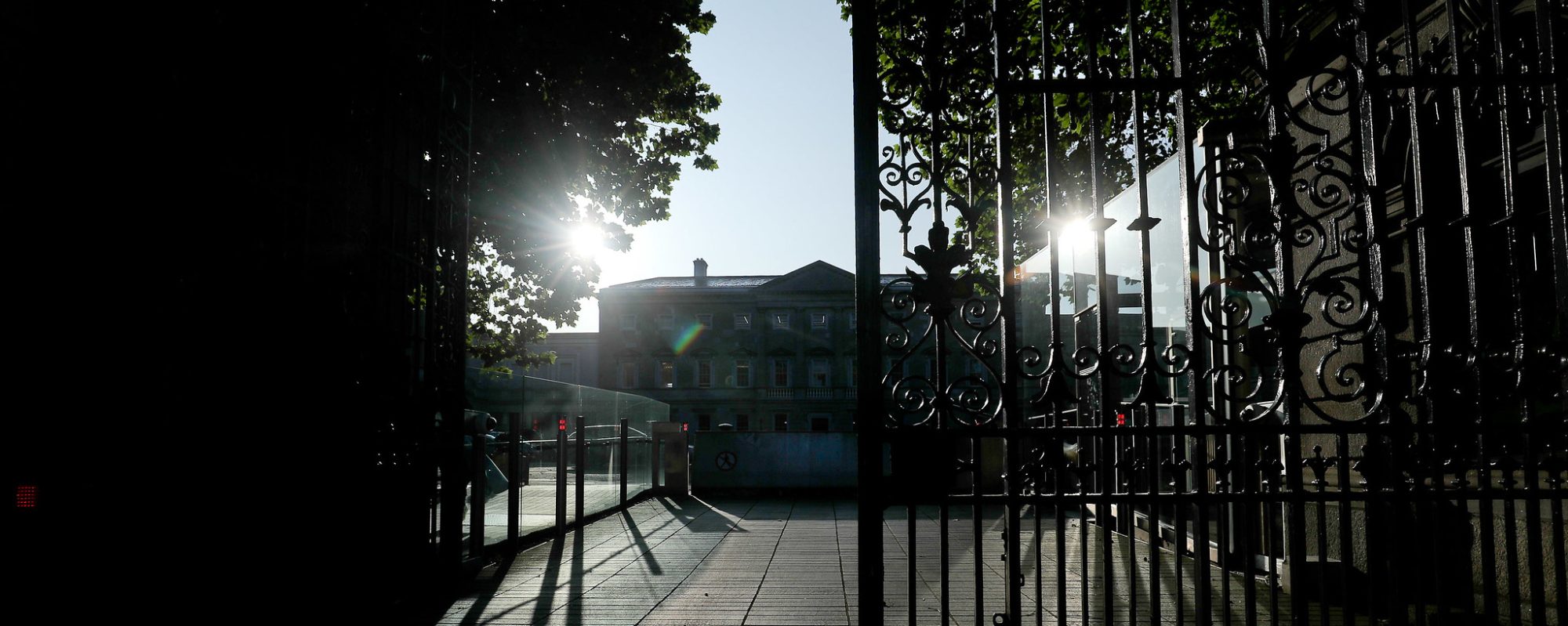
Why Fianna Fáil is right not to contest Aras11

The reality that Fianna Fail is no longer the huge force in Irish politics that it once was is gradually dawning on some.

Former big beasts in the forest are finding that they now do not strike the same sense of awe and fear they once did when the party commanded support levels of around 40%.

While watching the process of them coming to terms with this loss of influence and authority in public is neither edifying nor appealing – it is better it happens quickly.

The reality of the last election is that Fianna Fail no longer has a God given right to presume it can be in power. It has received what a colleague of mine in the North described as “the mother and father of a political punishment beating”.

It is a beating from which the party can recover, but that process will be long and arduous. The process of renewal the party must undergo must itself commence with the facing of some facts.

The first among these is that the traditional way of doing political business will no longer work. That means, in this instance, that the old assumption that almost any candidate Fianna Fail selects from its own ranks will automatically be a front runner no longer applies. Things have changed utterly for everyone in the party, not just those at the top.

It applies even to huge voter getters like Brian Crowley. For him to think that he could personally withstand this swing against the party is to miss what happened last February.

There is no great evidence to show that the public anger has diminished significantly. Any candidate facing the electorate in the foreseeable future, and that includes this October, with Fianna Fail on their posters will incur the wrath of a still smarting public – no matter how small they make the logo.

Contrary to the views of others, the party leadership was right, and is right, to wait until now to decide its strategy. The suggestion that this decision should – or could – have been made last June or July is nonsense. This is a decision that required some time and space for calm consideration. It is a decision that needed to be made when the full impact and scale of what happened last February had been digested.

Having the Gay Byrne flirtation in public before taking this decision was an error, though it hard to see how anyone could have thought the Byrne option could ever have been considered just in private.

It sent the wrong message to the party membership. Martin’s countrywide tour of the constituencies was reconnecting the leadership with the members – the Byrne episode has dented that reconnection: though not damaged it irreparably, despite the rantings of a few impetuous people on Facebook.

But consider what a hero Micheal Martin would have appeared if he had convinced Byrne to run. Consider too that some of those who were most critical of Martin for courting the popular light entertainer had – a few weeks earlier – been urging him to allow four or five of his Oireachtas colleagues to sign the nomination papers of another, equally well regarded entertainment figure; David Norris.

There is a world of difference between accepting your current situation and allowing it to curb your ambitions. The fact that Fianna Fail may not directly contest this October’s Presidential election does not undermine the party’s hopes to recover the public trust it has lost.

If anything, not running a traditional style candidate is part of the process of letting former supporters know that it is taking the hard message they sent last February to heart.

This is not merely a question of the party saving a few hundred thousand Euros by not running a candidate – it is about Fianna Fail doing what it traditionally did best: facing up to harsh realities and addressing them. It is this which offers Fianna Fáil a way to renewal and recovery, not the fielding of an Áras 2011 candidate.
It is way too early to call the Aras11 race

My latest article on the aras11 race from the Evening Herald 13th August 2011


In about 75 days we will vote for our next President. It is a long way away and there will be plenty of polls to mull over between now and then.

The latest RedC Paddy Power poll does throw up some unexpected numbers, so I suspect with the next two or three polls. I would not expect them to settle down and reflect actual voter intentions until much closer to October 27th.

Uncle Gaybo tells us that he will make up his mind on whether to run or not. He has some big things to mull over, including his high level of potential support. They are impressive by any standards, almost Norrisian when compared to polls taken in recent weeks.

But what do these big numbers mean or matter when the beneficiary is not in or out of the race yet? Plus, he should consider that early leads come with a major health warning from Irish presidential election history.

The first major poll of the 1997 Aras race was conducted by IMS and published in the Sunday Independent about 40 days before polling (on September 21st)

It showed the Labour party’s candidate, Adi Roche in a commanding lead with 38% – ten points ahead of Uncle Gaybo’s figure today. On polling day, on October 30th she ended up on 7%.

If things changed that much for her in 40 days, consider how much more they might change over the course of 76 days. The words “sprint” and “marathon” come to mind. Come to think of it, so do the words “obstacle course”

As with Uncle Gaybo, Adi’s name had come into the fray as a bit of a surprise announcement just days before an opinion poll. The Irish Times poll; published ten days later, had Roche on 22%, behind McAleese (who polled 35% in both polls).

I know the dangers of comparing polls from different polling companies with different samples. I also know that Adi’s declining poll numbers followed a tough and difficult campaign.

The point I am making here is that any poll taken so far out from the actual polling day, particularly with some candidates yet to declare, is no indicator of how anyone might fair out on the big day. This applies to those at the top or the bottom of the poll. We may as well poll as to who will win the 2012 Eurovision inAzerbaijan(Though it’s a fair bet they’ll be East European)

To put it in its crudest terms, this poll seems to me to simply reflect how well the public recognises the candidates’ names, so far.

I say this as the truth is that the Presidential campaign not started yet. Yes, there has been a lot of coverage over the past few weeks, but this has focussed on particular individuals rather than the full slate.

Apart from a few short one to one interviews on the Pat Kenny radio show and his rather terrible Frontline debate where most of the potential candidates stayed away, there has been no opportunity to calmly judge the candidates suitability to be President.

The campaign proper in October will matter. By then we will know who is definitely in the race or who is not. We will start to hear clear messages from each of them why they are the right person to succeed President McAleese. We will hear about their values and their thoughts on what the next seven years should bring.

We, the public will be able to assess and review the candidates individually and collectively over that three to four weeks of intensive campaigning.

The last thing anyone wants or needs is an 11 week campaign. No one’s sanity, patience or tolerance could withstand 75 days of that.

So let us stay calm, wait to see who is in or out and all take a few deep breaths from now until late September when the race can begin in earnest.

Why current crisis is more political than economic

My latest Evening Herald column from August 8th 2011 – you can also see it online: here

——————————

Euro Parliament Committee Room - Bxl

Success has many fathers, but failure is an orphan. Clearly, no one has told the economists this.

In any other walk of life — architecture, dentistry, cake decorating — people run away when they see failure or disaster looming.

Not the economists. They embrace disaster. They revel in it.

As soon as a crisis looms they rush to the TV camera and the microphone to say how they predicted it.

They take a pride and pleasure in being associated with doom and failure that would do your heart good, if the consequences were not so dire for the rest of us.

In the wake of last week’s market turmoil, the weekend papers and discussion shows were full of economists doing what they do best.

Switching between the radio stations on Saturday and Sunday mornings was like playing some demented radio five-card stud — I see your dollar bond collapse and raise you an Italian bailout.

The Sunday newspapers were as bad with even more dire predictions of either the collapse of the euro or the dollar, or both.

We are living in uncertain economic times … and will be for some years to come. No one needs to tune into the radio to learn that.

This is a major culture shock for many, though not for those of us who lived through the Eighties … and no one wants to see another decade lost to despair and inactivity.

But I digress. So why have we seen renewed predictions of crisis this week? They do not seem to have been prompted by the publication of any eurozone statistics or hard figures.

Neither could they be reasonably explained away as just the result of a global slow news day.

While they may, in part, be due to the outworkings of the American debt ceiling compromise, the giveaway is in the word most often employed by economists in describing the crisis: confidence.

We have seen share values drop and bond costs increase over the past week because market analysts and investors do not have confidence in the capacity of eurozone countries to deal with all the debt in the system.

Could these possibly be the same investors who were protected from massive losses in banks and bad investments by those same governments?

Ironic, isn’t it? Eaten bread may be soon forgotten, but never with anything like the speed and hypocrisy with which socialised private losses are forgotten by the markets.

It is tough to make someone have confidence in you, particularly when you have not got much confidence or trust in them. But wringing our hands in anger on this won’t make the problem go away.

As I said earlier, the past week’s scare does not have its origin in a spreadsheet. It is fundamentally a political issue; not an economic one.

The real danger for us is that the dramatic actions and reforms the market is demanding in return for their “confidence” would be deeply unacceptable to people here and across the Eurozone.

This is the almost impossible balance that the eurozone leaders are trying to strike. To make the changes just about needed to gain market approval without totally alienating public opinion at home. The political spectre of Brian Cowen must stalk their deliberations.

Not that the eurozone leaders merit much sympathy. Merkel and Sarkozy’s slowness to act decisively in the early stages of this crisis has cost us all. Their dithering and loose talk threw Ireland to the market wolves in a futile attempt to stem the tide at no cost to themselves.

Their recent reforms to the European Financial Stability Fund have been more carefully judged, though these will take a while to work their way through.

Meanwhile, the next time you hear an economist demanding firmer and more determined actions, just remember that translates in higher taxes and higher charges for you and yours.

– Derek Mooney

Quick quips will not get you out of this mess, Senator. You need to hear some things you don’t want to hear

Presidential candidate
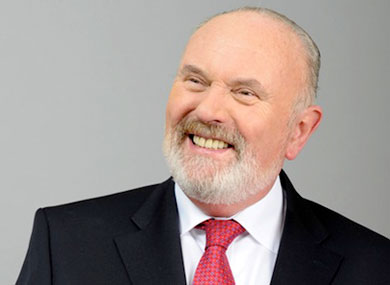
Senator David Norris

Text of my article on the Norris campaign saga from Evening Herald – see it online here:

I like West Wing quotes. They are not just well written, they can neatly sum up a situation. The one which comes to mind as I watch the evolving Norris campaign saga is from an episode in series one.

In it, the fictional President Bartlett character advises a colleague on selecting a campaign manager/ chief of staff. “Do you have a best friend… Is he smarter than you… Would you trust him with your life?”

When the guy answers “Yes sir” to all three questions, Bartlett tells him: “That’s your chief of staff.”

That’s precisely what David Norris has needed from the start of this whole thing.

Though I have criticised some of them, he has had many loyal and personally devoted campaigners. He has a huge social media support network too. But sheer enthusiasm is not enough. The one thing he has lacked most was someone who could challenge him and tell him the unpleasant facts he has not wanted to hear.

Many months ago I said that David’s gift for the quick quip and caustic comment may prove to be his Achilles heel as it suggested a lack of gravitas.

This proved only in part to be true. The tone, content and nature of his lengthy 1997 letter to his former partner’s lawyers was ill considered, ill advised and exposed poor judgement.

With due respect to the Senator’s continuing supporters, this assessment is really not in question. One in Four founder Colm O’Gorman put it more forthrightly on Twitter saying: “my views on his writing the letter are clear and unequivocal. He was wrong. Very wrong.”

Some, like Senator John Crown, attempt to explain away the letter pointing to ones written by Kathleen Lynch, Bobby Molloy and Trevor Sargent. Besides the “two wrongs don’t make a right” argument, in those cases the authors accepted their ill judgement and in the cases of Molloy and Sergent they resigned.

Yes, there are nasty people and vile groups who want to see Norris’s candidacy scuppered. Yes, there are those who would have employing dirty tricks to frustrate him.

But this isn’t a mafia movie. The enemy of your enemy is not always your friend.

The contemptibility of some of those who oppose David should not blind us to the legitimate questions this letter and saga raise about his candidacy. This is not a slanted leak from his detractors. The damage here comes from what the candidate has said himself and the material he has made available.

Running for the Presidency is not like a really big Trinity Senate campaign – and this campaign has not really started yet. We are still in the pre-campaign stage. The last two Presidential campaigns saw major negative campaigns. In 1990 the target was Brian Lenihan Sr, in 1997 it was Adi Roche and Mary McAleese. I fear we may have more to endure when this race hits its full stride in late September.

So where does that leave David’s campaign now?

David now says he wants to fight on, even though he recognises his chances slim. His courage and tenacity is admirable: but it is time to face realities. Alastair Campbell famously said that you have eleven days to kill a story or you’re toast. This is the second crisis for David, so he will have even less time.

I would suggest that one of two things may happen over the coming days to decide his future prospects.

The first is that some new Oireachtas members may rally to his cause. He already needed five more, the damage this crisis is inflicting on his campaign means he needs them today. If there are five more nominators out there: right now is the time to them to declare, not next September.

The second and more likely scenario is that some of those who have already declared for him will tell him, either privately or publicly, that they cannot now follow through on existing pledges of support. That will end his chances.

Whatever happens, this presidential race has changed completely. Past back markers may soon emerge as front runners… and there is still Dana to consider

Evening Herald August 1st August 2011

Derek Mooney on Sam Smyth Show TodayFM Radio July 31st

You can listen to podcasts of Today FM’s Sam Smyth Show via the two links below. On the panel were former political correspondent Eoghan O’ Murchu, (yours truly) Derek Mooney, columnist with the Evening Herald and former government policy advisor; and Senior Lecturer in Economics at Trinity College, Senator Sean Barrett.

Joining Sam for interview was Fianna Fáil Senator Averil Power.

Political writer with the Sunday Independent John Drennan was on the phone discussing the latest revelations regarding Senator David Norris, and the implications of this on his presidential bid.

Ed Hayes joined the show on the phone from his Long Island holiday retreat.

It is in 2 x 1 hour long parts. Part One here and Part Two here

Ireland and Norway are very alike. So, could it happen here?

This article can also be viewed on the Herald.ie site here


Monday July 25 2011

Not only has Norwegian PM Jens Stoltenberg shown great leadership in his measured response to the atrocity which had befallen the Norwegian people, he has also given a new measured response to such attacks with the words: “The answer to violence is more democracy, more humanity, but not more naivety.”

The appalling atrocities in central Oslo and the island of Utoya have rightly shocked us all, not just for their ferocity and callousness but for the fact that they have been perpetrated in the city and a country one associates most with peace building and peace making.

Oslo is not just the home of the Nobel Peace Centre and the location for the awarding of the Nobel Peace Prize, it has also given its name to the 1993 foundation on which peace negotiations between Israel and the Palestinians were based: the Oslo Accords.

Briefly, during the first hours after the car bomb exploded in Oslo many minds turned to the possibility that the attack was the work of Islamist terrorists. The attempted car bombing in Stockholm just before Christmas was as hard to understand, but that attack was linked to Islamist terrorism: the first such attack in the Nordic nations.

It took some time for the full scale of the slaying to emerge for experts and analysts to realise that this was not an attack from extremist Islamists.

It was the polar opposite. It was from a local home-grown ultra-nationalist who feared and hated Islam.

This attack, on his own people, was perpetrated by a man whose own warped world view sees Islam as a threat to the Western way of life and whose online writings denounced Norwegian politicians as failing to defend Norway from Islamic influence.

As we look at the horror, should we consider if such a thing could happen here?

Up to last Friday afternoon the Norwegians did not think such a thing was likely.

They, like us, considered this to be something one only read about in other larger cities and countries. Yet, it happened.

In many ways Norway and Ireland are alike. We are both small, quiet, friendly, liberal democracies most noted in the international context for our contributions to peace support and international diplomacy.

During those brief few hours when speculation focused on an external terrorist cause some suggested Norway’s having troops in Afghanistan as a possible reason why it could be a target.

We too have troops serving in Afghanistan since 2002, so it could also potentially make us one, though Norway’s membership of Nato and participation in the Libyan campaign were also cited as possible causes.

But, as we now know, the reason was not external – it was internal. In Norway’s case this domestic threat was aided by their gun laws: Norway’s large hunting and sports shooting traditions does allow regulated access to a range of firearms.

Back in 2008 the Justice Minister, Dermot Ahern, moved to clamp down on gun controls, especially on the numbers of legally held handguns. Yet there are still many thousands of legally and illegally held guns on this island.

The one thing we cannot legislate for, though, is what goes on in someone’s head. A society cannot protect itself 24/7 from the actions of a lone crazed attacker.

To tackle that we need to turn to the last part of Stoltenberg’s advice: we cannot be naive. While the likelihood of such a thing happening here may be small: it is not zero. We must not be naive, we do need to be vigilant.

How politicians helped redeem themselves by taking on the big guys

My Evening Herald article is online Here

Saturday July 23 2011

JUST by coincidence, I happened to be passing through Brussels this week.

From the window of my hotel room near the Schuman roundabout, I could both see the European Council building and hear the sirens roar as EU heads of government arrived for the emergency EU summit.

From the the TV in the background I could hear and see the continuing fallout on BBC World news from the hacking scandal, while on my laptop I read and listen to the deserved praise being heaped on the Taoiseach for his speech on the Cloyne scandal.

As these three separate news stories competed for my attention it began to dawn on me that these three very different events have a common thread: how politics can work and how politicians can make a difference when they reflect the public mood.

In the case of the News of the World hacking scandal we see the politicians finally recovering their sense of confidence and self worth and shedding their decades of deference to one media mogul.

In the European Council decision we see politicians taking bolder and coordinated actions to exert some meaningful control over Europe’s economic destiny and shunning the cautious advice of bankers or ratings agencies.

In the case of Enda Kenny’s Cloyne speech we see a political leader not just standing up to Rome, but finding his voice calmly and forcefully telling it some home truths and reminding it how much it has lost its way.

redeem

By their actions and words, across these three events, public representatives have helped redeem the profession of politics somewhat by taking on three of the most powerful interest groups: the Church, the banking sector and the media.

This is no renaissance for politics, but just a timely reminder that politics and politicians can rise above the cynical and do good.

While the common thread in the three events is the primacy of democratic politics, it is no harm to reflect on how much further Enda is along the road of telling the Church its role and place in modern society than David Cameron is in his attempt to break this news to Rupert Murdoch and News International.

Nonetheless, this should not stop us taking a leaf out of Westminster’s book and, just as the MPs did with the Murdochs, bringing senior churchmen before a public hearing of a Dail Committee to answer questions from the people’s chosen representatives.

Just over a year ago the Papal Nuncio refused to appear before a committee considering the report of the Murphy Commission.

Let us test the water now to see if the Vatican and the Nunciature think they can sustain this refusal to answer for their actions.

As Fergus Finlay said, the Taoiseach’s Cloyne speech has set the bar high.

It follows on from Brian Cowen’s hard hitting speech responding to the Ryan Report and Dermot Ahern’s declaration following the Report of the Murphy Commission that a “clerical collar will protect no criminal”.

To quote Brutus in Shakespeare’s Julius Caesar: “There is a tide in the affairs of men, Which taken at the flood, leads on to fortune.”

Enda has taken that tide and the Cloyne speech will help establish a political legacy.

However, while he is entitled to enjoy the coming few weeks as the speech continues to reverberate, he should make a quick call to a certain former Taoiseach in Drumcondra to discover how quickly the sheen on his real achievements in the Good Friday Agreement can be dulled by harsh economic realities.

opportunity

Enda needs to apply the same clarity of language and and certainty of approach to tackling the economy that he has found in tackling the Vatican and Catholic hierarchy.

The new measures agreed by euro leaders at the emergency EU Summit may just afford him such an opportunity — but he needs to take this particular tide soon and not squander the opportunities it affords.

Aras11: and then there was five, or four…..

With each passing day the Aras11 race increasingly resembles a remake of the 1945 Agatha Christie movie: And Then There Were None.

For those of you who haven’t seen the Barry Fitzgerald classic, or its later remakes, the plot revolves around a group of people brought together on a remote and isolated location by Mr U. N. Owen (say it out loud and you will get it).

One by one the guests depart. Each in increasingly tragic circumstances, until there is just one is left. Or, is there? Have each of them really gone to meet their maker? Could there be a last minute twist in the tale?

Ok, I have done this metaphor to death, but you can see where I am going with it.

Labour’s early selection of Michael D Higgins heralded early exits by Fergus Finlay and Kathleen O’Meara. Niall O’Dowd’s withdrawal last week and Avril Doyle’s exit this week has brought the total number of viable candidates down by four. I say “viable” as there are two also-rans seeking Council nominations.

Today’s Fine Gael selection convention will reduce the field by a further two – though you will find it hard to get a firm consensus on which two.

So what does this all mean? Well, by the close of business tonight the original field will have been halved. Three of these will definitely be on the Aras11 ballot paper: the FG and Lab nominees, plus Sean Gallagher. Two more: Mary Davis and Senator David Norris will be hoping to make it before the final deadline.

So it now looks like there will be a field of five candidates when the election comes around in October. Or will there? Will there be one or two more – will there be one less?  October is still a long way away.

With 33 Oireachtas members, Fianna Fáil has more than the 20 signatures needed and could still choose to support a candidate not already in the race and not necessarily from the Fianna Fáil family.

With a total of 31, the Independent TDs and Senators, including United Left Alliance, could also nominate, if they can find one on whom twenty of them can agree Though Norris supporters suggest he has 8 or 9 of them already signed up.

While Sinn Féin, with 17 Oireachtas members, would need to get three Independents on side to give a nomination to a person of their choice.

Back on the Council trail: the longest declared candidate, Senator David Norris, must be feeling pretty miffed to be overtaken in the Council stakes by Sean Gallagher on 5 and Mary Davis on 2.

Gallagher’s relative ease in securing motions of intent would suggest that he and his team were working on this campaign long before he officially entered the race. I know some of his core campaign team. They are very skilled professionals who have run it like a classic Seanad campaign.

It is this skill and ability; however, that makes Mary Davis’s victory in Gallagher’s Louth and Monaghan backyards all the more impressive.  Her comfortable margins suggests that my mate, and keen political blogger, Jonny Fallon, was right when he tweeted a few weeks back that the other Independents would have to wait until Gallagher got his four councils.

It also suggests that a coalition of non Fine Gael councillors across the remaining councils is preparing to swing in behind the Special Olympics boss Davis, as their next favoured independent. She now looks certain be also be on the Aras11

Less certain is Norris. He has been waiting for almost two months to follow up on his one success in Fingal Council. It will be interesting to see if Fine Gael is still set on stymieing his campaign. This would be in contrast to the Fine Gael abstentions elsewhere which allowed Gallagher to get through.

Maybe Fine Gael fear Norris more than Gallagher, or maybe they just want someone in the race who they can label and attack as a Fianna Fáiler?

Who knows, only time will tell – and time, as Agatha Christie observed, is the best killer.

ENDS 

From Evening Herald July 9th 2011

My Herald Column: Man overboard as ‘Capt Birdseye’ Reilly caught in storm of his own making

See online here:

Man overboard. Just four months in office and the Government has lost its first back bencher. In fairness, they have a lot of them, so one could hardly matter that much.

The 2011 intake of new Fine Gael and Labour TDs are still so unfamiliar to us that, in all likelihood, it could take a while to notice that two or three of them had gone missing.

At this rate — losing one backbencher every four months — the Coalition could hold on to its 58-seat majority for another 10 years. That is if there wasn’t a general election due in just under five years’ time.

And that’s why this first defection might have slightly largely ramifications than originally thought.

Pressure

Denis Naughten defied the party whip by voting for a Dail motion calling for accident and emergency facilities in Roscommon Hospital to remain open.

In doing so, he has significantly raised the pressure on his former colleagues. The Roscommon Hospital Committee has got a scalp. Other hospital committees and pressure groups committees will be taking notes.

Minister of State John Perry, who promised before the election to return breast cancer services at Sligo General Hospital, will find the heat being turned on him. He won’t be alone in the simmering pot. Government backbenchers in Portlaoise and across the country will find more targeted and co-ordinated campaigns being whipped up over the summer.

Never mind a winter of discontent, this government faces an autumn of anguish. Correction: the Fine Gael TDs face an autumn of anguish on the hospitals issue thanks to the Health Ministers upping the ante just before the election. (He’s the one who looks like a cross between Brian Blessed and Captain Birdseye)

If only he had played it calmer and cooler. Everyone could see Fine Gael and Labour were coasting to victory, but that was not enough for Fine Gael’s health spokesperson and deputy leader. Captain Blessed Birdseye wrote an open letter to the voters of Roscommon saying: “Fine Gael undertakes to retain the emergency surgical, medical and other health services at Roscommon Hospital.”

Last week the Taoiseach sought to defend the good Captain with the argument that Dr Reilly said this when he ” … was contesting the general election (and) he was not in possession of the information about the difficulties surrounding the recruitment of non-consultant hospital doctors”.

This did not, however, explain Deputy Naughten’s announcement at the end of March that Fine Gael had firmly “put a halt to any plans by the HSE to withdraw services from smaller hospitals”, and that it would not only protect, but would also enhance and develop these services.

One presumes that his words had Captain Blessed Birdseye’s blessings. If not, the Roscommon Deputy has made a rod for his own back. If he had, then there is still some considerable mileage left in this story.

This is also about management of expectations. The last government reduced expectations enormously, though as often by accident as by design. This Government came in building up expectations beyond anything that was deliverable.

Enda may come to regret leaving ministers in the portfolios they held in opposition. Yes, they are familiar with the minutiae of the issues, but they are also left to face those promises they made. Fine Gael could well end up reaping a whirlwind it started by itself and for itself. To quote the Book of Proverbs: “He that troubleth his own house shall inherit the wind.” Put that in your sails, Captain.

Derek Mooney was political and policy adviser to a Cabinet Minister 2004-2010 and has worked as a public policy consultant since the mid-1990s

– Derek Mooney

We the Citizens: Solutions First, Diagnosis Second

One of my favourite old jokes is about aNew Yorkgrandmother who happens upon a small crowd gathered at the side of the street as she wends her way home.

She walks around the edge of the crowd, straining to see what is happening. Eventually she works out that there has been a road traffic accident and that there is a doctor in the centre of the crowd giving first aid to an injured cyclist.

Pushing her way through, she starts calling out to the Doctor: “Give him an enema, give him an enema”. Hearing her advice being repeatedly hurled at him, the Doctor turns to her and curtly says: “Madam, this young man has a broken arm – an enema is not going to help him”.  “Maybe”, comes her reply, “but it couldn’t hurt”

We the Citizens are a lot like that old woman. They are well intentioned and genuinely concerned, but are so fixated on the treatment that they are blind to the ailment.

It’s deciding the treatment before attempting a diagnosis. They have an enema they want to give us, and we are going to get it. In their defence, the reforms they suggest would neither hurt nor damage anyone. But on the other hand, they would not make major changes either.

The conclusions they reached were modest enough: retaining PR STV, reducing TDs pay, but given the scale of the problems we face do any of us have the time or energy to expend on tackling the superficial ills?

This is not to disregard the importance of political reforms, but just to wonder why they pick this precise moment. They accept that all the political parties have committed themselves to political reform. Well then, let us wait and see what the Government proposes when it puts its package of reforms to a referendum next year.

My problem is twofold. First, I keep getting the feeling that We the Citizens is trying to be a non political, political party. It seems to want a voice and a say on a par with the existing political parties without all the hassle of sending candidates door to door to argue their case, or making spending returns to the Standards in Public Office commission.

Its leaders, or mentors, lambast what some saw as the focus group populism of Bertie Ahern, yet miss the fact that the model they have chosen is effectively a giant focus group itself.  The members of their Citizens Assembly were, after all, chosen by a polling company on a set of criteria, broken down by age and sex. (I sometimes feel a bit that way myself).

My second problem is the suggestion that 100 people meeting together over a weekend is something new or unique. It happens in communities up and down the land, look at the campaign in Roscommon and Portlaoise to save their A&Es.

In most of these cases the local TDs and Councillors are there to state their case, take the flak and to listen to what the people are saying. Yet, We the Citizens say that they want “to demonstrate to Government and to all of the political parties that engaging with citizens in between elections works,”

But Irish politicians and Irish political parties already know that. We might not like the conclusions they reach or the actions they take – but no one can say that we do not have one of the most highly competitive constituency systems and most connected national politicians inEurope.

This surely is the paradox, or even the contradiction, at the heart of this whole exercise. It is this very level of local political engagement, this responsiveness to public mood that so many blame for our woes – including it seems We the Citizens.

Or could it be that the wrong group of politicians were just being responsive to the wrong mass of citizens. Or, to put it the way a Labour activist tweeted during Primetime: “I wonder how many people who are in that studio repeatedly voted for FF and then complained about the state of the country.”

Isn’t that the public’s prerogative?