FF’s Sean Fleming quickly adds up the damage

My review of Minister Brendan Howlin’s day 1 budget speech. http://www.herald.ie/news/ffs-fleming-quickly-adds-up-the-damage-2954736.html

This is the first budget since Ruairi Quinn’s 1996 one where Fianna Fail have been in the position of having to respond as an opposition.

Only a handful of the remaining Fianna Fail TDs have any experience of replying to a budget statement on the hoof, like this.

Back then they had both the numbers in the chamber and in their research office to be able to respond robustly. Back then, they were also not hampered by seeng their economic strategy being implemented by the government.

In these circumstances, the party’s spokesperson, Sean Fleming, did reasonably well. His accountancy background enabled him to focus in on some of the finer and more damaging points that appeared in the tables, but somehow managed not to make it into the Minister’s script.

Sinn Fein’s Mary Lou McDonald gave one of her best Dail performances to date. Whereas Fleming stuck with the detail, she concentrated on the politics, excoriating and needling Fine Gael and Labour backbenchers for reneging on their election promises.

Over recent years we have been moving from the traditional westminster model of budgets where the finance minister goes into a self imposed silence or purdah in advance of the statement, to a european one where large elements emerge into the public arena in advance.

While recent budgets have seen their share of advance kite flying, this one brought the craft to new and dizzying heights. 

It is all about the management of expectations. It’s an old trick. Get your people spinning that medical cards might be hit, and then hope the public will break out the champagne, or possibly the Babycham given our straightened times, when they are not.
So the theory goes. In this case the audience was not so much the people at home, but the massed ranks of backbench government TDs who would like to be two term Deputies not one termers.
This may account for the very muted applause after Minister Howlin resumed his seat. Though this may just as much been due to how inappropriate and ill judged the loud cheers and fulsome applause the Fianna Fail deputies gave to their recent budgets seems now.

Enda’s State of the Nation fails to Inspire

An Taoiseach’s national address was well intentioned but badly executed. 

To his credit; from the moment he became Taoiseach, Enda Kenny has shown that he realises the importance of talking to people. He has demonstrated regularly that he knows the job of Taoiseach is not just the traditional one of government Chairman or Chief.

He understands that it is also that of the “confidence giver in chief”, particularly at times of crisis like this. The person who tells the rest of us what is happening and how he and his team have a plan to get us through the difficulties.

Television has not been his friend. Neither have the formal set pieces: Ard Fheis speeches etc. He has been more comfortable in informal situations, particularly those where his words and message are delivered unmediated: live to a flesh and blood audience.

For all these reasons, last night’s TV “Address to the Nation” was going to be a big ask. The fact that it was billed as the most important address he would ever give, the “speech of his life”, did not help.

In the event, the speech did not succeed in achieving its desired result.

A speech is not about offering a litany of facts and figures, it is about putting across a clear message. The Taoiseach acknowledged this truth in his address saying that he was “outlining the Government’s strategy.”

The pity is that while this may have been the aim, the content and delivery failed to convey any sense of strategy or coherent plan.

The address should not just have been another element of the package of budget speeches: but an opportunity to set out a vision of where we are going and how we can get there together.

It could have been a vision of the kind of Ireland the Taoiseach wants to see in place by 2016, the centenary of the Easter Rising and an exposition of how he sees us achieving that.

Instead of the expected “state of the nation” we got a curiously cold and passionless presentation that omitted both vision and purpose. A bland party political broadcast that seemed, in part, to be an attempt to explain both why The government was now implementing policies it had opposed and why it had abandoned promises made only nine months ago.

It was less an “address to the nation” and more an apology from the leader of Fine Gael.
As the Taoiseach and his advisers are now starting to realise there are some very obvious risks with such addresses.

The expectations were high.

People expect to be better informed and maybe even more confident after the broadcast than they were before. Looking at the online commentary as I write this, I do not see this being the emerging consensus. Most politically unaligned posters appear to be seeing the address as a “wasted opportunity”.

But there are other risks too. The leader comes on TV to say that things will get better… but, they don’t. As a consequence we lose faith in them.

The other worry is that the Leader comes on TV to say that things are even worse that he had suggested they were… the opposition have a field day using his own words to attack him and his popularity plummets

Though I have no firm evidence for thinking this, I believe that these were the two of the key factors behind Brian Cowen’s reluctance to make a similar address in 2008/2009. The one issue Cowen would not have had to address if he had chosen to make such a speech then is the crisis facing the EU and the Euro.

In my view the Taoiseach made a mistake in not devoting more of his script to this crucial issue. Not only did the EU section amount to less than 10% of the total text, the section was bland and failed to seriously address any of the issues facing us.

In other EU countries they are talking of having “less than a week” to save the Euro. Within the coming days we will learn more of the Merkel/Sarkozy plan to fundamentally change how the EU and the Euro function, but here our Taoiseach reduces the matter to almost an afterthought in his keynote address to the nation.

It kind of sums up the whole exercise, well intentioned, but poorly done.

Twitter:  @dsmooney

Barrack Closures a Mistake on All Fronts

This article appeared in the Irish Examiner on Thursday November 17th 2011

Resigning as a Minister is not something to be done lightly. You must weigh up the influence and input you are surrendering from having a seat at the table against the public acclamation you will receive. The applause and cheers will soon die down and you will be left standing on the outside while decisions get made without you.

Though he is not a household name, Willie Penrose is a smart man. While he may have the bearing and manner of a classic rural parish pump TD, he is a smart guy. An experienced and successful Barrister, Penrose knows what he is doing.

Gilmore knew that that the future of Columb Barracks in Mullingar was a red line issue for Penrose when he nominated him as a Super Junior – so why did he proceed with the appointment?

This government was only a few days in office when speculation started that they may close some more barracks. Further barrack closures have been a fixation with some senior civil servants and military figures in Defence.

Shortly after I entered the Department of Defence in October 2004 a senior official popped into my office to discuss the issue of “barrack consolidation”. This I came to learn was the euphemism for barrack closures.

There is a school of thought, among some in the Defence organisation, that we should have a much smaller number of super barracks – say three or four – located in the major cities, rather than the existing network of smaller posts across the State.

While this would potentially be a little more economic and efficient, this has to be weighed with the popular support and positive PR generated from having more locally organised and based units. It is a demonstrable fact that recruitment is strongest in those areas where there is a military post.

Even at the height of the Celtic Tiger for every general service recruit post advertised there were at least 5 applicants, while the Cadet competitions often saw 25 or 30 well qualified applicants for each vacancy.

Local barracks and locally based army units form strong bonds with local communities. Use of barracks facilities, especially sports grounds, is usually offered to local community groups, particularly youth groups. The local army unit is always on hand to help out in the classic “aid to the civil power” type exercises – flooding, ice clearance, bad weather etc.

While they are hard to measure on a civil servants excel spreadsheet, these strong local bonds are vitally important and should not be thrown away lightly.

The previous Minister, Michael Smith has closed six barracks back in 1998, though some of these properties had still not been disposed of almost six years later. Indeed it would take a further five or so years to deal with these.

The estimated year on year savings from these 1998 closures was estimated to be in the region of €3.5 – 4.5m. These were “economies of scale” saving from reduced security, heating, lighting and other savings.

If the current row over closing three or four barracks was just about that, I might be tempted to agree with it. But this is a mistake on all fronts.

Alan Shatter says that given the choice between saving buildings and retaining personnel, he opts for the latter. A noble intention: if only that was the choice before him.

It is not.

If the planned closures go ahead the Defence Forces can kiss good bye to seeing their numbers ever rise back above 10,500 again.

There are a number of reasons not to close these barracks.

Their closure will hurt the local economies in Mullingar, Clonmel and Cavan just as much as any factory closure. There is no point the Taoiseach giving out to Talk-Talk management for the inconsiderate handling of that closure while his own Minister is planning to do the same thing.

Where does the Minister propose to transfer the troops stationed in Mullingar, Clonmel and Cavan? Where is the spare capacity in the remaining barracks?

We are already aware from the last round of barrack closures that the remaining barracks were full and operating close to capacity.

To close these other barracks and to permanently move around 500 – 600 troops would require a considerable capital investment in additional facilities in Athlone, Finner andLimerick. This is not something that will appear overnight. Where does the Minister propose to get the cash to provide this additional capacity?

Colm McCarthy’s famous Bord Snip Nua report found that the Defence Forces were the only sector of the Public Service to reduce numbers during the height of the Celtic Tiger. His report suggested a number of further small reforms, including a reduction in the size of the force by a further 500 to 10,000. He recommended this be implemented over a two year period. It was achieved within a year, well ahead of the target date.

So what kind of signal do these further cuts – cuts that go beyond An Bord Snip Nua – send to others in the Public Service? This was a point that Brian Lenihan and Brian Cowen instinctively understood.

Here is a part of the public service that has downsized, modernised and reformed itself beyond expectations and yet it gets singled out again for cuts that neither make sense nor add up. These barrack closures appear, on the face of it, to be gratuitous.

The Defence Forces now do more with less. When it comes to real public sector reform the Defence Forces are a model of how it can be done right. These closures put that model at risk.

The investment in the Defence Forces made between 1997 and 2007 was a text book example of how to invest wisely and productively. Surplus property was sold and the proceeds invested in better training and equipment.

While the numbers working in the Public Service increased by 17% over the decade of the Celtic Tiger, the numbers working in the defence organisation actually fell by 8%.

This applied across all levels. The number of troops fell and so did the number of civil servants. Indeed Defence has a remarkably small civil service

The fact that the Minister does not get this point is compounded by the fact that he did not address the annual PDFORRA conference. That was a bad decision. It was his first opportunity to address the soldier’s representative organisation and he opted to send his Junior Minister while he and his Secretary General heading off to an international conference instead.

Willie Penrose’s resignation is about a lot more than just Mullingar Barracks; it is about a part time Defence Minister who fails to appreciate what he is doing, or is simply not bothered.

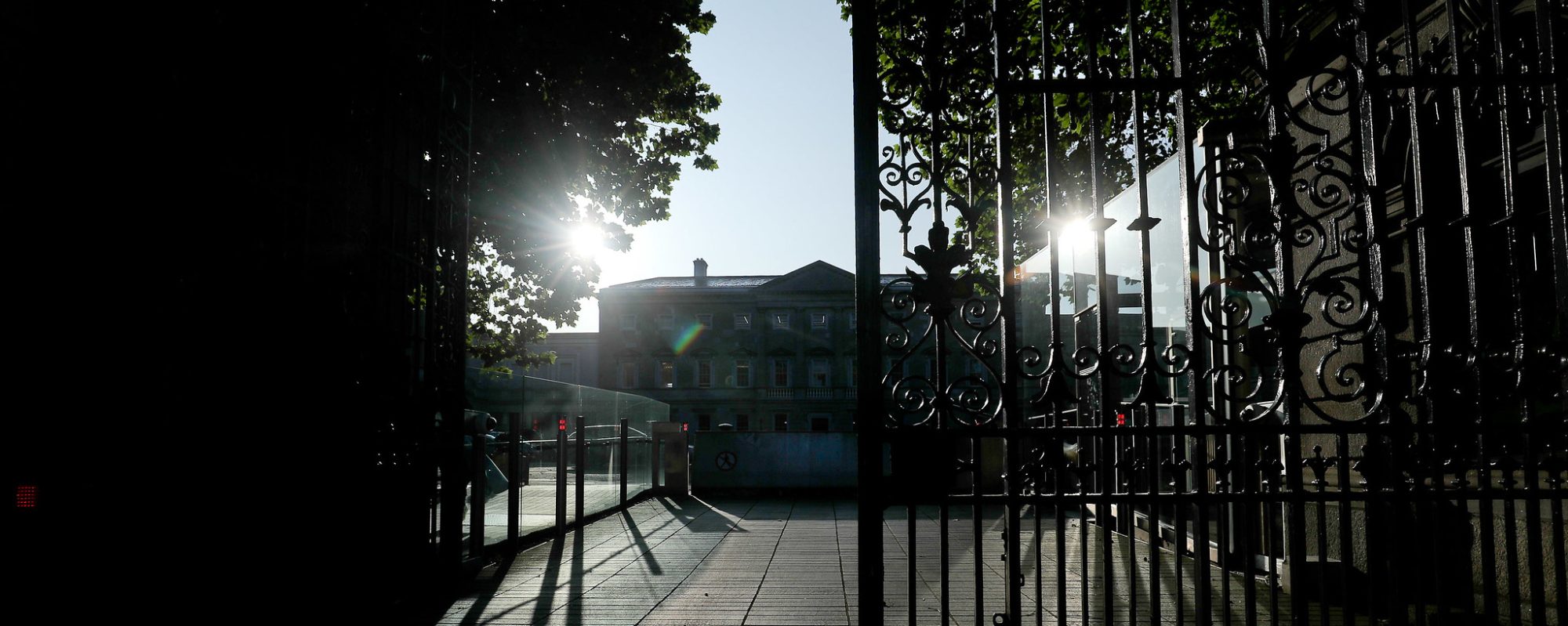
So tell me Minister, how exactly did we find €3.6bn?

My column from the Evening Herald (2nd November 2011) on the discovery by the Department of Finance that we owe €3.6Bn less than we thought; due to an accounting error in the Government’s figures. 

———————–

Wednesday November 02 2011

IN one of his early routines the American comedian Bob Newhart explained how he had to turn to comedy when his career in accountancy came to an abrupt end. He described how he had, as a fledgling accountant, developed his own theory of accountancy which stated that getting within 10pc of the total was enough.

While the idea did not catch on with his bosses in the 1960s, it appears the theory has been rediscovered and redeployed in the Department of Finance.

Finding that we have €3.6bn more that we had is a lot better than finding we have €3.6bn less — but don’t you just feel that if it had been the latter the cuts target for this December’s Budget would have doubled.

At this point I had intended to explain the discrepancy. Having spent about six years in Government reading and dealing with Government estimates and balance sheets I felt sure I was up to the job.

But after about 45 minutes of reading statements from various agencies my head melted and I needed to lie down in a darkened room.

Those who understand these things better, tell me that this has all got something to do with the amount being rolled over like a Lottery prize that isn’t won, though it is possible that I got the analogy wrong.

Liabilities

The one thing I know is that the problem stems from confusion between the National Treasury Management Agency (NTMA) and the Department of Finance.

Up to 1990 only the Minister for Finance could borrow money on behalf of the State. In 1990 that power, along with the responsibility to manage assets and liabilities and negotiate rates on the State’s borrowings, was given to the NTMA.

The NTMA proved itself quickly with savings on the interest paid on our debt roughly equivalent to reducing tax rates by about 10pc.

However, while the authority to borrow and manage the debt was delegated to the NTMA, the responsibility for the accounts and borrowings has always rested with the Minister for Finance and his officials.

There was a change in how the NTMA dealt with the State’s Housing Finance Agency and how it listed their assets and liabilities in its accounts which was not picked up on when the State’s general government debt was calculated.

It is vital that the confusion is cleared up and succinctly explained as soon as possible by the minister and his senior officials in both the Department and the NTMA.

The error is all the more embarrassing as the head of the Finance Department is due to take up an appointment in early 2012 as Ireland’s nominee to the European Court of Auditors.

This organisation is, according to its President , responsible for examining ” … whether financial operations have been properly recorded and disclosed, legally executed and managed so as to ensure economy, efficiency and effectiveness.”

Disciplines

It also raises an interesting general issue regarding the management of government departments. The Irish civil service uses a “generalist model”.

Department officials get a broad experience across a range of disciplines and policy areas. Across their careers, most civil servants can expect to be trained and work in a number of different areas. The benefit of this rotation system is that you get people with a broad vision, enthusiasm and wide experience of varying sectors.

Moving high flyers between sectors and departments helps stem the “it’s the way we have always done it here” mentality. But, it also has a downside. There are fewer specialists in those areas where they are specifically qualified and some posts that should require specialist skills and training are filled by people without them.

It’s just like Sir Humphrey said in a classic Yes Minister episode: “Well obviously I’m not a trained lawyer, or I wouldn’t have been in charge of the legal unit.”

Gallagher has no one to blame but himself

Aras an UachtáranBelow is my critique of the Sean Gallagher’s unsuccessful campaign for the Áras. This appears in today’s EVENING HERALD (Friday Oct 28th) though my column is not online there, just yet.  

Already they are calling it the Gallagher moment. What they mean is that instant on the Frontline debate when the momentum that had driven Gallagher’s campaign for the previous ten days evaporated under Sinn Féin fire.

The reality may be a little less dramatic. While Sean Gallagher’s campaign did come to a halt on Frontline, it took the next 48 hours for it to go into a full nose dive.

On the face of it the McGuinness assault was intended as a signal to Sinn Féin voters not to transfer to Gallagher. The polls were showing Sean with a convincing lead over Higgins in the region of 10%, but still needed McGuinness transfers to see him over the line.

The Shinner’s strategists were determined that they would not be the ones to give Sean the keys to the Áras and by extension hand a vicarious victory to Fianna Fáil, even by proxy.

Their intent was clear, make it as difficult as possible for Gallagher in the final days. It was why they stored up the the story for a few days. Conversely that is what made the situation even more damaging for Gallagher. He clearly knew the story was out there, although in different guises and varying versions, but when confronted with it he seemed dazed and confused.

The real damage came the following day when Gallagher still seemed unable to deal with the allegation. His campaign produced a punchy and clear press release, but the candidate seemed either unable or unwilling to deliver it.

Perhaps his problem was that after months of uttering bland and cosy messages about positivity and unity (not to mention entrepreneurship) he just could not find the steel in his soul needed to take on his challengers and tell them to go take a running jump at themselves.

Yes, Sinn Féin and McGuinness were changing their story. Events that were claimed to have happened after the dinner were now being said to have happened before it. Their story was all over the place. But it appeared that Gallagher’s was too, if you were just to go by what he himself said in the interviews he did on Pat Kenny and the Six One news.

So what if he had been involved in a fund raising dinner back in 2008. The event was not a clandestine one. The donations were declared. The money was going for legitimate political expenditure. He had been the campaign manager for a successful Dáil candidate in 2007. He had a onus to help defray the costs and expenses of that election. I was in a similar position elsewhere. There were bills to be paid, so money needed to be raised by volunteers and others. No banks were robbed, no one got shot.

So confused and oblique were his replies that the problem festered and grew all day Tuesday and Wednesday. Many including myself thought the damage might be limited to his capacity to attract transfers. It now looks like it went far wider than deeper, possibly due to it all been linked to question marks over his company accounts and large fees taken by himself.

The two weeks of labelling him a Fianna Fáiler did not, as evidenced in successive polls, do him any damage. The flaws and errors in his own handling of a relatively minor crisis did. The Presidency is about judgement, his was called seriously into question.

In the case of Gay Mitchell the judgement that must be called into question is that of the senior party figures who allowed him to go forward as a candidate. Gay is and remains a deeply committed public representative and Fine Gaeler, yet it has looked for the past month that the party on the ground had abandoned him. His campaign was unfocussed and patchy from the start, not helped by whispers that he was not really Enda’s first choice as a candidate. Well, if he wasn’t then why run him? Is Enda the leader or not?

Gay can take some comfort that his own poor showing was reflected in the Dublin West by-election where the party’s candidate also faired badly. The question how is how do we reconcile opinion polls that consistently show Fine Gael in the mid 30s with these results?

There will be some pretty interesting analysis to be done when the smoke and dust settles after this weekend,.

Labour Insanity Rules

This had been written as a analysis piece on latest Aras11 opinion polls, but just didn’t make the cut today


“Insanity is doing the same thing over and over again and expecting to get a different result each time.”

Depending on where you look this quote is attributed to Albert Einstein, Confucius Benjamin Franklin or Rita Mae Brown.

Whatever the true source, it is becoming increasing clear that no one in either the Higgins for President or Labour Party head quarters has heard it.

Two weeks ago, just after the fRedC poll picked up on the first wave of the surge of support to Sean Gallagher I warned here that the black ops against him would start, just as they had with Mary Davis.

And haven’t they just.

For almost two weeks we have seen daily reminders that Sean Gallagher had been a member of Fianna Fáil: that he had considered running for Fianna Fáil: that he still knew people in Fianna Fáil and that he might even like some of these people in Fianna Fáil.

The net result of almost two weeks of constantly pillorying and haranguing him about his Fianna Fáil associations has been an even great swing in support to him.

Two weeks of branding him as a latent or closet FF-er who probably eats his dinner in the middle of the day and the three latest opinion polls show Gallagher enjoying a solid double digit lead over Higgins.

And what is the response of Higgins’ supporters to the news that their man is now further behind Gallagher than he was last week? They go online and redouble their attacks on Gallagher.

Insanity or what? Desperation possibly? Someone urgently needs to change the script in Higgins’ HQ. It is not just that the tactic is not working: it is seriously backfiring.

Just recall how, a few weeks ago, Higgins was reaching out to Fianna Fáil voters saying that he knew that most of them were decent and honourable people. Gay Mitchell tried that strategy too, but it was never going to work for a solid dyed in the wool Fine Gael-er like him.

It did, however, look for a short while like the approach might pay off for Michael D. though. The RED C poll that first signalled a swing to Gallagher also showed that more Fianna Fáil voters supported Higgins than Gallagher.

Well that is not the case anymore, thanks to the campaign’s tactics.

The Higgins campaign went from reaching out to that 17% of voters who stuck with FF in February to vilifying and attacking them. Worse still they got their own candidate in on the act.  Have they never heard of second and third preferences?

Did they not see the damage Gay Mitchell did to himself and his campaign from being his own attack dog?

Labour has managed to change their own candidate from appearing as a calm, knowledgeable; slightly aloof, elder statesman figure into an old fashioned Labour party machine candidate who is starting to look and act desperate.

It will be interesting in the final TV debate tonight to see if Higgins compounds the mistakes of the past few days or tries to reach out to that 17% in some way.

It could be that his team will try a totally different tack and make a play for Martin McGuinness’s number 2s. In which case do not expect hear the names of Pte Patrick Kelly or Det Jerry McCabe pass his lips.

Kenny’s U-turn on Special Advisers

Taoiseach Enda Kenny’s defence of his U-turn on capping the pay of Special Advisers set me to thinking.

Merrion Street
Dept of An Taoiseach

When they came into office just eight months ago the Taoiseach started out well. He announced the withdrawal of ministerial cars and garda drivers from most Cabinet Ministers and was seen striding to work onfoot with no merc or beemer in sight.

He also said that he intended to take a similar approach to Special Advisers pay. The results there have been less impressive. Contrary to the declared intention to reduce the pay rates, it now emerges that almost 50% of them have been given exemptions and are now paid above the Principal Officer grade.

The Taoiseach defends this saying that Advisers are still paid less than previously.

Is that really so, Enda?

Back in October 2004 I was asked to become the Special Adviser to the newly appointed Defence Minister. It took me about five or six weeks to wind up my existing business and take on my duties as Special Adviser.

Within a few days of taking on the position I sat down with the Department’s HR manager. He talked me through the Departments requirements and regulations.

There were a number of forms to sign, covering a range of matters including security and related matters. I was required to produce the usual tax forms required of any new employee plus a Tax Clearance Certificate.

He then produced my contract of employment. We discussed some of the provisions while I leafed through the document. Then we both went quiet at the same time.

When it came to my pay rate the contract stated that I would be paid at the first point on the Assistant Principal (AP) grade. My understanding when I had accepted the post was that I would be paid at Principal Officer (PO) grade.

The difference between the first points on the AP and PO scales was in the region of €25k. The first point on the AP scale was in or around €57K as best as I can recall now.

I was a bit taken back by this and said as much to the HR manager. He explained that the default rate for my post in the department was AP grade unless I could show that my previous salary had been higher than that.

I relaxed as I knew I should clearly show that my annual income over the previous few years was in excess of the AP scale. It did take a few weeks to sort out but the paperwork was finalised as my first year’s pay was set at the first point on the PO scale.

I am not revealing anything new here. I am open about my salary as the then opposition used to ask parliamentary questions about my pay and expenses, and that of my colleagues across other Departments, at least twice a year. The replies were published regularly.

Indeed I recall opening an issue of the Sunday Independent as I was queuing to board a Ryanair flight to visit my parents in Spain and seeing one of those replies featuring my name, photo and pay rate there.  Worse still, I saw some people on the plane later holding copies of the Sindo and glaring at me.

Those replies usually pointed to the fact that there were fewer advisers in the post 1997 FF/PD Governments than there had been in the 94-97 FG/Lab/DL one. About 30% fewer: as far as I remember.

I make this point as the Taoiseach has sought to assert that paying 50% of their advisers at the first point on the PO scale is some big advance on the situation while I was there.

It is not.

The point on the scale is the same, though the scale has reduced. It was reduced by the last Government, not this one. As advisers we agreed to a 9% voluntary reduction in our pay in line with the voluntary cut in Ministerial pay, as well as the increased pension contributions and reductions in civil service pay rates across the board.

Like many things this Government is doing they may want people to think it is different – the reality is that it is the same.

Aras11 Campaign Review Oct 17th

This was written for the Evening Herald of Mon Oct 17th. 

There are ten days to go until polling day in Aras11. That means that two thirds of the campaign is behind us and, if the polls are correct, so are two thirds of the candidates.

Michael D Higgins, who has been in the top two in the polls almost since the beginning of the campaign, is now joined at the top of the poll, by Sean Gallagher.

Indeed he is not merely joined at the top of the poll by Gallagher; he is surpassed by the independent who appears to have caught the big momentum just at the right point.

The curious thing about the last RedC poll is that Gallagher’s surge has not been at Higgin’s expense. Both candidates actually increased support. In a role that may not sit too comfortably with him or the Labour Party, Higgins is becoming the traditional mainstream established party candidate while Gallagher is taking the role of non establishment figure garnering the non-party and independent backing.

Around 50% of voters have backed an independent candidate since the start of the campaign. With ten days to go they now appear to be backing the independent candidate who seems the strongest and has the best chance of winning.

This trend had begun to emerge in the last RedC poll on October 6th. While 21% of voters said in that poll that they were likely to vote for Gallagher, only 5% said they thought he could actually win the race.

His emergence as a front runner among the independents in that poll has seen him take support from other independents, like Davis and Norris. They will now need to fight hard if they are to have any chance of putting in a decent showing.

Gallagher would also appear to be getting considerable backing from remaining Fianna Fáil supporters, something he had not been achieving before this.

The latest RedC poll does come with the health warning that it was conducted just before last Wednesday night’s Primetime debate with Miriam O’Callaghan. That was not Gallagher’s greatest moment, though RedC researchers believe that these debates are not having significant impact in the results in their polling.

There are two other interesting features in this poll. The decline in support for Martin McGuinness must run contrary to what the Sinn Féin big strategy.  He had appeared to be holding his support in the face of a fairly constant barrage about his past, mainly from Gay Mitchell and Fine Gael.

Then along came David Kelly. In one short but painfully honest encounter he encapsulated in a harrowing personal story what others had been trying to say abstractly. The fall in McGuinness’s support makes his Mansion House fiesta now look like Neil Kinnock’s ill judged Sheffield rally.

The other is the continuing decline in support for Gay Mitchell. I am personally at a loss to explain this, except to return to the analysis that this race for the park is turning into a competition between the strongest traditional party candidate: Higgins and the strongest independent candidate: Gallagher.

While Gallagher is cannibalising independent support on one side, Higgins is doing the same on the traditional party side – and at Mitchell’s expense.


I live in what would be regarded as a true blue Fine Gael area. In past local and general elections I have been inundated by Fine Gael canvassers and leaflet drops.


This time: nothing. Apart from the infamous “Litir Um Toghacan” I have not received once call, one leaflet or one attempted contact from the local Fine Gael organisation, and these are people who know Gay Mitchell well.


A campaign that cannot even convince its own activists and core supporters can only be described as an unmitigated disaster.


The one ray of hope from the polls for Mitchell is the enormous volatility there has been in recent weeks.


Yes, the voters would seem to be splitting into two camps, one pro party, the other anti-party, but within those camps they are still volatile. All could change in the last week with one big revelation or story on either side.


Brace yourself for the black ops, Sean

My Evening Herald column on the current state of the race for the Park – see it online here: 


When the story of this presidential contest is eventually written, presuming it ever actually ends, it will focus on a number of unusual features.

One of the most unusual concerns you: the voter.

For a sizeable proportion of the electorate this contest is a first. Virtually no one under the age of 32 in this country has ever voted in a Presidential election before. That is roughly 20-25% of the approx 3.2million people entitled to vote.

While it is hard to say what precise impact this is having, it may play in part in explaining why this contest not going exactly to plan: well, not to the plans of certain parties.

This election should have been Fine Gael’s for the taking. With the exception of Mary Robinson’s 1990 victory, the presidency has been the almost exclusive preserve of Fianna Fáil. Fine Gael has dethroned its old adversary, yet its campaign strategy is sending its candidate’s poll figures into reverse.

Another two weeks like this and poor Gay will be in negative ratings. While that may be a mathematical impossibility his getting less than a quarter of a quota and Fine Gael failing to get any reimbursement of campaign expenses is not.

Call me old fashioned but I really cannot believe that loyal Fine Gael voters will continue to allow a man who has loyally defended his leader to languish in the polls just ahead of Dana.

The problem for Gay is twofold. First, there is no hint of the core support rallying to him. Fine Gael activists have grown accustomed to easy canvasses and getting good responses. They do not relish the thought of having to knock on doors and listen to the flak just yet.

Second, the pundits are over estimating the level of that core support. They point to poll findings that Mitchell is getting only 15% of Fine Gael support.

This is a slight misreading of the RedC poll in my view. What it has found is that only 15% of those people who voted Fine Gael at the last election are planning to support Gay. Not all of the 36% of the electorate who voted for them in February now perceive themselves as Fine Gael.

Many are ex Fianna Fáil voters. They felt betrayed by the party they had supported and now feel free to change allegiances depending on the policies and personalities presented to them.

Speaking of Fianna Fáil; the last two polls seem to give the lie to the assertions that Sean Gallagher’s Soldiers of Destiny background would be a millstone. His increased support suggests that many voters are not bothered by his political past. This does not appear to be the situation for remaining Fianna Fáil supporters however. He is only their second choice, behind Higgins.

Sean’s increased poll ratings come with a bigger target for his back.  Doing well in a poll can be a major risk. Ask Mary Davis. Her surge two weeks ago was followed by an intensive period of dark murmurings and attack. Indeed, Sean was not slow to join in on that. What comes around – goes around.

Were her rise and attacks entirely unrelated? Hardly, though maybe it is just the cynic in me. Either that or it is the fact that I am considerably over 31 and have seen my fair share of presidential campaign black ops.

Whatever the case, the Gallagher team will be girding their loins, shins and other sensitive regions for onslaught to come.

We are just at the half way mark. The field does seem to be dividing itself into two leagues. A premier league which this week stars Higgins, Gallagher and McGuinness and a first division featuring the just relegated Mary Davis alongside Gay Mitchell, Dana and one time premier favourite Norris.

But there are still two more weeks to go. There is still a lot to play for, hopefully that the play will be confined to the ball and not the man – or woman.


By Derek Mooney

Monday October 10 2011


And they say that negative campaigns don’t work…..

The presidential campaign is barely a week old and already we have candidates producing P60s showing how much they have earned over the years. This was in response to dark propaganda about earnings and directorships.

And they say that negative campaigns don’t work. If we are at this stage just one week into the race then it cannot be long until the demands come that this candidate or that one produces their birth, baptismal or parents’ marriage certs.

We should not really be that surprised. Academic/college politics is said to be so much more vicious than real politics because the stakes are so low. It could just as easily be said about Irish Presidential elections.

It is not that the office is unimportant; it is that the powers are limited and the office appears to fade into the background once the campaign is over.

The fact that Mary McAleese has been an excellent President somehow adds to the notion that it doesn’t matter an awful lot as to who succeeds her.

As none of the candidates have so far convinced us that they are cut from the same cloth as her, the debate is slowly turning to which of them will be the least worst.

The office of President is so tightly defined and closely managed that almost no occupant could manage to go truly rogue. So, while many people, myself included, have severe misgivings about the possibility of McGuinness occupying the office, the truth is that his being President would not change anything. Martin McGuinness being President will not make a significant difference to anyone’s daily life – apart from his own.

The reality of the past decade is that Sinn Féin has been moving steadily to the centre in the North. No sooner do they move into office but they very quickly adopt the policies and strategies of those who were there before them. Sinn Féin in Government in the North is not a thorn in anyone’s side, least of all the DUP’s. They may head up anti hospital closure committees in the 26 counties, but in the North they merrily implement the cuts imposed byLondon.

So, while his election may not herald the end of civilisation as we know it, it could send out a very embarrassing signal at this crucial time.

Almost any of the other candidates: Michael D Higgins, Mary Davis, Sean Gallagher or Gay Mitchell could each fulfil the role in their own individual ways without causing us any embarrassment or sparking an international crisis.

This least-worst approach appeared to be the underlying theme to last night’s TV3 debate.  Unlike past encounters, there was some spark to it. The cross talk between the candidates did not yield much and at times became insufferably twee. The competition to be the most concerned by the trauma of suicide bordered on distasteful.

It was the questioning and serial grilling by the moderator that managed to reveal something more about each of the candidates. As someone said on Twitter last night, it was not that any one candidate emerged as the winner: it was more that some managed to emerge less damaged and scarred.

David Norris and Dana were not among them. Though a veteran of past campaigns, Dana seemed the least prepared and most unfocused. While Norris’s continuing obfuscation in the face of very specific questions from Browne on who it was inIsraelwho had advised him not to publish the remaining letters was telling.

David’s protestations that the public will decide this issue ring particularly hollow when he refuses to give them access to the full facts by releasing the outstanding letters. This issue is not going away and the longer it continues the worse he will get for him.

His media adviser is a big admirer of Tony Blair’s spin doctor, Alastair Campbell, He should remind his client of Campbell’s famous rule that if you allowed a bad news story to dominate the headlines for more than four days, you are in trouble.

David has had more than four days of such headlines and the only end in sight is his own. And, to think, we still have three weeks more of this to go.