
In this week’s column I ask why the nation’s business is being put on hold while Fine Gael attempts to find and then hit its “reset” button. This column was written on the same day as the news of the resignation of Sir Jeffrey Donaldson emerged – along with the very serious nature of the charges made against him. I reflect broadly, but very briefly on this news in my accompanying Podcast
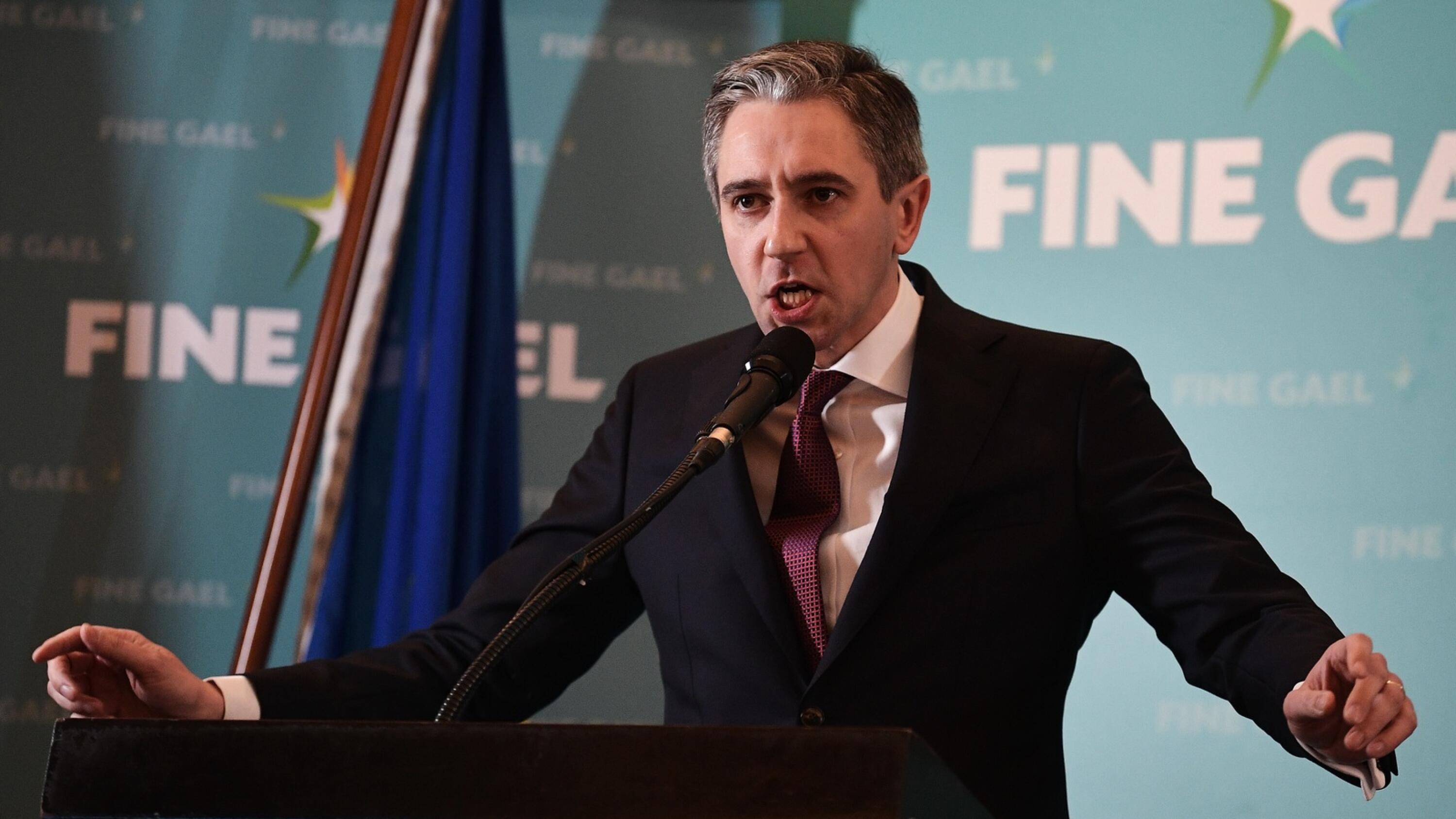
The nation’s business has been effectively put on hold while Fine Gael takes another 10 days off to try to find, and then hit, the reset button.
On Wednesday March 20th the Taoiseach Leo Varadkar caught everyone off guard, including much valued political allies as the Finance Minister as Paschal Donohoe, and announced that he was resigning immediately as Fine Gael leader.
He also stated that he would formally resign as Taoiseach, as soon as my successor is able to take up that office. Note the wording. In effect, the outgoing Taoiseach said that the election of a new Taoiseach would be based on a timetable set by the Fine Gael organisation.
This may have appeared to make sense to the outgoing Taoiseach on March 20th, as he possibly anticipated that there would be an internal contest and a vote among Fine Gael party members, but did no one in his political office, or among the senior civil servants in his Department or in the Oireachtas consider if this timetable was appropriate in the event that there would be no contest?
From the viewpoint of the outgoing Taoiseach, I can see how the timetable would make sense… partisan sense. He resigns as leader. The party then takes three or four days for rivals to emerge and get the requisite number of proposers. Nominations close on the following Sunday or Monday. The Fine Gael organisation then has around a week to make up its mind, vote by post and have a new leader in place for the Fine Gael Árd Fheis to be held at the University of Galway on Saturday, April 6th.
Meanwhile, the Dáil was already scheduled to go into recess for two weeks, finishing up on Thursday March 21st and not returning until Tuesday April 9th.
And so, the plan went, the newly minted Fine Gael leader would slowly from Galway go on a three-day triumph to be elected by Dáil Éireann as Taoiseach the following Tuesday.
But that isn’t how things have gone. The Fine Gael leadership contest turned into a rout, with a torrent of TDs and Senators rushing to declare their support for Simon Harris. Harris was installed as party leader by Sunday afternoon to the adulation and delight of many within Fine Gael.
But what happened to the plan for Varadkar to “…resign as Taoiseach as soon as my successor is able to take up that office.”
Is Minister Harris not ready to take up the office? (I don’t think he will be ready to ever take up the office, but that’s not the point here). Why wasn’t the Dáil reconvened last Wednesday to elect a new Taoiseach? Why isn’t it summoned next Wednesday to elect one? Why is a provisional timetable, drafted to suit the legitimate Fine Gael internal process for electing a new leader, not being changed when that process is not required?
Why do we have a lame duck Taoiseach continuing in office for two weeks? And it is not only Varadkar who is a lame duck. So too are the various ministers who may either be dropped or re-assigned when the new Taoiseach takes office. Ministers, particularly Fine Gael Ministers, are now more focused on keeping their jobs than they are about making decisions.
The real business of government has been put on hold for two full weeks, while the minority Fine Gael partner struggles to find a magic reset button it can hit to make a dismal political future look brighter. This is not to exonerate the leaders of the Green party or Fianna Fáil. They seem quite content to allow this pause, perhaps seeing it as the price of doing business with a party that has been in office for thirteen years despite not one, but two successive rejections by the voters.
In his response to the outgoing Taoiseach’s resignation, the Tánaiste, Micheal Martin was anxious to highlight just how much more work this government has to do. He stressed that the government had a full schedule of major decisions to get through between now and February 2025, when its mandate comes to an end. So why does he feel this government can take two weeks off making those decisions while Fine Gael huddles in a corner to figure out what it stands for?
Indeed, the Tánaiste was equally keen to remind us that “…this is a coalition of three parties, not personalities.” Really? That was not quite the line the current Fianna Fáil leader was taking with colleagues when issues and problems arose in the past. It was not the line he took when the question of who would nominate Ireland’s next EU Commissioner was raised with both Varadkar and Martin at the end of 2023.
Mr Martin told journalists that there was an “…agreement between the parties in government as to the nomination of the next commissioner – that it would be a Fianna Fáil nominee.”
Check the Programme for Government, published in June 2020, and you find no reference whatsoever to the appointment. So where is this agreement? If it is not in the written agreement between the parties, where is it? It sounds more like an informal agreement between individuals – whether you think they are personalities, or not.
Though calling it an agreement seems an overstatement when you consider that Leo Varadkar told journalists, at a separate briefing, that there was “no written agreement” with Fianna Fáil on the issue but then declined to even say if there was an informal arrangement.
All of which is moot, however, as one of the two people who appear to have any knowledge of this unwritten agreement has now departed the scene and his successor may not feel themselves bound by private deals to which they were not a actually a party… in the individual sense.
Anyway… it seems that everything else must remain on hold for another ten days while Fine Gael gets to talk all about itself.
I am writing this column on the day when the news of the resignation of Sir Jeffrey Donaldson has emerged – in particular the very serious nature of the charges being made against him. I do not think there is much I can or should say here, though I do reflect more broadly, and very briefly on this distressing news in my accompanying Podcast

 derekmooney.ie