
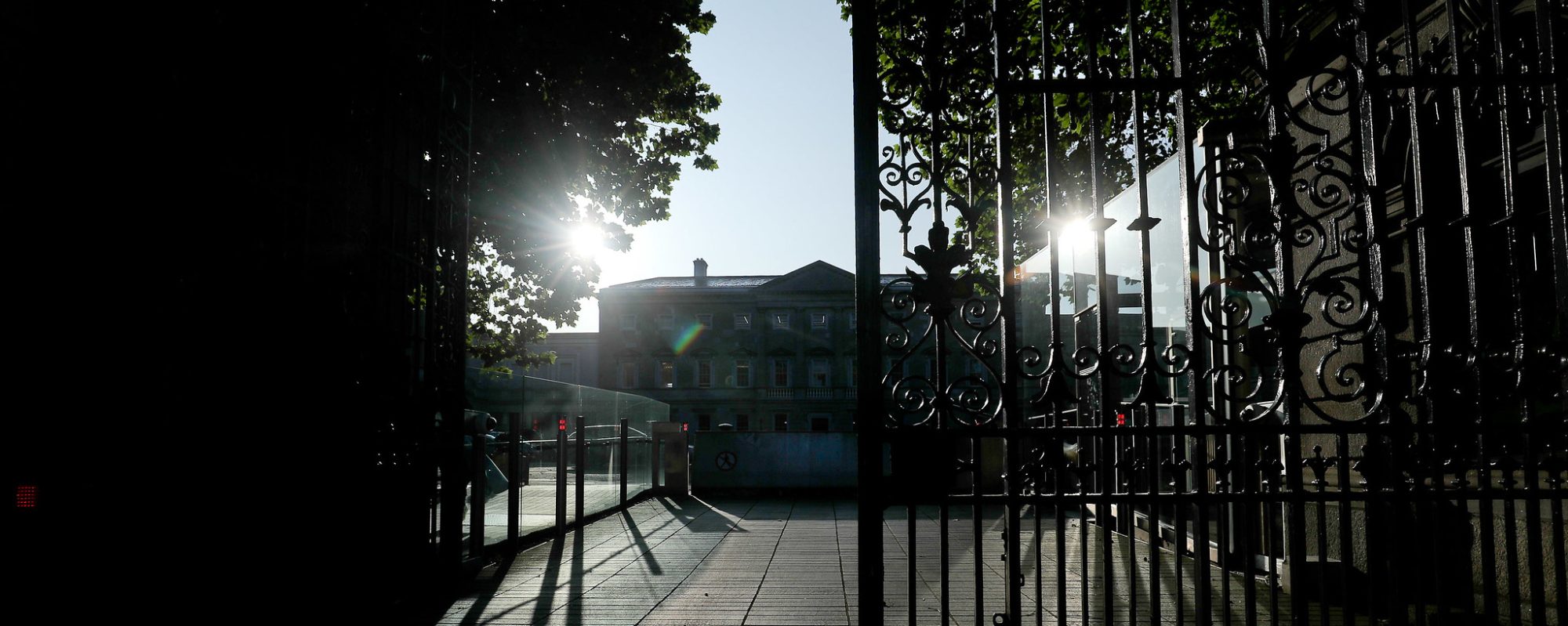
As Taoiseach Michael Martin prepares for his upcoming visit to the White House for St. Patrick’s Day celebrations, he faces a diplomatic landscape fraught with challenges. The visit comes at a particularly sensitive time in US-Ireland relations, with trade imbalances, defense spending, and international policy differences creating potential friction points. In this article I consider some of those friction points, but refrain from offering advice. This article expands on many of the points i raised in my recent podcast:
Mulvaney’s Controversial Advice
Former Trump Chief of Staff Mick Mulvaney recently suggested that Martin should consider “sitting out” the White House trip, arguing that the downsides might outweigh the upsides 1. This advice, while coming from someone with deep Irish connections and experience as a special envoy on Northern Ireland, misses a crucial diplomatic reality: declining the invitation at this stage would inevitably be perceived as a snub by the White House.
Mulvaney’s concerns stem from Ireland’s positions on Gaza, its EU membership, and potential trade disputes. The Trump administration has consistently viewed Ireland as benefiting unfairly from its low corporate tax rates and the reporting of profits through Ireland rather than the United States. 1.
However, canceling the visit would only exacerbate tensions rather than resolve them.
The Apple Money and Defence Spending
One likely point of contention during Martin’s visit will be the Apple tax case. The Trump administration may well use this meeting to press Ireland on transferring the Apple tax windfall to the US Treasury 7. This demand could be linked to Ireland’s recently announced plans to increase defence spending.
Ireland has committed to raising its defence budget to €3 billion annually, with Tánaiste Simon Harris confirming the government’s intention to move beyond the initial €1.5 billion commitment. 3 4. The Trump administration might pressure Ireland to direct this spending toward American defence contractors, potentially suggesting the purchase of American fighter jets like F-16 Vipers or F-35 Lightning IIs instead of alternatives like the Saab Gripen 3.
This could be a major problem, as the rest of the EU moves away from dependence on US military equipment and systems as the Trump administration signals its weakening commitment to the transatlantic partnership. In recent days we have even seen Trump openly questions Europe’s commitment to NATO’s Article 5 – the collective defence principle. It establishes that an armed attack against one NATO member is considered an attack against all members. Article 5 has only been invoked once in NATO’s history – following the September 11, 2001 terrorist attacks against the United States, so Trump’s assertion is a fiction.
How can Ireland credibly buy US military equipment in this context? I cannot see how we can do anything other than buy European.
The JD Vance Factor
The meeting with Vice President JD Vance could prove particularly challenging. Vance has previously criticized Ireland’s proposed hate speech legislation, describing it as “authoritarian” and claiming it would “severely undermine freedom of speech” 6. His role as Trump’s “attack dog” on international relations could make the vice presidential meeting even more problematic than the presidential one.
Vance’s recent comments attacking European allies reflect the Trump administration’s narrative that America has been “ripped off” by nearly every country, including its traditional allies. 7. This sentiment was echoed in Trump’s recent proclamation of March 2025 as Irish American Heritage Month, which, while celebrating Irish-American contributions, pointedly noted trade imbalances between the two countries 5.
Despite these challenges, Martin’s diplomatic skills and thorough preparation make him well-suited to navigate this difficult terrain. His ability to read into briefs and do his homework will serve him well in Washington. The Irish government appears to be focusing on emphasizing the mutual benefits of the US-Ireland relationship, with Martin planning to highlight that Ireland is the sixth largest source of foreign direct investment in the US, with $295 billion invested in 2022. 9.
Rather than engaging in public confrontations, Martin will likely raise sensitive issues like Ukraine and Gaza in private discussions. This approach allows Ireland to express its concerns without escalating tensions or creating diplomatic incidents 10
The Broader Context: European Security
Martin’s visit occurs against the backdrop of shifting transatlantic relations and European security concerns. With Trump’s America voting alongside Russia and against its European allies at the UN, Ireland faces significant questions about its security posture7. The government’s plans to increase defence capabilities and remove certain restrictions on troop deployments signal a recognition of these changing realities. While Sinn Féin, The Soc Dems, Labour and others oppose these changes as steps toward abandoning neutrality. As argued above, though there will be diplomatic pressure on Martin to commit to buying American, he must resist this pressure in the longer run.
Michael Martin’s White House visit represents a critical moment for US-Ireland relations. While the challenges are significant, Martin’s diplomatic experience and Ireland’s strong network in Washington position him well to protect Irish interests while maintaining positive relations with the US. By focusing on the mutual benefits of the relationship and engaging in thoughtful private diplomacy, Martin can navigate these complex waters effectively.
The visit may not be without its uncomfortable moments, particularly given the Trump administration’s focus on trade imbalances and its skepticism toward traditional alliances. However, the longstanding relationship between the two countries and the significant economic ties provide a foundation for continued cooperation, even in these challenging times.

 derekmooney.ie