

Introduction:
If my maths is correct… and that is a major “if”… this is my ninth annual summer political reading list.
As the name suggests, the books on the list have a political theme or connection. The books in this year’s selection are all non-fiction and are a reflection of my prejudices and opinions. I have tried, as in previous years, to include books that help challenge my own views… so some books on this year’s list will accord with my personal political perspective… some don’t.
There are far fewer biographies and histories this year, compared with previous years (just one of each), and more polemics on international and global issues. By their nature political books are not “light reads”, but I have tried to avoid overly academic tomes. The one criteria I have tried to stick with is finding books that are well-written and accessible. With one clear exception… most have been written and published over the past 6 – 12 months, which means they are mostly hard backs.
There is A #MooneyOnPolitics #podcast to accompany this list: On Spotify
Enjoy. Feel free to leave your thoughts and feedback below.
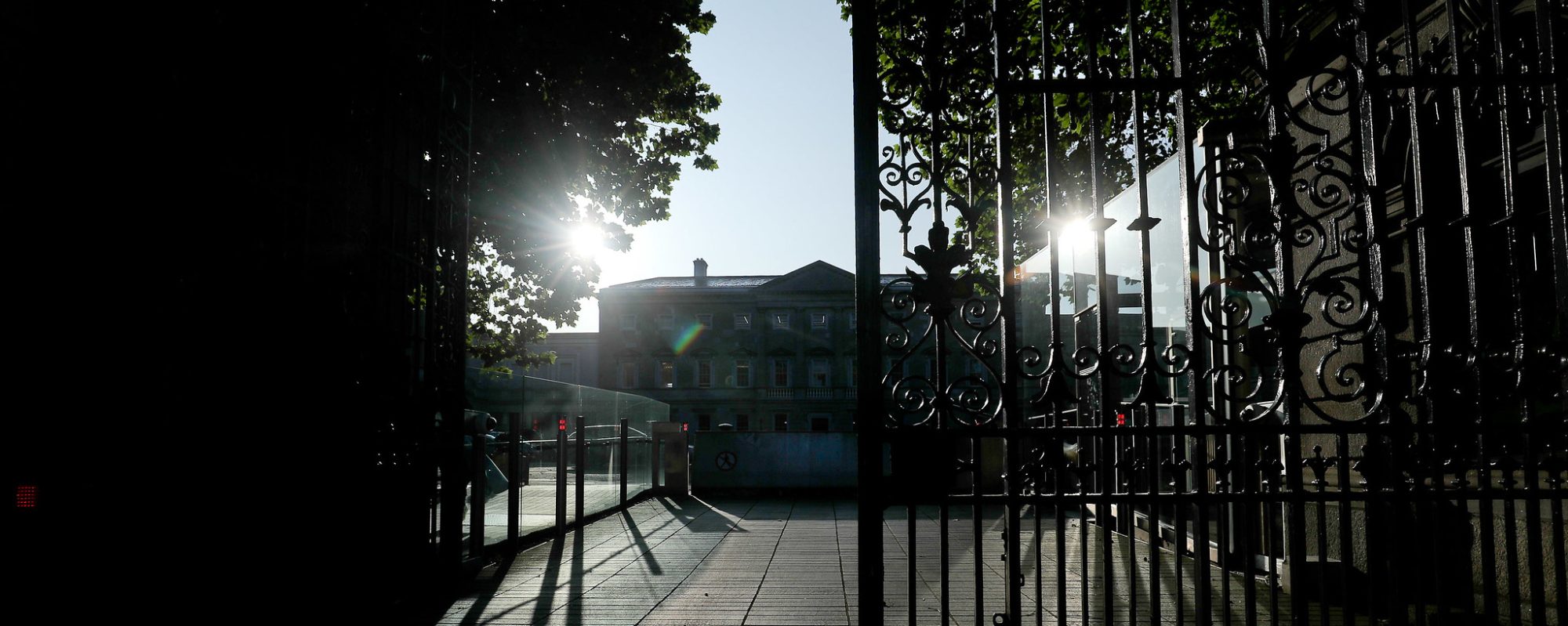
The Secret Life of Leinster House by Gavan Reilly
 You’ve read his tweets and articles… now read his book! According to some of the publicity material Gavan Reilly’s The Secret Life of Leinster House “[pulls] back the curtain on the inner workings of Dáil Éireann.” It’s a glib line that doesn’t do the book, or the author, justice. Leinster House is many things. Tt’s a place of work. It’s a small village, with several hundred workers, two restaurants, two bars, a coffee a shop, creche and a pricey bike shed… but the Wizard’s chamber in the Emerald City it is not.
Leinster House is not an especially secretive or forbidding place. Its traditions and practices are nowhere near as arcane or oblique as those of the House of Commons. Indeed, I suspect the percentage of Irish citizens who have visited Leinster House, either socially or on business, is higher than the percentage of Brits who have even stepped inside the palace of Westminster.
Reilly’s writes entertainingly, and without cynicism, about the workings of Leinster House. He describes what day-to-day life is like for those who work there, with the aid of anecdotes gleaned from good people, past and present, who have worked there. He brings the reader into the world of elections, party rivalries, and the realities of being an elected representative today. He tells the stories of those working there and attempts to explain what drives the different personalities who populate Leinster House to go into politics and live with scrutiny and pressure they endure. While this is easily the lightest read on this year’s list, that is no bad thing. Well worth buying.
Under the Rainbow by Shane Kenny
 Even I am surprised to see this one on my list. I was no fan of the 1994–1997 Fine Gael-Labour-Democratic Left “Rainbow” coalition and worked hard to see it turfed out. Nonetheless, this Shane Kenny’s insider account, from his vantage point as government press secretary, of how that administration functioned is compelling as there are not too many insider accounts of how government works in Ireland.
The publicity claims the book offers a vivid, behind-the-scenes look at a government that helped shape today’s Ireland. While Kenny does write with vigour and candour, asserting that this short-lived administration shaped today’s Ireland is a claim too far. Nonetheless, the period did see several significant events including the divorce referendum, the “payments to politicians” tribunal, the Veronica Guerin murder and the faltering approach of Taoiseach John Bruton to the Northern Ireland peace process. Kenny offers glimpses and informed insights into what was happening at the heart of government at each step.
Kenny understandably champions the Rainbow government’s achievements and is honest and frank about its missed opportunities. He loyally and valiantly defends John Bruton’s time as Taoiseach and valiantly sets the record straight on how Bruton worked constantly not just to keep the coalition together, but to make it work. This book should be read by anyone studying how political decisions are made and the impact that the relationships between the big personalities involved can have on the process. Does it contain lessons for today’s government… perhaps yes… if I take the word “big” out of the last sentence.
https://www.gillbooks.ie/politics-current-affairs/politics-current-affairs/under-the-rainbow
The Root of All Evil: The Irish Boundary Commission by Cormac Moore
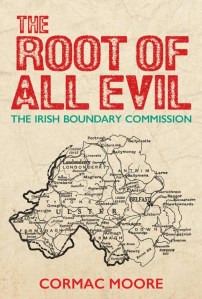 This is a personal choice. If you are not already familiar with Cormac Moore’s work then I strongly urge you to check out his highly entertaining and informative series of YouTube videos/podcasts on Irish history (The Irish History Boys) with Tim McGarry.
This is Cormac’s fifth book and the second in depth historical analysis on the issue of partition (his 2019 work: Birth of the Border: The Impact of Partition in Ireland dealt with the far-reaching effects of partition).
In the 100th anniversary of the collapse and failure Boundary Commission Cormac Moore’s The Root of All Evil chronicles how the three-man Irish Boundary Commission, convened in 1924, took submissions and visited sites along the border but then collapsed. Its report was suppressed. All the work and promise failed to deliver a single change, dashing the hopes of many nationalists stranded on the wrong side of an arbitrary border.
Moore impartially recounts how the Dublin Government was outmanoeuvred on every substantive matter, via a mix of Irish government naivety, unionist intransigence and serial duplicity by successive British governments.
As Moore says in the introduction: the aim of this book is to explain this incredibly complex, but captivating and important saga in modern Irish and British history… to shed more light on the intriguing and, particularly for Northern nationalists, infuriating story behind the Irish Boundary Commission, the results of which still resonate deeply today.
A very timely offering, not just on the 100th anniversary of the commission’s collapse, but as we move ever closer to righting the wrongs of partition.
https://www.irishacademicpress.ie/product/the-irish-boundary-commission-the-root-of-all-evil/
Dillon Rediscovered by Kevin Rafter
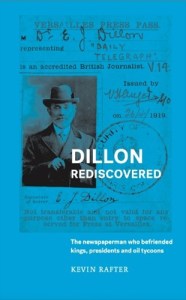 I must confess that when I first heard that Kevin Rafter was planning a book entitled Dillon Rediscovered I thought he was plotting a revisionist biography of the Fine Gael leader of the early 1960s, James Dillon. I was wrong. Very wrong.
This excellent book by Kevin tells the incredible story of Irish journalist Emile Joseph Dillon (1854–1933) and follows on from an earlier history of Irish journalism, edited by Kevin, entitled Irish journalism before independence. More a disease than a profession.
Rafter introduces us to Dillon, a true pioneer who laid a foundation for the modern art and craft of foreign correspondence. Journalists who “go where the story is” and report with independence and integrity are following the example set by Dillon. Not only one of Ireland’s most daring journalists, he was also a linguist and academic. The Daily Telegraph’s St. Petersburg correspondent for almost 30 years, Dillon built his reputation for audacious reporting, including a stint working undercover during the Hamidian massacres of Armenians. He chronicled many pivotal moments in world history including the Dreyfus Affair, the Boxer Rebellion, and the 1919 Paris Peace Conference.
Rafter tells the story of Dillon’s career from his very early childhood in the slums of Dublin’s north inner-city, to his years in the courts of kings and presidents, covering revolutions, assassinations, and crises, through his complicated personal life, and his retirement and death in Barcelona.
It is a fascinating and entertaining life story, expertly and devotedly recounted by Rafter. A must read, which if you did not know better you’d swear was fiction.
https://brooksidepublishingservices.com/martello-publishing/p/dillon-rediscovered
Catastrophe: Nakba II by Fintan Drury
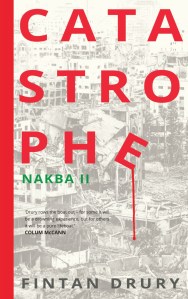 Though many would primarily know of Fintan Drury as a businessman and a major figure in sports management, his background and first love is journalism. In a long career as a foreign correspondent he covered major events in Northern Ireland, Britain, Europe, Africa, and the USA.
Catastrophe: Nakba II by Fintan Drury is a powerful and frank exploration of the ongoing plight of the Palestinian people. Drury acknowledges that the book is neither a historical or academic analysis. It is instead, a deeply personal, but journalistically objective, telling of the story of this important moment, based on Drury’s own interviews conducted on the ground in Jordan, Lebanon and the West Bank in the summer of 2024, and later discussions and with others. The result is an insightful and moving analysis of Israel’s oppression of the Palestinian people.
Drury draws a direct line from the original Nakba (Catastrophe) of 1947–1949 at the end of the British Palestinian mandate to the horrific events of today, arguing that the Palestinian cause is a defining issue of our time. Drury’s writing is passionate and direct. The best summary of the book comes from Drury himself, in his opening note to the reader…
The ambition is to provide a coherent and convincing narrative that shows how, while the Hamas attack of 7 October 2023 was the single greatest loss of life suffered by the Jewish people since the Holocaust, Israel’s response is a genocide for which all those responsible must be brought to justice.
https://www.irishacademicpress.ie/product/catastrophe-nakba-ii/
The Question of Palestine by Edward Said
 The next book on my list is the oldest, by far… but is an appropriate and supportive complement to Fintan Drury’s Nakba II. First published in 1979, Edward Said’s The Question of Palestine remains a landmark work for understanding the Palestinian experience and the broader Middle East conflict.
Said’s 1979 work was groundbreaking in bringing the Palestinian story to English-speaking audiences. Said combines scholarly rigor with personal insight, making the case for Palestinian self-determination and highlighting the ongoing relevance of justice and empathy.
The book makes it on to this list as there is a new edition, published late last year as a Fitzcarraldo classic. Reading Said’s words almost 50 years on, you realise just how pressing and urgent the issues explored by Said then, remain today. His book is essential reading for a full understanding of the Israeli-Palestinian conflict and is an important counter narrative to the waves of pro Netanyahu misinformation we see across social media… and from the mouths of some European leaders.
https://fitzcarraldoeditions.com/books/the-question-of-palestine/
Protecting Democracy in Europe by Tom Theuns
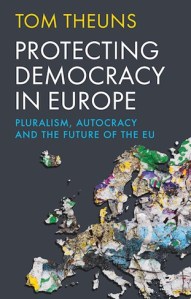 At a time of global uncertainty and the daily impact of an erratic and capricious US White House, some look to Europe for solid and progressive leadership and direction… and finding it sadly lacking. In Protecting Democracy in Europe Tom Theuns offers a robust, perhaps even idealistic, critique of how the European Union is tackling the many challenges facing it, not least the incremental moves to authoritarianism by some of its own member states, particularly by Orban in Hungary’s and Fico in Slovakia.
Theuns forcefully argues that the EU’s current approach is too legalistic and technocratic. He calls it the EU’s “democracy without politics” attitude and believes it will fail to stop modern European autocratic tendencies taking root. Though I would dispute Theuns view that Europe’s future as a community of democratic states is uncertain, he does highlight clear failings by Europe, as a political community. Are these down to political misjudgements by European leaders, or to the ineptitude or weakness of some of those at the top, is a question worth posing.
He calls for a more robust, pluralist defence of democracy and even hold out the prospect of Europe having to expel autocratic members. Drawing on real-world examples and political theory, this book is a provocative and worthy contribution to debates about the future of European democracy. It’s a must-read for anyone concerned about the resilience of democratic institutions in Europe… and that includes Ireland’s own European Commissioner, Michael McGrath.
https://www.hurstpublishers.com/book/protecting-democracy-in-europe/
The Coming Storm by Gabriel Gatehouse
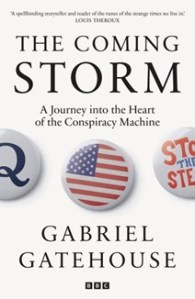 Speaking of the capricious White House brings me neatly to the next book on my list this year: The Coming Storm by Gabriel Gatehouse. Put simply, Gatehouse sets out how misinformation came to dominate American political life. By misinformation I mean the fact rejecting conspiracy theories that dominate radical U.S. politics.
The book traces the evolutionary growth of political paranoia from the Clinton years to the storming of the US Capitol on January 6th. He weaves together stories of internet trolls, white supremacists, and Silicon Valley influencers to show how misinformation has become a powerful force in American life.
Gatehouse’s pacey journalistic style makes the story both vivid and accessible, not least when he tells the story in the prologue of Derrick Evans, a MAGA backing 40-year-old who served as a member of the West Virginia House of Delegates before being convicted and sentenced to three months for his part in the January 6 insurrection in the Capitol. Evans resigned his seat saying his deeply regretted the hurt and pain he had caused. But by the time he met Gatehouse in May 2024 Evans was far from contrite. He was now doubling down on his claims that the 2020 election had been stolen from Trump and was adamant that the US was living under way more tyranny today than the founding fathers had in 1775. By 2024 Evans was trying to get back into Republican politics, running in the GOP West Virginia primary for the 1st district seat in Congress. Evans lost… but still won 37% of the GOP vote.
Gatehouse is never sneering or dismissive. He exposes the nonsense behind the QAnon and other wild claims, but rather than concluding that there is nothing to see and that this is just some weird delusion, he delves deeper to see what drives Evans and others and identifies a loose alliance of tech bros, internet trolls and white supremacists who peddle these claims as they prepare the ground for a period of epochal change. It is an unsettling and worrying conclusion, as there really is a there, there… just not the one that Evans et al imagine.
https://www.penguin.co.uk/books/453235/the-coming-storm-by-gatehouse-gabriel/9781785948176
Strangeland: How Britain Stopped Making Sense by Jon Sopel
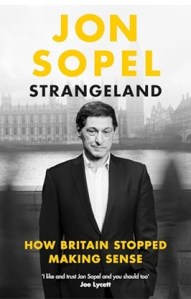 Closer to home, but sticking with the general theme of countries and regions in turmoil, brings me to Jon Sopel’s Strangeland, his personal look at the deep problems of contemporary Britain. Sopel is a journalist I personally like and trust. From his time with the BBC to his current work Global’s daily news podcast The News Agents (with the equally excellent Emily Maitlis and Lewis Goodall).
Sopel looks at the changes in Britain over the decade from 2014 to 2024 and takes the perspective of someone who spent most of that time working abroad, returning in 2022. He bemoans the broken state of Britain today and reflects on how things have gone wrong in Britain over the past decade or so. He contrasts the progressive enthusiasm of the Cameron Clegg coalition with the bombast and disarray of Boris Johnson and then (briefly) Liz Truss.
His perspective is patriotic and proud Brit. Yes, he is a broadly progressive and liberal Brit, but he is still one who takes pride in Britain’s past as a one-time power and an industrial innovator. He is not nihilistic, though he does urge his fellow citizens to take heed of what has been happening in the US and the perils of creeping authoritarianism (a theme across many of the books in this year’s list).
Perhaps I am drawn to this book as I feel it has a place in the debate on unity on this island, as our near neighbour asks itself how much sense does it make today for it to continue as a political union of four distinct, but very unequal, nations?
https://www.penguin.co.uk/books/462861/strangeland-by-sopel-jon/9781529938418
Moral Ambition by Rutger Bregman
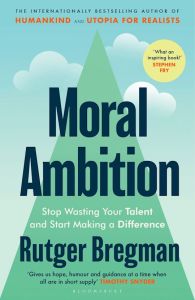 All of which brings me to the final book on this year’s list, Rutger Bregman’s Moral Ambition. Maybe it is a bit much to hail this as a corrective to the dark themes and prophetic warnings of Theuns, Gatehouse Drury and Sopel, but there is something uplifting and hopeful in reading Bregman’s positive and optimistic call to action. Though it may not always appear to be the case, I am a glass half full person.
Moral Ambition is very much a call to action. Bregman urges readers not just to “be on the right side of history but to make history itself”. It is a modern and practical variation on Ghandi’s be the change you wish to see in the world. Bregman offers a new definition of success that focuses on making a tangible difference in the world, not just personal achievement. Remember that scene in an early episode of Yes Minister where the student interviewer asks Jim Hacker “what have you achieved?” He lists off all the high offices he holds. and all the committee he sits on. She says no… I mean what have you done to benefit others… Hacker slumps.
What is the point of power and office if you don’t exercise it?
Bregman delivers this positive message through inspiring stories of historical and contemporary changemakers. He shows that political progress depends on a combination of high ideals with direct, ambitious intervention. As the late Seamus Mallon often observed: decisions are made by the people who show up. This applies locally, nationally and globally.
Remember that scene in Yes Minister where the student interviewer asks Jim Hacker “what have you achieved?” He lists off all the high offices he holds. She says no… I mean what have you done to benefit others… Hacker slumps.
Yes, it may all sound a tad Pollyanna-y, but a few pages into the book and you will see how Bregman dispels that notion via an uncynical guide for anyone who wants their activism (maybe even their political career) to have a measurable impact on their community and on public policy.
https://www.bloomsbury.com/uk/moral-ambition-9781526680600/
Unfinished Empire, Russian Imperialism in Ukraine and the Near Abroad by Prof Donnacha Ó Beachain
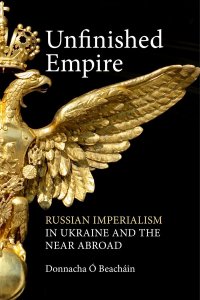 DCU Professor Donnacha Ó Beacháin sheds critical light on how history, politics and power continue to collide in Ukraine and beyond, and why breaking the cycle of domination is vital for global security.
For centuries, Russian imperialism has shaped the fate of its neighbours, from the tsarist conquests to Soviet domination and today’s relentless aggression. This book exposes the Kremlin’s enduring ambition to control its periphery, dismantling the myths used to justify its actions – from claims of shared history to the weaponization of security and culture. It reveals how Russia has sought to subordinate neighbouring states, and how these nations have resisted, asserting their sovereignty in defiance of Moscow’s pressure.
It is essential reading for grasping the complexities of the current geopolitical crisis.
Published by Columbia University Press.

 derekmooney.ie