My Evening Herald column from today’s (Thurs May 24th) edition:
Many different reasons to vote yes or no
With less than a week to go the referendum campaign seems more and more to be about less and less.
On the face of it, if you believe the posters, the choice is to Vote Yes to achieve stability or to Vote No to end austerity.
But do any of us really believe these claims? Regrettably, like previous EU referendums the debate has been conducted at the extremes, not the centre. It was the case in the Nice and Lisbon referendums, remember those “€1.84 Minimum Wage after Lisbon” posters?
Mercifully, we have been spared the malign input of Cóir and Youth Defence this time. The are no loss, especially as most of them wouldn’t know a treaty from a tea-bag (to rob a line I recently overheard)
But this absence of any significant ultra right involvement on the no side does highlight a curious undercurrent to the campaign, one, which I suspect, may be a factor in how some people decide how to vote next week.
While the slogans maybe about the EU and the Euro the referendum has morphed into a proxy battle on the future of left / right politics in Ireland.
From the start the battle front was drawn up along left versus right lines.
On the Yes side you had the right and centre right parties: FG, FF and Lab (more about them later), the employers’ and business organisations, the farmer’s groups and the more established/mainstream trade unions.
On the No side you had the socialist and hard left parties, People Before Profit, Joe Higgin’s Socialists, Sinn Féin, the more radical trade unions.
While the entrance of The Declan Ganley somewhat clouded the the Left/Right delineation, it hasn’t ruptured it.
The sight of him sharing No platforms with irredentist left firebrands is a joy to behold, especially when you consider that they agree on virtually nothing, including Europe. Most on the hard left are euro-sceptic while The Ganley is avowedly Euro-federalist.
While passing the Fiscal Treaty will herald no major day to day changes – mainly because it just restates the centre/centre right economic orthodoxy in place since 2008 – it will cement it into domestic law for the foreseeable future.
It is this that the left fears and opposes most.
Passing the Treaty would recalibrate the centre of the Irish political spectrum a few points to the right. It won’t be a seismic or noticeable shift, but it torpedoes the Left’s ambitions of shifting it the other way.
It doesn’t vanquish them, nor does it make them to tone the rhetoric down. If anything, it will do the opposite, but in their hearts they will know that their ambition to shift Ireland economically to the left has been reversed.
This explains why the campaign from Joe Higgins, Boyd Barrett and Sinn Féin has been so fierce. But not as fierce as when its over and they start to target each other.
I am not predicting that their poll rating drops are set to drop. They won’t. They will probably rise as voters use them to express their disapproval of government parties going pack on pre election pledges.
But the Irish electorate is sophisticated. It is overwhelmingly aspirational. This applies across all social classes and communities. They want their kids to do better than they did. That decides voting intentions more than anything.
In the meantime Sinn Féin will continue to do well at Labour’s expense, after all Gerry and Mary Lou are saying now what Éamon and Joan were saying two years ago.
It is Labour who will be the biggest casualty. Polls showing 40% of Labour supporters voting No could have longer term ramifications for the leadership. But whatever they may be, they can be so where near as damaging as Gilmore’s infamous “Frankfurt’s Way or Labour’s Way” slogan.
It may turn out to be the most devastating political slogan of recent times – devastating to its authors, that is.
What will we be voting about on May 31st? It is one of the toughest Treaty referendum questions to answer.
The ECB on Frankfurt’s Way?
If you are to believe the thousands of posters that adorn our street lamps we are either voting yes to stability and jobs or voting no to austerity. A simple enough choice… or so you’d think? Unfortunately, as the campaign progresses, it is becoming clear that neither the Yes nor the No poster claims stands up to much scrutiny.
Do we really think we will suddenly achieve stability and more jobs if we vote yes? I suspect that even the most ardent of yes voters believes that to be case.
On the other hand does the most convinced no voter think that the austerity measures, including household and septic tank charges will disappear if 50% plus one of us votes no? I doubt it.
So what are we voting about?
The best answer I have heard so far has not come from a member of government, the ULA or Sinn Féin. It came, peculiarly enough, from a Euro bureaucrat, a former member of the board of the European Central Bank member. Not the type of person you would expect to speak with simplicity and clarity, yet he did.
Speaking on RTE Radio One’s This Week programme, Lorenzo Bini Smaghi described the decision before us with a cheque book analogy. After years of having separate current accounts, he explained, the Eurozone countries have decided to have one current account and one single chequebook between them for certain purposes.
The risk with this is that any individual country could abuse their access and stick others with the bill, so it is important to agree a set of strict and enforceable rules beforehand. These rules are set out in the Fiscal Treaty. If you want to be able to use the joint account, you need to agree the rules. Refuse to agree the rules and you won’t be allowed near the chequebook.
It is a simple and effective explanation.
What we are voting about is our relationship with the Eurozone countries. Do we want to continue and strengthen that relationship or do we want to weaken it. This does not mean that voting No is the same as being against the Europe, but the choice we are facing has become starker than we would like it to be.
Ok. So now that I have attempted to make the issue a little clearer and get behind the hype and hysteria printed on the posters let me now reverse the process and confuse it again.
While much of the debate has been about the EU and the Euro let me point to another level in the debate. Though it does not get mentioned so much, this referendum has become a proxy battle on the future of left versus right politics in Ireland.
Before The Declan Ganley entered the fray the battle lines had been drawn up along clear Left/Right lines.
On the Yes side you had the right/centre right parties (FG, FF and even Lab), the employers’ and business organisations, the farmer’s groups and the more conservative trade unions.
On the No side you had the radical and left parties, People Before Profit, Joe Higgins Socialists, Sinn Féin, the more radical trade unions.
A Yes result would recalibrate the centre of the Irish political spectrum several degrees to the right. While this would not vanquish the left, it would limit their scope and hem them in.
This could help explain why Sinn Féin has been so fierce in urging a No. A Yes vote would place a definite ceiling on their ambitions and make the centre/centre right economic approach the norm for at least the next decade.
This would leave the hard left /socialist factions with no influence, just sitting on the sideline spouting rhetoric – so, no change there.
The main casualty could be Irish Labour Party, no matter what the result. “Frankfurt’s Way or Labour’s Way” may turn out to be the most devastating political slogan of recent times – devastating to its authors, that is.
The attached research paper Report on EU Attendance was conducted by Markus Johansson and Daniel Naurin of the Dept of Political Science at the University of Gothenburg and presented at the SNES spring conference in Uppsala 22-23 March 2011.
SNES (Swedish Network for European Studies in political science) is Sweden’s leading research network dealing with questions of European politics and governance.
The study examined 808 EU Council meetings between 2000 and 2010 and found that Ireland had one of the highest average Ministerial attendances at Council of Minister’s meetings, 5th out of the 27 member states.
The authors of the study argue that attendance is an integral part of EU engagement and reflects the priorities of the governments involved. Ireland’s position as 5th highest out of the 27 member states from 2000-2010 is a testament to Fianna Fáil’s committeeman to Europe and strong engagement
This exposes the hollowness of claims repeatedly made by Government Ministers and the Taoiseach that Fianna Fáil failed to attend EU meetings.
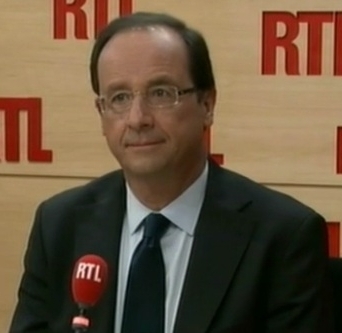
The next French President? François Hollande (Photo taken from the Hollande Campaign site)
Though the early polls have been positive I am getting a sense that the No side may picking up some momentum as we near the May 31st polling date for the Fiscal Stability Treaty Referendum.
One of the main grounds for this sense of foreboding may indeed be the May polling date itself. I fear having the poll this early may prove the biggest threat to a Yes outcome for three reasons:
1. It allows no side to raise the prospect of a second referendum later in the year. The more astute and sophisticated side of the No campaign is starting to run an argument that goes as follows: We have voted twice on the last two EU treaties.In each case we have come back with a better deal the second time. This Treaty does not come into force until January 2013. We have the time to Vote No now and use the following months to go back and get a better deal and then Vote Yes later in the year. A late September polling date would have denied this argument to them
2. This Sunday see’s the first round of the French Presidential Elections, The Second roubnd of voting will be two weeks later at the beginning of May. While Sarkozy has had a good campaign to date and has closed the gap in the first round the polls there still suggest that Francois Hollande will win the Second Round by approx 55:45.Hollande is standing on recovery platform that rejects Sarkozy’s austerity plan and talks of renegotiating the Fiscal Compact,
While this position may be dismissed as a Gallic version of Gilmore’s “Frankfurt’s Way or Labour’s Way” – ie a promise that sounds good in the campaign but doesn’t survive past polling day – it does look like Hollande is serious. His determination to imeddiately set out a renegotiation the Fiscal Compact to include a growth programme, Euro Bonds etc has probably been strengthened by the attempts of Merkel and other Centre Right EU leaders to snub him.
We will be going to vote during the first days of a Hollande presidency, the background noise to ouyr vote to pass the existing threaty will be his moves to renegotiate that very treaty – almost making a farce of that vote. The politically astute move for our Government would have been to hold off until September and see if Hollande will make a difference.
3. The one great lesson learned from previous referenda, particularly NIce I & II and Lisbon I & II is that the public needs a longer run up/lead in period to tease out the issues. The traditional three or four week campaign has been found to be insufficient, particularly in the absence of “on the ground” campaigns.
Though polling day is about six weeks away there is little sign of that debate is starting yet. Will the Refendum Commission have the time to do the job? Based on the last referendums, it would certainly appear not. The Tanaiste and Minister for Foreign Affairs had a thirty minute slot on RTE 1 last Saturday where he could have used 5/6 miinutes to explain why voting Yes is important. He didn’t. He chose instead to just give the poll a passing reference, 125 words in a script over 3100 words long. “referendum” featured only once in his script.
While the timing of the polling day is just one factor, it may prove a crucial one. The Treaty should stand or fall on its own contents alone. I am on record here as having my own qualms about the Treaty (see my post here on why I will be a reluctant Yes voter). The debate will be essential. This vote is not like others, we do not have a veto, we cannot delay or deny the progress of this Treaty by our vote alone. The EU has been horrendously slow to act to save itself from the start of this crisis. It has chosen the path of half measures over swift decisive action – usually at the behest of a Franco-German leadership that put domestic political considerations ahead of pan european ones. But we should not be blind to the developing EU real politik.
The appointment of Simon Coveney and Joan Burton as the Fine Gael and Labour campaign directors somehow does not imbue one with a sense of confidence. Coveney’s nomination does echo Charlie Haughey’s appointment of Paddy Lalor as Fianna Fáil national director of elections – a move that spurred the late Frank Cluskey to comment: “There’s confidence for ya”
Over the past few days (Tues Apil 11 – 13) I ran a simple poll on my website www.derekmooney.ie . In it I asked people to select the three government ministers they believed were performing best in office.
182 people voted in the online poll.
The results are as follows: You can download the results in pdf format Rate the Ministers
About a week ago I wrote a piece for the Herald defending the government giving politicians a three week break for the Easter.
Calm down lads, calm down
This was, I argued, a welcome opportunity for Ministers, TDs and their advisers to do some of the other boring, but important, work and also to take some time to reflect and think about the issues of the day.
Talk about getting it wrong. No sooner has the ink hit the pages than almost everyone in Government was out in public tearing strips off each other.
The whole cast of characters were involved: Environment Minister: Big Phil Hogan, Health Minister: James “Capt Birsdeye O’Reilly, Finance Minister: Michael Noonan, Arts Minister: Jimmy Deenihan, Welfare Minister: Joan Burton, Communications Minister: Pat Rabbitte, Justice Minister Alan Shatter, FG Party Chair Charlie Flanagan plus a few Government backbenchers including Labour’s Colm Keaveney and Fine Gael’s Regina Doherty.
The week before had seen some on the Labour side saying that Big Phil could have handled the whole household charge thing a lot better. Just as it appeared that that particular row had run its course, news broke that Big Phil was meeting with Moriarty Tribunal favourite and Tipp North TD, Michael Lowry only a few days after the publication of that Tribunal’s final report.
Within hours other Ministers, namely Birdseye O’Reilly and Noonan, were confirming that they too had meetings with Lowry. This was all too much for Joan who questioned the wisdom of this. So too did Jimmy, but more subtly.
Joan’s words riled Charlie who went on Twitter to ask if Joan had a Government death wish. Regina subsequently went on Radio to say Charlie was right and that Joan was wrong. Others thought Joan was right, including Colm, who also went on to Twitter to call the judgment of senior figures in Fine Gael into question.
Meanwhile Pat spoke to the Sunday Independent to say that he was frustrated by the “interminable delay” in bringing prosecutions following Mahon and Moriarty. Within hours of the paper hitting the breakfast table Alan had issued a broadside that had Pat in mind when it stressed the importance of not making public comments that might prejudice proceedings.
By lunchtime the Taoiseach was doing a bad Harry Enfield scouser impression telling everyone to “calm done”. All that was missing was him donning a Kevin Keegan wig and finishing off the interview saying: “Dey do do dat dough don’t dey dough”
Not only did all of this happen in just one week, it happened in very quiet week at that. If this is how the members of the Government deal with minor matters, Lord help us when the big problems come. And come they will.
The Government has had a fairly charmed existence since coming to office. While things are clearly not improving, they have not had to face any genuine crises or policy dramas.
Both parties have endured some setbacks early into their term. but none that really tested them. For Fine Gael it was the losses in the presidential election and referendum, plus the Roscommon hospital fiasco. For Labour it was the loss of three TDS, including a Junior Minister and a by-election winner, though these were offset by their man winning the presidency.
The handling of the household charge suggests they lack a certain deftness of touch, yet it pales into significance against the problems they may yet face in the years ahead.
How will a government that descends into public squabbling and faction fighting at the mere mention of the names of Moriarty Lowry or O’Brien cope if Merkel Draghi or Barroso decide to turn the thumbscrews on Corporation tax or whatever?
Have they all forgotten that they will be asking the people to take their collective advice at the end of May and vote yes to the Fiscal Compact Treaty? Might it not help their case to give the appearance of knowing what they are doing and all pulling in one direction?
As to the internecine squabbling, there are several systems in place to stop such petty rows escalating and getting into the public arena. One is called common sense. Another is the special adviser/programme manger system. Isn’t it time to get working on both?
Besides our Fianna Fáil backgrounds, Sean Gallagher and I have something else in common: an errant tweet has contributed to us both losing out on a job.
In my case it partly caused me to lose a job I already held. I was Willie O’Dea’s adviser and programme manager when Dan Boyle sent his infamous tweet.
Its claim that there would: “Probably be a few chapters in this story yet” proved baseless, nonetheless 24 hours later the Minister had resigned and yours truly was clearing out his desk. C’est la vie. The tweet only brought the inevitable forward by twelve months.
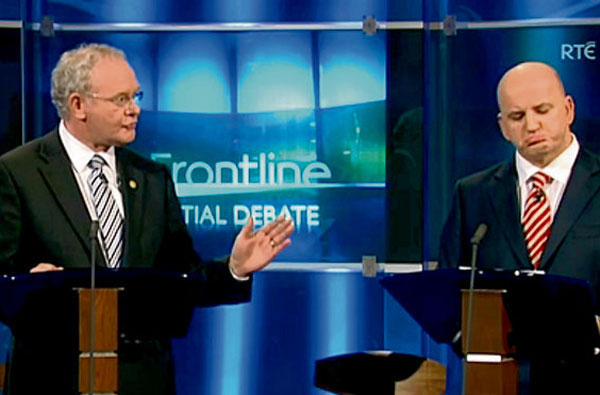
In Sean’s case the broadcast of a bogus tweet during the Frontline Presidential Debate played a major play in derailing his campaign and denying him the job he wanted.
Yesterday the Broadcasting Authority of Ireland gave its verdict on his complaint against RTE, The Frontline and The Pat Kenny Show.
It was a fairly damning judgement. The BAI found that Sean Gallagher had been treated “unfairly” on three counts.
One: by the broadcast of the initial bogus tweet from an account that purported to be from the official Martin McGuinness for President campaign.
Two: by the failure of the Frontline to tell the audience of the subsequent tweet from the official McGuinness campaign denying that it had issued the bogus one.
Three: by the continuing failure of the Today with Pat Kenny radio show the next morning to properly clarify the status and background of the two tweets.
Given that it found that a programme that was intended as a Presidential Debate was unfair to one particular candidate, it was amazing to see the BAI go on to say that no further investigation or inquiry is required as the complaint “was not of such a serious nature as to warrant an investigation or public hearings”.
It is not as if this might have affected the outcome of an election or anything….. oh, hang on a minute…. Yes, it might.
No one can definitively state whether the tweetgate affair altered the outcome, but we do know that Sean Gallagher was the poll leader before the debate and he wasn’t a few days later. We also know that tallies of the postal votes – ie those votes cast and returned to the presiding officers before the Frontline debate – showed Gallagher topping the poll.
On the other hand, it is entirely possible that viewers watching the Frontline debate might have switched from Gallagher to Michael D Higgins even if the tweet had never been mentioned.
All this is in the realms of speculation. What is not speculation however it that someone sent that tweet to undermine the front runner and affect the race.
So, yes, this matter does require further investigation.
The BAI has determined that Mr Gallagher was treated unfairly in how the tweet was handled. RTE’s Director General made a sincere and genuine apology and the RTE Authority is to examine the BAI’s finding.
This is all right and proper. But RTE’s actions are only part of the case.
Like others watching the campaign on the internet I was not aware of the difference between the real and fake McGuinness for President twitter accounts until the controversy broke that night.
The confusion was easy as, according to some Social Media watchers, both twitter accounts were created on the same day. Indeed, as part of its own defence, RTE argued that many other journalists were similarly confused and had taken the first bogus tweet as genuine. (A defence rejected by the BAI)
The question remains: who was responsible for sending out the tweet? Are we going to tolerate a situation where an election outcome can potentially be so easily influenced by one person or group of people acting in the shadows?
We have seen thousands of people protest on the streets of Moscow regarding accusations that Putin rigged their Presidential election, are we not to try and look a bit deeper into this case?
Isn’t the integrity of our democratic process worth a bit more effort?
And then there was one. It is just over two and a half years since we elected Gay Mitchell, Proinsias de Rossa and Joe Higgins as our three MEPs.
Within eighteen months Joe had made his way back into the Dáil. He waved goodbye toBrusselshis seat was taken by Paul Murphy. (No, I don’t know much about him either).
Fast forward another twelve months to this week and veteranDublinMEP Proinsias de Rossa announces that he is to stand down and his seat will pass to Dublin City Councillor, Emer Costello. As if to complete the row of falling dominoes, Cllr Costello’s vacancy on the City Council will in turn be filled by someone selected by her local labour organisation.
And so, two of the three people who asked us in June 2009 make them MEPs for a five year fixed term have decided to move on or move out. Thus… and who would have imagined we would ever again hear these words…leaving Gay Mitchell as the last man standing.
Everything that Joe and Proinsias have done is entirely and wholly within the rules. Casual vacancies arising from MEPs dying, resigning or otherwise being disqualified are filled this way. It applies across the EU.
It is arguable that this method of filling occasional vacancies is fairer and more democratic than the by-election route. The people’s decision on the five year mandate of their MEPs made in 2009, by proportional representation, is allowed to stand for the duration.
Nonetheless, it is disappointing that some of those who contested the Euro Election so fiercely can so easily renege on their mandate mid way through the term. I won’t dwell on this point as I cannot claim to be an impartial observer on this aspect having worked on Eoin Ryan’s 2009 campaign.
The point I will comment upon is broader. It is the degree to which these seats are becoming the property of the political party in a manner that starts to resemble the introduction of the party list system.
This may look like a big extrapolation from just one or two co-option processes, but when taken together with recent commentary from Prof David Farrell and others on changing Dáil sitting times to drag TDs away from constituency work, then the leap may not seem so great.
One of the particular features of our multi-seat PR/STV system is the level of personal attachment and connection between Public Representative and voter. This can often transcend party affiliation and may even be said to be on the increase.
Yet there is a curious clamour for this personal connection to be broken. The accusation of the parish pump and cliental-ism is made TDs are said to be so obsessed with getting re-elected that they encourage constituents to think that entitlements they were due were only won thanks to the intervention of the TD.
They argue that TDs should be spending their entire working week legislating and debating. They miss the risk that such a system would just institutionalise the control of party hierarchies.
TDs based in Leinster House Monday to Friday, doing virtually no constituency work for almost five years would be dependent on the national party structure to get them re-elected. Bad news for mavericks.
Not to mention the loss of to our system of representative government. How else can you represent people if you do not spend a good proportion of your time meeting with them and really learning their concerns?
Like all things; there is a balance to be struck. You cannot have TDs who only see life through the prism of how it will affect their re-election chances. But going to the other end of the spectrum is not the answer either.
You don’t learn much by sending out glossy 8 page A3 newsletters every six months. You got to get out and knock on doors. There is no point speaking in the Dáil if all you are churning out is what you found on Google; read from a focus group or what popped into your head over night.
The personal connection between the elected and the elector is important. Anything that diminishes it, undermines the democratic process.
Though I never voted for him (not even a 3 or 4) I will be sad to see Proinsias quit the stage. I wish him well.




 derekmooney.ie