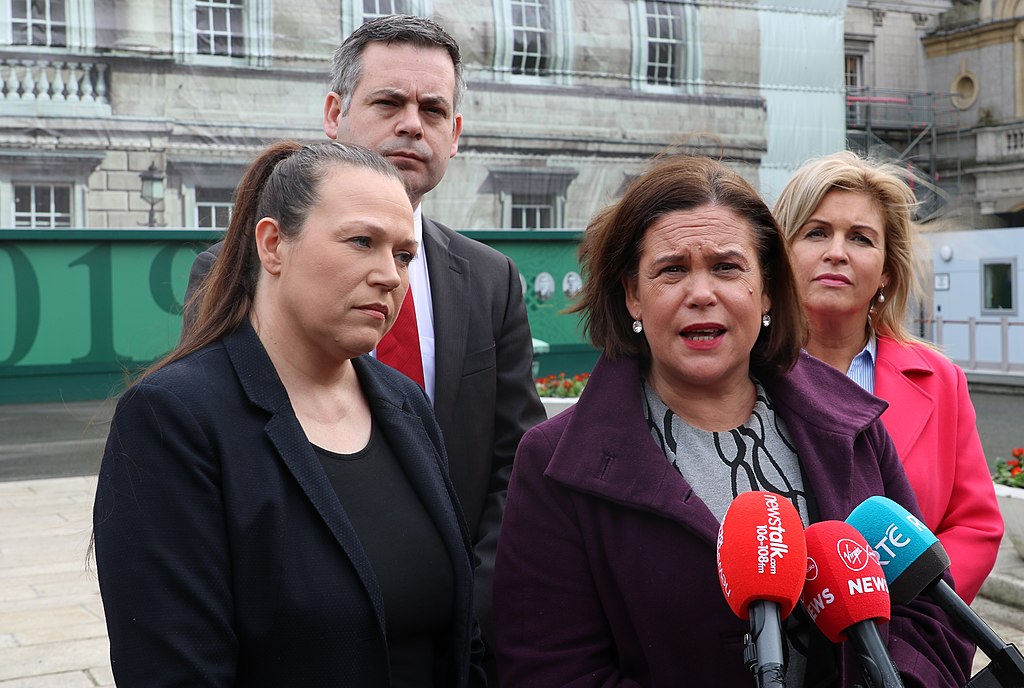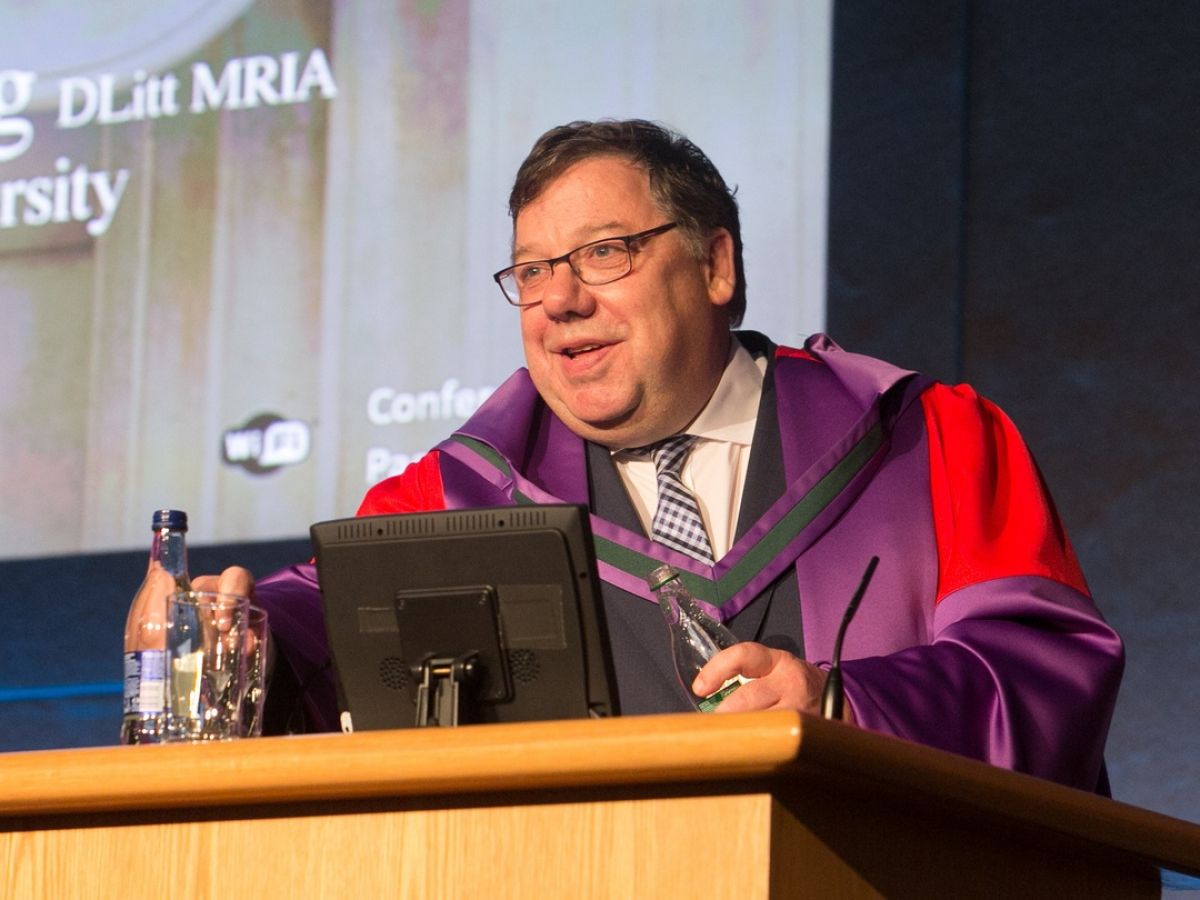
Derek responds to @LeoVaradkar criticism of Taoiseach @MicheálMartinTD

Here is a slightly edited (i.e. condensed) clip of my appearance on the BBC Radio Ulster Talkback show where I joined Aoife Moore, Gregory Campbell MP and DUP founder Wallace Thompson to discuss comments made by former Taoiseach Leo Varadkar on the BBC’s Borderland podcast where he said that the current Irish government was guilty of putting up an “artificial barrier” to a referendum on a united Ireland.

As reported on the BBC NI website, Varadkar asserts that Taoiseach Micheál Martin is not prepared to push forward with work on preparing for unity until there was “total reconciliation” across the island – something which his predecessor said may never be possible. “This is where I differ with Micheál Martin,” said Leo Varadkar.

Though I disagree with Micheál Martin on many issues and quit Fianna Fáil in 2020 because of irreconcilable disagreements on several political issues, including Martin’s approach to unity and Northern Ireland, I think Varadkar’s criticism goes far too far and is 
Nation must go on standby while Fine Gael resets?

In this week’s column I ask why the nation’s business is being put on hold while Fine Gael attempts to find and then hit its “reset” button.  This column was written on the same day as the news of the resignation of Sir Jeffrey Donaldson emerged – along with the very serious nature of the charges made against him. I reflect broadly, but very briefly on this news in my accompanying Podcast

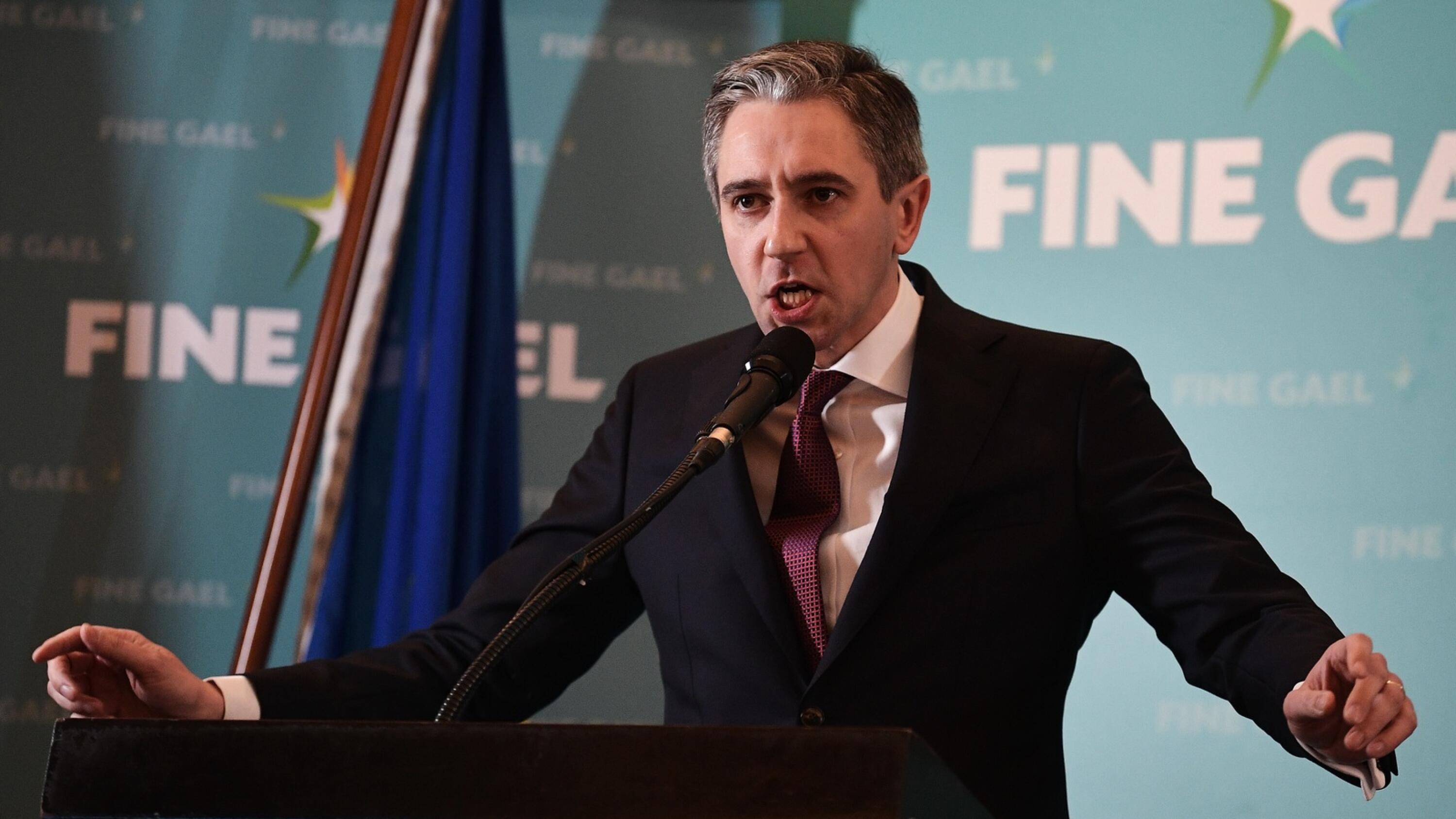
Simon Harris speaks in Athlone. Picture: Charles McQuillan/Getty Image sourced Sunday Business Post

The nation’s business has been effectively put on hold while Fine Gael takes another 10 days off to try to find, and then hit, the reset button.

On Wednesday March 20th the Taoiseach Leo Varadkar caught everyone off guard, including much valued political allies as the Finance Minister as Paschal Donohoe, and announced that he was resigning immediately as Fine Gael leader.

He also stated that he would formally resign as Taoiseach, as soon as my successor is able to take up that office. Note the wording. In effect, the outgoing Taoiseach said that the election of a new Taoiseach would be based on a timetable set by the Fine Gael organisation.

Continue reading “Nation must go on standby while Fine Gael resets?”

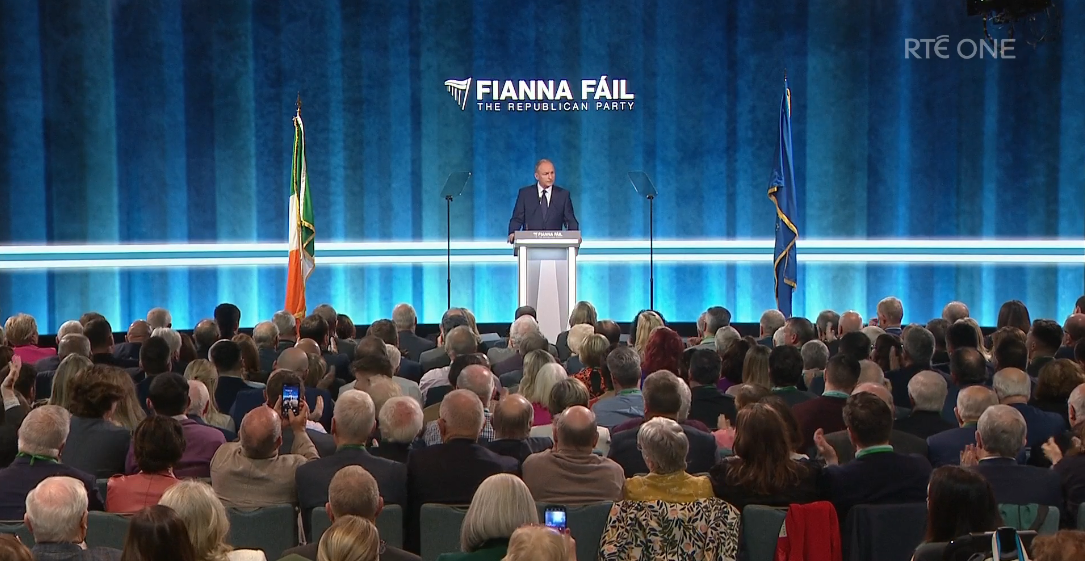
Micheál Martin’s Árd Fheis speech – A lot said, but not much new

By my calculations last Saturday night’s Árd Fheis speech was Micheál Martin’s ninth as party leader. His first being at the 73ú Árd Fheis in 2012. This week’s micro-gathering was the the 81st.

Martin enters his fourteenth year* as party leader in three months. He has been unfortunate in missing out on several opportunities to address the party faithful,  particularly during his time as Taoiseach.

Árd Fheis speeches matter. Though leaders now have other online platforms where they can directly address the public, they greatly cherish the half hour TV slot, once every 12 – 18 months. Continue reading “Micheál Martin’s Árd Fheis speech – A lot said, but not much new”

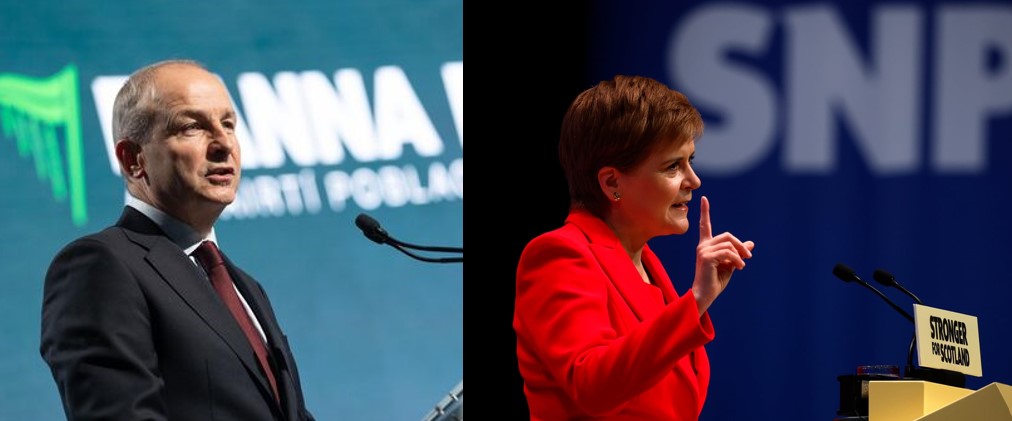
A Timely Tale of Two Speeches

In my first post in since July I chose to take a “compare and contrast” look at the recent party leader speeches of two of the most important (and long standing) political leaders on these two islands: Scotland’s First Minister and SNP leader, Nicola Sturgeon MSP and An Taoiseach and Fianna Fáil leader, Micheal Martin, T.D.  

This is my first written political blogpost in several months. I certainly cannot blame the absence of political news or activity for the lengthy absence. If anything, the speed, and frequency of developments made writing new blogs impractical, as no sooner had I written some piece of considered political analysis than events had overtaken it.

There were other contributory facts, including a fairly mild dose of Covid that was followed by about two months of relatively minor breathing issues that still sapped my energy levels.

I did post a slightly hurried Mooney on Politics Podcast on the difficulties with the Fianna Fáil/SDLP partnership while I was in Brussels, but this is my first-time putting words on screen since July.

The temptation, therefore, is to review what has happened since, but I have resisted that temptation and chosen to: (a) return to a frequent theme, the leadership of Micheal Martin and (b) look at this through the lens of comparison.

The idea for this comparison suggested itself by the coincidence of both Fianna Fáil and the SNP having their first posy pandemic, in-person party conferences within a few days of each other.

Continue reading “A Timely Tale of Two Speeches”

Goodbye to Broadsheet – and hello to cuckoo clocks and the 3 Fianna Fáil truths I set out 2 years ago!

For the first time in almost six years I am writing a weekly opinion piece which will not appear on Broadsheet.ie. Though I have written for various print magazines and newspapers over the years, writing a weekly opinion piece for Broadsheet was both enjoyable and slightly.

The Broadsheet platform offered me the potential to reach a different audience than when I was writing for the Evening Herald. An audience that might not instinctively identify with my more moderate brand of politics. To judge from the comments on my Broadsheet farewell piece the exercise kind of worked. Many people leaving messages along the lines of “while I didn’t often agree with you, I enjoyed reading your point of view and seeing your analysis.”

I am deeply sorry that Broadsheet is gone. We will miss its eclectic assortment of quirky and whimsical stories, doggie/cat pics, news items, and early sight of the next day’s front pages. We will be the poorer for its demise It served its readers… and its contributors… well.

I am grateful to John – who I have known from the days of In Dublin and Magill – and to all the team behind Broadsheet. I wish them all well for the future.

The fact that I no longer have the Broadsheet platform from which to rant, won’t stop me foisting my weekly analysis on an unprepared and unguarded public, though they may have to search a little harder to find me – be it on my website, podcast and/or Social Media… starting now.

Orson Welles as Harry Lime – Switzerland had 500 years of brotherly love and peace. And what did that produce? The cuckoo clock.

Exactly two years ago, on June 15th 2020 in a column entitled Better Never Than Late, I stated that there were then three absolute truths for Fianna Fáil. Truths that highlighted how misguided the leadership’s strategy of putting Fine Gael back into government was as it ignored the reality that that Fianna Fáil had options and leverage. Continue reading “Goodbye to Broadsheet – and hello to cuckoo clocks and the 3 Fianna Fáil truths I set out 2 years ago!”

NI Assembly result was historic – just not era changing

This column first appeared on May 9th 2022 on Broadsheet and looks at the Northern Ireland assembly election results and how the two governments in Dublin and London have responded. 

AE22 results

For about forty years, from the early 1930s up to the early 1970s, many weighty academic tomes on Karl Marx and on Charles Darwin, attempted to analysis how and why Marx decided to ask the father of the Theory of Evolution if he would accept Marx dedicating one of the volumes of Das Kapital, to him – and why Darwin politely, but firmly, declined the request?

It was a conundrum which intrigued and perplexed many fine scholars from both the left and right. Each side offering complex and multi-layered interpretations about each man’s motivations.

Was Marx just seeking Darwin’s approval – it is certain that Marx admired Darwin’s work – or was he attempting to draw parallels between his and Darwin’s theories and perhaps win the great man over to his arguments? Was Darwin’s refusal driven by a deep wariness of Marx’s politics and the fear of being associated with them.

Continue reading “NI Assembly result was historic – just not era changing”

DUP Is Down – But Don’t Count It Out Just Yet

The column first appeared on Broadsheet.ie on Monday April 4th. Though the DUP’s support is faltering and has been on a steady decline over the past few years, it is still too early to write the party’s political obituary. It may run Sinn Féin close in the race to emerge as the single biggest party. The DUP decline in the polls, past the Robinson era, is due to internal faction fights that are based partly on personality, but primarily due to the inability of a sizeable cohort in the party to grasp the fact that Northern Ireland has changed over the past decade or more, despite the DUP’s political preeminence, and is continuing to change. 

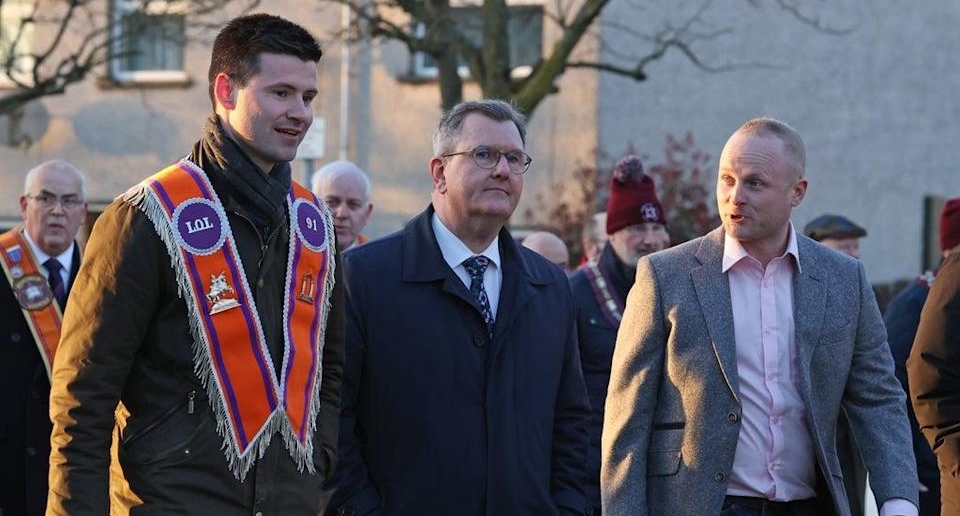
L-R Jonathan Buckley (DUP), Sir Jeffrey Donaldson, Loyalist activist Jamie Bryson – during an anti NI Protocol rally in Lurgan

With the Northern Ireland Assembly election exactly one month away, a great deal of the commentary has focused – naturally enough – on the damage that unionism continues to inflict on itself.

I cannot recall a time when unionism seemed in greater disarray. All due to the ill-judged decisions and actions of hard line, irridentist unionists.

This is not to deny that there is a strong and growing seam of moderate, indeed progressive, unionism. A modern unionism that is more focused on facing the challenges of the future than re-waging the tribal battles of the past. A unionism that sees the grave dangers in the rallies against the Northern Protocol being foisted on many small towns across the six counties.

Continue reading “DUP Is Down – But Don’t Count It Out Just Yet”

The Painful Sting Of A Fading DUP

This column first appeared on Broadsheet.ie on Monday February 14th. This was the same day as the Irish News published results of their opinion poll, which was conducted in partnership with the Institute of Irish Studies University of Liverpool between January 25 and February 7.

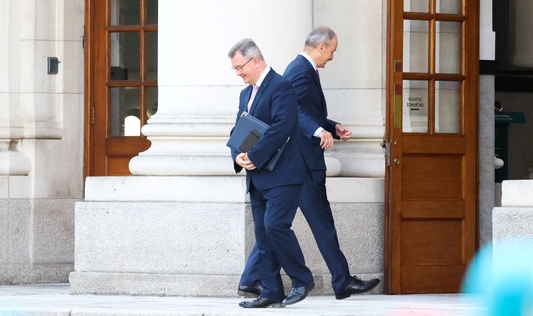
Pictured is Leader of the Democratic Unionist Party Jeffrey Donaldson with Taoiseach Micheal Martin as he leaves Government Buildings in Dublin, following a meeting between the two leaders. Photograph: Sam Boal / RollingNews.ie

The latest intrigues of Jeffrey Donaldson and the DUP bring to mind the adage: “You can get an awful sting from a dying bee.”

We may well be watching the final throes of Unionist ascendency as the DUP struggles to deal with a fraught situation entirely of its own making.

Last year’s celebration of Northern Ireland’s centenary reminded us how the net impact of five decades of Unionist rule was to undermine the very hegemony that brought it into existence. When Northern Ireland was established in 1921, around 62% identified as Protestant and 34% identified as Roman catholic. This figure remained steady up to the late 1960s when the proportion of Catholics began to increase. Continue reading “The Painful Sting Of A Fading DUP”

Sinn Féin discovers public sector reform, a decade after everyone else… late, but still welcome

This article first appeared on Broadsheet.ie on January 10th 2022 and looks at Sinn Féin’s 10-year-wait to discover the need for public sector reform. I also examine their record on this issue, in that part of the island, where they have ministerial responsibility for public sector reform

Sinn Féin, CC BY 2.0 via Wikimedia Commons

Something unusual, though politically significant, happened during the first 10 minutes of last Friday’s “Gathering” on RTÉ Radio 1’s Claire Byrne Today show.

We have become so accustomed to hearing Sinn Féin spokespeople sticking carefully to their talking points and holding the party line, that hearing one utter even the vaguest criticism of their leader, is jarring.

Yet that is what Sinn Fein’s Louise O’Reilly did when she said that she “wouldn’t use necessarily the words that Mary Lou used…”. The words to which O’Reilly was referring, which she also called “inelegant”, had come from an Irish Examiner interview in which the Sinn Féin leader said of the need for public sector reform:

“But we have, in many respects, a system that is constipated, a system that is slow, and a system that needs to be jolted… “

It’s not often you hear a Sinn Féin spokesperson upbraid their leader in public and get away with it. Louise’s move was politically bold and strategically wise.

Continue reading “Sinn Féin discovers public sector reform, a decade after everyone else… late, but still welcome”

Three More Reasons Why The President Is Right to Decline Invitation

This week’s Broadsheet column looks at the faux controversy that has arisen from the decision by President Micheal D Higgins to decline an invitation from the Church Leaders Group (Ireland) to attend a #NI100 Church service in Armagh in October. The Church leaders also invited HM The Queen.  Here I suggest that this situation could have easily been avoided if the Church leaders, and others, had taken better heed of the advised offered back in May 2010 by then Taoiseach, Brian Cowen on the essential principles of commemorating and remembering. 

With any luck, the controversy over President’s Michael D. Higgins decision not to attend next month’s planned church service in Armagh to “mark the centenary of the partition of Ireland and the formation of Northern Ireland” will soon abate.

It is a row that does no one any credit, least of all those who claim the President has a missed opportunity to extend the hand of friendship to Unionism.

As yesterday’s Ireland Thinks/Mail on Sunday poll reported, a staggering four out of five of us believe that President Higgins is doing the right thing and for the right reason.

He is. But he has more than just popular sentiment on his side. This was not a decision made impetuously or in haste. As the President explained last week, he has been mulling over the invitation from the Church Leaders Group (Ireland) for several months. He shared his concerns with event organisers telling them that the event title was not a politically neutral and presented him with difficulties.

Continue reading “Three More Reasons Why The President Is Right to Decline Invitation”