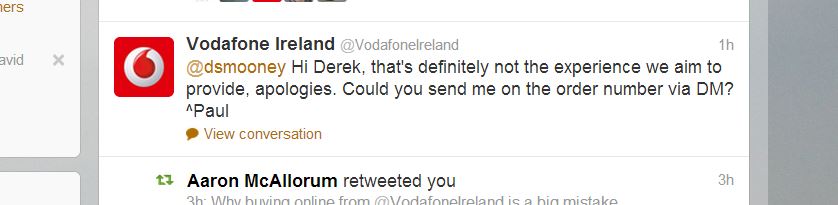
@vodafoneIreland on twitter succeeds where online & phone support fails

Just a quick update on my recent experiences with Vodafone Ireland.

Within an hour or so or posting yesterday’s blog I was contacted by @VodafoneIreland on Twitter. They accepted that the customer service had been poor and promised to resolve the issue today.

To be fair to them – they did. Everything was resolved to my satisfaction by lunchtimed

My Vodafone Red account is now set up and I have my new iPhone complete with credit supplied by Vodafone to make up for the chaos and confusion their online and phone support had caused over the preceding days.

My verdict:

@vodafoneIreland on Twitter 10/10

Vodafone Customer Support on phone & online 3/10 – really needs do better

Why buying online from @VodafoneIreland is a big mistake

Vodafone-Red-logoFor the past few years I have had a pay as you go mobile phone account with Vodafone.ie – plus a separate Vodafone mobile broadband toggle I use with my iPad. In total this cost about €60 a month,

Last week I spotted Vodafone’s new Vodafone Red bill pay account and decided to for the €55 a month level and also buy a new iPhone – costing €99 (I had a basic model Nokia up to now). I decided to do the switch and order the lot online, this I did last week-end – so far so good.

I got an email confirming the switch and saying that my phone would arrive at my door within 24 hours. On Monday the money was taken from my credit card. Though I was not anticipating delivery of the phone until Tuesday I stayed around the house and worked from home.

I did the same on Tuesday – I worked from home all day – never left even once, but no phone arrived.

This morning (Wednesday) I went online to see what was happening – using Vodafone’s online chat service. While the guy in customer service was polite he basically suggested that there was nothing he could do – there had been a hitch at Vodafone’s end and my order had not been submitted – the money had been taken out of my account alright, but as far as Vodafone was concerned the order had “failed to be sent automatically, so the system will be processing the order again..”

He advised me that I had two options:

1. Go buy another phone from any Vodafone shop, and “the moment you receive the one we are going to send, you can send it back to us and you will be refunded back” or,

2. Wait at home for another 3 days for my existing order to be resubmitted. processed and maybe delivered.

I made it clear that neither option was acceptable and so chose to go to the Vodafone shop on Grafton Street to see if I could sort it out there and leave with a phone that I had paid for last Monday.

At the shop they told me that this was not an issue for them, but they put me through to the customer service desk via a phone on the shop counter.

I went through all the above with them and was again offered the two options above, though without any of the politeness or courtesy shown in the online chat encounter.

She told me that she was going to cancel my order, arrange a refund of my €99, but that this would take up to 5 working days. She said I could then decide what I want to do, but to do this she needed me to give her my Credit Card number over the phone… ie she wanted me to call out my credit credit number over the phone, standing at the shop counter in a busy shop in front of strangers! When I expressed reservations at doing this she became very indignant.

So – as a result of taking what I thought was the safer, more convenient option and shopping online with Vodafone I have:

1. No change of service

2. No new phone

3. Wasted a day and a half waiting at home for a delivery that was never coming

4. Had €99 deducted by Vodafone from my credit card account for two days so far – and in all likelihood for the best part of a week.

Whatever this is – it is not customer service!

POST SCRIPT

Since posting this I have been contacted by @VodafoneIreland who accept that this situation is unacceptable.

Voda

They have promised to sort this problem out in the morning. I will update then

Mitt Romney heading to White House… but just to visit

Mitt Romney heading to White house

I snapped this pic of Mitt Romney on my Nokia phone just outside The Warner Theatre on Pennsylvania Ave, DC. He was on his way to the nearby White House for lunch with President Obama.

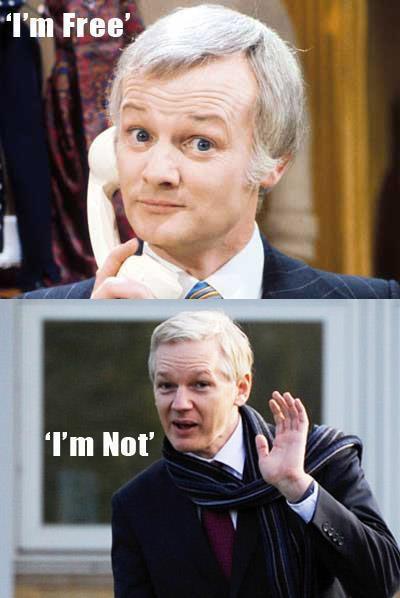
Free Assange….. with every purchase

I’m Free: I’n not

Taken from the facebook page of Rudolph Van’t Hoff

The system employed by a one man band does not suit the RTE symphony orchestra. 

My take on the recent spate of resignations from the board of the development aid charity, Goal, from toady’s Evening Herald

When well known and respected organisations start hitting the headlines more for their boardroom machinations than their achievements: then its time to start asking some questions.

This, regrettably, seems to be the case with one of Ireland’s known and most highly regarding international aid and development organisations: Goal. I say Goal, though in the minds of many people It has come to be known as: John O’Shea’s Goal.

Over the years the organisation has developed an enviable record for its tireless work in some of the world’s most dangerous and deprived areas. Much of this reputation has been down to the work of its high profile and out spoken Chief Executive, John O’Shea.

He has given the organisation and its cause a strong voice over the years. He has been fearless in speaking out for people in danger across the world and in reminding us of our responsibilities to those in the third world.

In doing this, John has often rubbed people up the wrong way. Including yours truly. During my time in the Department of Defence I feared his appearances on radio or TV and they would usually involve a call that the Irish government send more troops overseas to some new emerging humanitarian crisis.

I was often tempted to contact him to tell him that sending troops into a country or region to which they had not been invited was technically known in the business as an invasion.
I didn’t, as I knew his calls were a reflection of how highly he views the the skills and commitment of our Defence Force peacekeepers and the work they have done in humanitarian missions across the world.

Nonetheless, the fact that he would still issue such calls in the absence of UN mandates does suggest that he might have a bit of a penchant for rushing headlong into action.

John sees a problem and is compelled to act. Its an admirable trait, but it doesn’t work in every situation. Sometimes you need to heed the calmer voices around you who remind you that there are hurdles to climb before you can get to your goal.

It is not that they urge caution to frustrate your aims, they do so to ensure those aims can be more effectively achieved.

Could this account, in part, for the recent resignations from the board of Goal? Could it help explain why the charity has gone through two very effective and well regarded chairpeople in under a year?

The reasons cited in the media for the recent resignations of Directors Fran Rooney and Ken Fogarty were concerns over “corporate governance”.  Though this sounds like a complex subject, in reality it is very straightforward. In plain talk, this means how the organisation is run and who does what.

An experienced administrator from the charitable and voluntary sector once explained “corporate governance” to me as “management proposes, the board decides. Management implements, the board oversees”.

Both sides need to work in partnership, but neither should stray over into the ground of the other. It is a system of checks and balances that ensures best practise and protects both sides. It is especially important in the case of charitable organisations handling and processing millions of Euros per year.

Again, during my time in the Department of Defence, we saw controversy touch the Irish Red Cross when questions of corporate governance were raised. These have been addressed and more robust systems put in place suited to an organisation of its growing size. The organisation did endure some temporary reputational damage, but it also showed it had the capacity to come back and reestablish its reputation. Hopefully, this will prove the case here too.

As any organisation grows and develops, so too must its systems and structures. The system employed by a one man band would not suit the RTE symphony orchestra.
Though they may be cumbersome, these systems and rules are essential to protect those people in the organisation, both paid and voluntary, and to safegaurd the organisation’s goals.

Sometimes you need to stand back to see what it is you wanted to achieve.
Twitter: @dsmooney

Derek Mooney on Sam Smyth Show TodayFM Radio July 31st

You can listen to podcasts of Today FM’s Sam Smyth Show via the two links below. On the panel were former political correspondent Eoghan O’ Murchu, (yours truly) Derek Mooney, columnist with the Evening Herald and former government policy advisor; and Senior Lecturer in Economics at Trinity College, Senator Sean Barrett.

Joining Sam for interview was Fianna Fáil Senator Averil Power.

Political writer with the Sunday Independent John Drennan was on the phone discussing the latest revelations regarding Senator David Norris, and the implications of this on his presidential bid.

Ed Hayes joined the show on the phone from his Long Island holiday retreat.

It is in 2 x 1 hour long parts. Part One here and Part Two here

We the Citizens: Solutions First, Diagnosis Second

One of my favourite old jokes is about aNew Yorkgrandmother who happens upon a small crowd gathered at the side of the street as she wends her way home.

She walks around the edge of the crowd, straining to see what is happening. Eventually she works out that there has been a road traffic accident and that there is a doctor in the centre of the crowd giving first aid to an injured cyclist.

Pushing her way through, she starts calling out to the Doctor: “Give him an enema, give him an enema”. Hearing her advice being repeatedly hurled at him, the Doctor turns to her and curtly says: “Madam, this young man has a broken arm – an enema is not going to help him”.  “Maybe”, comes her reply, “but it couldn’t hurt”

We the Citizens are a lot like that old woman. They are well intentioned and genuinely concerned, but are so fixated on the treatment that they are blind to the ailment.

It’s deciding the treatment before attempting a diagnosis. They have an enema they want to give us, and we are going to get it. In their defence, the reforms they suggest would neither hurt nor damage anyone. But on the other hand, they would not make major changes either.

The conclusions they reached were modest enough: retaining PR STV, reducing TDs pay, but given the scale of the problems we face do any of us have the time or energy to expend on tackling the superficial ills?

This is not to disregard the importance of political reforms, but just to wonder why they pick this precise moment. They accept that all the political parties have committed themselves to political reform. Well then, let us wait and see what the Government proposes when it puts its package of reforms to a referendum next year.

My problem is twofold. First, I keep getting the feeling that We the Citizens is trying to be a non political, political party. It seems to want a voice and a say on a par with the existing political parties without all the hassle of sending candidates door to door to argue their case, or making spending returns to the Standards in Public Office commission.

Its leaders, or mentors, lambast what some saw as the focus group populism of Bertie Ahern, yet miss the fact that the model they have chosen is effectively a giant focus group itself.  The members of their Citizens Assembly were, after all, chosen by a polling company on a set of criteria, broken down by age and sex. (I sometimes feel a bit that way myself).

My second problem is the suggestion that 100 people meeting together over a weekend is something new or unique. It happens in communities up and down the land, look at the campaign in Roscommon and Portlaoise to save their A&Es.

In most of these cases the local TDs and Councillors are there to state their case, take the flak and to listen to what the people are saying. Yet, We the Citizens say that they want “to demonstrate to Government and to all of the political parties that engaging with citizens in between elections works,”

But Irish politicians and Irish political parties already know that. We might not like the conclusions they reach or the actions they take – but no one can say that we do not have one of the most highly competitive constituency systems and most connected national politicians inEurope.

This surely is the paradox, or even the contradiction, at the heart of this whole exercise. It is this very level of local political engagement, this responsiveness to public mood that so many blame for our woes – including it seems We the Citizens.

Or could it be that the wrong group of politicians were just being responsive to the wrong mass of citizens. Or, to put it the way a Labour activist tweeted during Primetime: “I wonder how many people who are in that studio repeatedly voted for FF and then complained about the state of the country.”

Isn’t that the public’s prerogative?

Inheriting the wind-up meaningless clichés

Do you remember Gyles Brandreth? He was an author, TV game show panellist and one time Tory MP. One of his great claims to fame was his put down of the former UK Deputy Prime Minister: John Prescott, whom he accused of “using the English language as a Rubik’s cube.”

The one-liner came to mind as I watched Minister Pat Rabbitte on the Sunday’s Week in Politics. Not that I would ever accuse Pat of abusing the language. Far from it. Pat has a deserved reputation for verbal dexterity and quick wittedness. His dismissal, some years ago, of a former Limerick TD as “Willie O’Dea’s surplus in human form” may have been planned, but it was delivered with panache.

The reason I bring all this up, however, comes from his use of that torrid little phrase “we inherited this situation from the last government”. I expect better from Pat than using glib little clichés like this.

I am long enough around in politics to know that the Government will be using variations on this theme for a long time to come. When there is a change of government, particularly on the scale we saw last February, the incoming Government is naturally going to dump on the previous one.

It happens everywhere. In theUK, although he is well over a year in office, David Cameron starts off each reply to Prime Minister’s questions saying how he is trying to tackle the problems left by Gordon Brown.

Doubtless he will continue to trot out the line for a while more, though polls there are suggesting the British electorate are starting to tire of it,

I understand that the Taoiseach and his assortment of Ministers are going to spend the next year or more prefacing every utterance with the “it wasn’t me, it was like this when I got here” line of attack.

I just wish they would drop the “inheriting” hook and find a line that does not make them sound as if they are some unwilling group plucked from obscurity and press-ganged into taking on the Ministerial offices, salaries and cars against their will.

Most people “inheriting” a situation have found themselves in that space despite their wishes, not because of them. As far as I know you cannot legally inherit from someone you have helped to do in, even when that someone was already doing a good job of doing themselves in.

This government came into office knowing the situation they faced full well. They set it out clearly in their election campaigns and went to the people asking them for their mandate to tackle the enormous problems we face.

The two parties now holding the levers of power have every right to talk about the size of the problems, the need for difficult decisions and to throw a few belts into the outgoing government for good measure.

They should not, however, be talking as if this all something that has taken them somehow by surprise. They also forfeit the right to lash their predecessors on every single issue by effectively taking the same policy approaches.

The health issue and the fate of local A&Es is a good case in point. There is no credibility in the Health Minister (he’s the one who looks like a cross between Capt Bird’s Eye and Brian Blessed) outbidding the outgoing Government by writing open letters to the voters in February saying “Fine Gael undertakes to retain the emergency surgical, medical and other health services at Roscommon Hospital”, only to reverse that commitment a few weeks later.

The Taoiseach only adds salt to the wound by offering the defence that when Dr Reilly “…was contesting the general election he was not in possession of the information about the difficulties surrounding the recruitment of non-consultant hospital doctors.”

Are we going to hear these words again on other issues? Will it turn out that the Taoiseach himself was not “in possession of the information about the difficulties” on June 16th when he absolutely ruled out any increase in income tax in December’s Budget. I hope not.