Labour could be casualty in Treaty Yes vote

My Evening Herald column from today’s (Thurs May 24th) edition:

voting
Many different reasons to vote yes or no

With less than a week to go the referendum campaign seems more and more to be about less and less.

On the face of it, if you believe the posters, the choice is to Vote Yes to achieve stability or to Vote No to end austerity.

But do any of us really believe these claims? Regrettably, like previous EU referendums the debate has been conducted at the extremes, not the centre. It was the case in the Nice and Lisbon referendums, remember those “€1.84 Minimum Wage after Lisbon” posters?

Mercifully, we have been spared the malign input of Cóir and Youth Defence this time. The are no loss, especially as most of them wouldn’t know a treaty from a tea-bag (to rob a line I recently overheard)

But this absence of any significant ultra right involvement on the no side does highlight a curious undercurrent to the campaign, one, which I suspect, may be a factor in how some people decide how to vote next week.

While the slogans maybe about the EU and the Euro the referendum has morphed into a proxy battle on the future of left / right politics in Ireland.

From the start the battle front was drawn up along left versus right lines.

On the Yes side you had the right and centre right parties: FG, FF and Lab (more about them later), the employers’ and business organisations, the farmer’s groups and the more established/mainstream trade unions.

On the No side you had the socialist and hard left parties, People Before Profit, Joe Higgin’s Socialists, Sinn Féin, the more radical trade unions.

While the entrance of The Declan Ganley somewhat clouded the the Left/Right delineation, it hasn’t ruptured it.

The sight of him sharing No platforms with irredentist left firebrands is a joy to behold, especially when you consider that they agree on virtually nothing, including Europe. Most on the hard left are euro-sceptic while The Ganley is avowedly Euro-federalist.

While passing the Fiscal Treaty will herald no major day to day changes – mainly because it just restates the centre/centre right economic orthodoxy in place since 2008 – it will cement it into domestic law for the foreseeable future.

It is this that the left fears and opposes most.

Passing the Treaty would recalibrate the centre of the Irish political spectrum a few points to the right. It won’t be a seismic or noticeable shift, but it torpedoes the Left’s ambitions of shifting it the other way.

It doesn’t vanquish them, nor does it make them to tone the rhetoric down. If anything, it will do the opposite, but in their hearts they will know that their ambition to shift Ireland economically to the left has been reversed.

This explains why the campaign from Joe Higgins, Boyd Barrett and Sinn Féin has been so fierce. But not as fierce as when its over and they start to target each other.

I am not predicting that their poll rating drops are set to drop. They won’t. They will probably rise as voters use them to express their disapproval of government parties going pack on pre election pledges.

But the Irish electorate is sophisticated. It is overwhelmingly aspirational. This applies across all social classes and communities. They want their kids to do better than they did. That decides voting intentions more than anything.

In the meantime Sinn Féin will continue to do well at Labour’s expense, after all Gerry and Mary Lou are saying now what Éamon and Joan were saying two years ago.

It is Labour who will be the biggest casualty. Polls showing 40% of Labour supporters voting No could have longer term ramifications for the leadership. But whatever they may be, they can be so where near as damaging as Gilmore’s infamous “Frankfurt’s Way or Labour’s Way” slogan.

It may turn out to be the most devastating political slogan of recent times – devastating to its authors, that is.

Labour didn’t know magnitude of problems facing Ireland?

Irish Labour Party - Didn't Know

I have just been watching Labour’s Dominic Hannigan on The Week in Politics and was amazed to hear him claim that Labour didn’t know the magnitude of problems facing Ireland during the General Election campaign last year. He offered this as the reason why they have abandoned so many of the promises made in that campaign.

It is the same attitude you hear when Ministers trot out the glib little phrase “we inherited this from the last government”.

I am long enough around in politics to know that the Government will be using variations on this theme for a long time to come. When there is a change of government, particularly on the scale we saw last year, the incoming Government is naturally going to dump on the previous one.

It happens everywhere. In the UK, although he is well now two year ins office, David Cameron starts off almost every reply to Prime Minister’s questions saying how he is trying to tackle the problems left by Gordon Brown.

Doubtless he will continue to trot out the line for a while more, though polls there are suggesting the British electorate are starting to tire of it,

I understand that the Taoiseach and his assortment of Ministers are going to spend the next year or more prefacing every utterance with the “it wasn’t me, it was like this when I got here” line of attack.

I just wish they would drop the “inheriting” hook and find a line that does not make them sound as if they are some unwilling group plucked from obscurity and press-ganged into taking on the Ministerial offices, salaries and cars against their will.

Most people “inheriting” a situation have found themselves in that space despite their wishes, not because of them. As far as I know you cannot legally inherit from someone you have helped to do in, even when that someone was already doing a good job of doing themselves in.

This government came into office knowing the situation they faced full well. They set it out clearly in their election campaigns and went to the people asking them for their mandate to tackle the enormous problems we face. Labour’s Finance spokeperson said the economy was banjaxed:

The two parties now holding the levers of power have every right to talk about the size of the problems, the need for difficult decisions and to throw a few belts into the outgoing government for good measure.

They should not, however, be talking as if this all something that has taken them somehow by surprise. They also forfeit the right to lash their predecessors on every single issue by effectively taking the same policy approaches.

The health issue and the fate of local A&Es is a good case in point. There is no credibility in the Health Minister outbidding the outgoing Government by writing open letters to the voters in February saying “Fine Gael undertakes to retain the emergency surgical, medical and other health services at Roscommon Hospital”, only to reverse that commitment a few weeks later.

The Taoiseach only adds salt to the wound by offering the defence that when Dr Reilly “…was contesting the general election he was not in possession of the informati

on about the difficulties surrounding the recruitment of non-consultant hospital doctors.”

Labour Leader Gilmore Ranked Second Worst in Poll of Ministers’ Performance

Over the past few days (Tues Apil 11 – 13) I ran a simple poll on my website www.derekmooney.ie . In it I asked people to select the three government ministers they believed were performing best in office.

 182 people voted in the online poll.

The results are as follows: You can download the results in pdf format Rate the Ministers

1

Finance Minister Michael Noonan

2

Welfare Minister Joan Burton

3

Agriculture Minister Simon Coveney

4

Pub Exp Minister Brendan Howlin

5

Transport Minister Leo Varadkar

6

Education Minister Ruairi Quinn

7

Enterprise Minister Richard Bruton

8

Children’s Minister Frances Fitzgerald

9

Communications Minister Pat Rabbitte

10

Arts Minister Jimmy Deenihan

11

Justice Minister Alan Shatter

12

Foreign Minister Eamon Gilmore

12

Health Minister James Reilly

13

Environment Minister Phil Hogan*

If they squabble this much over small stuff… what happens when the big probs arrive?

About a week ago I wrote a piece for the Herald defending the government giving politicians a three week break for the Easter.

Scousers
Calm down lads, calm down

This was, I argued, a welcome opportunity for Ministers, TDs and their advisers to do some of the other boring, but important, work and also to take some time to reflect and think about the issues of the day.
Talk about getting it wrong. No sooner has the ink hit the pages than almost everyone in Government was out in public tearing strips off each other.
The whole cast of characters were involved: Environment Minister: Big Phil Hogan, Health Minister: James “Capt Birsdeye O’Reilly, Finance Minister: Michael Noonan, Arts Minister: Jimmy Deenihan, Welfare Minister: Joan Burton, Communications Minister: Pat Rabbitte, Justice Minister Alan Shatter, FG Party Chair Charlie Flanagan plus a few Government backbenchers including Labour’s Colm Keaveney and Fine Gael’s Regina Doherty.

The week before had seen some on the Labour side saying that Big Phil could have handled the whole household charge thing a lot better. Just as it appeared that that particular row had run its course, news broke that Big Phil was meeting with Moriarty Tribunal favourite and Tipp North TD, Michael Lowry only a few days after the publication of that Tribunal’s final report.

Within hours other Ministers, namely Birdseye O’Reilly and Noonan, were confirming that they too had meetings with Lowry. This was all too much for Joan who questioned the wisdom of this. So too did Jimmy, but more subtly.

Joan’s words riled Charlie who went on Twitter to ask if Joan had a Government death wish. Regina subsequently went on Radio to say Charlie was right and that Joan was wrong. Others thought Joan was right, including Colm, who also went on to Twitter to call the judgment of senior figures in Fine Gael into question.

Meanwhile Pat spoke to the Sunday Independent to say that he was frustrated by the “interminable delay” in bringing prosecutions following Mahon and Moriarty. Within hours of the paper hitting the breakfast table Alan had issued a broadside that had Pat in mind when it stressed the importance of not making public comments that might prejudice proceedings.

By lunchtime the Taoiseach was doing a bad Harry Enfield scouser impression telling everyone to “calm done”. All that was missing was him donning a Kevin Keegan wig and finishing off the interview saying: “Dey do do dat dough don’t dey dough”

Not only did all of this happen in just one week, it happened in very quiet week at that. If this is how the members of the Government deal with minor matters, Lord help us when the big problems come. And come they will.

The Government has had a fairly charmed existence since coming to office. While things are clearly not improving, they have not had to face any genuine crises or policy dramas.

Both parties have endured some setbacks early into their term. but none that really tested them. For Fine Gael it was the losses in the presidential election and referendum, plus the Roscommon hospital fiasco. For Labour it was the loss of three TDS, including a Junior Minister and a by-election winner, though these were offset by their man winning the presidency.

The handling of the household charge suggests they lack a certain deftness of touch, yet it pales into significance against the problems they may yet face in the years ahead.

How will a government that descends into public squabbling and faction fighting at the mere mention of the names of Moriarty Lowry or O’Brien cope if Merkel Draghi or Barroso decide to turn the thumbscrews on Corporation tax or whatever?

Have they all forgotten that they will be asking the people to take their collective advice at the end of May and vote yes to the Fiscal Compact Treaty? Might it not help their case to give the appearance of knowing what they are doing and all pulling in one direction?

As to the internecine squabbling, there are several systems in place to stop such petty rows escalating and getting into the public arena. One is called common sense. Another is the special adviser/programme manger system. Isn’t it time to get working on both?

ENDS

Dáil breaks can only benefit both sides

My Evening Herald column from Saturday March 31st arguing that breaks in Dáil sittings are necessary and beneficial


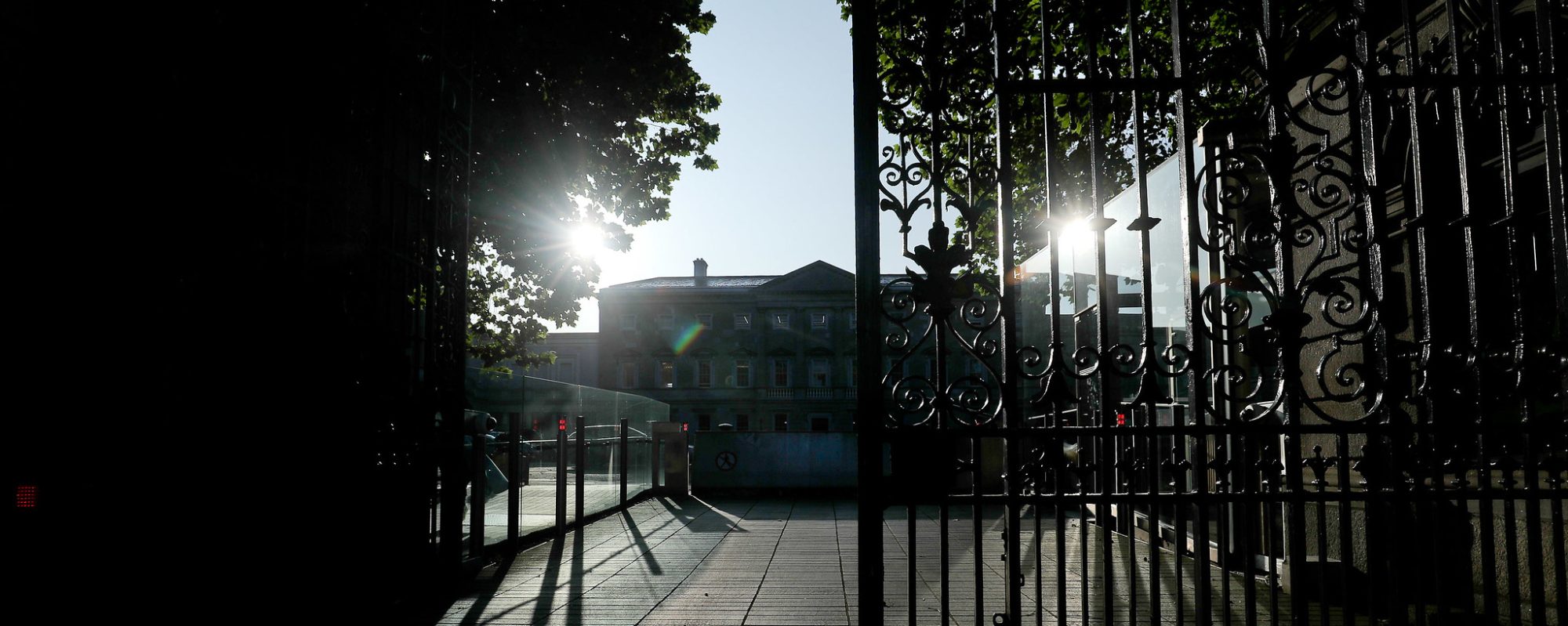
Leinster House

On Thursday Dáil Éireann takes a break for the Easter recess. It is set to return on April 18th. Cue a hue and cry from opposition TDs and assorted political hacks demanding that the Dáil return sooner or sit longer or whatever.

These protests are not only regular and predictable, they are just as entertaining as they are pointless.

These sham battles seem to be based on the notion that the more the Dáil sits the better. Really? It is hard to sustain that argument when you look at the household charge fiasco.

In its recent annual report the Government commends itself for increasing the number of sitting days, saying that the Dáil sat for about 127 days, roughly 36/37weeks, in its first year.

According to the government’s calculations this is a 44% increase on the number of sitting days in the first year of the previous Dáil (2007/08).

A major achievement you’d think. Though not quiet as impressive when compared with the years 2008/09 and 2009/10 when the Dáil actually sat for 35 weeks per annum.

But what’s a week or two between old sworn enemies?

It is the old public sector problem: measuring inputs, not outcomes. Successive governments have been guilty of it.

The Government’s legislative programme should be driven by the number of pieces of legislation it wishes to pass into law, not by a need to produce bits of legislation to fill up some allotted time slot.

TDs should not be apologising for the Dáil not sitting in plenary session over the next three weeks.

Yes, various Oireachtas committees will be sitting during that time – but something else should also be happening. Something that is, in my opinion, far more important.

Politicians and their policy advisers should be availing of this break to do something they rarely get to do: think and prepare.

There is a story, probably apochryphal, about a Minister walking along a corridor in his Department when he spies a senior policy maker sitting back with his feet up on the desk. “Have you no work to do?” asks the Minister, “I have…” comes the reply “…I am doing it now, I’m thinking”.

These short breaks in Dáil sittings afford Ministers and senior officials some time and space away from debates, motions and parliamentary questions to think and to focus on other matters in their departments – things that don’t often make the headlines at Leader’s questions.

Central to this is standing back and taking stock of where they are.

When the Dáil is sitting a surprising amount of time in a government Department can be taken up in answering TDs questions alone, particularly when its that Minister’s turn at oral PQs.

Parliamentary accountability and scrutiny is an essential part of the democratic process, but you also need time to go and effectively do all those things that the parliament will subsequently want to scrutinise.

But if the need for this “thinking” time is important for Ministers and officials is it absolutely vital for an opposition and its support teams.

The Minister has a full time team of 8 or more in his office to fetch, carry and prepare – plus those other senior officials along the corridor to advise and research – the opposition spokesman is often depending on two or three.

But it is not a matter of resources. While the Dáil is sitting the agenda is set by the government. The opposition is usually just reacting to it – or reacting to the media reaction to events.

This is not always a bad thing, especially for an opposition that is effective at harrying the administration. This was the case in the latter half of the last government. The only crumb of comfort it got from the polls was when the Dáil was in recess. When it was in session both oppositions parties’ ratings went up, especially Labour’s.

But an opposition also needs to set the agenda too. It takes a lot of preparation and planning for an opposition to get the focus on its agenda. These breaks can often provide that space.

Politicians on both sides should acknowledge this fact. Who knows, maybe the reporters who cover the Dáil and actually benefit from the break might even credit them for it.

Ends

I Don’t Like The Fiscal Compact Treaty, But I Will Still Vote Yes

My thoughts on why I am not impressed with this Fiscal Compact Treaty, but why I will vote for it and urge others to vote Yes too.  

A few nights ago I was on the cusp of penning a piece as to how it was possible to be a committed pro European and still urge a “No” vote at the forthcoming Fiscal Compact Referendum.

My reasoning broadly ran as follows.

  • While the Fiscal Compact does contain some important measures that would have addressed the fiscal problems that others, not Ireland, had experienced in the run up to the crisis – it effectively does nothing about the core issue facing the EU and the Euro: the dysfunctional European banking system.
  • The EU Council and Commission have wasted over two years taking pointless half measures that tinker about with the symptoms of the problem while studiously ignoring the core problem: the banking crisis.
  • This fiscal compact is just the latest in a series of well intentioned, but minimalist attempts to assure the markets that it ready to address the crisis. Like the others it will fail.
  • What the EU needs now is a short sharp shock to jolt it into effective and decisive action. By decisive action I mean tackling the banking and credit crisis head on and bolstering the role of the European Central Bank to become the lender of last resort.
  • Ireland can not only deliver that shock by rejecting the Fiscal Treaty as inadequate and lacking substance, but it can take the lead – particularly among the smaller, peripheral nations – in demanding that the Commission, particularly President Barroso stop acting as the servants of the French & German governments and get the EU back to being a Union of countries that work together, in partnership and in solidarity for our mutual benefit.

That was my broad theory.

It is not heresy or anti European to say that the Fiscal Compact Treaty does not address the biggest problem facing the economies in both the EU and the Euro.

The point is not that the Fiscal Compact goes too far – it is that it is too one sided. It addresses a secondary problem – not the primary one. It almost completely omits the measures required, specifically on the ECB, to tackle the real problems facing us all.

As I was writing the piece I realised that while I still fully believe in points 1 – 4 the reasoning underpinning Point 5 was fatally flawed.

Ireland rejecting the Fiscal Compact will not be seen as us rejecting it as a half measure. It will be seen as Irish petulance. We have thrown down the gauntlet before – on Nice 1 and Lisbon 1 for reasons that most in the EU failed to grasp.

The Taoiseach and his Ministers have shown not the slightest interest in showing Leadership at the EU Council or of building any consensus among the smaller peripheral countries.

Rather the Taoiseach has been content to roll over and have his belly tickled (metaphorically – I hope) by the big two, and hope that no one will ask him any difficult questions.

He has consistently underplayed his hand for the past year. Stories that talked tough and banged the table at his first Council meeting yielded nothing. Since then he has been content to keep his head below the parapet. The same applies to Eamon Gilmore.

There is nothing to suggest that either are capable of building a consensus across the EU. The reality is that neither have attempted it. Their antithesis to travelling to meet other leaders or hold bi-laterals here is mind boggling, especially when you consider how they howled in opposition that the last Government was allowing Ireland’s reputation to slip.

None of this augurs well for Ireland’s forthcoming EU Presidency, but that’s another story.

Those pointless rejections of Nice 1 and Lisbon 1, are now coming back to bite us. Those who urged us to say No then, are once again in the vanguard urging us to Vote No once more. Their reasoning has not changed. They are as Eurosceptic and anti European as they ever were.

Saying No now would be seen as biting the hand that feeds us – even when that hand has been making a few bob from what its been doing.

Worse still saying No would not gain anything by saying No – except to put ourselves in some undefined limbo beyond the revised European Stability Mechanism. Whereas our saying No in Nice 1 and Lisbon 1 held up the process of ratifying those treaties, saying No now will halt nothing.

We have no veto. We have no bargaining chips on this one. There is no point in threatening to pull the trigger when everyone else knows we have no ammo in the chamber.  UCD’s Dr Ben Tonra makes this point very clearly in an excellent post on the politicalreform.e page here.

The conclusion is that we must pass the Fiscal Compact treaty and then use that passing of the Treaty to build a coalition of smaller countries across the EU to tackle the real problem facing us.

I would love to think that saying No would urge the EU into actions that are long overdue. The sad reality is that it will not.

So, just like the French Socialists who were compelled to vote for Chirac in Round Two of the 2002 Presidential elections, rather than seeing Le Pen slip through, I may be taking a disinfectant mat with me to the polling station as I vote Yes.

I want a better treaty. I want a treaty that tackles the real problems. This treaty itself even acknowledges the need for a further treaty.

If passing this one is the price we must pay to get to that point – then let us do so – and quickly.

To burn bondholders or not to burn them – is there a third option?

Is it any wonder there is so much confusion about what to do with the bank bondholders?

Less than twelve months ago (February 10th to be precise) Leo Varadkar was saying:

Any bank coming to us looking for more money is going to have to show how they are going to impose losses on their junior bondholders, on their senior bondholders, and on other creditors before they come looking to us for any more money. Not another cent.”

That was before the General Election. Eight months after the election; the now Minister Varadkar had changed tack and was saying:

What’s happening in relation to the Anglo bondholders is they’ll be paid from Anglo’s own resources, from the sale of its own property assets, for example.

By last weekend the line had developed further. On Sunday he was  says that the Government “had to weigh up the costs on the one side and the risks on the other.” and that not paying the €1.2billion of Anglo bonds due this Wednesday: “…would have implications for other State companies like ESB and Bord Gáis,”

It is probably a littler bit unfair to single out Minister Varadkar like this. He was saying pretty much what everyone else was saying in FG during this period. His skill and talent was that he said it more directly and concisely than almost any of his colleagues. It is what makes his quotes more memorable.

Whatever about the changes in the Fine Gael script, two bigger truths have not changed over the past year. The ironic part is that these truths are contradictory.

The first is that the ECB is still holding to its line that bond holders should not be ‘burned’. By that they mean that bond holders should not be forced to accept any reduction in the monies due to them.

The other is the reality that there is a very active market in bonds being sold off at a discount in return for hard cash. These discounts can be fairly hefty, particularly where those bonds have a tasty coupon included.

This trade in bonds was touched upon at a recent seminar on the issue of offset debt, hosted by Thomas Pringle TD and how it could ease the plight of those in negative equity.

Some bond holders are deciding, in their own business interests, to mitigate their losses and sell bonds at a discount. Their rationale is that a bird in the hand is better than two in the bush: a not uncommon business approach.

They sell the bonds on to vulture capitalists who buy the bonds at a 30, 40 or even 50% discount. They retain the bonds face value, and so, they stand to make a hefty profile when the bonds are paid off.

While bondholders may choose to do this, the ECB says they must not be made to do it – except in the case of Greece, but let’s put that to one side for the moment.

This leaves a classic Catch 22. Investors, speculators and traders are selling bonds between each other at varying hefty discounts, with the prospects of making even bigger profits.

It is one thing to say that bond holder’s rights should not be ridden over and allow the market to function, but telling European taxpayers that they should not enter the open market and offer to buy back those bonds, is another.

Its like signing an IOU and watching it being traded among your friends for less than its face value, but being told you cannot dare attempt to buy it back: even if the guy currently holding it would be willing to sell it to you.

Ireland cannot do a solo run and give two fingers to the ECB, but it needs to start canvassing opinion around the EU table to start looking at this issue again.

The noises coming from the new Belgian government, coupled with the prospect of a new occupant of the Élysée Palace come the summer suggests it may be a route worth exploring. Something, perhaps, for the Taoiseach to consider as he heads to Brussels?

Enda’s State of the Nation fails to Inspire

An Taoiseach’s national address was well intentioned but badly executed. 

To his credit; from the moment he became Taoiseach, Enda Kenny has shown that he realises the importance of talking to people. He has demonstrated regularly that he knows the job of Taoiseach is not just the traditional one of government Chairman or Chief.

He understands that it is also that of the “confidence giver in chief”, particularly at times of crisis like this. The person who tells the rest of us what is happening and how he and his team have a plan to get us through the difficulties.

Television has not been his friend. Neither have the formal set pieces: Ard Fheis speeches etc. He has been more comfortable in informal situations, particularly those where his words and message are delivered unmediated: live to a flesh and blood audience.

For all these reasons, last night’s TV “Address to the Nation” was going to be a big ask. The fact that it was billed as the most important address he would ever give, the “speech of his life”, did not help.

In the event, the speech did not succeed in achieving its desired result.

A speech is not about offering a litany of facts and figures, it is about putting across a clear message. The Taoiseach acknowledged this truth in his address saying that he was “outlining the Government’s strategy.”

The pity is that while this may have been the aim, the content and delivery failed to convey any sense of strategy or coherent plan.

The address should not just have been another element of the package of budget speeches: but an opportunity to set out a vision of where we are going and how we can get there together.

It could have been a vision of the kind of Ireland the Taoiseach wants to see in place by 2016, the centenary of the Easter Rising and an exposition of how he sees us achieving that.

Instead of the expected “state of the nation” we got a curiously cold and passionless presentation that omitted both vision and purpose. A bland party political broadcast that seemed, in part, to be an attempt to explain both why The government was now implementing policies it had opposed and why it had abandoned promises made only nine months ago.

It was less an “address to the nation” and more an apology from the leader of Fine Gael.
As the Taoiseach and his advisers are now starting to realise there are some very obvious risks with such addresses.

The expectations were high.

People expect to be better informed and maybe even more confident after the broadcast than they were before. Looking at the online commentary as I write this, I do not see this being the emerging consensus. Most politically unaligned posters appear to be seeing the address as a “wasted opportunity”.

But there are other risks too. The leader comes on TV to say that things will get better… but, they don’t. As a consequence we lose faith in them.

The other worry is that the Leader comes on TV to say that things are even worse that he had suggested they were… the opposition have a field day using his own words to attack him and his popularity plummets

Though I have no firm evidence for thinking this, I believe that these were the two of the key factors behind Brian Cowen’s reluctance to make a similar address in 2008/2009. The one issue Cowen would not have had to address if he had chosen to make such a speech then is the crisis facing the EU and the Euro.

In my view the Taoiseach made a mistake in not devoting more of his script to this crucial issue. Not only did the EU section amount to less than 10% of the total text, the section was bland and failed to seriously address any of the issues facing us.

In other EU countries they are talking of having “less than a week” to save the Euro. Within the coming days we will learn more of the Merkel/Sarkozy plan to fundamentally change how the EU and the Euro function, but here our Taoiseach reduces the matter to almost an afterthought in his keynote address to the nation.

It kind of sums up the whole exercise, well intentioned, but poorly done.

Twitter:  @dsmooney

Barrack Closures a Mistake on All Fronts

This article appeared in the Irish Examiner on Thursday November 17th 2011

Resigning as a Minister is not something to be done lightly. You must weigh up the influence and input you are surrendering from having a seat at the table against the public acclamation you will receive. The applause and cheers will soon die down and you will be left standing on the outside while decisions get made without you.

Though he is not a household name, Willie Penrose is a smart man. While he may have the bearing and manner of a classic rural parish pump TD, he is a smart guy. An experienced and successful Barrister, Penrose knows what he is doing.

Gilmore knew that that the future of Columb Barracks in Mullingar was a red line issue for Penrose when he nominated him as a Super Junior – so why did he proceed with the appointment?

This government was only a few days in office when speculation started that they may close some more barracks. Further barrack closures have been a fixation with some senior civil servants and military figures in Defence.

Shortly after I entered the Department of Defence in October 2004 a senior official popped into my office to discuss the issue of “barrack consolidation”. This I came to learn was the euphemism for barrack closures.

There is a school of thought, among some in the Defence organisation, that we should have a much smaller number of super barracks – say three or four – located in the major cities, rather than the existing network of smaller posts across the State.

While this would potentially be a little more economic and efficient, this has to be weighed with the popular support and positive PR generated from having more locally organised and based units. It is a demonstrable fact that recruitment is strongest in those areas where there is a military post.

Even at the height of the Celtic Tiger for every general service recruit post advertised there were at least 5 applicants, while the Cadet competitions often saw 25 or 30 well qualified applicants for each vacancy.

Local barracks and locally based army units form strong bonds with local communities. Use of barracks facilities, especially sports grounds, is usually offered to local community groups, particularly youth groups. The local army unit is always on hand to help out in the classic “aid to the civil power” type exercises – flooding, ice clearance, bad weather etc.

While they are hard to measure on a civil servants excel spreadsheet, these strong local bonds are vitally important and should not be thrown away lightly.

The previous Minister, Michael Smith has closed six barracks back in 1998, though some of these properties had still not been disposed of almost six years later. Indeed it would take a further five or so years to deal with these.

The estimated year on year savings from these 1998 closures was estimated to be in the region of €3.5 – 4.5m. These were “economies of scale” saving from reduced security, heating, lighting and other savings.

If the current row over closing three or four barracks was just about that, I might be tempted to agree with it. But this is a mistake on all fronts.

Alan Shatter says that given the choice between saving buildings and retaining personnel, he opts for the latter. A noble intention: if only that was the choice before him.

It is not.

If the planned closures go ahead the Defence Forces can kiss good bye to seeing their numbers ever rise back above 10,500 again.

There are a number of reasons not to close these barracks.

Their closure will hurt the local economies in Mullingar, Clonmel and Cavan just as much as any factory closure. There is no point the Taoiseach giving out to Talk-Talk management for the inconsiderate handling of that closure while his own Minister is planning to do the same thing.

Where does the Minister propose to transfer the troops stationed in Mullingar, Clonmel and Cavan? Where is the spare capacity in the remaining barracks?

We are already aware from the last round of barrack closures that the remaining barracks were full and operating close to capacity.

To close these other barracks and to permanently move around 500 – 600 troops would require a considerable capital investment in additional facilities in Athlone, Finner andLimerick. This is not something that will appear overnight. Where does the Minister propose to get the cash to provide this additional capacity?

Colm McCarthy’s famous Bord Snip Nua report found that the Defence Forces were the only sector of the Public Service to reduce numbers during the height of the Celtic Tiger. His report suggested a number of further small reforms, including a reduction in the size of the force by a further 500 to 10,000. He recommended this be implemented over a two year period. It was achieved within a year, well ahead of the target date.

So what kind of signal do these further cuts – cuts that go beyond An Bord Snip Nua – send to others in the Public Service? This was a point that Brian Lenihan and Brian Cowen instinctively understood.

Here is a part of the public service that has downsized, modernised and reformed itself beyond expectations and yet it gets singled out again for cuts that neither make sense nor add up. These barrack closures appear, on the face of it, to be gratuitous.

The Defence Forces now do more with less. When it comes to real public sector reform the Defence Forces are a model of how it can be done right. These closures put that model at risk.

The investment in the Defence Forces made between 1997 and 2007 was a text book example of how to invest wisely and productively. Surplus property was sold and the proceeds invested in better training and equipment.

While the numbers working in the Public Service increased by 17% over the decade of the Celtic Tiger, the numbers working in the defence organisation actually fell by 8%.

This applied across all levels. The number of troops fell and so did the number of civil servants. Indeed Defence has a remarkably small civil service

The fact that the Minister does not get this point is compounded by the fact that he did not address the annual PDFORRA conference. That was a bad decision. It was his first opportunity to address the soldier’s representative organisation and he opted to send his Junior Minister while he and his Secretary General heading off to an international conference instead.

Willie Penrose’s resignation is about a lot more than just Mullingar Barracks; it is about a part time Defence Minister who fails to appreciate what he is doing, or is simply not bothered.

So tell me Minister, how exactly did we find €3.6bn?

My column from the Evening Herald (2nd November 2011) on the discovery by the Department of Finance that we owe €3.6Bn less than we thought; due to an accounting error in the Government’s figures. 

———————–

Wednesday November 02 2011

IN one of his early routines the American comedian Bob Newhart explained how he had to turn to comedy when his career in accountancy came to an abrupt end. He described how he had, as a fledgling accountant, developed his own theory of accountancy which stated that getting within 10pc of the total was enough.

While the idea did not catch on with his bosses in the 1960s, it appears the theory has been rediscovered and redeployed in the Department of Finance.

Finding that we have €3.6bn more that we had is a lot better than finding we have €3.6bn less — but don’t you just feel that if it had been the latter the cuts target for this December’s Budget would have doubled.

At this point I had intended to explain the discrepancy. Having spent about six years in Government reading and dealing with Government estimates and balance sheets I felt sure I was up to the job.

But after about 45 minutes of reading statements from various agencies my head melted and I needed to lie down in a darkened room.

Those who understand these things better, tell me that this has all got something to do with the amount being rolled over like a Lottery prize that isn’t won, though it is possible that I got the analogy wrong.

Liabilities

The one thing I know is that the problem stems from confusion between the National Treasury Management Agency (NTMA) and the Department of Finance.

Up to 1990 only the Minister for Finance could borrow money on behalf of the State. In 1990 that power, along with the responsibility to manage assets and liabilities and negotiate rates on the State’s borrowings, was given to the NTMA.

The NTMA proved itself quickly with savings on the interest paid on our debt roughly equivalent to reducing tax rates by about 10pc.

However, while the authority to borrow and manage the debt was delegated to the NTMA, the responsibility for the accounts and borrowings has always rested with the Minister for Finance and his officials.

There was a change in how the NTMA dealt with the State’s Housing Finance Agency and how it listed their assets and liabilities in its accounts which was not picked up on when the State’s general government debt was calculated.

It is vital that the confusion is cleared up and succinctly explained as soon as possible by the minister and his senior officials in both the Department and the NTMA.

The error is all the more embarrassing as the head of the Finance Department is due to take up an appointment in early 2012 as Ireland’s nominee to the European Court of Auditors.

This organisation is, according to its President , responsible for examining ” … whether financial operations have been properly recorded and disclosed, legally executed and managed so as to ensure economy, efficiency and effectiveness.”

Disciplines

It also raises an interesting general issue regarding the management of government departments. The Irish civil service uses a “generalist model”.

Department officials get a broad experience across a range of disciplines and policy areas. Across their careers, most civil servants can expect to be trained and work in a number of different areas. The benefit of this rotation system is that you get people with a broad vision, enthusiasm and wide experience of varying sectors.

Moving high flyers between sectors and departments helps stem the “it’s the way we have always done it here” mentality. But, it also has a downside. There are fewer specialists in those areas where they are specifically qualified and some posts that should require specialist skills and training are filled by people without them.

It’s just like Sir Humphrey said in a classic Yes Minister episode: “Well obviously I’m not a trained lawyer, or I wouldn’t have been in charge of the legal unit.”