Our Constitution gives people the power, thankfully

Today, December 29th 2012, marks the 75th anniversary of the Irish Constitution, Búnreacht na hÉireann coming into effect. This is my Evening Herald column on it continuing importance and relevance to Irish life.

eamon de valera
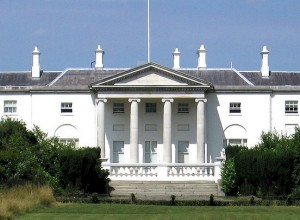
Dev – Architect of our Constitution

On this day seventy five years ago the Irish Constitution came into operation. As we have seen in recent and current controversies, almost four decades on, the Constitution is still central to much of our political debate.

Within the past year we have seen it successfully amend it three times: Judges Pay, Fiscal Compact and Children’s Rights. But, we have also seen the public resoundingly reject the governments request that they amend it on the issue of  Oireachtas enquiries.

It is not the first time the public has done this. Not only did they defeat the Nice I and Lisbon I votes, as early as 1959 they rejected the then attempt to change the voting system. Indeed in 1968 the voters rejected the next two amendments put to them, both related to elections.

It was not until the 1972 vote on joining the then EEC that the people passed the first amendment to the Constitution. (Technically this is the Third Amendment as the first two were made in 1939 and 1941 without referendums as part of transitional arrangements.)

Over the past 75 years the public have approved some twenty five changes to the Constitution. While some were technical in nature, others – such as the five votes relating to abortion – were highly controversial and emotionally charged.

What this shows is that the Constitution makes the people sovereign. They alone decide what changes may be made to the fundamental law of the land.

This important aspect of De Valera’s 1937 Constitution has been much praised over the years. While it is easy to look at the language and some of the secondary provisions as being a product of their time and maybe a little outdated now, most legal experts view the principles set out in the Constitution of 1937 as being ahead of their time.

Five of the fifty articles are devoted to Fundamental Rights. Decades before international instruments, such as the United Nations Charter and the Universal Declaration of Human Rights proclaimed fundamental rights and fair procedures, the Irish Constitution had done so.

Indeed, while the Constitution does not declare Ireland as militarily neutral, it does contain in Article 29.2 a commitment to “the pacific settlement of international disputes” and the adherence to International law. This is just something else that marks the document out as being ahead of its time.

But while it may have been well ahead of its time 75 years ago, it is still so?

I would argue that, essentially, it is. The fundamental principles it espouses are just that – fundamental. The commitment to democracy, rule of law, fair procedures etc do not change with the seasons of the prevailing political fashion.

But it is also a living document, particularly in the provisions relating to how government and the judiciary should work. Back in 1937 it seemed natural that only those over 21 should be entitled to vote, by 1972 that was changed to 18 by a margin of over 5 to 1 of those voting.

Events of recent years have thrown up some more significant issues. Are our governmental structures sufficiently responsive – or even fit for purpose – in the context of the IMF/EU bailout and an evolving European Union/Eurozone? Is the 1930’s post independence concept of property ownership appropriate in 21st century Ireland?

But where is reform on these issues being discussed? Not at the Government’s Constitutional Convention, it seems. Its initial priorities, as set out by the Government, are to discuss the President’s term of office and the voting age. This is the equivalent of setting up a dance committee after the Titanic has hit the ice. The one substantive constitutional issue on which the government, particularly the Taoiseach, is committed is abolition of the Seanad.

Just when we require more meaningful scrutiny of government policy, it proposes less and sells it under the guise of “reform”. Fortunately, it is the people who will be sovereign on this.

ENDS
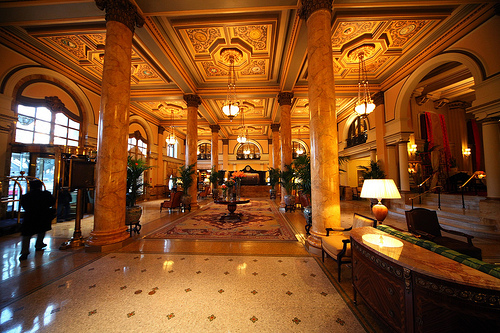
Why lobbysits are so vital for all communities

My Evening Herald column from last Saturday (23rd June 2012)

Lobby of The Willard Hotel in DC
Pic courtesy of biberfan on flickr

I have an aversion to the term: lobbyist. I resisted its use in describe myself when I worked with a range of national representative groups and I can’t recall ever using it to describe those whom I dealt with while I was a ministerial adviser.

The term “lobbyist” seems to have a pejorative tone to it. Lobbying is viewed with suspicion. Understandable enough after the Tribunal horror stories of men in well cut suits loitering outside Council chambers offering “incentives” to errant Councillors.

The reality is that lobbying is a practice as old as government itself. The origins of the term are often erroneously attributed to the post Civil War US President, Ulysses S. Grant.

Grant was fond of retiring to the bar of the old Willard Hotel across from the White House. News of his habit soon spread and he increasingly found himself besieged by promoters of this or that project as he passed through the lobby of the Hotel.

The term, in fact, well predates Grant and the Willard Hotel and most probably goes back to 17th century England and refers to the lobbies where constituents and petitioners could meet Members of Parliament.

Yet somehow the image of rail tycoons and land speculators in the lobby of the Willard smoking big cigars while stuffing cash into the pockets of pliable politicians seems to have stuck

This is a great pity as lobbying is an entirely legitimate and democratic activity. It is even protected by the First Amendment to the US Constitution which speaks of the right “…to petition the government for a redress of grievances.”

Substitute the words “advocacy” or “campaigning” for “lobbying” and you get a better sense of what it should be about: making the best case you can to the powers that be.

When it descends to kick backs and payola it is no longer lobbying, it is just corruption, plain and simple.

Yet this is the image that still persists: guys in the lobby of the Willard improperly influencing politicians, and their more modern day equivalents.

But it is a false image. Lobbyists today come in all shapes, sizes and types.

People can be advocates on their own behalf, or they can seek the services of others with experience and skills in presenting a case on behalf of others.

They can be from schools, universities, communities, companies, trade associations, trade unions, churches, charities, environmental groups or senior citizens groups

Not all lobbyists are paid. In my experience (from both sides of the divide) most are not. During my time in government I recall getting more calls and emails from volunteer lobbyists than paid ones.

Lobbying is not simply about getting access to a TD, Senator Councillor or Official. These meetings are just the final small step in a much more complex process.

Lobbying is about preparation. It is about research. It is about assembling the facts and honestly analyzing the implications of what you propose. It is a process – and one more about research, education and communication than it is just about persuasion.

I know, from being on the other side, that a dedicated individual pleading a case that they know and understand deeply can be infinity more persuasive than the most costly lawyer or public affairs consultant.

This was the case with those who campaigned for formal recognition of the bravery of those who fought at Jadotville in the Congo in 1961. Not only were they tireless and passionate, they had done their research. No one knew or understood the complexities of this tragic situation better than they. When presented, their case was undeniable.

Far from having something to fear from lobbying such as this, democracy needs it. Just as lobbyists and public affairs people will benefit from a transparent and fair system of regulation.

As Justice Brandeis observed, almost a century ago. “sunlight is the best of disinfectants”.

ENDS

Labour could be casualty in Treaty Yes vote

My Evening Herald column from today’s (Thurs May 24th) edition:

voting
Many different reasons to vote yes or no

With less than a week to go the referendum campaign seems more and more to be about less and less.

On the face of it, if you believe the posters, the choice is to Vote Yes to achieve stability or to Vote No to end austerity.

But do any of us really believe these claims? Regrettably, like previous EU referendums the debate has been conducted at the extremes, not the centre. It was the case in the Nice and Lisbon referendums, remember those “€1.84 Minimum Wage after Lisbon” posters?

Mercifully, we have been spared the malign input of Cóir and Youth Defence this time. The are no loss, especially as most of them wouldn’t know a treaty from a tea-bag (to rob a line I recently overheard)

But this absence of any significant ultra right involvement on the no side does highlight a curious undercurrent to the campaign, one, which I suspect, may be a factor in how some people decide how to vote next week.

While the slogans maybe about the EU and the Euro the referendum has morphed into a proxy battle on the future of left / right politics in Ireland.

From the start the battle front was drawn up along left versus right lines.

On the Yes side you had the right and centre right parties: FG, FF and Lab (more about them later), the employers’ and business organisations, the farmer’s groups and the more established/mainstream trade unions.

On the No side you had the socialist and hard left parties, People Before Profit, Joe Higgin’s Socialists, Sinn Féin, the more radical trade unions.

While the entrance of The Declan Ganley somewhat clouded the the Left/Right delineation, it hasn’t ruptured it.

The sight of him sharing No platforms with irredentist left firebrands is a joy to behold, especially when you consider that they agree on virtually nothing, including Europe. Most on the hard left are euro-sceptic while The Ganley is avowedly Euro-federalist.

While passing the Fiscal Treaty will herald no major day to day changes – mainly because it just restates the centre/centre right economic orthodoxy in place since 2008 – it will cement it into domestic law for the foreseeable future.

It is this that the left fears and opposes most.

Passing the Treaty would recalibrate the centre of the Irish political spectrum a few points to the right. It won’t be a seismic or noticeable shift, but it torpedoes the Left’s ambitions of shifting it the other way.

It doesn’t vanquish them, nor does it make them to tone the rhetoric down. If anything, it will do the opposite, but in their hearts they will know that their ambition to shift Ireland economically to the left has been reversed.

This explains why the campaign from Joe Higgins, Boyd Barrett and Sinn Féin has been so fierce. But not as fierce as when its over and they start to target each other.

I am not predicting that their poll rating drops are set to drop. They won’t. They will probably rise as voters use them to express their disapproval of government parties going pack on pre election pledges.

But the Irish electorate is sophisticated. It is overwhelmingly aspirational. This applies across all social classes and communities. They want their kids to do better than they did. That decides voting intentions more than anything.

In the meantime Sinn Féin will continue to do well at Labour’s expense, after all Gerry and Mary Lou are saying now what Éamon and Joan were saying two years ago.

It is Labour who will be the biggest casualty. Polls showing 40% of Labour supporters voting No could have longer term ramifications for the leadership. But whatever they may be, they can be so where near as damaging as Gilmore’s infamous “Frankfurt’s Way or Labour’s Way” slogan.

It may turn out to be the most devastating political slogan of recent times – devastating to its authors, that is.

Cowen Talks Ireland Up Seeking Inward Investment

The speech at Washington DC’s Georgetown University by former Taoiseach, Brian Cowen, has attracted some comment since it was reported last week in the Financial Times and Irish Times. Much of that comment has focussed upon just about everything about from its contents. It is a well drafted and cogently argued analysis of the crisis that befell both Ireland and the EU and well worth reading in full: Speech By Fmr Taoiseach B Cowen – 21.03.12

Given the venue and context it is evident that this was meant as a low key, considered and informed contribution and not as a political foray. While I think it will, in time, be seen as an important analysis of the situtaion from 2007/08 onwards. I also think it is important to note how the former taoiseach took the opportunity present to talk Ireland up and to touts for business and investment for Ireland. This is particularly evident in the final paragraphs of the speech:

“I believe Ireland is one of the best locations in the world to establish and to grow a business. This is not just rhetoric but is reflected in the rapid on-going overseas investment which is occurring in Ireland. Ireland is not just open for business but as, I believe, any independent assessmentwould indicate it is among the best places in Europe to start and grow an international business. This will ultimately pay off for our citizens. Indeed all of the fundamental strengths which prior to the crisis meant that Ireland had one of the highest growth rates of GNP per capita among advanced countries for a very long period are still in place and in many respects our advantages have improved in terms of increased cost competitiveness.”


The Party May be Down, But it is Certainly Not Finished

Fianna Fáil

My take on Fianna Fáil’s 73ú Ard Fheis which is taking place in the RDS this weekend (March 2 & 3). This piece was written for the Evening Herald of March 3rd

———————————-

For as long as I can recall Fianna Fáil Árd Fheiseana were the party conferences where the emphasis was more on the “partying” than the “conferencing”.

They were great social and political occasions where activists from all strands of society, right across the country, gathered to celebrate their membership of the party.

There they rallied; networked; socialised and renewed friendships with colleagues from other constituencies.

To be brutally honest, for many – myself included – the formal debates and motions were incidental to the core objective: discussing politics with old friends and hearing the leader’s speech.

While tonight’s address, the first by Michael Martin as leader, will remain the highpoint of this weekend’s Árd Fheis, it will come at the end of two days of serious and intense debate about the party’s future.

The issue before the Árd Fheis is that stark: the very survival of what was once the greatest modern political movement in Western Europe.

Over these two days – yesterday and today – at the RDS, members are deciding a slate of major reforms on how the party is organised and run.

Key to these is the move away from the representative/delegate model for candidate selection in favour of the One Member One Vote system (OMOV). In other words; to allow every active member in every cumann to have an equal say in selecting candidates and officers.

It is resonant of the crucial debate the British Labour Party had at their 1993 Conference. That was the year they ended the Trade Union block vote and adopted OMOV.

It was not an easy battle for them. The move to reform and modernise had been delayed for almost 14 years as they tore themselves apart with internal wrangling and infighting.

The result was three stunning defeats and three terms of powerless opposition.

Only by reforming their internal structures and systems did Labour allow itself to reconnect with its membership and, more importantly, with the people. After 14 years of irrelevance “New” Labour began to get in touch with the cares and concerns of the British people and respond effectively to them.

That is what Michael Martin hopes to achieve with this Árd Fheis. While the events of the past few days may have moved the focus slightly away from that goal, he was determined to shift it back as soon as the members start to gather in the RDS last night.

And a fair few of them gathered; with over 4000 members registered to attend by the middle of the week.

It is an indication of how serious the party’s grassroot members are about renewing their party. The number of people running for positions is another. Contest for the 20 nationally elected places on the Fianna Fáil Árd Comhairle has never been keener, with many bright, young first time candidates.

The same applies to several of the other senior positions, though the contest for the positions of Party Vice President was made marginally less intense with the withdrawals of two former party big hitters: Mary Hanafin and Éamon Ó Cuiv.

The weekend’s debates are not confined to organisational matters. The Clár contains some motions which, if passed, would herald interesting shifts in policy, including ones on gay marriage, gay adoption ending the regime of TDs’ and Senators expenses’ and reducing the voting age to 16.

There is also a slew of the more traditional Árd Fheis motions, including some Dublin centred resolutions calling for the reinstatement of the Ballymun Regeneration, Grangegorman DIT Campus and Metro North projects.

So, a great deal of serious work will be done by those gathering in Ballsbridge, but be certain too that there some socialising and banter as the faithful show that while they may be down, the party is by no means finished.

Derek Mooney was a Ministerial Adviser 2004 – 2010 and a Public Affairs Consultant and Speechwriter since the 90s

FF’s Sean Fleming quickly adds up the damage

My review of Minister Brendan Howlin’s day 1 budget speech. http://www.herald.ie/news/ffs-fleming-quickly-adds-up-the-damage-2954736.html

This is the first budget since Ruairi Quinn’s 1996 one where Fianna Fail have been in the position of having to respond as an opposition.

Only a handful of the remaining Fianna Fail TDs have any experience of replying to a budget statement on the hoof, like this.

Back then they had both the numbers in the chamber and in their research office to be able to respond robustly. Back then, they were also not hampered by seeng their economic strategy being implemented by the government.

In these circumstances, the party’s spokesperson, Sean Fleming, did reasonably well. His accountancy background enabled him to focus in on some of the finer and more damaging points that appeared in the tables, but somehow managed not to make it into the Minister’s script.

Sinn Fein’s Mary Lou McDonald gave one of her best Dail performances to date. Whereas Fleming stuck with the detail, she concentrated on the politics, excoriating and needling Fine Gael and Labour backbenchers for reneging on their election promises.

Over recent years we have been moving from the traditional westminster model of budgets where the finance minister goes into a self imposed silence or purdah in advance of the statement, to a european one where large elements emerge into the public arena in advance.

While recent budgets have seen their share of advance kite flying, this one brought the craft to new and dizzying heights. 

It is all about the management of expectations. It’s an old trick. Get your people spinning that medical cards might be hit, and then hope the public will break out the champagne, or possibly the Babycham given our straightened times, when they are not.
So the theory goes. In this case the audience was not so much the people at home, but the massed ranks of backbench government TDs who would like to be two term Deputies not one termers.
This may account for the very muted applause after Minister Howlin resumed his seat. Though this may just as much been due to how inappropriate and ill judged the loud cheers and fulsome applause the Fianna Fail deputies gave to their recent budgets seems now.

Gallagher has no one to blame but himself

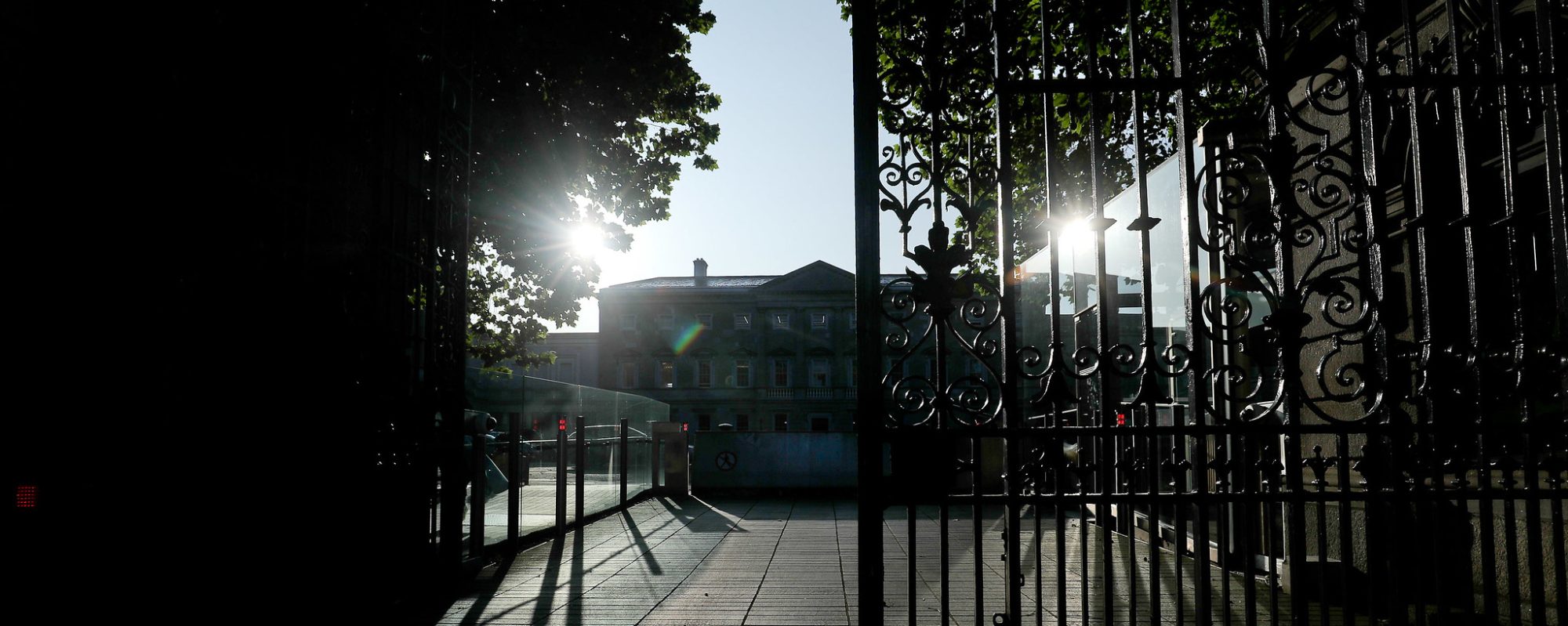
Aras an UachtáranBelow is my critique of the Sean Gallagher’s unsuccessful campaign for the Áras. This appears in today’s EVENING HERALD (Friday Oct 28th) though my column is not online there, just yet.  

Already they are calling it the Gallagher moment. What they mean is that instant on the Frontline debate when the momentum that had driven Gallagher’s campaign for the previous ten days evaporated under Sinn Féin fire.

The reality may be a little less dramatic. While Sean Gallagher’s campaign did come to a halt on Frontline, it took the next 48 hours for it to go into a full nose dive.

On the face of it the McGuinness assault was intended as a signal to Sinn Féin voters not to transfer to Gallagher. The polls were showing Sean with a convincing lead over Higgins in the region of 10%, but still needed McGuinness transfers to see him over the line.

The Shinner’s strategists were determined that they would not be the ones to give Sean the keys to the Áras and by extension hand a vicarious victory to Fianna Fáil, even by proxy.

Their intent was clear, make it as difficult as possible for Gallagher in the final days. It was why they stored up the the story for a few days. Conversely that is what made the situation even more damaging for Gallagher. He clearly knew the story was out there, although in different guises and varying versions, but when confronted with it he seemed dazed and confused.

The real damage came the following day when Gallagher still seemed unable to deal with the allegation. His campaign produced a punchy and clear press release, but the candidate seemed either unable or unwilling to deliver it.

Perhaps his problem was that after months of uttering bland and cosy messages about positivity and unity (not to mention entrepreneurship) he just could not find the steel in his soul needed to take on his challengers and tell them to go take a running jump at themselves.

Yes, Sinn Féin and McGuinness were changing their story. Events that were claimed to have happened after the dinner were now being said to have happened before it. Their story was all over the place. But it appeared that Gallagher’s was too, if you were just to go by what he himself said in the interviews he did on Pat Kenny and the Six One news.

So what if he had been involved in a fund raising dinner back in 2008. The event was not a clandestine one. The donations were declared. The money was going for legitimate political expenditure. He had been the campaign manager for a successful Dáil candidate in 2007. He had a onus to help defray the costs and expenses of that election. I was in a similar position elsewhere. There were bills to be paid, so money needed to be raised by volunteers and others. No banks were robbed, no one got shot.

So confused and oblique were his replies that the problem festered and grew all day Tuesday and Wednesday. Many including myself thought the damage might be limited to his capacity to attract transfers. It now looks like it went far wider than deeper, possibly due to it all been linked to question marks over his company accounts and large fees taken by himself.

The two weeks of labelling him a Fianna Fáiler did not, as evidenced in successive polls, do him any damage. The flaws and errors in his own handling of a relatively minor crisis did. The Presidency is about judgement, his was called seriously into question.

In the case of Gay Mitchell the judgement that must be called into question is that of the senior party figures who allowed him to go forward as a candidate. Gay is and remains a deeply committed public representative and Fine Gaeler, yet it has looked for the past month that the party on the ground had abandoned him. His campaign was unfocussed and patchy from the start, not helped by whispers that he was not really Enda’s first choice as a candidate. Well, if he wasn’t then why run him? Is Enda the leader or not?

Gay can take some comfort that his own poor showing was reflected in the Dublin West by-election where the party’s candidate also faired badly. The question how is how do we reconcile opinion polls that consistently show Fine Gael in the mid 30s with these results?

There will be some pretty interesting analysis to be done when the smoke and dust settles after this weekend,.

Why current crisis is more political than economic

My latest Evening Herald column from August 8th 2011 – you can also see it online: here

——————————

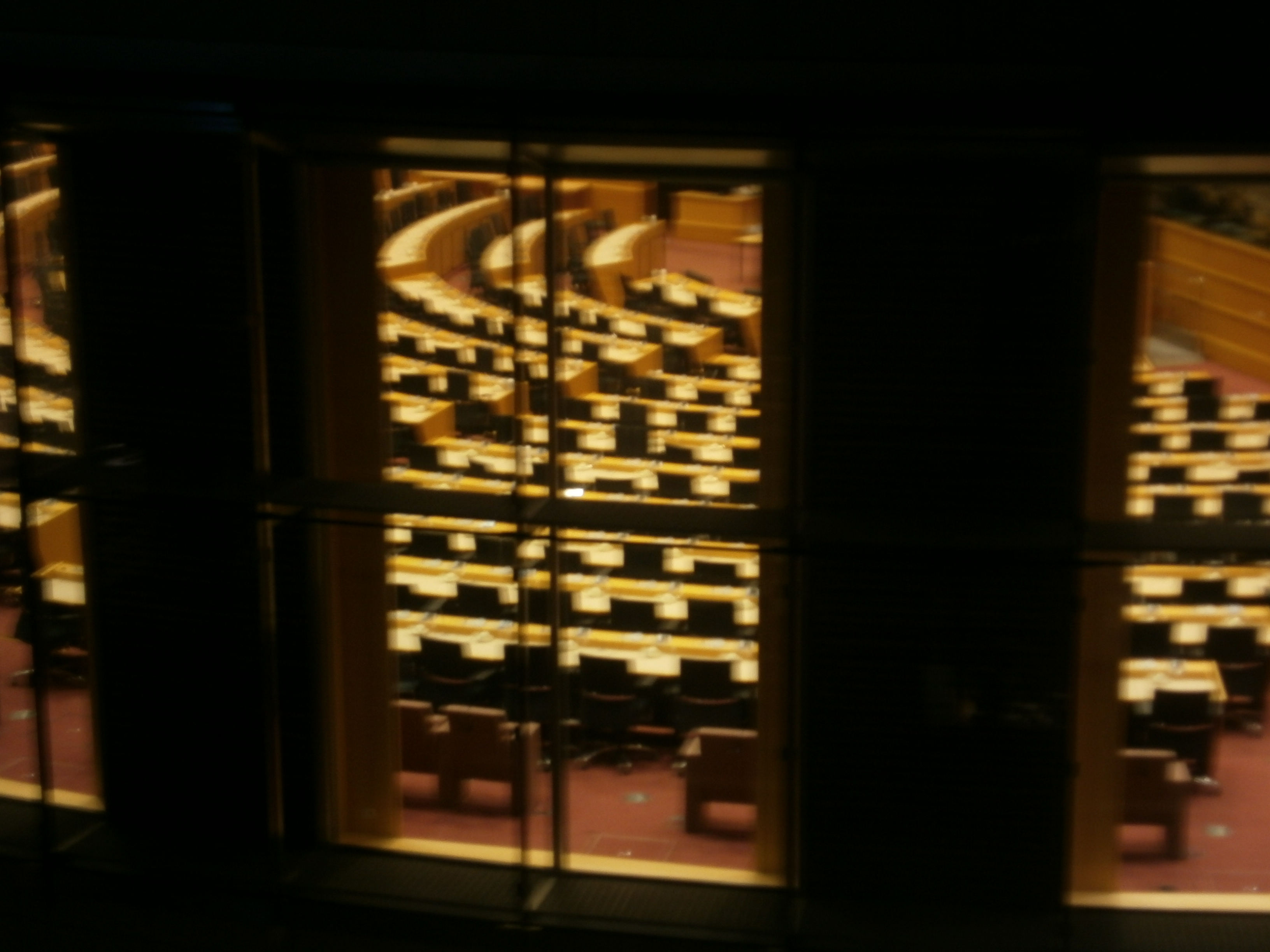
Euro Parliament Committee Room - Bxl

Success has many fathers, but failure is an orphan. Clearly, no one has told the economists this.

In any other walk of life — architecture, dentistry, cake decorating — people run away when they see failure or disaster looming.

Not the economists. They embrace disaster. They revel in it.

As soon as a crisis looms they rush to the TV camera and the microphone to say how they predicted it.

They take a pride and pleasure in being associated with doom and failure that would do your heart good, if the consequences were not so dire for the rest of us.

In the wake of last week’s market turmoil, the weekend papers and discussion shows were full of economists doing what they do best.

Switching between the radio stations on Saturday and Sunday mornings was like playing some demented radio five-card stud — I see your dollar bond collapse and raise you an Italian bailout.

The Sunday newspapers were as bad with even more dire predictions of either the collapse of the euro or the dollar, or both.

We are living in uncertain economic times … and will be for some years to come. No one needs to tune into the radio to learn that.

This is a major culture shock for many, though not for those of us who lived through the Eighties … and no one wants to see another decade lost to despair and inactivity.

But I digress. So why have we seen renewed predictions of crisis this week? They do not seem to have been prompted by the publication of any eurozone statistics or hard figures.

Neither could they be reasonably explained away as just the result of a global slow news day.

While they may, in part, be due to the outworkings of the American debt ceiling compromise, the giveaway is in the word most often employed by economists in describing the crisis: confidence.

We have seen share values drop and bond costs increase over the past week because market analysts and investors do not have confidence in the capacity of eurozone countries to deal with all the debt in the system.

Could these possibly be the same investors who were protected from massive losses in banks and bad investments by those same governments?

Ironic, isn’t it? Eaten bread may be soon forgotten, but never with anything like the speed and hypocrisy with which socialised private losses are forgotten by the markets.

It is tough to make someone have confidence in you, particularly when you have not got much confidence or trust in them. But wringing our hands in anger on this won’t make the problem go away.

As I said earlier, the past week’s scare does not have its origin in a spreadsheet. It is fundamentally a political issue; not an economic one.

The real danger for us is that the dramatic actions and reforms the market is demanding in return for their “confidence” would be deeply unacceptable to people here and across the Eurozone.

This is the almost impossible balance that the eurozone leaders are trying to strike. To make the changes just about needed to gain market approval without totally alienating public opinion at home. The political spectre of Brian Cowen must stalk their deliberations.

Not that the eurozone leaders merit much sympathy. Merkel and Sarkozy’s slowness to act decisively in the early stages of this crisis has cost us all. Their dithering and loose talk threw Ireland to the market wolves in a futile attempt to stem the tide at no cost to themselves.

Their recent reforms to the European Financial Stability Fund have been more carefully judged, though these will take a while to work their way through.

Meanwhile, the next time you hear an economist demanding firmer and more determined actions, just remember that translates in higher taxes and higher charges for you and yours.

– Derek Mooney

Latest Herald column: First Anniversary of Dermot Earley’s Passing

This is my latest Evening Herald column: see here

Remembering Dermot Earley, a true Irish hero

By Derek Mooney
Saturday June 25 2011

IT IS a year since this country lost a man Enda Kenny described as iconic: Army Chief of Staff. Dermot Earley.

Far better people than me have given eloquent testimony to what an extraordinary man Dermot was. This can be readily verified by a visit to the excellent exhibition on his life and career at the GAA museum at Croke Park. On a purely personal level, what amazed me most about him was his capacity to command great authority while at the same time exhibiting a sense of humility.

He was strong and forceful, yet also gentle and relaxed. For almost six years, from 2004-2010, I worked down the corridor from him in the Parkgate HQ of the Defence Forces and Department of Defence.

Within a short space of time I witnessed his great personal skills, not least his ability to put people at ease. Both he and I were attending a social occasion organised by the soldiers’ representative body PDFORRA.

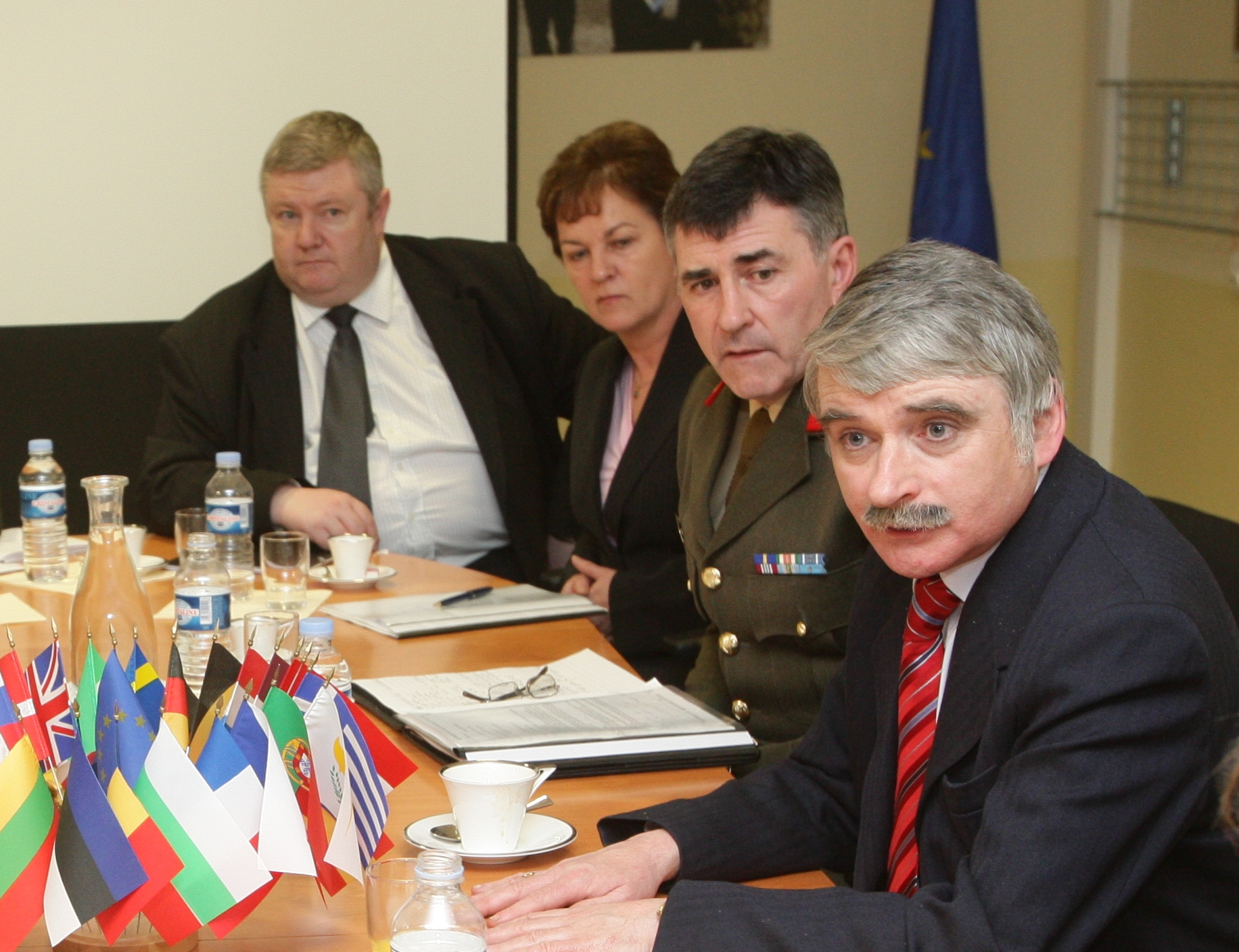
Through their involvement with the Euromil, the network of military representative bodies across Europe, PDFORRA had been supporting other groups seeking their own representation systems.

Attending the social function were three of four officers of a sister organisation not recognised by their own military authorities.

While I am 90pc sure I remember the country concerned, I won’t name it here. One of the PDFORRA senior officials asked me if I would mind meeting these guys. I said I had no problem and was introduced to them.

They were in civvies, as they were here on their own time.

IMPRESSED

Minutes later we were joined by Dermot, who arrived in the uniform of a Major General, as our Deputy Chief of Staff. He suggested we sit down at one of the tables and have a chat and a drink. The guys were not just impressed, they were visibly moved. Here was the second in command of our army not just meeting them, but sitting down and talking face to face when their own mid-ranking officers would not.

My other abiding memory was a a trip to the EUFOR HQ outside Paris. During a break, three or four of us, including Dermot, went outside to stretch our legs.

As we strolled we noticed a number of French soldiers on duty looking over at him from a distance. They could tell he was a senior general from his insignia, though it was clear they were unsure who he was, or where he was from.

He noticed this and chuckled as we saw them talk among themselves. At this point I piped up: “I think I know what they are saying.” “What’s that,” asked Dermot. “They are saying,” I replied, “you see yer man over there… he’s the greatest Irish footballer never to win an All-Ireland medal.” He looked at me sternly for about five seconds and then burst out laughing. He may have said something back at me, but I cannot quite recall just now. It is, however, the way I will remember him.

Ar dheis De go raibh a anam dilis.

– Derek Mooney