
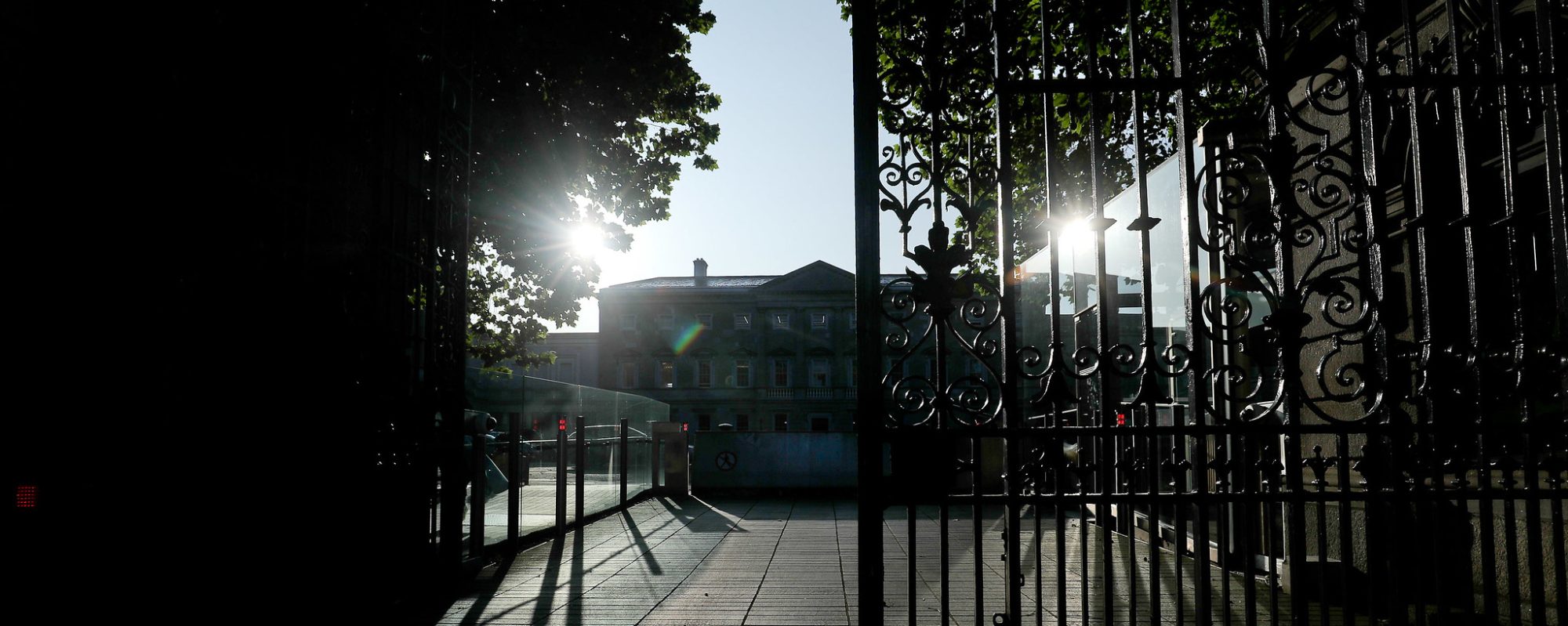

The Party May be Down, But it is Certainly Not Finished

Fianna Fáil

My take on Fianna Fáil’s 73ú Ard Fheis which is taking place in the RDS this weekend (March 2 & 3). This piece was written for the Evening Herald of March 3rd

———————————-

For as long as I can recall Fianna Fáil Árd Fheiseana were the party conferences where the emphasis was more on the “partying” than the “conferencing”.

They were great social and political occasions where activists from all strands of society, right across the country, gathered to celebrate their membership of the party.

There they rallied; networked; socialised and renewed friendships with colleagues from other constituencies.

To be brutally honest, for many – myself included – the formal debates and motions were incidental to the core objective: discussing politics with old friends and hearing the leader’s speech.

While tonight’s address, the first by Michael Martin as leader, will remain the highpoint of this weekend’s Árd Fheis, it will come at the end of two days of serious and intense debate about the party’s future.

The issue before the Árd Fheis is that stark: the very survival of what was once the greatest modern political movement in Western Europe.

Over these two days – yesterday and today – at the RDS, members are deciding a slate of major reforms on how the party is organised and run.

Key to these is the move away from the representative/delegate model for candidate selection in favour of the One Member One Vote system (OMOV). In other words; to allow every active member in every cumann to have an equal say in selecting candidates and officers.

It is resonant of the crucial debate the British Labour Party had at their 1993 Conference. That was the year they ended the Trade Union block vote and adopted OMOV.

It was not an easy battle for them. The move to reform and modernise had been delayed for almost 14 years as they tore themselves apart with internal wrangling and infighting.

The result was three stunning defeats and three terms of powerless opposition.

Only by reforming their internal structures and systems did Labour allow itself to reconnect with its membership and, more importantly, with the people. After 14 years of irrelevance “New” Labour began to get in touch with the cares and concerns of the British people and respond effectively to them.

That is what Michael Martin hopes to achieve with this Árd Fheis. While the events of the past few days may have moved the focus slightly away from that goal, he was determined to shift it back as soon as the members start to gather in the RDS last night.

And a fair few of them gathered; with over 4000 members registered to attend by the middle of the week.

It is an indication of how serious the party’s grassroot members are about renewing their party. The number of people running for positions is another. Contest for the 20 nationally elected places on the Fianna Fáil Árd Comhairle has never been keener, with many bright, young first time candidates.

The same applies to several of the other senior positions, though the contest for the positions of Party Vice President was made marginally less intense with the withdrawals of two former party big hitters: Mary Hanafin and Éamon Ó Cuiv.

The weekend’s debates are not confined to organisational matters. The Clár contains some motions which, if passed, would herald interesting shifts in policy, including ones on gay marriage, gay adoption ending the regime of TDs’ and Senators expenses’ and reducing the voting age to 16.

There is also a slew of the more traditional Árd Fheis motions, including some Dublin centred resolutions calling for the reinstatement of the Ballymun Regeneration, Grangegorman DIT Campus and Metro North projects.

So, a great deal of serious work will be done by those gathering in Ballsbridge, but be certain too that there some socialising and banter as the faithful show that while they may be down, the party is by no means finished.

Derek Mooney was a Ministerial Adviser 2004 – 2010 and a Public Affairs Consultant and Speechwriter since the 90s
I Don’t Like The Fiscal Compact Treaty, But I Will Still Vote Yes

My thoughts on why I am not impressed with this Fiscal Compact Treaty, but why I will vote for it and urge others to vote Yes too.  

A few nights ago I was on the cusp of penning a piece as to how it was possible to be a committed pro European and still urge a “No” vote at the forthcoming Fiscal Compact Referendum.

My reasoning broadly ran as follows.

  • While the Fiscal Compact does contain some important measures that would have addressed the fiscal problems that others, not Ireland, had experienced in the run up to the crisis – it effectively does nothing about the core issue facing the EU and the Euro: the dysfunctional European banking system.
  • The EU Council and Commission have wasted over two years taking pointless half measures that tinker about with the symptoms of the problem while studiously ignoring the core problem: the banking crisis.
  • This fiscal compact is just the latest in a series of well intentioned, but minimalist attempts to assure the markets that it ready to address the crisis. Like the others it will fail.
  • What the EU needs now is a short sharp shock to jolt it into effective and decisive action. By decisive action I mean tackling the banking and credit crisis head on and bolstering the role of the European Central Bank to become the lender of last resort.
  • Ireland can not only deliver that shock by rejecting the Fiscal Treaty as inadequate and lacking substance, but it can take the lead – particularly among the smaller, peripheral nations – in demanding that the Commission, particularly President Barroso stop acting as the servants of the French & German governments and get the EU back to being a Union of countries that work together, in partnership and in solidarity for our mutual benefit.

That was my broad theory.

It is not heresy or anti European to say that the Fiscal Compact Treaty does not address the biggest problem facing the economies in both the EU and the Euro.

The point is not that the Fiscal Compact goes too far – it is that it is too one sided. It addresses a secondary problem – not the primary one. It almost completely omits the measures required, specifically on the ECB, to tackle the real problems facing us all.

As I was writing the piece I realised that while I still fully believe in points 1 – 4 the reasoning underpinning Point 5 was fatally flawed.

Ireland rejecting the Fiscal Compact will not be seen as us rejecting it as a half measure. It will be seen as Irish petulance. We have thrown down the gauntlet before – on Nice 1 and Lisbon 1 for reasons that most in the EU failed to grasp.

The Taoiseach and his Ministers have shown not the slightest interest in showing Leadership at the EU Council or of building any consensus among the smaller peripheral countries.

Rather the Taoiseach has been content to roll over and have his belly tickled (metaphorically – I hope) by the big two, and hope that no one will ask him any difficult questions.

He has consistently underplayed his hand for the past year. Stories that talked tough and banged the table at his first Council meeting yielded nothing. Since then he has been content to keep his head below the parapet. The same applies to Eamon Gilmore.

There is nothing to suggest that either are capable of building a consensus across the EU. The reality is that neither have attempted it. Their antithesis to travelling to meet other leaders or hold bi-laterals here is mind boggling, especially when you consider how they howled in opposition that the last Government was allowing Ireland’s reputation to slip.

None of this augurs well for Ireland’s forthcoming EU Presidency, but that’s another story.

Those pointless rejections of Nice 1 and Lisbon 1, are now coming back to bite us. Those who urged us to say No then, are once again in the vanguard urging us to Vote No once more. Their reasoning has not changed. They are as Eurosceptic and anti European as they ever were.

Saying No now would be seen as biting the hand that feeds us – even when that hand has been making a few bob from what its been doing.

Worse still saying No would not gain anything by saying No – except to put ourselves in some undefined limbo beyond the revised European Stability Mechanism. Whereas our saying No in Nice 1 and Lisbon 1 held up the process of ratifying those treaties, saying No now will halt nothing.

We have no veto. We have no bargaining chips on this one. There is no point in threatening to pull the trigger when everyone else knows we have no ammo in the chamber.  UCD’s Dr Ben Tonra makes this point very clearly in an excellent post on the politicalreform.e page here.

The conclusion is that we must pass the Fiscal Compact treaty and then use that passing of the Treaty to build a coalition of smaller countries across the EU to tackle the real problem facing us.

I would love to think that saying No would urge the EU into actions that are long overdue. The sad reality is that it will not.

So, just like the French Socialists who were compelled to vote for Chirac in Round Two of the 2002 Presidential elections, rather than seeing Le Pen slip through, I may be taking a disinfectant mat with me to the polling station as I vote Yes.

I want a better treaty. I want a treaty that tackles the real problems. This treaty itself even acknowledges the need for a further treaty.

If passing this one is the price we must pay to get to that point – then let us do so – and quickly.

Is Sinn Fein’s living on the average wage claim all that it seems?

My Evening Herald column from today’s paper. Friday 17th February 2012

Sinn Féin

There are few topics more guaranteed to raise the hackles than politicians’ pay. I recently overheard a conversation on the topic in a pub in Cork. It was hard not to hear it given the volume of the exchange. This was curious as they were agreeing with each other – their argument was as to which of them detested politicians more.

The late Brian Lenihan kick started the process of trying to bring down the levels of politicians’ pay and expenses back in October 2008. There have been a few rounds since. Enda Kenny started out ok reducing the number of garda drivers and cutting staff levels in ministerial offices, but recently lost the plot with the €17k pay hikes for Super Juniors.

The issue of reducing politicians’ pay and re-allocating that money elsewhere even raised its head during the Presidential election. Several candidates said they favoured a cut, including Martin McGuinness who promised to only take home the average industrial wage if elected.

In doing this he was repeating what Sinn Féin elected reps say they do in the Oireachtas and the Northern Ireland Assembly. While TDs earn about €92K a year, Sinn Fein’s TDs say they take the average industrial wage: around €32,000 per year. Speaking to the Donegal Daily a few weeks ago SF TD Pearse Doherty put his weekly take home pay at around €540.

They frequently remind us of their largesse. Without a doubt anyone foregoing 60% of their salary is entitled to praise and kudos, but only when that is what they are really doing. So, this begs the question: are they truly foregoing the money?

Martin McGuinness partly answered this question in the Guardian newspaper in April 2009. This was in the aftermath of a report that he and Gerry Adams jointly claimed expenses of £3,600 a month (under the House of Commons second home allowance scheme) for rent on a shared two-bedroom flat in north London.

Speaking at the time Mr McGuinness said: “I get roughly over £300 per week from Sinn Féin, the exact same money as the person who drives me to my work”.

“I have no difficulty or problem with that, knowing that the rest of the money is being put into developing Sinn Féin and developing constituency offices all over the island of Ireland for the people of Ireland.”_

There are two things wrong with this statement. First, he regards Sinn Féin as his paymaster; not the taxpayer. Second, the sense of pride that the “rest of the money”, in his case in the region of £75k before tax, does not go back in to central funds to pay for hospital beds or SNAs: but rather goes to funding and advancing Sinn Féin’s political enterprise.

The money surrendered by Sinn Féin’s TDs and Senators does not benefit the taxpayer or the person on welfare: it benefits their own local party organisations. It goes to running constituency offices and funding local activists. In Pearse Doherty’s case it pays for two part time workers in his constituency

So, Sinn Féin takes money from the public coffers and puts it into running political operations dedicated to helping them keep their seats. This is not so much a sacrifice: it is more of an investment in their own political future.

Though on the average industrial wage, they get to be local employers with extra paid staff. I am fairly sure there are not many others on the industrial wage out there who can similarly hire someone in to help them keep their job.

Yet the rules state that a political party may not accept a donation from the same person in the same calendar year which exceeds €6,348.69 in value. So is what they are doing a donation or not?

It is an issue which freelance journalist Gerard Cunningham aka faduda.ie has attempted to raise with both Sinn Féin and SIPO, though without much success.

Is there a distinction between donations depending on whether they are allocated locally or nationally – if so, then it is a big loophole. If not, then shouldn’t all TDs and all Senators be placed on a level playing field when it comes to funding their local political activities?

Most important, if taxpayers money is being handed back – shouldn’t it be handed back to the taxpayer?

ENDS

A tough year for Martin – and it will get tougher

My column in Saturday’s Evening Herald (Jan 28 2012) on Micheal Martin’s first year a leader of Fianna Fáil

—————

A year ago this week {or “today” if published on February 26} Michael Martin sought and won the toughest and possibly most thankless job in Irish politics today: leader of Fianna Fáil.

Looking back over the past year there must have been moments when he felt he hadn’t so much won the prize, as been landed with it. Yet he did win it.

The manner in which he took a stand and challenged for the leadership helped him throw off his previous reputation as an ultra cautious politician who preferred to kick problems to committees rather than taking tough decisions.

On becoming leader [this day one year ago] he found himself at the helm of a demoralised and dissolute party facing into an election for which it was woefully unprepared.

The once great election winning machine that had been Fianna Fáil limped and staggered its way over the line with its new leader’s energetic and impassioned debate performances as rare high points in an otherwise horrendous campaign.

The result was best described by a northern colleague of mine as the greatest political punishment beating ever. The public was not just disillusioned and angry with Fianna Fáil and its Ministers: it had no interest in its views or opinions.

While his first full year in the job has been tough, it could actually have been worse. At the outset many pundits thought the very best he could hope for was stemming the tide of Fianna Fáil’s decline.

Recent opinion polls and the unexpected second place showing in the Dublin West by-election point to the party not just halting the decline, but even reversing it a bit. But there will be no one around Martin popping the champagne corks for a long while yet.

While the party’s prospects may look a tad better now than a year ago: its future is still by no means assured. The party has a long way to go before the public will be ready to listen to what it has to say.

One of Martin’s successes, if this is the right word, has been to get the party’s membership to grasp the new political reality that Fianna Fáil can no longer take its continued existence or relevance as inevitable.

This was no easy lesson for the party to accept. In some ways it is still a work in progress. While there is much talk of reforming both how the party is run and how it develops policy, these have yet to be implemented.

Hopefully, the reconnection Martin has making between the leadership and the members through his constituency visits and personal engagement should enable him to drive through a meaningful reform package.

But it is not as if everything has gone his way. While the right decision was eventually made; the very public “will they/won’t they” row on running a candidate for theArastook its toll. Likewise, Martin’s sometimes over wordy and earnest contributions at Leader’s Questions in the Dáil have not helped convey the idea of a strong leader.

This latter criticism is often attributed to his need to attack on two fronts at once.  Martin is not just targeting the government; he is also targeting the other opposition alternative in Sinn Féin.

Another explanation is that Sinn Féin now has a much bigger back office and research resource than Fianna Fáil. Addams and Co may be reading from scripts, but they are well crafted and written ones

It is not as if his task will get any easier either.

In the coming weeks Martin faces the prospect of dealing with the fallout of the Mahon Tribunal’s report. While there is no confirmed date for its publication, there is much speculation that it may be released just before Fianna Fail’s Árd Fheis at the beginning of March.

Talk about bad timing.

Whatever happens, Martin’s own position is secure. He has from now until the Locals and Europeans in 2014, at least, to show that he can lead the party to recover some of the public trust and confidence it lost.

After one full year, the toughest job in Irish politics is going to get even tougher.

ENDS

To burn bondholders or not to burn them – is there a third option?

Is it any wonder there is so much confusion about what to do with the bank bondholders?

Less than twelve months ago (February 10th to be precise) Leo Varadkar was saying:

Any bank coming to us looking for more money is going to have to show how they are going to impose losses on their junior bondholders, on their senior bondholders, and on other creditors before they come looking to us for any more money. Not another cent.”

That was before the General Election. Eight months after the election; the now Minister Varadkar had changed tack and was saying:

What’s happening in relation to the Anglo bondholders is they’ll be paid from Anglo’s own resources, from the sale of its own property assets, for example.

By last weekend the line had developed further. On Sunday he was  says that the Government “had to weigh up the costs on the one side and the risks on the other.” and that not paying the €1.2billion of Anglo bonds due this Wednesday: “…would have implications for other State companies like ESB and Bord Gáis,”

It is probably a littler bit unfair to single out Minister Varadkar like this. He was saying pretty much what everyone else was saying in FG during this period. His skill and talent was that he said it more directly and concisely than almost any of his colleagues. It is what makes his quotes more memorable.

Whatever about the changes in the Fine Gael script, two bigger truths have not changed over the past year. The ironic part is that these truths are contradictory.

The first is that the ECB is still holding to its line that bond holders should not be ‘burned’. By that they mean that bond holders should not be forced to accept any reduction in the monies due to them.

The other is the reality that there is a very active market in bonds being sold off at a discount in return for hard cash. These discounts can be fairly hefty, particularly where those bonds have a tasty coupon included.

This trade in bonds was touched upon at a recent seminar on the issue of offset debt, hosted by Thomas Pringle TD and how it could ease the plight of those in negative equity.

Some bond holders are deciding, in their own business interests, to mitigate their losses and sell bonds at a discount. Their rationale is that a bird in the hand is better than two in the bush: a not uncommon business approach.

They sell the bonds on to vulture capitalists who buy the bonds at a 30, 40 or even 50% discount. They retain the bonds face value, and so, they stand to make a hefty profile when the bonds are paid off.

While bondholders may choose to do this, the ECB says they must not be made to do it – except in the case of Greece, but let’s put that to one side for the moment.

This leaves a classic Catch 22. Investors, speculators and traders are selling bonds between each other at varying hefty discounts, with the prospects of making even bigger profits.

It is one thing to say that bond holder’s rights should not be ridden over and allow the market to function, but telling European taxpayers that they should not enter the open market and offer to buy back those bonds, is another.

Its like signing an IOU and watching it being traded among your friends for less than its face value, but being told you cannot dare attempt to buy it back: even if the guy currently holding it would be willing to sell it to you.

Ireland cannot do a solo run and give two fingers to the ECB, but it needs to start canvassing opinion around the EU table to start looking at this issue again.

The noises coming from the new Belgian government, coupled with the prospect of a new occupant of the Élysée Palace come the summer suggests it may be a route worth exploring. Something, perhaps, for the Taoiseach to consider as he heads to Brussels?

Joan Burton’s Second Law of Inverse Stability

Hadn’t posted on here in a few weeks – catching up on missed items today. This is the most current of the three blogs posted today. It was originally intended for today’s Evening Herald

—————————————————

As far as I am aware the only eponymous Irish Rule of Politics was named for its creator, the much missed political journalist Gerald Barry.

The rule roughly states that “every leader of the opposition will, be at some point, be hailed as the worst ever leader of the opposition.”  Its strength lies not just in its inherent truth; but also to the fact that it applies in almost every jurisdiction.

Look at poor Ed Miliband. How he manages to drag himself into Parliament after reading reports of backbench murmuring and discontent in that morning’s papers is beyond me.

Yet he does, thus highlighting the fundamental truth that scorn and opprobrium goes with the job of being opposition leader. Maybe Enda Kenny could give Ed some pointers on this

But I digress. While the US has numerous rules and laws of politics, Gerald Barry’s is the only one I can think of in the Irish context, or at least it was until now.

Over the weekend the Social affairs Minister, Joan Burton reminded us that there is a second immutable rule of Irish politics, even if it hasn’t had a name up to now.

This Second law states that “large government majorities can lead to disaster and indiscipline”. It so might have been drafted with Minister Burton’s tactics in mind that it probably should be named for her: The Burton Second Law of Inverse Stability.

It’s most notable occurrence to date was during the 1977 – 1981 Fianna Fail majority Government. In 1997 Jack Lynch returned Fianna Fail to office with a twenty seat majority.

Two years later a variety of backbench insurrections on issues from the Farmer’s Levy to British Army border flyovers had so weakened and undermined his leadership that he lost two by-elections in his own back yard and would see his leadership ended by December of 1979.

While at first sight it would appear that big majorities would leave a government comfortably placed to win Dáil votes, the counter intuitive truth is otherwise.

Such big majorities allow backbenchers the scope to flex their muscles and run risks they would not dare try if they thought their actions might herald an election and the loss of their own seat.

Enter Minister Joan Burton. Almost since her appointment to government she has erred on the side of expressing her own strongly views rather than merely defer to the broader FG/Lab consensus.

She has some entitlement to feel aggrieved. She did the heavy lifting as the party’s Finance spokesperson in opposition. She carved out a separate position for the Labour party on the economy, differentiating itself from Fine Gael.

She played a vital part in securing the Labour swing, only to find herself having to standby while Labour effectively disavowed her policies, not in favour of Fine Gael’s but, in favour of those of the outgoing Government.

A hard pill to swallow, made harder by seeing front bench colleagues leap frog her into Cabinet.

It would seem her response has been to work the Labour back benches and strive to speak more for them than for her FG colleagues. A good strategy for positioning yourself within the party: not a great one when it comes to conveying the impression of strong and cohesive government.

While her comments on a second bailout may not send the markets into a spin or (regrettably) make President Sarkozy’s political headaches any worse, it will not endear her to her party leader or Cabinet colleagues.

It also sends a signal to others to feel free to do the same. Clearly, with three of them jettisoning the Labour Whip so far, labour backbenchers do not need much encouragement, but for how much longer can or will Fine Gael be prepared to tolerate this?

Which brings me back to the issue of rules and laws. Newton’s Third Law of Motion states: “To every action there is an equal and opposite reaction”. It is just as true in politics.

While they have been disciplined up to now, I suspect it won’t be too long until we see some Fine Gaelers feeling the same need to unburden themselves and say their piece.

Maybe we will then have our third law of politics: Varadkar’s Third Law of Political Momentum?

Twitter @dsmooney

Taxes won’t make us quit fags. We’ll just smuggle them

A copy of my Evening Herald column from December 28th 2011 

I suspect most of us will be glad to see the back of 2011. As we prepare for its successor we will do so in the hope it will be better and with the traditional list of good intentions for 2012.

There are many things I hope to have the discipline and self will to both do and not to do in the year ahead. Fortunately, one of those things is not giving up cigarettes as I have never had that particular nasty habit.

I don’t smoke. I have tried it a few times, but I have never taken to it. Maybe this helps explain why I have never understood its allure. Sadly, I have seen the damage they can cause close up.

Just under ten months ago my Dad, Fergus, died following a four year battle with lung cancer. He had fought it bravely, but eventually his heart gave out. Not helped by the fact he spent decades smoking 40 a day, un-tipped ones at that.

I have an uncle who still smokes despite the damage it has already done to his health. I have a favourite aunt and various other relatives and friends who I would dearly love to see quit cigarettes.

Clearly, I am not unique in any of this, but I make the point as a background to why I think the recent increase in tobacco duty was a bad idea.

I was chatting with my Mum just before Michael Noonan rose to give his Budget speech. The wanted to see an increase in tobacco duty as she felt it might deter others from going through what my Dad had endured and also help stop her brother from continuing to smoke.

While she was happy with the Budget increase, I fear her hope that increasing the price of a packet of cigarettes by 5c, 10c or 50c will reduce the amount my uncle (or anyone else) smokes will not be realised.

I wish it would, but logic and factual analysis makes it increasingly clear that it won’t.

This is not just me picking conclusions out of thin air. It is the conclusion reached by the Revenue Commissioners’ Economics of Tobacco .report published last February.

It estimated that about 20% of cigarettes consumed inIrelandare not taxed here, ie, they come into the market illegally via smuggling. It also says this figure is rising. Some suggest their estimate is conservative and is probably somewhere nearer a third.

Whatever the precise figure, there are two things we know. We have the highest excise on tobacco products inEuropeand we have increasing levels of black market sales of smuggled tobacco.

The relationship between these two facts is so blindingly obvious that even the Department of Finance has been moved to admit it

Replying to a Dáil question last October, the Junior Minister for Public Expenditure & Reform stated that “The average price of a packet of cigarettes here is €8.65, whereas inHungary it is €2.06… raising tax on tobacco products further would simply encourage the illicit trade..”

So why go and do precisely that? Why indulge in a gesture that not only flies in the face of the facts, but also only serves to benefit the lowest in our society.
Some 218 million smuggled cigarettes were seized in 2009. This includes the 120m intercepted at Greenore Port, Co Louth: the largest ever seizure in the EU. But  we still only seize a fraction of the illicit trade. Countless millions of cigarettes, including fake illegally produced ones with prohibitively high tar contents, are making it on to the streets.

This smuggling is funding the activities of criminal and dissident terrorist gangs to the tune of probably €3million plus per week.

Meanwhile the Government loses about half a billion Euros a year in lost taxes that could be used to fund treatments that might actually combat nicotine addiction.

The sad truth is that there is no one simple action government can take to stop people from smoking: this includes plain packaging (a topic I will return to).

The sooner we grow up and acknowledge this fact the sooner we will start to really address the problem.

Twitter: @dsmooney

FF’s Sean Fleming quickly adds up the damage

My review of Minister Brendan Howlin’s day 1 budget speech. http://www.herald.ie/news/ffs-fleming-quickly-adds-up-the-damage-2954736.html

This is the first budget since Ruairi Quinn’s 1996 one where Fianna Fail have been in the position of having to respond as an opposition.

Only a handful of the remaining Fianna Fail TDs have any experience of replying to a budget statement on the hoof, like this.

Back then they had both the numbers in the chamber and in their research office to be able to respond robustly. Back then, they were also not hampered by seeng their economic strategy being implemented by the government.

In these circumstances, the party’s spokesperson, Sean Fleming, did reasonably well. His accountancy background enabled him to focus in on some of the finer and more damaging points that appeared in the tables, but somehow managed not to make it into the Minister’s script.

Sinn Fein’s Mary Lou McDonald gave one of her best Dail performances to date. Whereas Fleming stuck with the detail, she concentrated on the politics, excoriating and needling Fine Gael and Labour backbenchers for reneging on their election promises.

Over recent years we have been moving from the traditional westminster model of budgets where the finance minister goes into a self imposed silence or purdah in advance of the statement, to a european one where large elements emerge into the public arena in advance.

While recent budgets have seen their share of advance kite flying, this one brought the craft to new and dizzying heights. 

It is all about the management of expectations. It’s an old trick. Get your people spinning that medical cards might be hit, and then hope the public will break out the champagne, or possibly the Babycham given our straightened times, when they are not.
So the theory goes. In this case the audience was not so much the people at home, but the massed ranks of backbench government TDs who would like to be two term Deputies not one termers.
This may account for the very muted applause after Minister Howlin resumed his seat. Though this may just as much been due to how inappropriate and ill judged the loud cheers and fulsome applause the Fianna Fail deputies gave to their recent budgets seems now.

Enda’s State of the Nation fails to Inspire

An Taoiseach’s national address was well intentioned but badly executed. 

To his credit; from the moment he became Taoiseach, Enda Kenny has shown that he realises the importance of talking to people. He has demonstrated regularly that he knows the job of Taoiseach is not just the traditional one of government Chairman or Chief.

He understands that it is also that of the “confidence giver in chief”, particularly at times of crisis like this. The person who tells the rest of us what is happening and how he and his team have a plan to get us through the difficulties.

Television has not been his friend. Neither have the formal set pieces: Ard Fheis speeches etc. He has been more comfortable in informal situations, particularly those where his words and message are delivered unmediated: live to a flesh and blood audience.

For all these reasons, last night’s TV “Address to the Nation” was going to be a big ask. The fact that it was billed as the most important address he would ever give, the “speech of his life”, did not help.

In the event, the speech did not succeed in achieving its desired result.

A speech is not about offering a litany of facts and figures, it is about putting across a clear message. The Taoiseach acknowledged this truth in his address saying that he was “outlining the Government’s strategy.”

The pity is that while this may have been the aim, the content and delivery failed to convey any sense of strategy or coherent plan.

The address should not just have been another element of the package of budget speeches: but an opportunity to set out a vision of where we are going and how we can get there together.

It could have been a vision of the kind of Ireland the Taoiseach wants to see in place by 2016, the centenary of the Easter Rising and an exposition of how he sees us achieving that.

Instead of the expected “state of the nation” we got a curiously cold and passionless presentation that omitted both vision and purpose. A bland party political broadcast that seemed, in part, to be an attempt to explain both why The government was now implementing policies it had opposed and why it had abandoned promises made only nine months ago.

It was less an “address to the nation” and more an apology from the leader of Fine Gael.
As the Taoiseach and his advisers are now starting to realise there are some very obvious risks with such addresses.

The expectations were high.

People expect to be better informed and maybe even more confident after the broadcast than they were before. Looking at the online commentary as I write this, I do not see this being the emerging consensus. Most politically unaligned posters appear to be seeing the address as a “wasted opportunity”.

But there are other risks too. The leader comes on TV to say that things will get better… but, they don’t. As a consequence we lose faith in them.

The other worry is that the Leader comes on TV to say that things are even worse that he had suggested they were… the opposition have a field day using his own words to attack him and his popularity plummets

Though I have no firm evidence for thinking this, I believe that these were the two of the key factors behind Brian Cowen’s reluctance to make a similar address in 2008/2009. The one issue Cowen would not have had to address if he had chosen to make such a speech then is the crisis facing the EU and the Euro.

In my view the Taoiseach made a mistake in not devoting more of his script to this crucial issue. Not only did the EU section amount to less than 10% of the total text, the section was bland and failed to seriously address any of the issues facing us.

In other EU countries they are talking of having “less than a week” to save the Euro. Within the coming days we will learn more of the Merkel/Sarkozy plan to fundamentally change how the EU and the Euro function, but here our Taoiseach reduces the matter to almost an afterthought in his keynote address to the nation.

It kind of sums up the whole exercise, well intentioned, but poorly done.

Twitter:  @dsmooney

Gallagher has no one to blame but himself

Aras an UachtáranBelow is my critique of the Sean Gallagher’s unsuccessful campaign for the Áras. This appears in today’s EVENING HERALD (Friday Oct 28th) though my column is not online there, just yet.  

Already they are calling it the Gallagher moment. What they mean is that instant on the Frontline debate when the momentum that had driven Gallagher’s campaign for the previous ten days evaporated under Sinn Féin fire.

The reality may be a little less dramatic. While Sean Gallagher’s campaign did come to a halt on Frontline, it took the next 48 hours for it to go into a full nose dive.

On the face of it the McGuinness assault was intended as a signal to Sinn Féin voters not to transfer to Gallagher. The polls were showing Sean with a convincing lead over Higgins in the region of 10%, but still needed McGuinness transfers to see him over the line.

The Shinner’s strategists were determined that they would not be the ones to give Sean the keys to the Áras and by extension hand a vicarious victory to Fianna Fáil, even by proxy.

Their intent was clear, make it as difficult as possible for Gallagher in the final days. It was why they stored up the the story for a few days. Conversely that is what made the situation even more damaging for Gallagher. He clearly knew the story was out there, although in different guises and varying versions, but when confronted with it he seemed dazed and confused.

The real damage came the following day when Gallagher still seemed unable to deal with the allegation. His campaign produced a punchy and clear press release, but the candidate seemed either unable or unwilling to deliver it.

Perhaps his problem was that after months of uttering bland and cosy messages about positivity and unity (not to mention entrepreneurship) he just could not find the steel in his soul needed to take on his challengers and tell them to go take a running jump at themselves.

Yes, Sinn Féin and McGuinness were changing their story. Events that were claimed to have happened after the dinner were now being said to have happened before it. Their story was all over the place. But it appeared that Gallagher’s was too, if you were just to go by what he himself said in the interviews he did on Pat Kenny and the Six One news.

So what if he had been involved in a fund raising dinner back in 2008. The event was not a clandestine one. The donations were declared. The money was going for legitimate political expenditure. He had been the campaign manager for a successful Dáil candidate in 2007. He had a onus to help defray the costs and expenses of that election. I was in a similar position elsewhere. There were bills to be paid, so money needed to be raised by volunteers and others. No banks were robbed, no one got shot.

So confused and oblique were his replies that the problem festered and grew all day Tuesday and Wednesday. Many including myself thought the damage might be limited to his capacity to attract transfers. It now looks like it went far wider than deeper, possibly due to it all been linked to question marks over his company accounts and large fees taken by himself.

The two weeks of labelling him a Fianna Fáiler did not, as evidenced in successive polls, do him any damage. The flaws and errors in his own handling of a relatively minor crisis did. The Presidency is about judgement, his was called seriously into question.

In the case of Gay Mitchell the judgement that must be called into question is that of the senior party figures who allowed him to go forward as a candidate. Gay is and remains a deeply committed public representative and Fine Gaeler, yet it has looked for the past month that the party on the ground had abandoned him. His campaign was unfocussed and patchy from the start, not helped by whispers that he was not really Enda’s first choice as a candidate. Well, if he wasn’t then why run him? Is Enda the leader or not?

Gay can take some comfort that his own poor showing was reflected in the Dublin West by-election where the party’s candidate also faired badly. The question how is how do we reconcile opinion polls that consistently show Fine Gael in the mid 30s with these results?

There will be some pretty interesting analysis to be done when the smoke and dust settles after this weekend,.