Is Government the Biggest Threat to a Yes Vote?

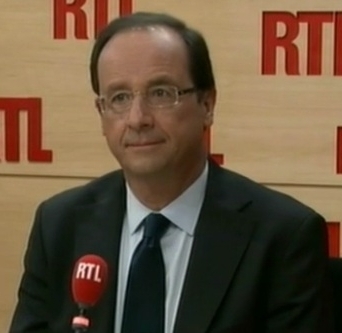
The next French President? François Hollande
(Photo taken from the Hollande Campaign site)

Though the early polls have been positive I am getting a sense that the No side may picking up some momentum as we near the May 31st polling date for the Fiscal Stability Treaty Referendum.

One of the main grounds for this sense of foreboding may indeed be the May polling date itself. I fear having the poll this early may prove the biggest threat to a Yes outcome for three reasons:

1. It allows no side to raise the prospect of a second referendum later in the year. The more astute and sophisticated side of the No campaign is starting to run an argument that goes as follows: We have voted twice on the last two EU treaties.In each case we have come back with a better deal the second time. This Treaty does not come into force until January 2013. We have the time to Vote No now and use the following months to go back and get a better deal and then Vote Yes later in the year. A late September polling date would have denied this argument to them

2. This Sunday see’s the first round of the French Presidential Elections, The Second roubnd of voting will be two weeks later at the beginning of May. While Sarkozy has had a good campaign to date and has closed the gap in the first round the polls there still suggest that Francois Hollande will win the Second Round by approx 55:45.Hollande is standing on recovery platform that rejects Sarkozy’s austerity plan and talks of renegotiating the Fiscal Compact,

While this position may be dismissed as a Gallic version of Gilmore’s “Frankfurt’s Way or Labour’s Way” – ie a promise that sounds good in the campaign but doesn’t survive past polling day – it does look like Hollande is serious. His determination to imeddiately set out a renegotiation the Fiscal Compact to include a growth programme, Euro Bonds etc has probably been strengthened by the attempts of Merkel and other Centre Right EU leaders to snub him.

We will be going to vote during the first days of a Hollande presidency, the background noise to ouyr vote to pass the existing threaty will be his moves to renegotiate that very treaty – almost making a farce of that vote. The politically astute move for our Government would have been to hold off until September and see if Hollande will make a difference.

3. The one great lesson learned from previous referenda, particularly NIce I & II and Lisbon I & II is that the public needs a longer run up/lead in period to tease out the issues. The traditional three or four week campaign has been found to be insufficient, particularly in the absence of “on the ground” campaigns.

Though polling day is about six weeks away there is little sign of that debate is starting yet. Will the Refendum Commission have the time to do the job? Based on the last referendums, it would certainly appear not.  The Tanaiste and Minister for Foreign Affairs had a thirty minute slot on RTE 1 last Saturday where he could have used 5/6 miinutes to explain why voting Yes is important. He didn’t. He chose instead to just give the poll a passing reference, 125 words in a script over 3100 words long. “referendum” featured only once in his script.

While the timing of the polling day is just one factor, it may prove a crucial one. The Treaty should stand or fall on its own contents alone. I am on record here as having my own qualms about the Treaty (see my post here on why I will be a reluctant Yes voter). The debate will be essential. This vote is not like others, we do not have a veto, we cannot delay or deny the progress of this Treaty by our vote alone. The EU has been horrendously slow to act to save itself from the start of this crisis. It has chosen the path of half measures over swift decisive action – usually at the behest of a Franco-German leadership that put domestic political considerations ahead of pan european ones. But we should not be blind to the developing EU real politik.

The appointment of Simon Coveney and Joan Burton as the Fine Gael and Labour campaign directors somehow does not imbue one with a sense of confidence. Coveney’s nomination does echo Charlie Haughey’s appointment of Paddy Lalor as Fianna Fáil national director of elections – a move that spurred the late Frank Cluskey to comment: “There’s confidence for ya”

The Party May be Down, But it is Certainly Not Finished

Fianna Fáil

My take on Fianna Fáil’s 73ú Ard Fheis which is taking place in the RDS this weekend (March 2 & 3). This piece was written for the Evening Herald of March 3rd

———————————-

For as long as I can recall Fianna Fáil Árd Fheiseana were the party conferences where the emphasis was more on the “partying” than the “conferencing”.

They were great social and political occasions where activists from all strands of society, right across the country, gathered to celebrate their membership of the party.

There they rallied; networked; socialised and renewed friendships with colleagues from other constituencies.

To be brutally honest, for many – myself included – the formal debates and motions were incidental to the core objective: discussing politics with old friends and hearing the leader’s speech.

While tonight’s address, the first by Michael Martin as leader, will remain the highpoint of this weekend’s Árd Fheis, it will come at the end of two days of serious and intense debate about the party’s future.

The issue before the Árd Fheis is that stark: the very survival of what was once the greatest modern political movement in Western Europe.

Over these two days – yesterday and today – at the RDS, members are deciding a slate of major reforms on how the party is organised and run.

Key to these is the move away from the representative/delegate model for candidate selection in favour of the One Member One Vote system (OMOV). In other words; to allow every active member in every cumann to have an equal say in selecting candidates and officers.

It is resonant of the crucial debate the British Labour Party had at their 1993 Conference. That was the year they ended the Trade Union block vote and adopted OMOV.

It was not an easy battle for them. The move to reform and modernise had been delayed for almost 14 years as they tore themselves apart with internal wrangling and infighting.

The result was three stunning defeats and three terms of powerless opposition.

Only by reforming their internal structures and systems did Labour allow itself to reconnect with its membership and, more importantly, with the people. After 14 years of irrelevance “New” Labour began to get in touch with the cares and concerns of the British people and respond effectively to them.

That is what Michael Martin hopes to achieve with this Árd Fheis. While the events of the past few days may have moved the focus slightly away from that goal, he was determined to shift it back as soon as the members start to gather in the RDS last night.

And a fair few of them gathered; with over 4000 members registered to attend by the middle of the week.

It is an indication of how serious the party’s grassroot members are about renewing their party. The number of people running for positions is another. Contest for the 20 nationally elected places on the Fianna Fáil Árd Comhairle has never been keener, with many bright, young first time candidates.

The same applies to several of the other senior positions, though the contest for the positions of Party Vice President was made marginally less intense with the withdrawals of two former party big hitters: Mary Hanafin and Éamon Ó Cuiv.

The weekend’s debates are not confined to organisational matters. The Clár contains some motions which, if passed, would herald interesting shifts in policy, including ones on gay marriage, gay adoption ending the regime of TDs’ and Senators expenses’ and reducing the voting age to 16.

There is also a slew of the more traditional Árd Fheis motions, including some Dublin centred resolutions calling for the reinstatement of the Ballymun Regeneration, Grangegorman DIT Campus and Metro North projects.

So, a great deal of serious work will be done by those gathering in Ballsbridge, but be certain too that there some socialising and banter as the faithful show that while they may be down, the party is by no means finished.

Derek Mooney was a Ministerial Adviser 2004 – 2010 and a Public Affairs Consultant and Speechwriter since the 90s

I Don’t Like The Fiscal Compact Treaty, But I Will Still Vote Yes

My thoughts on why I am not impressed with this Fiscal Compact Treaty, but why I will vote for it and urge others to vote Yes too.  

A few nights ago I was on the cusp of penning a piece as to how it was possible to be a committed pro European and still urge a “No” vote at the forthcoming Fiscal Compact Referendum.

My reasoning broadly ran as follows.

  • While the Fiscal Compact does contain some important measures that would have addressed the fiscal problems that others, not Ireland, had experienced in the run up to the crisis – it effectively does nothing about the core issue facing the EU and the Euro: the dysfunctional European banking system.
  • The EU Council and Commission have wasted over two years taking pointless half measures that tinker about with the symptoms of the problem while studiously ignoring the core problem: the banking crisis.
  • This fiscal compact is just the latest in a series of well intentioned, but minimalist attempts to assure the markets that it ready to address the crisis. Like the others it will fail.
  • What the EU needs now is a short sharp shock to jolt it into effective and decisive action. By decisive action I mean tackling the banking and credit crisis head on and bolstering the role of the European Central Bank to become the lender of last resort.
  • Ireland can not only deliver that shock by rejecting the Fiscal Treaty as inadequate and lacking substance, but it can take the lead – particularly among the smaller, peripheral nations – in demanding that the Commission, particularly President Barroso stop acting as the servants of the French & German governments and get the EU back to being a Union of countries that work together, in partnership and in solidarity for our mutual benefit.

That was my broad theory.

It is not heresy or anti European to say that the Fiscal Compact Treaty does not address the biggest problem facing the economies in both the EU and the Euro.

The point is not that the Fiscal Compact goes too far – it is that it is too one sided. It addresses a secondary problem – not the primary one. It almost completely omits the measures required, specifically on the ECB, to tackle the real problems facing us all.

As I was writing the piece I realised that while I still fully believe in points 1 – 4 the reasoning underpinning Point 5 was fatally flawed.

Ireland rejecting the Fiscal Compact will not be seen as us rejecting it as a half measure. It will be seen as Irish petulance. We have thrown down the gauntlet before – on Nice 1 and Lisbon 1 for reasons that most in the EU failed to grasp.

The Taoiseach and his Ministers have shown not the slightest interest in showing Leadership at the EU Council or of building any consensus among the smaller peripheral countries.

Rather the Taoiseach has been content to roll over and have his belly tickled (metaphorically – I hope) by the big two, and hope that no one will ask him any difficult questions.

He has consistently underplayed his hand for the past year. Stories that talked tough and banged the table at his first Council meeting yielded nothing. Since then he has been content to keep his head below the parapet. The same applies to Eamon Gilmore.

There is nothing to suggest that either are capable of building a consensus across the EU. The reality is that neither have attempted it. Their antithesis to travelling to meet other leaders or hold bi-laterals here is mind boggling, especially when you consider how they howled in opposition that the last Government was allowing Ireland’s reputation to slip.

None of this augurs well for Ireland’s forthcoming EU Presidency, but that’s another story.

Those pointless rejections of Nice 1 and Lisbon 1, are now coming back to bite us. Those who urged us to say No then, are once again in the vanguard urging us to Vote No once more. Their reasoning has not changed. They are as Eurosceptic and anti European as they ever were.

Saying No now would be seen as biting the hand that feeds us – even when that hand has been making a few bob from what its been doing.

Worse still saying No would not gain anything by saying No – except to put ourselves in some undefined limbo beyond the revised European Stability Mechanism. Whereas our saying No in Nice 1 and Lisbon 1 held up the process of ratifying those treaties, saying No now will halt nothing.

We have no veto. We have no bargaining chips on this one. There is no point in threatening to pull the trigger when everyone else knows we have no ammo in the chamber.  UCD’s Dr Ben Tonra makes this point very clearly in an excellent post on the politicalreform.e page here.

The conclusion is that we must pass the Fiscal Compact treaty and then use that passing of the Treaty to build a coalition of smaller countries across the EU to tackle the real problem facing us.

I would love to think that saying No would urge the EU into actions that are long overdue. The sad reality is that it will not.

So, just like the French Socialists who were compelled to vote for Chirac in Round Two of the 2002 Presidential elections, rather than seeing Le Pen slip through, I may be taking a disinfectant mat with me to the polling station as I vote Yes.

I want a better treaty. I want a treaty that tackles the real problems. This treaty itself even acknowledges the need for a further treaty.

If passing this one is the price we must pay to get to that point – then let us do so – and quickly.

A tough year for Martin – and it will get tougher

My column in Saturday’s Evening Herald (Jan 28 2012) on Micheal Martin’s first year a leader of Fianna Fáil

—————

A year ago this week {or “today” if published on February 26} Michael Martin sought and won the toughest and possibly most thankless job in Irish politics today: leader of Fianna Fáil.

Looking back over the past year there must have been moments when he felt he hadn’t so much won the prize, as been landed with it. Yet he did win it.

The manner in which he took a stand and challenged for the leadership helped him throw off his previous reputation as an ultra cautious politician who preferred to kick problems to committees rather than taking tough decisions.

On becoming leader [this day one year ago] he found himself at the helm of a demoralised and dissolute party facing into an election for which it was woefully unprepared.

The once great election winning machine that had been Fianna Fáil limped and staggered its way over the line with its new leader’s energetic and impassioned debate performances as rare high points in an otherwise horrendous campaign.

The result was best described by a northern colleague of mine as the greatest political punishment beating ever. The public was not just disillusioned and angry with Fianna Fáil and its Ministers: it had no interest in its views or opinions.

While his first full year in the job has been tough, it could actually have been worse. At the outset many pundits thought the very best he could hope for was stemming the tide of Fianna Fáil’s decline.

Recent opinion polls and the unexpected second place showing in the Dublin West by-election point to the party not just halting the decline, but even reversing it a bit. But there will be no one around Martin popping the champagne corks for a long while yet.

While the party’s prospects may look a tad better now than a year ago: its future is still by no means assured. The party has a long way to go before the public will be ready to listen to what it has to say.

One of Martin’s successes, if this is the right word, has been to get the party’s membership to grasp the new political reality that Fianna Fáil can no longer take its continued existence or relevance as inevitable.

This was no easy lesson for the party to accept. In some ways it is still a work in progress. While there is much talk of reforming both how the party is run and how it develops policy, these have yet to be implemented.

Hopefully, the reconnection Martin has making between the leadership and the members through his constituency visits and personal engagement should enable him to drive through a meaningful reform package.

But it is not as if everything has gone his way. While the right decision was eventually made; the very public “will they/won’t they” row on running a candidate for theArastook its toll. Likewise, Martin’s sometimes over wordy and earnest contributions at Leader’s Questions in the Dáil have not helped convey the idea of a strong leader.

This latter criticism is often attributed to his need to attack on two fronts at once.  Martin is not just targeting the government; he is also targeting the other opposition alternative in Sinn Féin.

Another explanation is that Sinn Féin now has a much bigger back office and research resource than Fianna Fáil. Addams and Co may be reading from scripts, but they are well crafted and written ones

It is not as if his task will get any easier either.

In the coming weeks Martin faces the prospect of dealing with the fallout of the Mahon Tribunal’s report. While there is no confirmed date for its publication, there is much speculation that it may be released just before Fianna Fail’s Árd Fheis at the beginning of March.

Talk about bad timing.

Whatever happens, Martin’s own position is secure. He has from now until the Locals and Europeans in 2014, at least, to show that he can lead the party to recover some of the public trust and confidence it lost.

After one full year, the toughest job in Irish politics is going to get even tougher.

ENDS

FF’s Sean Fleming quickly adds up the damage

My review of Minister Brendan Howlin’s day 1 budget speech. http://www.herald.ie/news/ffs-fleming-quickly-adds-up-the-damage-2954736.html

This is the first budget since Ruairi Quinn’s 1996 one where Fianna Fail have been in the position of having to respond as an opposition.

Only a handful of the remaining Fianna Fail TDs have any experience of replying to a budget statement on the hoof, like this.

Back then they had both the numbers in the chamber and in their research office to be able to respond robustly. Back then, they were also not hampered by seeng their economic strategy being implemented by the government.

In these circumstances, the party’s spokesperson, Sean Fleming, did reasonably well. His accountancy background enabled him to focus in on some of the finer and more damaging points that appeared in the tables, but somehow managed not to make it into the Minister’s script.

Sinn Fein’s Mary Lou McDonald gave one of her best Dail performances to date. Whereas Fleming stuck with the detail, she concentrated on the politics, excoriating and needling Fine Gael and Labour backbenchers for reneging on their election promises.

Over recent years we have been moving from the traditional westminster model of budgets where the finance minister goes into a self imposed silence or purdah in advance of the statement, to a european one where large elements emerge into the public arena in advance.

While recent budgets have seen their share of advance kite flying, this one brought the craft to new and dizzying heights. 

It is all about the management of expectations. It’s an old trick. Get your people spinning that medical cards might be hit, and then hope the public will break out the champagne, or possibly the Babycham given our straightened times, when they are not.
So the theory goes. In this case the audience was not so much the people at home, but the massed ranks of backbench government TDs who would like to be two term Deputies not one termers.
This may account for the very muted applause after Minister Howlin resumed his seat. Though this may just as much been due to how inappropriate and ill judged the loud cheers and fulsome applause the Fianna Fail deputies gave to their recent budgets seems now.

Why Fianna Fáil is right not to contest Aras11

The reality that Fianna Fail is no longer the huge force in Irish politics that it once was is gradually dawning on some.

Former big beasts in the forest are finding that they now do not strike the same sense of awe and fear they once did when the party commanded support levels of around 40%.

While watching the process of them coming to terms with this loss of influence and authority in public is neither edifying nor appealing – it is better it happens quickly.

The reality of the last election is that Fianna Fail no longer has a God given right to presume it can be in power. It has received what a colleague of mine in the North described as “the mother and father of a political punishment beating”.

It is a beating from which the party can recover, but that process will be long and arduous. The process of renewal the party must undergo must itself commence with the facing of some facts.

The first among these is that the traditional way of doing political business will no longer work. That means, in this instance, that the old assumption that almost any candidate Fianna Fail selects from its own ranks will automatically be a front runner no longer applies. Things have changed utterly for everyone in the party, not just those at the top.

It applies even to huge voter getters like Brian Crowley. For him to think that he could personally withstand this swing against the party is to miss what happened last February.

There is no great evidence to show that the public anger has diminished significantly. Any candidate facing the electorate in the foreseeable future, and that includes this October, with Fianna Fail on their posters will incur the wrath of a still smarting public – no matter how small they make the logo.

Contrary to the views of others, the party leadership was right, and is right, to wait until now to decide its strategy. The suggestion that this decision should – or could – have been made last June or July is nonsense. This is a decision that required some time and space for calm consideration. It is a decision that needed to be made when the full impact and scale of what happened last February had been digested.

Having the Gay Byrne flirtation in public before taking this decision was an error, though it hard to see how anyone could have thought the Byrne option could ever have been considered just in private.

It sent the wrong message to the party membership. Martin’s countrywide tour of the constituencies was reconnecting the leadership with the members – the Byrne episode has dented that reconnection: though not damaged it irreparably, despite the rantings of a few impetuous people on Facebook.

But consider what a hero Micheal Martin would have appeared if he had convinced Byrne to run. Consider too that some of those who were most critical of Martin for courting the popular light entertainer had – a few weeks earlier – been urging him to allow four or five of his Oireachtas colleagues to sign the nomination papers of another, equally well regarded entertainment figure; David Norris.

There is a world of difference between accepting your current situation and allowing it to curb your ambitions. The fact that Fianna Fail may not directly contest this October’s Presidential election does not undermine the party’s hopes to recover the public trust it has lost.

If anything, not running a traditional style candidate is part of the process of letting former supporters know that it is taking the hard message they sent last February to heart.

This is not merely a question of the party saving a few hundred thousand Euros by not running a candidate – it is about Fianna Fail doing what it traditionally did best: facing up to harsh realities and addressing them. It is this which offers Fianna Fáil a way to renewal and recovery, not the fielding of an Áras 2011 candidate.

Why current crisis is more political than economic

My latest Evening Herald column from August 8th 2011 – you can also see it online: here

——————————

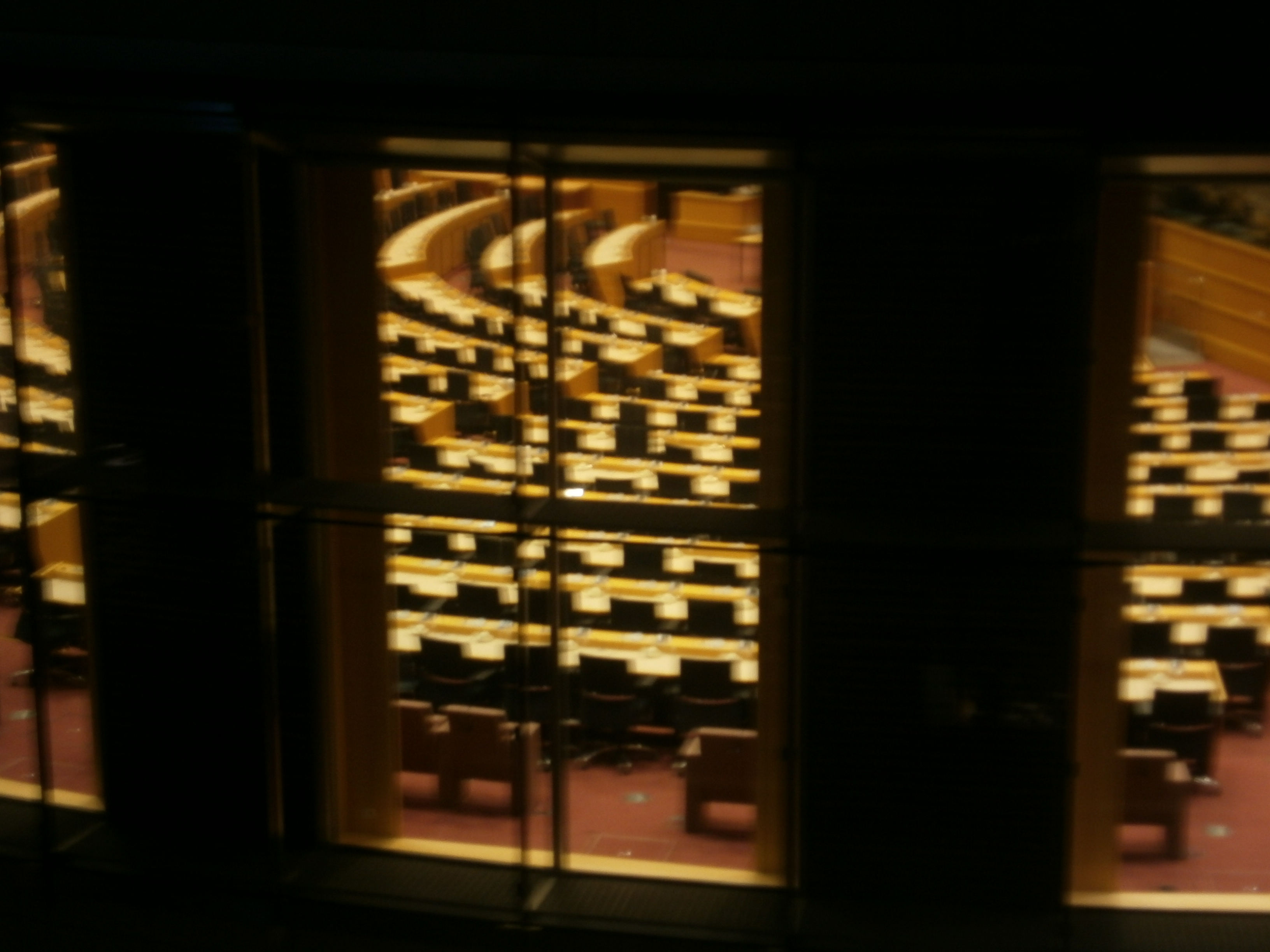
Euro Parliament Committee Room - Bxl

Success has many fathers, but failure is an orphan. Clearly, no one has told the economists this.

In any other walk of life — architecture, dentistry, cake decorating — people run away when they see failure or disaster looming.

Not the economists. They embrace disaster. They revel in it.

As soon as a crisis looms they rush to the TV camera and the microphone to say how they predicted it.

They take a pride and pleasure in being associated with doom and failure that would do your heart good, if the consequences were not so dire for the rest of us.

In the wake of last week’s market turmoil, the weekend papers and discussion shows were full of economists doing what they do best.

Switching between the radio stations on Saturday and Sunday mornings was like playing some demented radio five-card stud — I see your dollar bond collapse and raise you an Italian bailout.

The Sunday newspapers were as bad with even more dire predictions of either the collapse of the euro or the dollar, or both.

We are living in uncertain economic times … and will be for some years to come. No one needs to tune into the radio to learn that.

This is a major culture shock for many, though not for those of us who lived through the Eighties … and no one wants to see another decade lost to despair and inactivity.

But I digress. So why have we seen renewed predictions of crisis this week? They do not seem to have been prompted by the publication of any eurozone statistics or hard figures.

Neither could they be reasonably explained away as just the result of a global slow news day.

While they may, in part, be due to the outworkings of the American debt ceiling compromise, the giveaway is in the word most often employed by economists in describing the crisis: confidence.

We have seen share values drop and bond costs increase over the past week because market analysts and investors do not have confidence in the capacity of eurozone countries to deal with all the debt in the system.

Could these possibly be the same investors who were protected from massive losses in banks and bad investments by those same governments?

Ironic, isn’t it? Eaten bread may be soon forgotten, but never with anything like the speed and hypocrisy with which socialised private losses are forgotten by the markets.

It is tough to make someone have confidence in you, particularly when you have not got much confidence or trust in them. But wringing our hands in anger on this won’t make the problem go away.

As I said earlier, the past week’s scare does not have its origin in a spreadsheet. It is fundamentally a political issue; not an economic one.

The real danger for us is that the dramatic actions and reforms the market is demanding in return for their “confidence” would be deeply unacceptable to people here and across the Eurozone.

This is the almost impossible balance that the eurozone leaders are trying to strike. To make the changes just about needed to gain market approval without totally alienating public opinion at home. The political spectre of Brian Cowen must stalk their deliberations.

Not that the eurozone leaders merit much sympathy. Merkel and Sarkozy’s slowness to act decisively in the early stages of this crisis has cost us all. Their dithering and loose talk threw Ireland to the market wolves in a futile attempt to stem the tide at no cost to themselves.

Their recent reforms to the European Financial Stability Fund have been more carefully judged, though these will take a while to work their way through.

Meanwhile, the next time you hear an economist demanding firmer and more determined actions, just remember that translates in higher taxes and higher charges for you and yours.

– Derek Mooney