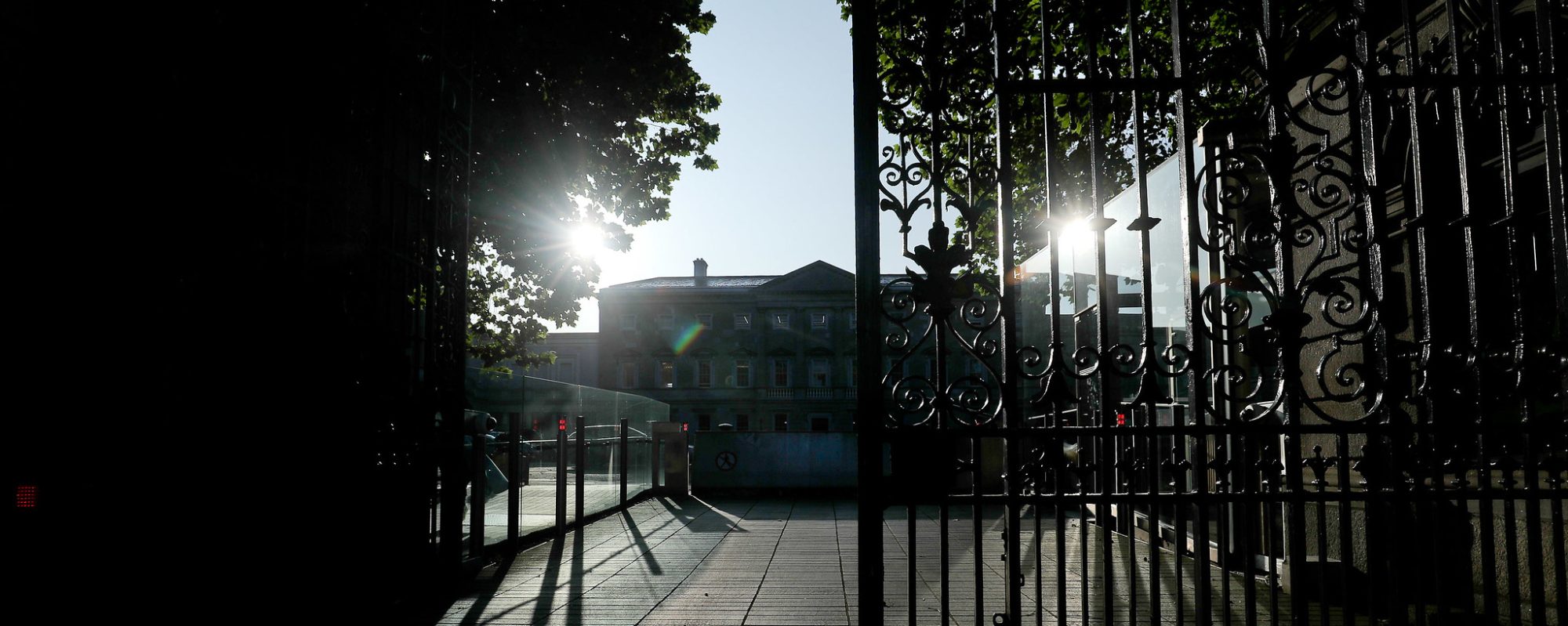
FF’s Sean Fleming quickly adds up the damage

My review of Minister Brendan Howlin’s day 1 budget speech. http://www.herald.ie/news/ffs-fleming-quickly-adds-up-the-damage-2954736.html

This is the first budget since Ruairi Quinn’s 1996 one where Fianna Fail have been in the position of having to respond as an opposition.

Only a handful of the remaining Fianna Fail TDs have any experience of replying to a budget statement on the hoof, like this.

Back then they had both the numbers in the chamber and in their research office to be able to respond robustly. Back then, they were also not hampered by seeng their economic strategy being implemented by the government.

In these circumstances, the party’s spokesperson, Sean Fleming, did reasonably well. His accountancy background enabled him to focus in on some of the finer and more damaging points that appeared in the tables, but somehow managed not to make it into the Minister’s script.

Sinn Fein’s Mary Lou McDonald gave one of her best Dail performances to date. Whereas Fleming stuck with the detail, she concentrated on the politics, excoriating and needling Fine Gael and Labour backbenchers for reneging on their election promises.

Over recent years we have been moving from the traditional westminster model of budgets where the finance minister goes into a self imposed silence or purdah in advance of the statement, to a european one where large elements emerge into the public arena in advance.

While recent budgets have seen their share of advance kite flying, this one brought the craft to new and dizzying heights. 

It is all about the management of expectations. It’s an old trick. Get your people spinning that medical cards might be hit, and then hope the public will break out the champagne, or possibly the Babycham given our straightened times, when they are not.
So the theory goes. In this case the audience was not so much the people at home, but the massed ranks of backbench government TDs who would like to be two term Deputies not one termers.
This may account for the very muted applause after Minister Howlin resumed his seat. Though this may just as much been due to how inappropriate and ill judged the loud cheers and fulsome applause the Fianna Fail deputies gave to their recent budgets seems now.
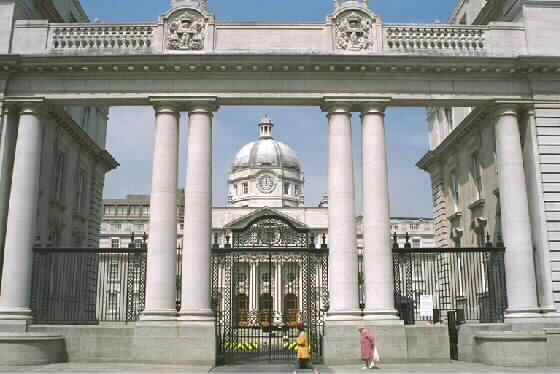
Enda’s State of the Nation fails to Inspire

An Taoiseach’s national address was well intentioned but badly executed. 

To his credit; from the moment he became Taoiseach, Enda Kenny has shown that he realises the importance of talking to people. He has demonstrated regularly that he knows the job of Taoiseach is not just the traditional one of government Chairman or Chief.

He understands that it is also that of the “confidence giver in chief”, particularly at times of crisis like this. The person who tells the rest of us what is happening and how he and his team have a plan to get us through the difficulties.

Television has not been his friend. Neither have the formal set pieces: Ard Fheis speeches etc. He has been more comfortable in informal situations, particularly those where his words and message are delivered unmediated: live to a flesh and blood audience.

For all these reasons, last night’s TV “Address to the Nation” was going to be a big ask. The fact that it was billed as the most important address he would ever give, the “speech of his life”, did not help.

In the event, the speech did not succeed in achieving its desired result.

A speech is not about offering a litany of facts and figures, it is about putting across a clear message. The Taoiseach acknowledged this truth in his address saying that he was “outlining the Government’s strategy.”

The pity is that while this may have been the aim, the content and delivery failed to convey any sense of strategy or coherent plan.

The address should not just have been another element of the package of budget speeches: but an opportunity to set out a vision of where we are going and how we can get there together.

It could have been a vision of the kind of Ireland the Taoiseach wants to see in place by 2016, the centenary of the Easter Rising and an exposition of how he sees us achieving that.

Instead of the expected “state of the nation” we got a curiously cold and passionless presentation that omitted both vision and purpose. A bland party political broadcast that seemed, in part, to be an attempt to explain both why The government was now implementing policies it had opposed and why it had abandoned promises made only nine months ago.

It was less an “address to the nation” and more an apology from the leader of Fine Gael.
As the Taoiseach and his advisers are now starting to realise there are some very obvious risks with such addresses.

The expectations were high.

People expect to be better informed and maybe even more confident after the broadcast than they were before. Looking at the online commentary as I write this, I do not see this being the emerging consensus. Most politically unaligned posters appear to be seeing the address as a “wasted opportunity”.

But there are other risks too. The leader comes on TV to say that things will get better… but, they don’t. As a consequence we lose faith in them.

The other worry is that the Leader comes on TV to say that things are even worse that he had suggested they were… the opposition have a field day using his own words to attack him and his popularity plummets

Though I have no firm evidence for thinking this, I believe that these were the two of the key factors behind Brian Cowen’s reluctance to make a similar address in 2008/2009. The one issue Cowen would not have had to address if he had chosen to make such a speech then is the crisis facing the EU and the Euro.

In my view the Taoiseach made a mistake in not devoting more of his script to this crucial issue. Not only did the EU section amount to less than 10% of the total text, the section was bland and failed to seriously address any of the issues facing us.

In other EU countries they are talking of having “less than a week” to save the Euro. Within the coming days we will learn more of the Merkel/Sarkozy plan to fundamentally change how the EU and the Euro function, but here our Taoiseach reduces the matter to almost an afterthought in his keynote address to the nation.

It kind of sums up the whole exercise, well intentioned, but poorly done.

Twitter:  @dsmooney

So tell me Minister, how exactly did we find €3.6bn?

My column from the Evening Herald (2nd November 2011) on the discovery by the Department of Finance that we owe €3.6Bn less than we thought; due to an accounting error in the Government’s figures. 

———————–

Wednesday November 02 2011

IN one of his early routines the American comedian Bob Newhart explained how he had to turn to comedy when his career in accountancy came to an abrupt end. He described how he had, as a fledgling accountant, developed his own theory of accountancy which stated that getting within 10pc of the total was enough.

While the idea did not catch on with his bosses in the 1960s, it appears the theory has been rediscovered and redeployed in the Department of Finance.

Finding that we have €3.6bn more that we had is a lot better than finding we have €3.6bn less — but don’t you just feel that if it had been the latter the cuts target for this December’s Budget would have doubled.

At this point I had intended to explain the discrepancy. Having spent about six years in Government reading and dealing with Government estimates and balance sheets I felt sure I was up to the job.

But after about 45 minutes of reading statements from various agencies my head melted and I needed to lie down in a darkened room.

Those who understand these things better, tell me that this has all got something to do with the amount being rolled over like a Lottery prize that isn’t won, though it is possible that I got the analogy wrong.

Liabilities

The one thing I know is that the problem stems from confusion between the National Treasury Management Agency (NTMA) and the Department of Finance.

Up to 1990 only the Minister for Finance could borrow money on behalf of the State. In 1990 that power, along with the responsibility to manage assets and liabilities and negotiate rates on the State’s borrowings, was given to the NTMA.

The NTMA proved itself quickly with savings on the interest paid on our debt roughly equivalent to reducing tax rates by about 10pc.

However, while the authority to borrow and manage the debt was delegated to the NTMA, the responsibility for the accounts and borrowings has always rested with the Minister for Finance and his officials.

There was a change in how the NTMA dealt with the State’s Housing Finance Agency and how it listed their assets and liabilities in its accounts which was not picked up on when the State’s general government debt was calculated.

It is vital that the confusion is cleared up and succinctly explained as soon as possible by the minister and his senior officials in both the Department and the NTMA.

The error is all the more embarrassing as the head of the Finance Department is due to take up an appointment in early 2012 as Ireland’s nominee to the European Court of Auditors.

This organisation is, according to its President , responsible for examining ” … whether financial operations have been properly recorded and disclosed, legally executed and managed so as to ensure economy, efficiency and effectiveness.”

Disciplines

It also raises an interesting general issue regarding the management of government departments. The Irish civil service uses a “generalist model”.

Department officials get a broad experience across a range of disciplines and policy areas. Across their careers, most civil servants can expect to be trained and work in a number of different areas. The benefit of this rotation system is that you get people with a broad vision, enthusiasm and wide experience of varying sectors.

Moving high flyers between sectors and departments helps stem the “it’s the way we have always done it here” mentality. But, it also has a downside. There are fewer specialists in those areas where they are specifically qualified and some posts that should require specialist skills and training are filled by people without them.

It’s just like Sir Humphrey said in a classic Yes Minister episode: “Well obviously I’m not a trained lawyer, or I wouldn’t have been in charge of the legal unit.”

Acknowledging Army was bad for SF business

This is my recent article on Martin McGuinness & Sinn Féin’s “profit before principles” approach to Óglaigh na hÉireann/Defence Forces in the Evening Herald on Friday Sept 30th – see it online here

I LIKE Senator John Crown’s test for judging the presidential race: “The presidency … should be prize for best pupil, not the most improved pupil”

It is a valid point. Martin McGuinness is one of many people who have — at varying speeds — helped move this island to a more peaceful existence.

But his story comes in two parts. If he is to get the positive marks for the latter part, then he must also accept the negative ones for the earlier part — and these are considerable.

Many men and women had to pay a heavy and lasting price for the delay in McGuinness, and others, coming to the conclusion reached years before by such inspirational figures as John Hume, Seamus Mallon and Ivan Cooper.

Now his supporters moan at his past being dragged up and the savage killings of the likes of Frank Hegarty and Jerry McCabe being discussed as if the “constructive ambiguity” that was devised to bring Sinn Fein into the political process had become their birthright.

They claim that younger people are not interested in the past. I am not sure that is as true as they think, but even if we do accept that argument, the concerns about their candidate are not all based in the past.

Some stem from the fact that the past stretches forward to touch us today. Take, for instance, Sinn Fein’s attitude to the Irish Defence Forces.

This is an important issue. The Constitution states that supreme command of the defence forces is vested in the President (Article 13.4) and that all officers of the defence forces hold their commissions from the President (Art 13.5.2).

The ambiguous nature of Sinn Fein’s attitude to the Irish Defence Forces post Good Friday agreement was of interest to me when I was adviser to the Minister for Defence.

Though Martin McGuinness the presidential candidate now says he accepts that Oglaigh na hEireann is the Irish Defence Forces, back then the only time you heard the words Oglaigh na hEireann from him or from Gerry Adams, it was a reference to the Provos.

Martin’s volte face on this matter is welcome, though long overdue. He accepts that only the Defence Forces, as successors to the Irish Volunteers, are entitled to use the title: ‘Oglaigh na hEireann’.

Section 16 of the Defence Acts states: “It shall be lawful for the Government to raise, train, equip, arm and maintain Defence Forces to be called and known as Oglaigh na hEireann or (in English) the Defence Forces.”

Perhaps the reason McGuinness and Co found it hard to acknowledge the existence of the Defence Forces was that doing that might be bad for business.

The business in question was the Shinners own online shop. There they busily flogged items, including T-shirts, mouse-mats, bracelets, pendants and signet rings, bearing the title Oglaigh na hEireann, to grab every last euro and dollar they could.

On three occasions, the then Minister wrote to the Sinn Fein leadership, North and South, asking them to remove this material from sale.

The letters were acknowledged, but despite repeated attempts to engage with them, no substantive response was ever issued.

I checked their website again last weekend and was amazed to find that Sinn Fein was still making money from the sale of jewellery bearing the words Oglaigh na hEireann.

While some of the items complained about back in 2005 have been ‘disappeared’, a number are still there. The online description of one of those, a signet ring selling for €45, said: “The inscription reads: Oglaigh na hEireann — which is Irish for Irish Republican Army.”

This gombeen attitude to our heritage and to those who serve our nation is not very presidential. The fact that it still continues suggests that McGuinness’ move on accepting the Defence Forces may not be as deep as it seems.

Well, maybe not until all their back stock of trinkets have been flogged off — profits before principles.

Why Fianna Fáil is right not to contest Aras11

The reality that Fianna Fail is no longer the huge force in Irish politics that it once was is gradually dawning on some.

Former big beasts in the forest are finding that they now do not strike the same sense of awe and fear they once did when the party commanded support levels of around 40%.

While watching the process of them coming to terms with this loss of influence and authority in public is neither edifying nor appealing – it is better it happens quickly.

The reality of the last election is that Fianna Fail no longer has a God given right to presume it can be in power. It has received what a colleague of mine in the North described as “the mother and father of a political punishment beating”.

It is a beating from which the party can recover, but that process will be long and arduous. The process of renewal the party must undergo must itself commence with the facing of some facts.

The first among these is that the traditional way of doing political business will no longer work. That means, in this instance, that the old assumption that almost any candidate Fianna Fail selects from its own ranks will automatically be a front runner no longer applies. Things have changed utterly for everyone in the party, not just those at the top.

It applies even to huge voter getters like Brian Crowley. For him to think that he could personally withstand this swing against the party is to miss what happened last February.

There is no great evidence to show that the public anger has diminished significantly. Any candidate facing the electorate in the foreseeable future, and that includes this October, with Fianna Fail on their posters will incur the wrath of a still smarting public – no matter how small they make the logo.

Contrary to the views of others, the party leadership was right, and is right, to wait until now to decide its strategy. The suggestion that this decision should – or could – have been made last June or July is nonsense. This is a decision that required some time and space for calm consideration. It is a decision that needed to be made when the full impact and scale of what happened last February had been digested.

Having the Gay Byrne flirtation in public before taking this decision was an error, though it hard to see how anyone could have thought the Byrne option could ever have been considered just in private.

It sent the wrong message to the party membership. Martin’s countrywide tour of the constituencies was reconnecting the leadership with the members – the Byrne episode has dented that reconnection: though not damaged it irreparably, despite the rantings of a few impetuous people on Facebook.

But consider what a hero Micheal Martin would have appeared if he had convinced Byrne to run. Consider too that some of those who were most critical of Martin for courting the popular light entertainer had – a few weeks earlier – been urging him to allow four or five of his Oireachtas colleagues to sign the nomination papers of another, equally well regarded entertainment figure; David Norris.

There is a world of difference between accepting your current situation and allowing it to curb your ambitions. The fact that Fianna Fail may not directly contest this October’s Presidential election does not undermine the party’s hopes to recover the public trust it has lost.

If anything, not running a traditional style candidate is part of the process of letting former supporters know that it is taking the hard message they sent last February to heart.

This is not merely a question of the party saving a few hundred thousand Euros by not running a candidate – it is about Fianna Fail doing what it traditionally did best: facing up to harsh realities and addressing them. It is this which offers Fianna Fáil a way to renewal and recovery, not the fielding of an Áras 2011 candidate.

Quick quips will not get you out of this mess, Senator. You need to hear some things you don’t want to hear

Presidential candidate
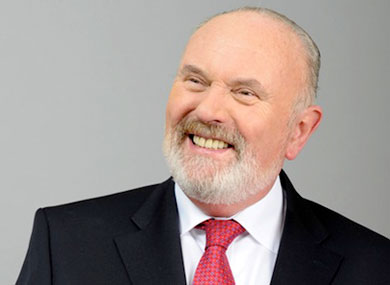
Senator David Norris

Text of my article on the Norris campaign saga from Evening Herald – see it online here:

I like West Wing quotes. They are not just well written, they can neatly sum up a situation. The one which comes to mind as I watch the evolving Norris campaign saga is from an episode in series one.

In it, the fictional President Bartlett character advises a colleague on selecting a campaign manager/ chief of staff. “Do you have a best friend… Is he smarter than you… Would you trust him with your life?”

When the guy answers “Yes sir” to all three questions, Bartlett tells him: “That’s your chief of staff.”

That’s precisely what David Norris has needed from the start of this whole thing.

Though I have criticised some of them, he has had many loyal and personally devoted campaigners. He has a huge social media support network too. But sheer enthusiasm is not enough. The one thing he has lacked most was someone who could challenge him and tell him the unpleasant facts he has not wanted to hear.

Many months ago I said that David’s gift for the quick quip and caustic comment may prove to be his Achilles heel as it suggested a lack of gravitas.

This proved only in part to be true. The tone, content and nature of his lengthy 1997 letter to his former partner’s lawyers was ill considered, ill advised and exposed poor judgement.

With due respect to the Senator’s continuing supporters, this assessment is really not in question. One in Four founder Colm O’Gorman put it more forthrightly on Twitter saying: “my views on his writing the letter are clear and unequivocal. He was wrong. Very wrong.”

Some, like Senator John Crown, attempt to explain away the letter pointing to ones written by Kathleen Lynch, Bobby Molloy and Trevor Sargent. Besides the “two wrongs don’t make a right” argument, in those cases the authors accepted their ill judgement and in the cases of Molloy and Sergent they resigned.

Yes, there are nasty people and vile groups who want to see Norris’s candidacy scuppered. Yes, there are those who would have employing dirty tricks to frustrate him.

But this isn’t a mafia movie. The enemy of your enemy is not always your friend.

The contemptibility of some of those who oppose David should not blind us to the legitimate questions this letter and saga raise about his candidacy. This is not a slanted leak from his detractors. The damage here comes from what the candidate has said himself and the material he has made available.

Running for the Presidency is not like a really big Trinity Senate campaign – and this campaign has not really started yet. We are still in the pre-campaign stage. The last two Presidential campaigns saw major negative campaigns. In 1990 the target was Brian Lenihan Sr, in 1997 it was Adi Roche and Mary McAleese. I fear we may have more to endure when this race hits its full stride in late September.

So where does that leave David’s campaign now?

David now says he wants to fight on, even though he recognises his chances slim. His courage and tenacity is admirable: but it is time to face realities. Alastair Campbell famously said that you have eleven days to kill a story or you’re toast. This is the second crisis for David, so he will have even less time.

I would suggest that one of two things may happen over the coming days to decide his future prospects.

The first is that some new Oireachtas members may rally to his cause. He already needed five more, the damage this crisis is inflicting on his campaign means he needs them today. If there are five more nominators out there: right now is the time to them to declare, not next September.

The second and more likely scenario is that some of those who have already declared for him will tell him, either privately or publicly, that they cannot now follow through on existing pledges of support. That will end his chances.

Whatever happens, this presidential race has changed completely. Past back markers may soon emerge as front runners… and there is still Dana to consider

Evening Herald August 1st August 2011

How politicians helped redeem themselves by taking on the big guys

My Evening Herald article is online Here

Saturday July 23 2011

JUST by coincidence, I happened to be passing through Brussels this week.

From the window of my hotel room near the Schuman roundabout, I could both see the European Council building and hear the sirens roar as EU heads of government arrived for the emergency EU summit.

From the the TV in the background I could hear and see the continuing fallout on BBC World news from the hacking scandal, while on my laptop I read and listen to the deserved praise being heaped on the Taoiseach for his speech on the Cloyne scandal.

As these three separate news stories competed for my attention it began to dawn on me that these three very different events have a common thread: how politics can work and how politicians can make a difference when they reflect the public mood.

In the case of the News of the World hacking scandal we see the politicians finally recovering their sense of confidence and self worth and shedding their decades of deference to one media mogul.

In the European Council decision we see politicians taking bolder and coordinated actions to exert some meaningful control over Europe’s economic destiny and shunning the cautious advice of bankers or ratings agencies.

In the case of Enda Kenny’s Cloyne speech we see a political leader not just standing up to Rome, but finding his voice calmly and forcefully telling it some home truths and reminding it how much it has lost its way.

redeem

By their actions and words, across these three events, public representatives have helped redeem the profession of politics somewhat by taking on three of the most powerful interest groups: the Church, the banking sector and the media.

This is no renaissance for politics, but just a timely reminder that politics and politicians can rise above the cynical and do good.

While the common thread in the three events is the primacy of democratic politics, it is no harm to reflect on how much further Enda is along the road of telling the Church its role and place in modern society than David Cameron is in his attempt to break this news to Rupert Murdoch and News International.

Nonetheless, this should not stop us taking a leaf out of Westminster’s book and, just as the MPs did with the Murdochs, bringing senior churchmen before a public hearing of a Dail Committee to answer questions from the people’s chosen representatives.

Just over a year ago the Papal Nuncio refused to appear before a committee considering the report of the Murphy Commission.

Let us test the water now to see if the Vatican and the Nunciature think they can sustain this refusal to answer for their actions.

As Fergus Finlay said, the Taoiseach’s Cloyne speech has set the bar high.

It follows on from Brian Cowen’s hard hitting speech responding to the Ryan Report and Dermot Ahern’s declaration following the Report of the Murphy Commission that a “clerical collar will protect no criminal”.

To quote Brutus in Shakespeare’s Julius Caesar: “There is a tide in the affairs of men, Which taken at the flood, leads on to fortune.”

Enda has taken that tide and the Cloyne speech will help establish a political legacy.

However, while he is entitled to enjoy the coming few weeks as the speech continues to reverberate, he should make a quick call to a certain former Taoiseach in Drumcondra to discover how quickly the sheen on his real achievements in the Good Friday Agreement can be dulled by harsh economic realities.

opportunity

Enda needs to apply the same clarity of language and and certainty of approach to tackling the economy that he has found in tackling the Vatican and Catholic hierarchy.

The new measures agreed by euro leaders at the emergency EU Summit may just afford him such an opportunity — but he needs to take this particular tide soon and not squander the opportunities it affords.

Germany lectures us on debt — forgetting the lessons of its own history

Here is my column on Germany forgetting the lessons of its own history from the Herald (Tuesday June 28 2011)

—————————————————————

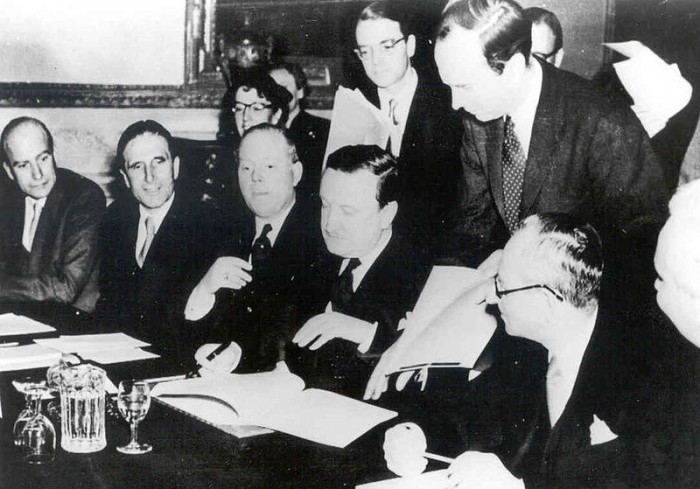
Signing the London Agreement on 27 Feb 1953 (Pic via: http://www.tlaxcala-int.org/article.asp?reference=8440)
Signing the London Agreement on 27 Feb 1953
(Pic via: http://www.tlaxcala-int.org/article.asp?reference=8440)

The media has been full of hourly reports of how the Greek debt crisis has the capacity to send the global economy back into the doldrums.

The Greeks, and by extension, the Portuguese, Irish and Spanish have had to endure tough lectures from France and Germany about the need for austerity.

The German government has been particularly forceful in delivering these lectures. Its leaders tell us their taxpayers do not want to subsidise bloated public sectors or unproductive workers across Europe.

And who could blame them? It is understandable that German workers do not want to pay extra taxes to send money across Europe, even if it is in the form of a loan with generous interest payments attached.

Understandable … but only if you have a short memory and disregard the history of the past century.

An economic historian at the LSE, Prof Albrecht Ritschl, has pointed out that the worst debtor nation of the past century is not Greece, it is Germany — and by a wide margin too. Worse still, Germany is denying to Greece, Portugal and Ireland the precise remedies it needed to rebuild itself. Twice in the last century, after WWI and WWII, Germany has ran up levels of debt that would make the Greek crisis look like a bad night at a mythical Tipperary Casino.

The cost of Germany’s 1930s debt default was as significant as the 2008 financial crisis. A default they were forced into as they could not repay the debts and war reparations set out in the Versailles Treaty following WWI.

This was the result of the rest of the world doing to Germany what Germany and others in the EU are now doing to us. Tons of new debt (in Germany’s case it was war reparations) were heaped on top of existing debt thereby draining the German economy of the ability to rebuild itself.

By the end of WWII, the rest of the world had learned a lesson. It recognised that lumbering a devastated and demoralised Germany with more debt was not a workable solution.

In the 1953 London Agreement on German External Debts, the Allied powers did the exact opposite of what the German and French governments are doing today. They wrote off half of Germany’s total mountain of debt and gave it additional time to repay the monies it owed.

It was thanks to the foresight and generosity of former enemies that West Germany was able to deliver the Wirtschaftswunder (economic miracle) of the 1950s.

This was a deal negotiated between leaders who had learned from the mistakes of the past and could see beyond the political demands of the next election, particularly Germany’s own Konrad Adenauer.

Remember, also, that one of the occupied countries owed money by Germany was Greece. Those protesting in Athens remember that their parents and grandparents had to forego the compensation owed to them.

How galling must it be for them to take lectures from the current German Chancellor on the virtues of paying your debts?

And, in case anyone thinks this is all reaching too far into the past, think again. According to Prof Ritschl, Germany defaulted on one of the conditions of the 1953 London Agreement as recently as 1990.

TOOLS

It is a sad indictment of the current German leadership that it cannot see that denying others the tools that it required to rebuild itself is only storing up trouble for the future.

It does not take a Konrad Adenauer or a Willy Brandt, however, to recognise that Germany’s economic fortunes are so closely intertwined with the other eurozone countries that if part of the eurozone falls, Germany could flounder.

So, even if heeding the lessons of history cannot bring Germany to realise the current policy is not working, self interest just might.

– Derek Mooney