New young politicians? Yes, but some diversity too

Milintee
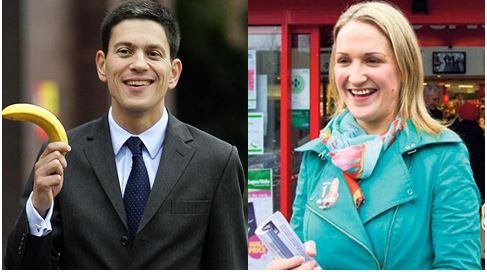
Miliband and McEntee – Milintee?

Not surprisingly, most of the commentary on the Meath East by-election result has focussed on the electoral drubbing meted out to the Irish Labour Party, but as Fergus Finlay pointed out in the Irish Examiner, Labour has been here before. Back in 1983, at the Dublin Central By-Election occasioned by the death of George Colley, Labour’s then candidate Jimmy Somers was beaten not only by the Workers’ Party (ironic) but by Sinn Fein in an area where Labour had until recently held a seat.

This nice analysis piece penned by the late Mary Raftery for MaGill at the time is worth reading and contains some phrases we have seen used a few times over the past week, including: “The by-election result was one of the most disastrous in Labour’s history” and “…a humiliation from which it will be difficult to recover.”

While Labour’s poor showing and Fianna Fáil’s continuing electoral recovery are the two main national lessons to be taken from the Ashbourne count centre, I want to briefly reflect on another less obvious one.

On almost precisely the same day as Fine Gael’s Helen McEntee entered full time national politics on this island, another politician was leaving it on the neighbouring island: David Miliband.

So what could these two events have in common? Well, not a lot really – but it did occur to me that Miliband, aged 48, was quitting politics at an age when politicians used to once enter politics.

In that regard Ms McEntee and Mr Miliband do have something in common, two things actually. First they both entered their respective parliaments at a relatively young age – Ms McEntee at 26 and Mr Miliband, slightly later, at 36 and second, neither had much real world experience outside of politics before entering parliament.

Essentially both were products of the political system, albeit at differing levels and grades. After completing her masters in 2010 Ms McEntee worked as a parliamentary assistant in her late father’s constituency office, while David progressed from Oxford and M.I.T to becoming Tony Blair’s head of policy via a stint at the Institute for Public Policy Research.

Neither had, to use the American phrase, “ever made a payroll”. While in America that is taken to mean running a business and being responsible for paying and employing people, in this context we can use it to mean experience of the real world, getting a job, getting promoted, running a household, paying a mortgage, providing childcare and then education for your kids.

Not that experiencing some or all of these necessarily qualify you to become a full time public representative, but wouldn’t some understanding of these help? Not that I am disregarding the pressures and difficulties faced by students these days. Frankly, as bad as the 70s and 80s were, I daily thank heavens that I am not a student in today’s environment.

Neither is this a plea for the Oireachtas to be full of 50 and 60-somethings or an attack on anyone under 25 running for the Dáil.

Rather I am just sounding a small note of caution against what I perceive as an emerging phenomenon here of people going almost straight from college into full time politics. Over the past two decades the number of jobs and opportunities in full time politics have increased. Since the early 90s the world of politics has become more professionalised with TDs and Senators now being able to employ parliamentary researchers and assistants paid for from the public purse. Not that I am one to complain having been a beneficiary of this development.

But with the creation of these additional opportunities it now seems the most successful path into the Dáil runs as follows:

University → elected as party officer – Job in Leinster House → Special Adviser → TD.

We risk having cohort of potential TDs (and Senators, if it survives) who have almost all followed the same real-life free path. Look at the UK and see how many of the men and women on the Tory and Labour benches fall into this category. While they may represent different political parties and support competing policies they essentially come from the same political background – all university educated, essentially middle class and all from within the political process.

Already we see the parties here looking out for new, young, vibrant candidates – and that’s a good thing. But what we also see is these candidates being identified earlier and earlier and based on criteria that are hard to understand.

Perhaps it is their newness and inexperience that is the attraction: a fresh clean slate for the party leadership to control and etch its views, coupled with a personal history that is free of controversy because its brevity presented damn all opportunity for it.

Turning back to Meath East, maybe it was just campaign hyperbole, or his penchant for the grandiloquent, that prompted Enda Kenny to describe Helen McEntee as “one of the most brilliant young candidates I have seen in any election” during an exchange in the Dáil on the day before polling. But what was there in her achievements or utterances that justified this high praise?

Is she a smart, confident and well educated woman, yes, without a doubt… but one of the most brilliant… in any election? Did we see anything in either the Vincent Brown or Primetime debates to support this claim?

Yes, there is a place in full time politics for young people and yes they deserve a major say in how their future is shaped, but we need to ensure that the search for the ideally packaged and presented candidate is not done at the cost of selecting those with more experience of life.

Labour could be casualty in Treaty Yes vote

My Evening Herald column from today’s (Thurs May 24th) edition:

voting
Many different reasons to vote yes or no

With less than a week to go the referendum campaign seems more and more to be about less and less.

On the face of it, if you believe the posters, the choice is to Vote Yes to achieve stability or to Vote No to end austerity.

But do any of us really believe these claims? Regrettably, like previous EU referendums the debate has been conducted at the extremes, not the centre. It was the case in the Nice and Lisbon referendums, remember those “€1.84 Minimum Wage after Lisbon” posters?

Mercifully, we have been spared the malign input of Cóir and Youth Defence this time. The are no loss, especially as most of them wouldn’t know a treaty from a tea-bag (to rob a line I recently overheard)

But this absence of any significant ultra right involvement on the no side does highlight a curious undercurrent to the campaign, one, which I suspect, may be a factor in how some people decide how to vote next week.

While the slogans maybe about the EU and the Euro the referendum has morphed into a proxy battle on the future of left / right politics in Ireland.

From the start the battle front was drawn up along left versus right lines.

On the Yes side you had the right and centre right parties: FG, FF and Lab (more about them later), the employers’ and business organisations, the farmer’s groups and the more established/mainstream trade unions.

On the No side you had the socialist and hard left parties, People Before Profit, Joe Higgin’s Socialists, Sinn Féin, the more radical trade unions.

While the entrance of The Declan Ganley somewhat clouded the the Left/Right delineation, it hasn’t ruptured it.

The sight of him sharing No platforms with irredentist left firebrands is a joy to behold, especially when you consider that they agree on virtually nothing, including Europe. Most on the hard left are euro-sceptic while The Ganley is avowedly Euro-federalist.

While passing the Fiscal Treaty will herald no major day to day changes – mainly because it just restates the centre/centre right economic orthodoxy in place since 2008 – it will cement it into domestic law for the foreseeable future.

It is this that the left fears and opposes most.

Passing the Treaty would recalibrate the centre of the Irish political spectrum a few points to the right. It won’t be a seismic or noticeable shift, but it torpedoes the Left’s ambitions of shifting it the other way.

It doesn’t vanquish them, nor does it make them to tone the rhetoric down. If anything, it will do the opposite, but in their hearts they will know that their ambition to shift Ireland economically to the left has been reversed.

This explains why the campaign from Joe Higgins, Boyd Barrett and Sinn Féin has been so fierce. But not as fierce as when its over and they start to target each other.

I am not predicting that their poll rating drops are set to drop. They won’t. They will probably rise as voters use them to express their disapproval of government parties going pack on pre election pledges.

But the Irish electorate is sophisticated. It is overwhelmingly aspirational. This applies across all social classes and communities. They want their kids to do better than they did. That decides voting intentions more than anything.

In the meantime Sinn Féin will continue to do well at Labour’s expense, after all Gerry and Mary Lou are saying now what Éamon and Joan were saying two years ago.

It is Labour who will be the biggest casualty. Polls showing 40% of Labour supporters voting No could have longer term ramifications for the leadership. But whatever they may be, they can be so where near as damaging as Gilmore’s infamous “Frankfurt’s Way or Labour’s Way” slogan.

It may turn out to be the most devastating political slogan of recent times – devastating to its authors, that is.

Time to Postpone #EURef ?

Text of my Evening Herald column considering the consequences of the French & Greek election results for our forthcoming Stability Treaty Referendum vote

The EU political landscape has changed dramatically in the last 24 hours. The election of Francois Hollande in France and the defeat of the pro bailout parties in Greece will have repercussions far beyond the borders in both countries.

While both results will come as no great surprise to politicians who have been following the campaigns in France and Greece; it seems no one has given any serious thought as to what may now happen.

The focus of such thought, in so much as there has been any, has been on what Hollande might do to make good on his campaign promise to move the EU’s focus on to growth and investment.

There seems to have been very little thought as to what might happen in Greece. As recently as last week, pundits were citing polls that showed that up to two thirds of the Greek electorate accepted the need for a bailout.

Perhaps they did tell the pollsters that but, as we discovered last night, that sentiment did not transfer itself to the ballot box. The reality is that two thirds of Greek voters opted for anti bailout parties of various hues – from far left to far right, leaving the two pro bailout parties in tatters.

The net result, in the short to medium term, will be political stability that will make markets jumpy and herald problems for counties such as Spain and Italy when they go to the markets to borrow money.

The instability in the Eurozone that we thought had abated for a while looks like returning with a vengeance. M Hollande may not have time to set out his vision for a growth and investment plan for the EU – events may well overtake him.

Uncertainty may now be the name of the game in the EU and the Eurozone – yet the Government here seems to think that nothing that has happened in the last 24 hours has changed the mood music here.

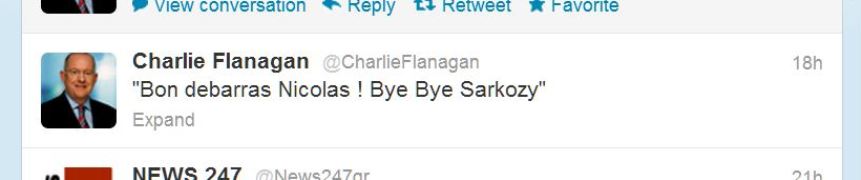
To judge from Tánaiste Eamon Gilmore’s comments the coalition government here believes that the result there has no consequence for the Stability Treaty referendum. The Tánaiste was in Paris, in a signal of European Socialist grouping solidarity, with PES colleague M Hollande. This contrasts with the fickleness of the FG party chairman,Charlie Flanagan’s “Bon debarras (Good Riddance) Nicolas ! Bye Bye Sarkozy” tweet last night.

@Charlie Flanagan FG Chairman
@Charlie Flanagan FG PP Chairman

In Feb 2011 Fine Gael were championing their relations with Sarkozy, Merkel and the EPP – now they deny their former friends. You could almost hear the cock crow three times.

I am no fan of the Stability Treaty. Like others. I believe it is a missed opportunity. It fails to tackle the root cause of the problems in Ireland and Europe – a failed and dysfunctional banking system. But I am not convinced that voting it down brings us one millimetre closer to resolving our problems.

I am a reluctant Yes voter. I hope that passing it may give Germany the cover it needs to allow real reforms to the European Central Bank and the Euro architecture,

For that reason I want to give the Treaty every chance to gain public support. I do not believe that ploughing ahead with a vote on a Treaty that may yet be further reformed – or even improved – serves any purpose. I genuinely fear that going ahead against a background of uncertainty and volatility puts the outcome in doubt.

It is not that I think the combined forces of Sinn Féin and the ULA will convince the people to vote No, but rather that the public will opt not to endorse a Treaty that may be defunct within weeks of passing it.

This is not a new fear. I wrote about the imprudence of holding the vote this early on my website some weeks ago. While I know many would suggest that postponing the referendum sends out the signal that the Government is weak, I think that is better than landing itself with a no vote based on bad timing.

While the Tánaiste is technically right in saying that we wouldn’t need to come back and vote again if a growth package were eventually added to the Treaty – can he really justify putting only half the question to a vote? Would it not be wiser, and more democratic, to wait a few months and put a definitive position to the people?#

It would require more courage and leadership to postpone the referendum than proceed with it. This just may be the reason why it doesn’t happen
May 7th 2012

Independent Study Shows Ireland had 5th Highest Attendance at EU Council Meetings 2000 – 2010

The attached research paper Report on EU Attendance was conducted by Markus Johansson and Daniel Naurin of the Dept of Political Science at the University of Gothenburg and presented at the SNES spring conference in Uppsala 22-23 March 2011.

SNES (Swedish Network for European Studies in political science) is Sweden’s leading research network dealing with questions of European politics and governance.

The study examined 808 EU Council meetings between 2000 and 2010 and found that Ireland had one of the highest average Ministerial attendances at Council of Minister’s meetings, 5th out of the 27 member states.

The authors of the study argue that attendance is an integral part of EU engagement and reflects the priorities of the governments involved. Ireland’s position as 5th highest out of the 27 member states from 2000-2010 is a testament to Fianna Fáil’s committeeman to Europe and strong engagement

This exposes the hollowness of claims repeatedly made by Government Ministers and the Taoiseach that Fianna Fáil failed to attend EU meetings.

Is Government the Biggest Threat to a Yes Vote?

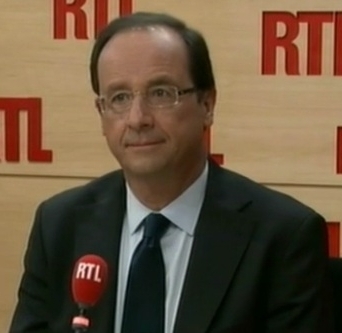
The next French President? François Hollande
(Photo taken from the Hollande Campaign site)

Though the early polls have been positive I am getting a sense that the No side may picking up some momentum as we near the May 31st polling date for the Fiscal Stability Treaty Referendum.

One of the main grounds for this sense of foreboding may indeed be the May polling date itself. I fear having the poll this early may prove the biggest threat to a Yes outcome for three reasons:

1. It allows no side to raise the prospect of a second referendum later in the year. The more astute and sophisticated side of the No campaign is starting to run an argument that goes as follows: We have voted twice on the last two EU treaties.In each case we have come back with a better deal the second time. This Treaty does not come into force until January 2013. We have the time to Vote No now and use the following months to go back and get a better deal and then Vote Yes later in the year. A late September polling date would have denied this argument to them

2. This Sunday see’s the first round of the French Presidential Elections, The Second roubnd of voting will be two weeks later at the beginning of May. While Sarkozy has had a good campaign to date and has closed the gap in the first round the polls there still suggest that Francois Hollande will win the Second Round by approx 55:45.Hollande is standing on recovery platform that rejects Sarkozy’s austerity plan and talks of renegotiating the Fiscal Compact,

While this position may be dismissed as a Gallic version of Gilmore’s “Frankfurt’s Way or Labour’s Way” – ie a promise that sounds good in the campaign but doesn’t survive past polling day – it does look like Hollande is serious. His determination to imeddiately set out a renegotiation the Fiscal Compact to include a growth programme, Euro Bonds etc has probably been strengthened by the attempts of Merkel and other Centre Right EU leaders to snub him.

We will be going to vote during the first days of a Hollande presidency, the background noise to ouyr vote to pass the existing threaty will be his moves to renegotiate that very treaty – almost making a farce of that vote. The politically astute move for our Government would have been to hold off until September and see if Hollande will make a difference.

3. The one great lesson learned from previous referenda, particularly NIce I & II and Lisbon I & II is that the public needs a longer run up/lead in period to tease out the issues. The traditional three or four week campaign has been found to be insufficient, particularly in the absence of “on the ground” campaigns.

Though polling day is about six weeks away there is little sign of that debate is starting yet. Will the Refendum Commission have the time to do the job? Based on the last referendums, it would certainly appear not.  The Tanaiste and Minister for Foreign Affairs had a thirty minute slot on RTE 1 last Saturday where he could have used 5/6 miinutes to explain why voting Yes is important. He didn’t. He chose instead to just give the poll a passing reference, 125 words in a script over 3100 words long. “referendum” featured only once in his script.

While the timing of the polling day is just one factor, it may prove a crucial one. The Treaty should stand or fall on its own contents alone. I am on record here as having my own qualms about the Treaty (see my post here on why I will be a reluctant Yes voter). The debate will be essential. This vote is not like others, we do not have a veto, we cannot delay or deny the progress of this Treaty by our vote alone. The EU has been horrendously slow to act to save itself from the start of this crisis. It has chosen the path of half measures over swift decisive action – usually at the behest of a Franco-German leadership that put domestic political considerations ahead of pan european ones. But we should not be blind to the developing EU real politik.

The appointment of Simon Coveney and Joan Burton as the Fine Gael and Labour campaign directors somehow does not imbue one with a sense of confidence. Coveney’s nomination does echo Charlie Haughey’s appointment of Paddy Lalor as Fianna Fáil national director of elections – a move that spurred the late Frank Cluskey to comment: “There’s confidence for ya”

Labour Leader Gilmore Ranked Second Worst in Poll of Ministers’ Performance

Over the past few days (Tues Apil 11 – 13) I ran a simple poll on my website www.derekmooney.ie . In it I asked people to select the three government ministers they believed were performing best in office.

 182 people voted in the online poll.

The results are as follows: You can download the results in pdf format Rate the Ministers

1

Finance Minister Michael Noonan

2

Welfare Minister Joan Burton

3

Agriculture Minister Simon Coveney

4

Pub Exp Minister Brendan Howlin

5

Transport Minister Leo Varadkar

6

Education Minister Ruairi Quinn

7

Enterprise Minister Richard Bruton

8

Children’s Minister Frances Fitzgerald

9

Communications Minister Pat Rabbitte

10

Arts Minister Jimmy Deenihan

11

Justice Minister Alan Shatter

12

Foreign Minister Eamon Gilmore

12

Health Minister James Reilly

13

Environment Minister Phil Hogan*

If they squabble this much over small stuff… what happens when the big probs arrive?

About a week ago I wrote a piece for the Herald defending the government giving politicians a three week break for the Easter.

Scousers
Calm down lads, calm down

This was, I argued, a welcome opportunity for Ministers, TDs and their advisers to do some of the other boring, but important, work and also to take some time to reflect and think about the issues of the day.
Talk about getting it wrong. No sooner has the ink hit the pages than almost everyone in Government was out in public tearing strips off each other.
The whole cast of characters were involved: Environment Minister: Big Phil Hogan, Health Minister: James “Capt Birsdeye O’Reilly, Finance Minister: Michael Noonan, Arts Minister: Jimmy Deenihan, Welfare Minister: Joan Burton, Communications Minister: Pat Rabbitte, Justice Minister Alan Shatter, FG Party Chair Charlie Flanagan plus a few Government backbenchers including Labour’s Colm Keaveney and Fine Gael’s Regina Doherty.

The week before had seen some on the Labour side saying that Big Phil could have handled the whole household charge thing a lot better. Just as it appeared that that particular row had run its course, news broke that Big Phil was meeting with Moriarty Tribunal favourite and Tipp North TD, Michael Lowry only a few days after the publication of that Tribunal’s final report.

Within hours other Ministers, namely Birdseye O’Reilly and Noonan, were confirming that they too had meetings with Lowry. This was all too much for Joan who questioned the wisdom of this. So too did Jimmy, but more subtly.

Joan’s words riled Charlie who went on Twitter to ask if Joan had a Government death wish. Regina subsequently went on Radio to say Charlie was right and that Joan was wrong. Others thought Joan was right, including Colm, who also went on to Twitter to call the judgment of senior figures in Fine Gael into question.

Meanwhile Pat spoke to the Sunday Independent to say that he was frustrated by the “interminable delay” in bringing prosecutions following Mahon and Moriarty. Within hours of the paper hitting the breakfast table Alan had issued a broadside that had Pat in mind when it stressed the importance of not making public comments that might prejudice proceedings.

By lunchtime the Taoiseach was doing a bad Harry Enfield scouser impression telling everyone to “calm done”. All that was missing was him donning a Kevin Keegan wig and finishing off the interview saying: “Dey do do dat dough don’t dey dough”

Not only did all of this happen in just one week, it happened in very quiet week at that. If this is how the members of the Government deal with minor matters, Lord help us when the big problems come. And come they will.

The Government has had a fairly charmed existence since coming to office. While things are clearly not improving, they have not had to face any genuine crises or policy dramas.

Both parties have endured some setbacks early into their term. but none that really tested them. For Fine Gael it was the losses in the presidential election and referendum, plus the Roscommon hospital fiasco. For Labour it was the loss of three TDS, including a Junior Minister and a by-election winner, though these were offset by their man winning the presidency.

The handling of the household charge suggests they lack a certain deftness of touch, yet it pales into significance against the problems they may yet face in the years ahead.

How will a government that descends into public squabbling and faction fighting at the mere mention of the names of Moriarty Lowry or O’Brien cope if Merkel Draghi or Barroso decide to turn the thumbscrews on Corporation tax or whatever?

Have they all forgotten that they will be asking the people to take their collective advice at the end of May and vote yes to the Fiscal Compact Treaty? Might it not help their case to give the appearance of knowing what they are doing and all pulling in one direction?

As to the internecine squabbling, there are several systems in place to stop such petty rows escalating and getting into the public arena. One is called common sense. Another is the special adviser/programme manger system. Isn’t it time to get working on both?

ENDS

Cowen Talks Ireland Up Seeking Inward Investment

The speech at Washington DC’s Georgetown University by former Taoiseach, Brian Cowen, has attracted some comment since it was reported last week in the Financial Times and Irish Times. Much of that comment has focussed upon just about everything about from its contents. It is a well drafted and cogently argued analysis of the crisis that befell both Ireland and the EU and well worth reading in full: Speech By Fmr Taoiseach B Cowen – 21.03.12

Given the venue and context it is evident that this was meant as a low key, considered and informed contribution and not as a political foray. While I think it will, in time, be seen as an important analysis of the situtaion from 2007/08 onwards. I also think it is important to note how the former taoiseach took the opportunity present to talk Ireland up and to touts for business and investment for Ireland. This is particularly evident in the final paragraphs of the speech:

“I believe Ireland is one of the best locations in the world to establish and to grow a business. This is not just rhetoric but is reflected in the rapid on-going overseas investment which is occurring in Ireland. Ireland is not just open for business but as, I believe, any independent assessmentwould indicate it is among the best places in Europe to start and grow an international business. This will ultimately pay off for our citizens. Indeed all of the fundamental strengths which prior to the crisis meant that Ireland had one of the highest growth rates of GNP per capita among advanced countries for a very long period are still in place and in many respects our advantages have improved in terms of increased cost competitiveness.”


Dáil breaks can only benefit both sides

My Evening Herald column from Saturday March 31st arguing that breaks in Dáil sittings are necessary and beneficial


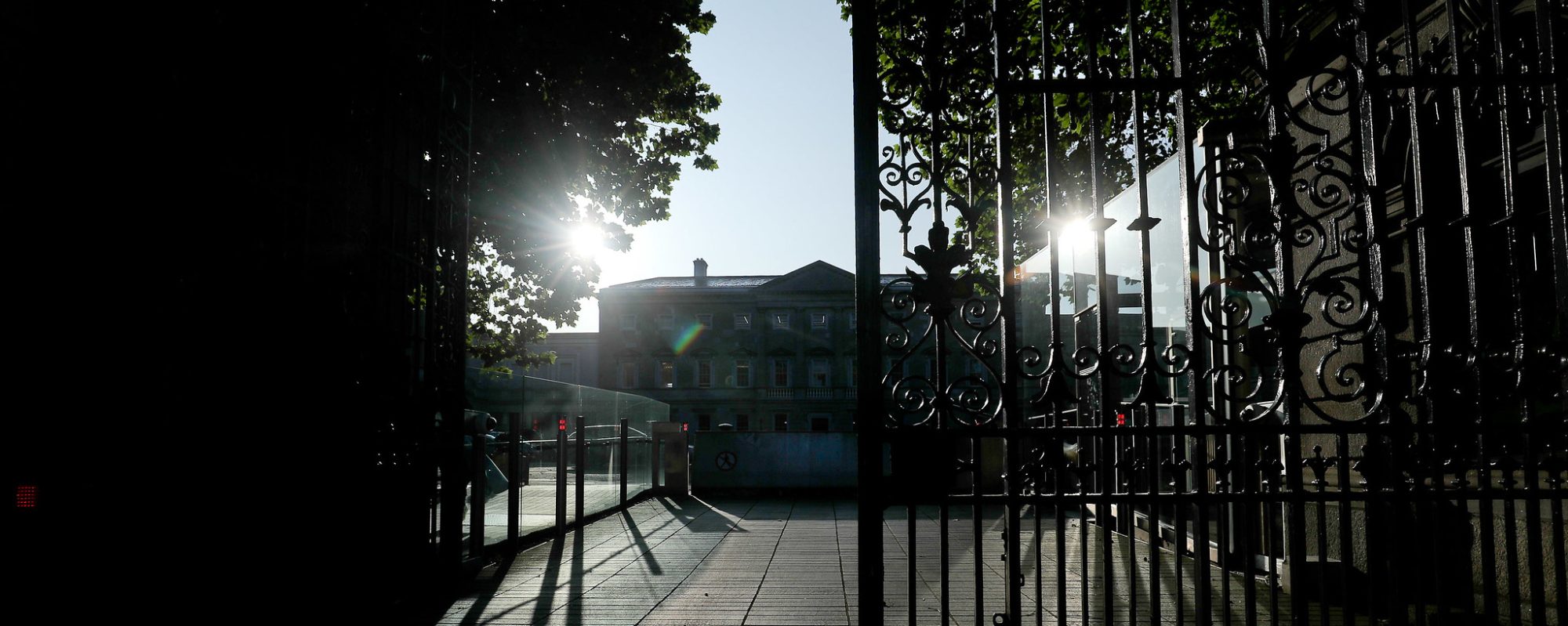
Leinster House

On Thursday Dáil Éireann takes a break for the Easter recess. It is set to return on April 18th. Cue a hue and cry from opposition TDs and assorted political hacks demanding that the Dáil return sooner or sit longer or whatever.

These protests are not only regular and predictable, they are just as entertaining as they are pointless.

These sham battles seem to be based on the notion that the more the Dáil sits the better. Really? It is hard to sustain that argument when you look at the household charge fiasco.

In its recent annual report the Government commends itself for increasing the number of sitting days, saying that the Dáil sat for about 127 days, roughly 36/37weeks, in its first year.

According to the government’s calculations this is a 44% increase on the number of sitting days in the first year of the previous Dáil (2007/08).

A major achievement you’d think. Though not quiet as impressive when compared with the years 2008/09 and 2009/10 when the Dáil actually sat for 35 weeks per annum.

But what’s a week or two between old sworn enemies?

It is the old public sector problem: measuring inputs, not outcomes. Successive governments have been guilty of it.

The Government’s legislative programme should be driven by the number of pieces of legislation it wishes to pass into law, not by a need to produce bits of legislation to fill up some allotted time slot.

TDs should not be apologising for the Dáil not sitting in plenary session over the next three weeks.

Yes, various Oireachtas committees will be sitting during that time – but something else should also be happening. Something that is, in my opinion, far more important.

Politicians and their policy advisers should be availing of this break to do something they rarely get to do: think and prepare.

There is a story, probably apochryphal, about a Minister walking along a corridor in his Department when he spies a senior policy maker sitting back with his feet up on the desk. “Have you no work to do?” asks the Minister, “I have…” comes the reply “…I am doing it now, I’m thinking”.

These short breaks in Dáil sittings afford Ministers and senior officials some time and space away from debates, motions and parliamentary questions to think and to focus on other matters in their departments – things that don’t often make the headlines at Leader’s questions.

Central to this is standing back and taking stock of where they are.

When the Dáil is sitting a surprising amount of time in a government Department can be taken up in answering TDs questions alone, particularly when its that Minister’s turn at oral PQs.

Parliamentary accountability and scrutiny is an essential part of the democratic process, but you also need time to go and effectively do all those things that the parliament will subsequently want to scrutinise.

But if the need for this “thinking” time is important for Ministers and officials is it absolutely vital for an opposition and its support teams.

The Minister has a full time team of 8 or more in his office to fetch, carry and prepare – plus those other senior officials along the corridor to advise and research – the opposition spokesman is often depending on two or three.

But it is not a matter of resources. While the Dáil is sitting the agenda is set by the government. The opposition is usually just reacting to it – or reacting to the media reaction to events.

This is not always a bad thing, especially for an opposition that is effective at harrying the administration. This was the case in the latter half of the last government. The only crumb of comfort it got from the polls was when the Dáil was in recess. When it was in session both oppositions parties’ ratings went up, especially Labour’s.

But an opposition also needs to set the agenda too. It takes a lot of preparation and planning for an opposition to get the focus on its agenda. These breaks can often provide that space.

Politicians on both sides should acknowledge this fact. Who knows, maybe the reporters who cover the Dáil and actually benefit from the break might even credit them for it.

Ends

The Party May be Down, But it is Certainly Not Finished

Fianna Fáil

My take on Fianna Fáil’s 73ú Ard Fheis which is taking place in the RDS this weekend (March 2 & 3). This piece was written for the Evening Herald of March 3rd

———————————-

For as long as I can recall Fianna Fáil Árd Fheiseana were the party conferences where the emphasis was more on the “partying” than the “conferencing”.

They were great social and political occasions where activists from all strands of society, right across the country, gathered to celebrate their membership of the party.

There they rallied; networked; socialised and renewed friendships with colleagues from other constituencies.

To be brutally honest, for many – myself included – the formal debates and motions were incidental to the core objective: discussing politics with old friends and hearing the leader’s speech.

While tonight’s address, the first by Michael Martin as leader, will remain the highpoint of this weekend’s Árd Fheis, it will come at the end of two days of serious and intense debate about the party’s future.

The issue before the Árd Fheis is that stark: the very survival of what was once the greatest modern political movement in Western Europe.

Over these two days – yesterday and today – at the RDS, members are deciding a slate of major reforms on how the party is organised and run.

Key to these is the move away from the representative/delegate model for candidate selection in favour of the One Member One Vote system (OMOV). In other words; to allow every active member in every cumann to have an equal say in selecting candidates and officers.

It is resonant of the crucial debate the British Labour Party had at their 1993 Conference. That was the year they ended the Trade Union block vote and adopted OMOV.

It was not an easy battle for them. The move to reform and modernise had been delayed for almost 14 years as they tore themselves apart with internal wrangling and infighting.

The result was three stunning defeats and three terms of powerless opposition.

Only by reforming their internal structures and systems did Labour allow itself to reconnect with its membership and, more importantly, with the people. After 14 years of irrelevance “New” Labour began to get in touch with the cares and concerns of the British people and respond effectively to them.

That is what Michael Martin hopes to achieve with this Árd Fheis. While the events of the past few days may have moved the focus slightly away from that goal, he was determined to shift it back as soon as the members start to gather in the RDS last night.

And a fair few of them gathered; with over 4000 members registered to attend by the middle of the week.

It is an indication of how serious the party’s grassroot members are about renewing their party. The number of people running for positions is another. Contest for the 20 nationally elected places on the Fianna Fáil Árd Comhairle has never been keener, with many bright, young first time candidates.

The same applies to several of the other senior positions, though the contest for the positions of Party Vice President was made marginally less intense with the withdrawals of two former party big hitters: Mary Hanafin and Éamon Ó Cuiv.

The weekend’s debates are not confined to organisational matters. The Clár contains some motions which, if passed, would herald interesting shifts in policy, including ones on gay marriage, gay adoption ending the regime of TDs’ and Senators expenses’ and reducing the voting age to 16.

There is also a slew of the more traditional Árd Fheis motions, including some Dublin centred resolutions calling for the reinstatement of the Ballymun Regeneration, Grangegorman DIT Campus and Metro North projects.

So, a great deal of serious work will be done by those gathering in Ballsbridge, but be certain too that there some socialising and banter as the faithful show that while they may be down, the party is by no means finished.

Derek Mooney was a Ministerial Adviser 2004 – 2010 and a Public Affairs Consultant and Speechwriter since the 90s