Public affairs and political communications consultant. Speech-writer. Former Irish Govt Adviser (2004-10). Occasional columnist and commentator: Broadsheet.ie, RTÉ.
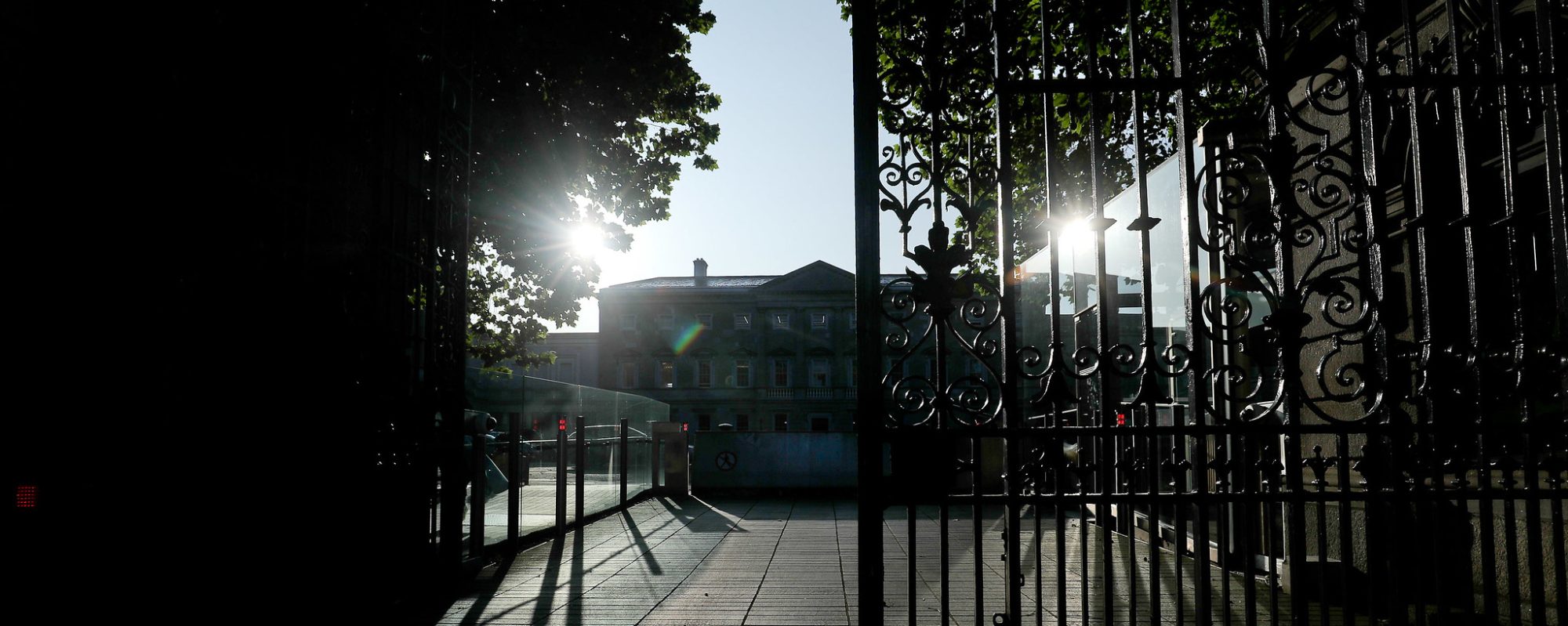
This is my Broadsheet “Mooney on Monday” from Monday piece from June 27th on how the Irish Government (and politicians) must act in response to the UK’s Brexit vote.
There is a new (though not uncritical) pro-EU majority across the island that should be encouraged and fostered via a re-establishment of the Forum on Europe. There must not any a return of form of border across the island.
For as long as I can recall it has been a central tenet of Unionism that the status of Northern Ireland should not change without the political consent of the majority of the people living there.
Yet, that it precisely what is set to happen over the coming years, with senior members of the DUP cheering it on
Despite the fact that a clear majority – some 56% – of the people of Northern Ireland who voted, including large numbers from both traditions, stated that they wanted to remain in the EU, their wishes are about to be ignored. It seems that a majority in the North is only a majority when the DUP is a part of it.
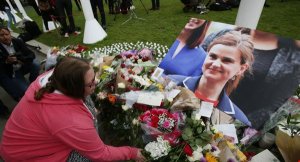
This is my Broadsheet opinion piece from June 20th, written in the aftermath of the horrific murder of Labour MP, Jo Cox. broadsheet.ie/ad-hominemphobia/
As people struggle to come to terms with how Jo Cox MP could be so brutally slain outside her constituency clinic, many have focused on the coarsening of public debate and the abuse, both actual and online, aimed at politicians.
Though there has undeniably been a coarsening of public debate in recent years, we should not delude ourselves that there was once a golden age when all political discussion was genteel and free from ad hominem attacks.
There wasn’t.
Politics has always been a rough trade where vigorous and full bodied exchanges are the order of the day. Take this robust response from Frank Aiken T.D. in Dáil Éireann in July 1959, which I found while doing some research on Irish diplomatic history.
This piece first appeared two weeks ago on Broadsheet.ie in the aftermath of the appalling events in Pulse nightcub in Orlando, Florida- link: broadsheet.ie/2016/06/13
When faced with a massive tragedy the natural inclination of most democratic political leaders, from across the spectrum, is to put partisan politics aside for a time and stand together in solidarity and grief.
Campaigns are put on hiatus, genuine political differences are temporarily put aside while the country mourns and tries to cope with the enormity of what has befallen it.
It is what happened in the wake of recent terrorist attacks in France and in Belgium and countless times in the USA in the aftermath of yet another mass slaying of innocent victims.
Yet, last night, even before the names and details of the 50 men and women callously slaughtered in the Pulse Nightclub in Orlanda had been released, the Republican Party’s presumptive candidate for the U.S. Presidency chose to take the other route, going was online to whip up anger and score political points off the worst instance of US domestic terrorism.
This piece first appeared on the Slugger O’Toole website on June 14th. Note that I wrote this piece a few days before the horrific murder of Jo Cox, M.P.
____________________
Shortly before polling day in last year’s Marriage Equality referendum one of the Irish national daily newspapers ran an opinion piece by a marketing/messaging expert evaluating the Yes and No campaigns to that point.
Though he had several criticisms of those of us on Yes side and even suggested that the Yes campaign was putting the outcome in unnecessary doubt, the subtext to his article seemed to be: this would have been a whole lot better if he had been running things.
I mention this now just in case anyone thinks that the observations I am about to make here about the poor state of the UK’s In/Out debate are intended in the same – if only they had asked me – vein.
They are not. Having worked on the winning side in several referenda from Lisbon II to Marriage Equality and from the Good Friday Agreement to Seanad Abolition, I know how difficult they can be and how each referendum is different from the other.
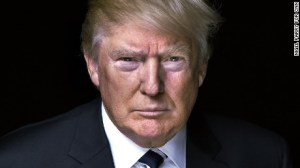
“Donald Trump looks as if he was playing a President in a porn movie.” This was Scottish comedian Frankie Boyle’s scathing put down of the Donald on BBC radio four’s News Quiz last Friday.
Maybe it is something to do with the Donald’s addiction to calling everything ‘huge’ (or as he says it: huuuuuge ) and lauding his own achievements with outlandish superlatives but Boyle’s taunt perfectly captures Trump’s OTT and hammy public appearances.
Trump’s emergence as a real contender for the White House has surprised most pundits including – if one of his former publicists is to be believed – himself.
How could this gauche, egotistical, property dealing demagogue tear up the US presidential campaign playbook and beat a string of long established Republican hopefuls?
Hard though we may find it to comprehend from this side of the Atlantic; but part of the Trump phenomenon is that he has teed-up this US presidential election to be a fight between the Washington insider: Hillary Clinton and the outsider: Trump.
This is my latest article for Broadsheet.ie – available online here: New Politics Explained
What exactly is this “New Politics” we have been reading and hearing about so much lately?
It was the question that should have occurred to me as soon as the Public Relations Institute asked me to participate in a panel discussion they held last Thursday as part of a half day seminar entitled: Public Affairs in the era of ‘New Politics’.
But it didn’t. Like many others, I have been throwing about the phrase “new politics” in the two and a half weeks since the Dáil elected a Taoiseach as if everyone understands what it means.
“There’s no Labour problem that Ken (Livingstone) can’t make worse.”
This was Alan Johnson’s response to the former London Mayor’s latest unwelcome intervention in a UK Labour row.
Substitute the name “Alan Kelly” for “Ken Livingstone” and Johnson’s axiom could just be as applicable here.
Perhaps it’s his pugnacious ‘I tell it like it is’ style, but Alan Kelly has come to be personally identified with two of the last government’s biggest political failures: Irish Water to the housing crisis, not to mention his “power is a drug… it suits me” interview or his penchant for adding to his own party’s travails.
Fianna Fáil’s poster attacking Fine Gael’s broken promises
Whether polling day is on Feb 26th or March 4th, it is clear that we are only two or three weeks away from the start of the great 2016 corriboard shortage… sorry, the 2016 general election.
Over the coming two weekends we will have the Fianna Fáil and then the Fine Gael Ard Fheiseanna, followed by Labour at the end of January – presuming that Enda hasn’t already called the election and pulled the plug on Labour’s big day out.
While the corriboard campaign posters remain in their wrappings and the Vote for me leaflets stand ready, the electioneering has already as good as started.
One the most interesting aspects of Fine Gael’s pre-campaign campaigning so far is just how much time and energy a party determined to dismiss Fianna Fáil as irrelevant is devoting to attacking them. See Today FM’s Matt Cooper’s comment on the Taoiseach’s Wednesday afternoon press conference:
Could it be that Fine Gael’s own private polling is telling them something the national newspapers polls are missing?
It occurred to me recently that Enda has spent the last few years doing a very bad Bertie Ahern impression – making Enda the Bobby Davro of Irish politics you might say. Enda gets the minor gestures and mannerisms right – but he misses the core of the character.
Enda may be as accomplished and expert a glad handler as Bertie when it comes to wading into a crowd and shaking the hand and slapping the of everyone around him, but he his mimicry is one dimensional. He does not possess Bertie’s skill and ability to command the facts and figures when engaging with the media on door step interviews.
While Enda still possesses many skills and abilities, not least his steely determination and ruthless streak, he is not politically hard wired to endure or sustain a long election campaign – especially if he hopes to keep his media interactions down to a few tightly managed ones.
It is a mistake on two fronts. First as they seem to be copying the Tory playbook here with minimal changes and basic adaptions.
Do they so see themselves as Ireland’s Tories that they cannot be bothered to make even the most basic of changes to the strategy, the text and the slogans? A series of recent Fine Gael social media posts have used the Tory line: “long-term economic plan” word for word:
While the Tories undoubtedly mounted a superb social media campaign in the 2015 UK general election and used the platforms, particularly Facebook, more effectively than most of their rivals (apart from the SNP who are the master campaigners both online and on the ground) that does not mean you take their campaign slogans and approaches lock stock and barrel.
Second, in taking the Tory campaign playbook en masse Fine Gael seems to have forgetten that we have a PR STV system, not First-Past-The-Post – indeed Fine Gael used to pride itself as being the defender of PR STV (they had opposed the two attempts to change the voting system by referendum in the 50s and 60s)
What works in a FPTP system does not necessarily work in a PR-STV one. Depending on where you live in a FPTP system you can find yourself voting for someone you don’t like rather than the one you do like most just so you can make sure the one you dislike more is kept out.
The idea that a vote for Fianna Fáil or Independent alliance is a vote for Sinn Féin is not so easy to sell in an STV system where the voter can vote the entire panel right down the line and omit the local SF candidate.
That said is easy to see the attractiveness of the Tory playbook for Fine Gael. The Tories succeeded in keeping their leader out of head to head debates, Fine Gael want and need to do the same – though for different reasons. While Cameron was wary of elevating Milliband by sharing a head to head debate platform with him – there were no questions about the PM’s capacity to perform well in a head to head debate.
The other attraction was the Tories successful cannibalisation of their Lib Dems coalition partners. Cameron’s gains came mostly from Lib Dem losses (The Tories took 27 of the 49 Lib Dem seats lost as opposed to 12 lost to Labour and 10 to the SNP) – an option that Fine Gael is eyeing up here, using Labour losses to shore up their own numbers. Fine Gael are ready to fight this campaign to the last Labour TD.
Though Fine Gael’s polling numbers have recovered recently – at precisely the time they needed them to recover – they are still on course to lose seats, even if they do get 31/32% in the polls.
While these improving numbers are no mere coincidence and are a tribute to Fine Gael’s political strategists, the idea that seems to be floating about the commentariat that Fine Gael is now some invincible campaigning machine is more than a little bit short of the mark.
Fine Gael is having a few problems of its own right now, and they are problems entirely of its own making. Though they will doubtless address the issue between now and the Árd Fheis (and possibly drum up future local difficulties in the process) Fine Gael was still short of the 30% gender quota up to a few days ago – a system they introduced and championed.
Not only that but its head-quarters operation has just ended an unseemly, costly and ultimately unsuccessful fight in the Courts with one of their own candidates: John Perry TD.
And before I am accused me of dragging up these problems like a Fianna Fáil-er whistling past the graveyard, I do not think this is a zero sum game. I do not presume that any loss of ground by Fine Gael over the campaign will automatically translate into a Fianna Fáil gain.
Fianna Fáil will have to make its own ground in this one and will need to land some hefty punches on Enda, Leo, Michael and Simon, it cannot depend on Enda and Fine Gael to just lose it.
Enda’s #armygate saga has had pundits of all hues falling over themselves to explain, or even excuse, how and why An Taoiseach went to a recent EPP gathering in Madrid and told a story about the Irish Defences Forces being on standby to protect ATMs back in 2012.
Some have seen this as just another example of the perils of letting Enda go off script. Others suggest it shows that his grip on the actualité is slipping, a bit like his story of the woman thanking him after the Budget.
In order to retain my punditry badge, let me weigh in with another possible explanation. I think Enda is suffering from Ransom Stoddard Syndrome.
Who is Ransom Stoddard, I hear you ask. He was the main character in the 1962 western: The Man Who Shot Liberty Valance. Stoddard, played by Jimmy Stewart, is the eponymous hero who shot the outlaw Liberty Valance – except, well…. he didn’t. (I hope this doesn’t spoil the plot for anyone hasn’t seen it.)
“No, sir. This is the West, sir. When the legend becomes fact, print the legend.”
Following a long political career, built in part on his reputation as the man who shot the criminal, Stoddard attempts to clarify events in an interview with a local newspaper. As the interview ends Stoddard asks the editor if the newspaper is going to use the real story, the editor replies: “No, sir. This is the West, sir. When the legend becomes fact, print the legend.”
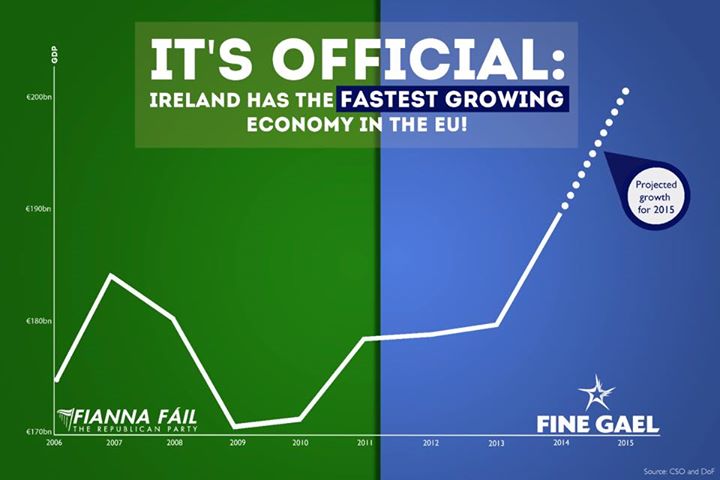
For Enda the legend of Enda has become confused with fact. The Enda legend or, to use the political communications parlance, the Enda narrative, is that he and Fine Gael manfully pulled Ireland back from the brink. In Fine Gael’s mind they inherited a bankrupt and dysfunctional country and, with careful planning and skilful leadership, turned it around to become the fastest growing economy in Europe. Not only that, they also tell themselves (and others) that the recession would never have hit Ireland if only Fine Gael had been in office for the preceding decade.
It is this narrative Enda was sharing with his colleagues in the EPP. The problem is that the facts don’t back it up, so Fine Gael and Enda must construct its own facts, facts based on its legends.
As Noel Whelan points out in his column in the Irish Times: Kenny gaffe over army and ATMs part of pattern of deception this is not the first, second or third time Enda has uttered this story of Army, ATMs and the Central Bank. This story has been constructed not only to fit into a narrative of the past, it is structured so as to advance it.
Yes, as others have pointed out, it does highlight Enda’s recurring issues with going off script and ad-libbing, but it is about more than a Taoiseach who can’t be trusted out on his own and who can’t remember his lines. It is about a party in government that is all narrative and no facts.
Last week the Fine Gael placed a graphic on its Facebook page which purported to show that it alone had secured Ireland’s recovery and made Ireland the fastest growing economy in the EU. To even the most casual of viewers the graphic, especially ones who ignore the dodgy Y axis increments, shows that the bulk of the recovery had been secured before the 2011 election and that the economy had effectively flat lined for the first two years of Fine Gael and Labour’s time in office.
Try searching for the 2002 and 2007 Fine Gael manifestos on the party’s website – you won’t find them. Neither will you find the many statements from Fine Gael spokespeople urging more spending after every Budget. The reality that both campaign platforms, plus the party statements promised to spend more and tax less than the Fianna Fáil alternatives does not sit well with the new Fine Gael legend.
Where Fine Gael is all narrative and no facts – Fianna Fáil has the opposite problem, it is all facts and precious little narrative. Up to the appearance of Brian Cowen and Bertie Ahern before the Banking Inquiry Fianna Fáil spokespeople seemed singularly unwilling to talk about the years leading up to the 2011 election. It seemed that they, like Fine Gael, thought that talking about the period 2002 – 2011 could only damage the party – but as Cowen and Ahern showed, setting the record straight and speaking candidly about what actually happened does not undermine Fianna Fáil.
Cowen and Ahern’s able and informed testimony at the Banking Inquiry showed that the Governments they led were neither reckless nor directionless. Yes, they made mistakes, but as they proved by their command of the facts and the details they did have a plan and were, in the teeth of a global financial crisis, making the best decisions they could on the basis of the facts and information before them. Their assured solo appearances contrasted with Enda’s assisted one, where he did the general patter and handed over to Richard Bruton when the questions become difficult.
The big fallout from the Banking Inquiry is not damaging Fianna Fáil the way Fine Gael’s strategists planned it would. They were full sure that parading the old familiar Fianna Fáil faces before the committee to be questioned and pilloried would re-ignite the public anger and ire of the 2011 election. Why else delay the hearings until the final run up to the election.
But they were wrong. While Fianna Fáil is hardly soaring in the polls, its support has been creeping up painfully slowly, just while the support levels for Fine Gael’s preferred enemy: Sinn Féin, have been slipping steadily downwards.
Hence the need for Fine Gael and for Enda is up the ante on the faux narrative and hype up the legend of Enda of the West complete, to return to the western movie motif, with the good guy white hats they have fabricated for themselves.
The problem is that life and politics today is much more questioning and techni-coloured now than it was in the days of the black and white western – no matter how exciting the story sounds.
When accessed I was amazed to discover that it was published in an unsearchable PDF format – i.e. it is essentially a 288 photo of the report: Interim_report_of_the_Fennelly_Commission (5)

 This is my Broadsheet “Mooney on Monday” from Monday piece from June 27th on how the Irish Government (and politicians) must act in response to the UK’s Brexit vote.
  This is my Broadsheet opinion piece from June 20th, written in the aftermath of the horrific murder of Labour MP, Jo Cox.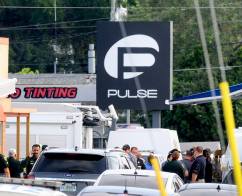
 This piece first appeared on the
 Here is my Broadsheet column from June 7th 2016. Published online here:
 This is my latest article for Broadsheet.ie – available online here:
  This was my first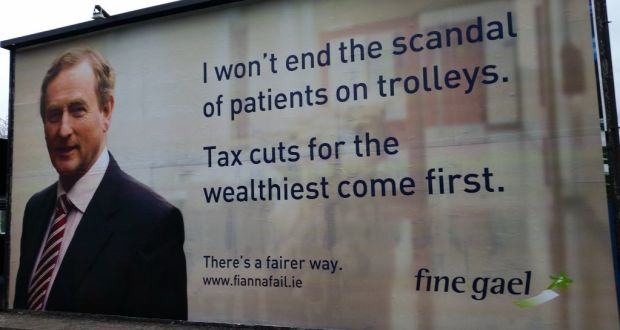
 derekmooney.ie