My column on the Chris Andrews Twittergate fiasco from today’s (Mon August 13th 2012) Evening Herald
Anonymous Tweets
I am not exactly sure how I feel about Chris Andrews today. I have known him personally for over 25 years. We are near contemporaries. I have campaigned alongside him and, on a couple of occasions, for him. He managed to so something I repeatedly failed to do: to get elected.
In his case that meant serving as a Dublin City Councillor and a TD for the Dublin South East constituency. His defeat in the great Fianna Fáil wipeout of February 2011 was not a reflection on his work as a local representative.
He came closer than many to hanging on in a constituency that has not be traditional FF territory. His work rate meant that the tide which engulfed him was not nearly as severe as that which washed away so many others.
For these reasons I feel sorry to see him exit politics.
But there is another side too. Like many of his friends and supporters I am deeply angered by the report in yesterday’s Sunday Independent of his antics in setting up a fake twitter account to attack Fianna Fáil.
This anger is twofold. It is an anger at his actions and his attempts to glorify them by presenting himself now as some victim, but it is also an anger at his betrayal of the trust of supporters and colleagues, like me.
No matter how much he may seek to convince himself otherwise, Chris is no victim.
He is no principled dissenter or critic being silenced out by an intolerant leadership. His actions were petty and self serving. He hid behind a fake account (@brianfornerFF) and sniped at perceived political rivals in the hope of bringing them down and advancing himself.
I engaged with his fake persona on Twitter a few times, mistakenly believing it what that of a disillusioned young member. After a few exchanges I quickly realised that it was nothing of the sort, though I never suspected it was Chris.
There was nothing noble or admirable in his comments, Most were just bitchy and sneering rants at colleagues. The only “political” thread in his exchanges with me was his expressed disdain for political dynasties, a little ironic now given the source.
The comical point in all of this is that the real Chris Andrews and I were exchanging messages on twitter at the same time as the fake tweets.
I, like others, had become an audiences for Chris’s one man performance of his own “Philadelphia Here I Come”. Unlike Friel’s “Gar Public” and “Gar Private” his were not the inner and outer voices of the same person, one expanding upon and setting the context for the utterances of the other.
Quite the opposite. While “official Chris” publicly expressed support and praise for the party “Continuity Chris” was lashing out at those seeking to reform and rebuild. He did occasionally take pot shots at the leadership and senior figures, but his targets were mainly local.
It was all a game, and a pointless one at that.
There was no great point of principle at stake here. His attacks and indeed his departure was not about the party’s stand on the Fiscal Treaty Referendum, no more than it was about its support of Gay marriage or a reformed Seanad.
This was about high politics or the future, it was about low politics and the past. It was about settling old scores and doing it out of sight, hidden behind a screen.
It was about the worst of the old politics, which makes his parting shot, his suggestion that dissent and criticism is not tolerated in FF, all the more galling.
Because of his age, his location and indeed his background Chris was uniquely placed to play a part in crafting and determining whatever future Fianna Fáil may have. The pity is that he rejected that opportunity – it did not reject him. This is what makes me both sad and angry.
My Evening Herald column from today’s (Thurs May 24th) edition:
Many different reasons to vote yes or no
With less than a week to go the referendum campaign seems more and more to be about less and less.
On the face of it, if you believe the posters, the choice is to Vote Yes to achieve stability or to Vote No to end austerity.
But do any of us really believe these claims? Regrettably, like previous EU referendums the debate has been conducted at the extremes, not the centre. It was the case in the Nice and Lisbon referendums, remember those “€1.84 Minimum Wage after Lisbon” posters?
Mercifully, we have been spared the malign input of Cóir and Youth Defence this time. The are no loss, especially as most of them wouldn’t know a treaty from a tea-bag (to rob a line I recently overheard)
But this absence of any significant ultra right involvement on the no side does highlight a curious undercurrent to the campaign, one, which I suspect, may be a factor in how some people decide how to vote next week.
While the slogans maybe about the EU and the Euro the referendum has morphed into a proxy battle on the future of left / right politics in Ireland.
From the start the battle front was drawn up along left versus right lines.
On the Yes side you had the right and centre right parties: FG, FF and Lab (more about them later), the employers’ and business organisations, the farmer’s groups and the more established/mainstream trade unions.
On the No side you had the socialist and hard left parties, People Before Profit, Joe Higgin’s Socialists, Sinn Féin, the more radical trade unions.
While the entrance of The Declan Ganley somewhat clouded the the Left/Right delineation, it hasn’t ruptured it.
The sight of him sharing No platforms with irredentist left firebrands is a joy to behold, especially when you consider that they agree on virtually nothing, including Europe. Most on the hard left are euro-sceptic while The Ganley is avowedly Euro-federalist.
While passing the Fiscal Treaty will herald no major day to day changes – mainly because it just restates the centre/centre right economic orthodoxy in place since 2008 – it will cement it into domestic law for the foreseeable future.
It is this that the left fears and opposes most.
Passing the Treaty would recalibrate the centre of the Irish political spectrum a few points to the right. It won’t be a seismic or noticeable shift, but it torpedoes the Left’s ambitions of shifting it the other way.
It doesn’t vanquish them, nor does it make them to tone the rhetoric down. If anything, it will do the opposite, but in their hearts they will know that their ambition to shift Ireland economically to the left has been reversed.
This explains why the campaign from Joe Higgins, Boyd Barrett and Sinn Féin has been so fierce. But not as fierce as when its over and they start to target each other.
I am not predicting that their poll rating drops are set to drop. They won’t. They will probably rise as voters use them to express their disapproval of government parties going pack on pre election pledges.
But the Irish electorate is sophisticated. It is overwhelmingly aspirational. This applies across all social classes and communities. They want their kids to do better than they did. That decides voting intentions more than anything.
In the meantime Sinn Féin will continue to do well at Labour’s expense, after all Gerry and Mary Lou are saying now what Éamon and Joan were saying two years ago.
It is Labour who will be the biggest casualty. Polls showing 40% of Labour supporters voting No could have longer term ramifications for the leadership. But whatever they may be, they can be so where near as damaging as Gilmore’s infamous “Frankfurt’s Way or Labour’s Way” slogan.
It may turn out to be the most devastating political slogan of recent times – devastating to its authors, that is.
What will we be voting about on May 31st? It is one of the toughest Treaty referendum questions to answer.
The ECB on Frankfurt’s Way?
If you are to believe the thousands of posters that adorn our street lamps we are either voting yes to stability and jobs or voting no to austerity. A simple enough choice… or so you’d think? Unfortunately, as the campaign progresses, it is becoming clear that neither the Yes nor the No poster claims stands up to much scrutiny.
Do we really think we will suddenly achieve stability and more jobs if we vote yes? I suspect that even the most ardent of yes voters believes that to be case.
On the other hand does the most convinced no voter think that the austerity measures, including household and septic tank charges will disappear if 50% plus one of us votes no? I doubt it.
So what are we voting about?
The best answer I have heard so far has not come from a member of government, the ULA or Sinn Féin. It came, peculiarly enough, from a Euro bureaucrat, a former member of the board of the European Central Bank member. Not the type of person you would expect to speak with simplicity and clarity, yet he did.
Speaking on RTE Radio One’s This Week programme, Lorenzo Bini Smaghi described the decision before us with a cheque book analogy. After years of having separate current accounts, he explained, the Eurozone countries have decided to have one current account and one single chequebook between them for certain purposes.
The risk with this is that any individual country could abuse their access and stick others with the bill, so it is important to agree a set of strict and enforceable rules beforehand. These rules are set out in the Fiscal Treaty. If you want to be able to use the joint account, you need to agree the rules. Refuse to agree the rules and you won’t be allowed near the chequebook.
It is a simple and effective explanation.
What we are voting about is our relationship with the Eurozone countries. Do we want to continue and strengthen that relationship or do we want to weaken it. This does not mean that voting No is the same as being against the Europe, but the choice we are facing has become starker than we would like it to be.
Ok. So now that I have attempted to make the issue a little clearer and get behind the hype and hysteria printed on the posters let me now reverse the process and confuse it again.
While much of the debate has been about the EU and the Euro let me point to another level in the debate. Though it does not get mentioned so much, this referendum has become a proxy battle on the future of left versus right politics in Ireland.
Before The Declan Ganley entered the fray the battle lines had been drawn up along clear Left/Right lines.
On the Yes side you had the right/centre right parties (FG, FF and even Lab), the employers’ and business organisations, the farmer’s groups and the more conservative trade unions.
On the No side you had the radical and left parties, People Before Profit, Joe Higgins Socialists, Sinn Féin, the more radical trade unions.
A Yes result would recalibrate the centre of the Irish political spectrum several degrees to the right. While this would not vanquish the left, it would limit their scope and hem them in.
This could help explain why Sinn Féin has been so fierce in urging a No. A Yes vote would place a definite ceiling on their ambitions and make the centre/centre right economic approach the norm for at least the next decade.
This would leave the hard left /socialist factions with no influence, just sitting on the sideline spouting rhetoric – so, no change there.
The main casualty could be Irish Labour Party, no matter what the result. “Frankfurt’s Way or Labour’s Way” may turn out to be the most devastating political slogan of recent times – devastating to its authors, that is.
The attached research paper Report on EU Attendance was conducted by Markus Johansson and Daniel Naurin of the Dept of Political Science at the University of Gothenburg and presented at the SNES spring conference in Uppsala 22-23 March 2011.
SNES (Swedish Network for European Studies in political science) is Sweden’s leading research network dealing with questions of European politics and governance.
The study examined 808 EU Council meetings between 2000 and 2010 and found that Ireland had one of the highest average Ministerial attendances at Council of Minister’s meetings, 5th out of the 27 member states.
The authors of the study argue that attendance is an integral part of EU engagement and reflects the priorities of the governments involved. Ireland’s position as 5th highest out of the 27 member states from 2000-2010 is a testament to Fianna Fáil’s committeeman to Europe and strong engagement
This exposes the hollowness of claims repeatedly made by Government Ministers and the Taoiseach that Fianna Fáil failed to attend EU meetings.
My column from today’s Evening Herald on Éamon Ó Cuiv’s Craggy Island Act
Craggy Island
If you think Fine Gael or Labour party backbenchers have it tough; spare a thought for Fianna Fáil’s sole backbencher: Éamon Ó Cuiv. He has been rarely out of the headliners since quitting as his party’s deputy leader and communications spokesperson.
Though he served as a Minister for the duration of the 1997 – 2010 Fianna Fáil led governments, it took a few disloyal acts as a back bencher to bring him to some form of public fame.
His newly found rebellious streak comes as a bit of a shock to those who remember his ministerial days, particularly his almost eight year stint as Minister for Community, Rural and Gaeltacht Affairs.
That department’s acronym (D/CRGA), coupled with his peculiarly laconic style, earned it the title Craggy Island during his tenure – though whether this was a reference to Fr Jack, Fr Ted Crilly or Fr Dougal was never fully established.
His reinvention as a latter day rebel is not his first metamorphosis. Despite his Man of Aran manner and demeanour he actually hails from the leafy and affluent, Dublin 4. His success at portraying himself as the archetypal westerner possibly owes as much to his lineage as it does to his conscious efforts.
His excellent track record as a public representation in West Galway, has gained him much respect in the party: almost as much as his position as Dev’s grandson.
This is the Catch 22 he seemed to have missed. While the reduction in the size of the parliamentary party has made him a bigger player, the cachet his political heritage confers is also somewhat diminished. The events of the past few years have reduced the currency value of dynasties in the new leaner Fianna Fáil. Isn’t the concept of dynasty incompatible with a truly republican party?
His outspoken comments on Europe, urging the party to a more Tory-esque euro sceptic position have not been the rallying cry he may have hoped for. Many share his view that Europe has not been working together in partnership or solidarity. They see that Europe’s “failure to act decisively and cohesively damaged its reputation and standing amongst its own citizens”. But they do not see voting No as the logical or sane answer to that problem.
I put that last line in quotes as, significantly, it does comes not from an Ó Cuiv speech, but rather from Michael Martin’s February 9th address to Institute for International and European Affairs, Dublin.
Ó Cuiv’s belief that he is the lone voice criticising the EU does not stand up. Despite his contentions, voting Yes does not require one to draw a veil over the glaring flaws in what the EU have done in addressing the European banking and economic crisis.
While many in the party may be prepared to allow him the occasional euro-sceptic outburst, they draw a definite line at his idea that Fianna Fáil should be cosying up to Sinn Féin. That is simply not on the table for the vast majority of the party’s public representatives at national and local level.
While some see Ó Cuiv’s grá for such an arrangement as a product of the shinner’s relative weakness in his bailiwick, others suggest it exposes his ill-founded, romantic notions of reuniting republicanism.
The Shinner’s provo-ism is the antithesis of Fianna Fáil’s republicanism. The two strands are simply incompatible and have been for generations. For Ó Cuiv to imagine that they are reconcilable does a disservice to those who adhered to the constitutional republican path and underestimates the ambitions of those who espoused the provo alternative
The irony is that Ó Cuiv’s truculence runs counter to the approach his grandfather adopted. Dev believed that being an elected representative of a political party brought responsibility and required discipline. The party decided its policies behind closed doors and everyone stuck to the party line, whether they personally agreed with it or not.
While there is no desire to grant Ó Cuiv the martyrdom that some think he seeks, he may yet force their hand and find himself banished to a Craggy Island of his own making.
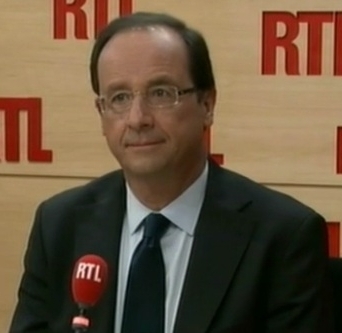
The next French President? François Hollande (Photo taken from the Hollande Campaign site)
Though the early polls have been positive I am getting a sense that the No side may picking up some momentum as we near the May 31st polling date for the Fiscal Stability Treaty Referendum.
One of the main grounds for this sense of foreboding may indeed be the May polling date itself. I fear having the poll this early may prove the biggest threat to a Yes outcome for three reasons:
1. It allows no side to raise the prospect of a second referendum later in the year. The more astute and sophisticated side of the No campaign is starting to run an argument that goes as follows: We have voted twice on the last two EU treaties.In each case we have come back with a better deal the second time. This Treaty does not come into force until January 2013. We have the time to Vote No now and use the following months to go back and get a better deal and then Vote Yes later in the year. A late September polling date would have denied this argument to them
2. This Sunday see’s the first round of the French Presidential Elections, The Second roubnd of voting will be two weeks later at the beginning of May. While Sarkozy has had a good campaign to date and has closed the gap in the first round the polls there still suggest that Francois Hollande will win the Second Round by approx 55:45.Hollande is standing on recovery platform that rejects Sarkozy’s austerity plan and talks of renegotiating the Fiscal Compact,
While this position may be dismissed as a Gallic version of Gilmore’s “Frankfurt’s Way or Labour’s Way” – ie a promise that sounds good in the campaign but doesn’t survive past polling day – it does look like Hollande is serious. His determination to imeddiately set out a renegotiation the Fiscal Compact to include a growth programme, Euro Bonds etc has probably been strengthened by the attempts of Merkel and other Centre Right EU leaders to snub him.
We will be going to vote during the first days of a Hollande presidency, the background noise to ouyr vote to pass the existing threaty will be his moves to renegotiate that very treaty – almost making a farce of that vote. The politically astute move for our Government would have been to hold off until September and see if Hollande will make a difference.
3. The one great lesson learned from previous referenda, particularly NIce I & II and Lisbon I & II is that the public needs a longer run up/lead in period to tease out the issues. The traditional three or four week campaign has been found to be insufficient, particularly in the absence of “on the ground” campaigns.
Though polling day is about six weeks away there is little sign of that debate is starting yet. Will the Refendum Commission have the time to do the job? Based on the last referendums, it would certainly appear not. The Tanaiste and Minister for Foreign Affairs had a thirty minute slot on RTE 1 last Saturday where he could have used 5/6 miinutes to explain why voting Yes is important. He didn’t. He chose instead to just give the poll a passing reference, 125 words in a script over 3100 words long. “referendum” featured only once in his script.
While the timing of the polling day is just one factor, it may prove a crucial one. The Treaty should stand or fall on its own contents alone. I am on record here as having my own qualms about the Treaty (see my post here on why I will be a reluctant Yes voter). The debate will be essential. This vote is not like others, we do not have a veto, we cannot delay or deny the progress of this Treaty by our vote alone. The EU has been horrendously slow to act to save itself from the start of this crisis. It has chosen the path of half measures over swift decisive action – usually at the behest of a Franco-German leadership that put domestic political considerations ahead of pan european ones. But we should not be blind to the developing EU real politik.
The appointment of Simon Coveney and Joan Burton as the Fine Gael and Labour campaign directors somehow does not imbue one with a sense of confidence. Coveney’s nomination does echo Charlie Haughey’s appointment of Paddy Lalor as Fianna Fáil national director of elections – a move that spurred the late Frank Cluskey to comment: “There’s confidence for ya”
The speech at Washington DC’s Georgetown University by former Taoiseach, Brian Cowen, has attracted some comment since it was reported last week in the Financial Times and Irish Times. Much of that comment has focussed upon just about everything about from its contents. It is a well drafted and cogently argued analysis of the crisis that befell both Ireland and the EU and well worth reading in full: Speech By Fmr Taoiseach B Cowen – 21.03.12
Given the venue and context it is evident that this was meant as a low key, considered and informed contribution and not as a political foray. While I think it will, in time, be seen as an important analysis of the situtaion from 2007/08 onwards. I also think it is important to note how the former taoiseach took the opportunity present to talk Ireland up and to touts for business and investment for Ireland. This is particularly evident in the final paragraphs of the speech:
“I believe Ireland is one of the best locations in the world to establish and to grow a business. This is not just rhetoric but is reflected in the rapid on-going overseas investment which is occurring in Ireland. Ireland is not just open for business but as, I believe, any independent assessmentwould indicate it is among the best places in Europe to start and grow an international business. This will ultimately pay off for our citizens. Indeed all of the fundamental strengths which prior to the crisis meant that Ireland had one of the highest growth rates of GNP per capita among advanced countries for a very long period are still in place and in many respects our advantages have improved in terms of increased cost competitiveness.”
My Evening Herald column from Saturday March 31st arguing that breaks in Dáil sittings are necessary and beneficial
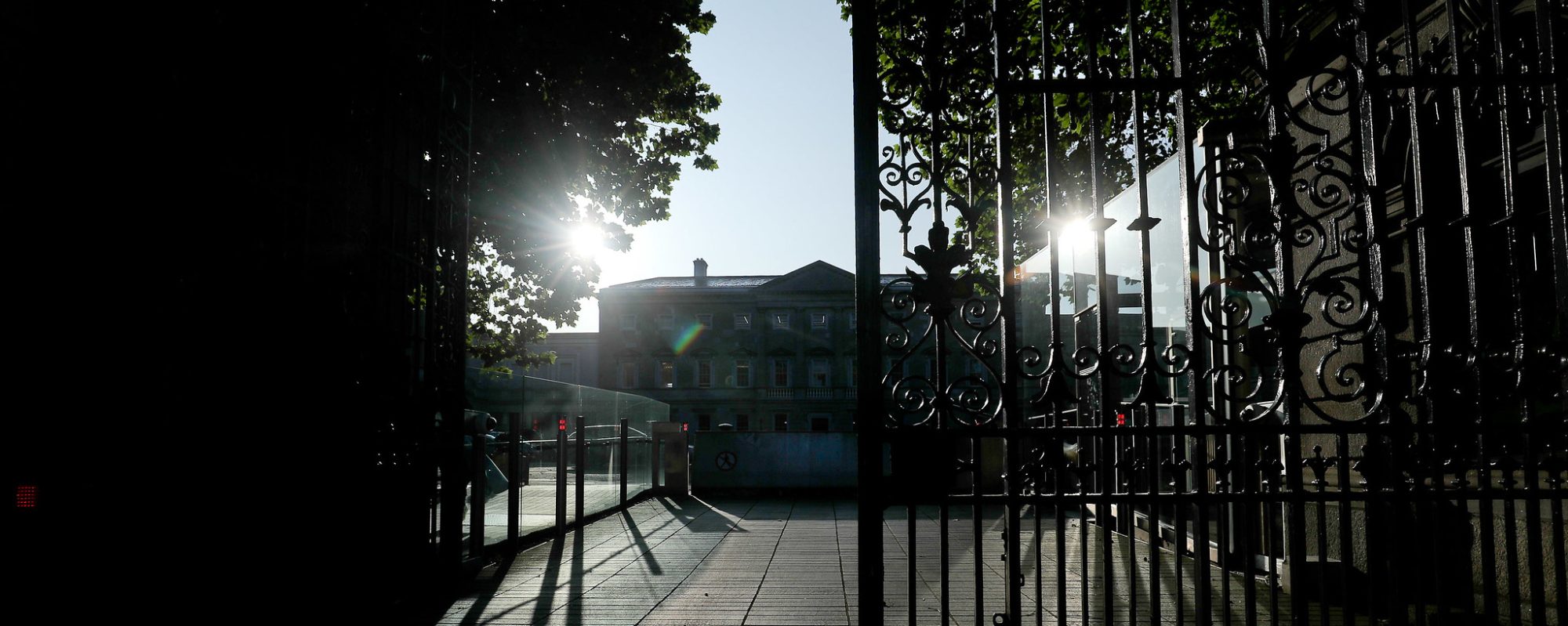
Leinster House
On Thursday Dáil Éireann takes a break for the Easter recess. It is set to return on April 18th. Cue a hue and cry from opposition TDs and assorted political hacks demanding that the Dáil return sooner or sit longer or whatever.
These protests are not only regular and predictable, they are just as entertaining as they are pointless.
These sham battles seem to be based on the notion that the more the Dáil sits the better. Really? It is hard to sustain that argument when you look at the household charge fiasco.
In its recent annual report the Government commends itself for increasing the number of sitting days, saying that the Dáil sat for about 127 days, roughly 36/37weeks, in its first year.
According to the government’s calculations this is a 44% increase on the number of sitting days in the first year of the previous Dáil (2007/08).
A major achievement you’d think. Though not quiet as impressive when compared with the years 2008/09 and 2009/10 when the Dáil actually sat for 35 weeks per annum.
But what’s a week or two between old sworn enemies?
It is the old public sector problem: measuring inputs, not outcomes. Successive governments have been guilty of it.
The Government’s legislative programme should be driven by the number of pieces of legislation it wishes to pass into law, not by a need to produce bits of legislation to fill up some allotted time slot.
TDs should not be apologising for the Dáil not sitting in plenary session over the next three weeks.
Yes, various Oireachtas committees will be sitting during that time – but something else should also be happening. Something that is, in my opinion, far more important.
Politicians and their policy advisers should be availing of this break to do something they rarely get to do: think and prepare.
There is a story, probably apochryphal, about a Minister walking along a corridor in his Department when he spies a senior policy maker sitting back with his feet up on the desk. “Have you no work to do?” asks the Minister, “I have…” comes the reply “…I am doing it now, I’m thinking”.
These short breaks in Dáil sittings afford Ministers and senior officials some time and space away from debates, motions and parliamentary questions to think and to focus on other matters in their departments – things that don’t often make the headlines at Leader’s questions.
Central to this is standing back and taking stock of where they are.
When the Dáil is sitting a surprising amount of time in a government Department can be taken up in answering TDs questions alone, particularly when its that Minister’s turn at oral PQs.
Parliamentary accountability and scrutiny is an essential part of the democratic process, but you also need time to go and effectively do all those things that the parliament will subsequently want to scrutinise.
But if the need for this “thinking” time is important for Ministers and officials is it absolutely vital for an opposition and its support teams.
The Minister has a full time team of 8 or more in his office to fetch, carry and prepare – plus those other senior officials along the corridor to advise and research – the opposition spokesman is often depending on two or three.
But it is not a matter of resources. While the Dáil is sitting the agenda is set by the government. The opposition is usually just reacting to it – or reacting to the media reaction to events.
This is not always a bad thing, especially for an opposition that is effective at harrying the administration. This was the case in the latter half of the last government. The only crumb of comfort it got from the polls was when the Dáil was in recess. When it was in session both oppositions parties’ ratings went up, especially Labour’s.
But an opposition also needs to set the agenda too. It takes a lot of preparation and planning for an opposition to get the focus on its agenda. These breaks can often provide that space.
Politicians on both sides should acknowledge this fact. Who knows, maybe the reporters who cover the Dáil and actually benefit from the break might even credit them for it.





 derekmooney.ie