“There’s no Labour problem that Ken (Livingstone) can’t make worse.”
This was Alan Johnson’s response to the former London Mayor’s latest unwelcome intervention in a UK Labour row.
Substitute the name “Alan Kelly” for “Ken Livingstone” and Johnson’s axiom could just be as applicable here.
Perhaps it’s his pugnacious ‘I tell it like it is’ style, but Alan Kelly has come to be personally identified with two of the last government’s biggest political failures: Irish Water to the housing crisis, not to mention his “power is a drug… it suits me” interview or his penchant for adding to his own party’s travails.
Fianna Fáil’s poster attacking Fine Gael’s broken promises
Whether polling day is on Feb 26th or March 4th, it is clear that we are only two or three weeks away from the start of the great 2016 corriboard shortage… sorry, the 2016 general election.
Over the coming two weekends we will have the Fianna Fáil and then the Fine Gael Ard Fheiseanna, followed by Labour at the end of January – presuming that Enda hasn’t already called the election and pulled the plug on Labour’s big day out.
While the corriboard campaign posters remain in their wrappings and the Vote for me leaflets stand ready, the electioneering has already as good as started.
One the most interesting aspects of Fine Gael’s pre-campaign campaigning so far is just how much time and energy a party determined to dismiss Fianna Fáil as irrelevant is devoting to attacking them. See Today FM’s Matt Cooper’s comment on the Taoiseach’s Wednesday afternoon press conference:
Could it be that Fine Gael’s own private polling is telling them something the national newspapers polls are missing?
It occurred to me recently that Enda has spent the last few years doing a very bad Bertie Ahern impression – making Enda the Bobby Davro of Irish politics you might say. Enda gets the minor gestures and mannerisms right – but he misses the core of the character.
Enda may be as accomplished and expert a glad handler as Bertie when it comes to wading into a crowd and shaking the hand and slapping the of everyone around him, but he his mimicry is one dimensional. He does not possess Bertie’s skill and ability to command the facts and figures when engaging with the media on door step interviews.
While Enda still possesses many skills and abilities, not least his steely determination and ruthless streak, he is not politically hard wired to endure or sustain a long election campaign – especially if he hopes to keep his media interactions down to a few tightly managed ones.
It is a mistake on two fronts. First as they seem to be copying the Tory playbook here with minimal changes and basic adaptions.
Do they so see themselves as Ireland’s Tories that they cannot be bothered to make even the most basic of changes to the strategy, the text and the slogans? A series of recent Fine Gael social media posts have used the Tory line: “long-term economic plan” word for word:
While the Tories undoubtedly mounted a superb social media campaign in the 2015 UK general election and used the platforms, particularly Facebook, more effectively than most of their rivals (apart from the SNP who are the master campaigners both online and on the ground) that does not mean you take their campaign slogans and approaches lock stock and barrel.
Second, in taking the Tory campaign playbook en masse Fine Gael seems to have forgetten that we have a PR STV system, not First-Past-The-Post – indeed Fine Gael used to pride itself as being the defender of PR STV (they had opposed the two attempts to change the voting system by referendum in the 50s and 60s)
What works in a FPTP system does not necessarily work in a PR-STV one. Depending on where you live in a FPTP system you can find yourself voting for someone you don’t like rather than the one you do like most just so you can make sure the one you dislike more is kept out.
The idea that a vote for Fianna Fáil or Independent alliance is a vote for Sinn Féin is not so easy to sell in an STV system where the voter can vote the entire panel right down the line and omit the local SF candidate.
That said is easy to see the attractiveness of the Tory playbook for Fine Gael. The Tories succeeded in keeping their leader out of head to head debates, Fine Gael want and need to do the same – though for different reasons. While Cameron was wary of elevating Milliband by sharing a head to head debate platform with him – there were no questions about the PM’s capacity to perform well in a head to head debate.
The other attraction was the Tories successful cannibalisation of their Lib Dems coalition partners. Cameron’s gains came mostly from Lib Dem losses (The Tories took 27 of the 49 Lib Dem seats lost as opposed to 12 lost to Labour and 10 to the SNP) – an option that Fine Gael is eyeing up here, using Labour losses to shore up their own numbers. Fine Gael are ready to fight this campaign to the last Labour TD.
Though Fine Gael’s polling numbers have recovered recently – at precisely the time they needed them to recover – they are still on course to lose seats, even if they do get 31/32% in the polls.
While these improving numbers are no mere coincidence and are a tribute to Fine Gael’s political strategists, the idea that seems to be floating about the commentariat that Fine Gael is now some invincible campaigning machine is more than a little bit short of the mark.
Fine Gael is having a few problems of its own right now, and they are problems entirely of its own making. Though they will doubtless address the issue between now and the Árd Fheis (and possibly drum up future local difficulties in the process) Fine Gael was still short of the 30% gender quota up to a few days ago – a system they introduced and championed.
Not only that but its head-quarters operation has just ended an unseemly, costly and ultimately unsuccessful fight in the Courts with one of their own candidates: John Perry TD.
And before I am accused me of dragging up these problems like a Fianna Fáil-er whistling past the graveyard, I do not think this is a zero sum game. I do not presume that any loss of ground by Fine Gael over the campaign will automatically translate into a Fianna Fáil gain.
Fianna Fáil will have to make its own ground in this one and will need to land some hefty punches on Enda, Leo, Michael and Simon, it cannot depend on Enda and Fine Gael to just lose it.
Thanks to a lot of travelling with work it has been a few weeks since I last posted on here. Here are my belated thoughts on Lucinda Creighton’s departure from the ranks of the Fine Gael parliamentary party and how it connects with the “rats in the ranks”
——
Larry Hand in “Rats in the Ranks”
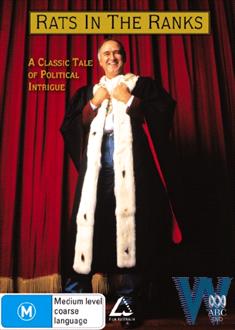
If you enjoy political machinations and intrigue then you should definitely watch the excellent 1994 Australian documentary “Rats in the Ranks” It chronicles the back stabbing and political manoeuvrings among the 12 local councillors electing a new mayor in a suburban Sydney district of Leichhardt. Watch the trailer here: http://www.youtube.com/watch?v=huxbBH78nhg
It has become ritualistic viewing for me, I usually watch it a few times a year. The central character, Cllr Larry Hand, not only offers a quick primer in petty political power-play as he attempts to retain his post as Mayor, he also comes out with a few nice political aphorisms.
My particular favourite is his observation following yet another row with his Australian Labor Party (ALP) counterparts: “I’ve always felt you haven’t really joined the ALP until you’ve been expelled from it.” Hand had originally been an ALP member.
Perhaps the line has a particular resonance with me as around the same time (the mid 90s) I came perilously close to being expelled from Fianna Fáil. The reason was my going on RTÉ’s Morning Ireland in early November 1994 to call on Albert Reynolds to stand aside in the wake of the controversy surrounding the appointment of Harry Whelehan as President of the High Court.
My public comments on that Monday morning provoked a motion to discipline me (for conduct unbecoming a member) for the following Thursday’s Fianna Fáil Árd Comhairle, but it was never discussed as Reynolds resigned on Thursday morning.
Hand’s words came to mind again while watching Lucinda Creighton’s departure from the Fine Gael parliamentary party last week.
Though her fairly intensive milking of the situation in the days since her departure has not impressed me as much, it still does not take away from her steadfastness in sticking by her beliefs and pre-election commitments on X case legislation.
At this point it is worth pointing out that while I am a constituent of hers, I have never voted for her and that I don’t share her reservations and disagree with how she voted last week. Nonetheless, her actions stand in marked contrast to the capitulation of some of her colleagues. Notwithstanding the weeks of watching them publicly wrestling with their consciences, it was almost inevitable that they were going to beat their consciences into submission.
Step forward Deputy Michelle Mulherin. The paucity of her argument was exposed in the final line of her excruciatingly self pitying Dáil speech: “I am now faced with either supporting the bill or being booted out of the party, my party, and I am not going to allow myself to be booted out so I am supporting this legislation.”
If her intention was to secure sympathy, she failed miserably. The only thing she succeeded in doing was making her constituency colleague John O’Mahony look less spineless than her.
His statement, at least, made some attempt at arguing a case for reneging on Fine Gael’s the pre-election commitments made in Phil Hogan’s infamous letter of comfort.
O’Mahony had to share his particular fig leaf of pretence with Deputy James Bannon. Bannon is another one of the cadre of Fine Gael Deputies who once swore up and down that they would never ever support something like this and now happily marched into the Yes lobby hoping that the people to whom they given those solemn promises would ignore their volte-face.
While I would happily advise anyone wanting a peaceful and contented existence to resolutely ignore Deputy Bannon, I suspect they will not ignore his duplicity on this one.
Returning to Lucinda, the pundits and observers who were this week predicting her slow disappearance into obscurity on the back benches seriously underestimate the Deputy for Dublin Bay South.
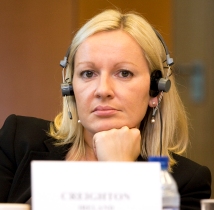
Lucinda Creighton TD (pic taken from her website)
While political history does show that many TDs who have defied the whip manage do disappear, never to be heard from again: Alice Glenn springs to mind, there are several notable exceptions.
Charlie McCreevy’s expulsion from Fianna Fáil under Haughey was the making of his career, not the breaking of it. Similarly Mary Harney’s 1985 expulsion from the Fianna Fáil parliamentary party for voting for the Anglo Irish Agreement did not end her career. This applies too to Des O’Malley, though I will concede that their routes back came via a new party.
While her stance on the Protection of Life During Pregnancy Bill would not reflect the views of most in her constituency, I suspect they will still admire her conviction and preparedness to walk the walk when necessary.
The same can be said for Wicklow TD, Billy Timmins. Billy was the Fine Gael opposition spokesperson for most of my time in the Department of Defence. He was an extremely effective opposition spokesman who showed more loyalty to Enda Kenny (via his attempted defence of Enda’s hare brained call for Army boot camps to deal with young offenders) than Enda showed to him.
While the conduct of this week’s debate bordered on the farcical with serious doubts now raised over the Government’s ability to order the business of the Dáil, by contrast the Taoiseach emerged somewhat stronger in the short term thanks to his put down of most of the wavering or doubtful TDs.
But, as for the implications for Enda in the medium to longer term, these may not turn out to be quite as rose tinted as they now appear. While the likes of Mulherin and Bannon now have little or no credibility, those others who were forced through the lobbies without all the public hullabaloo will quietly seethe away, just waiting for the moment when Enda needs them.
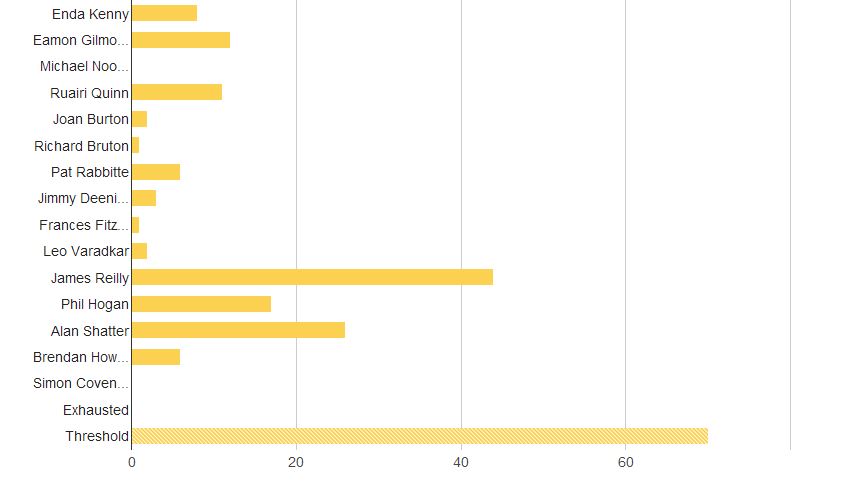
Last weekend I ran a poll under PR STV on the excellent www.opavote.org website to select/elect the worst Minister in Government. I closed polling a few minutes ago.
Many thanks to all those who took the time to vote. I ran this poll to see how well the site performed.
Results in Tabular formatFirst count as a bar chart
Where votes were tied (for an elimination) the one to be eliminated was picked by reference to their first count vote, where they were tied on first count is was by random selection
Interestingly both Michael Noonan and Simon Coveney received zero votes on the first count – which prompts me to shortly run a poll: Who is the best Minister in Cabinet (I may run that poll on a slightly different basis and seek the top three rather than just the one best)
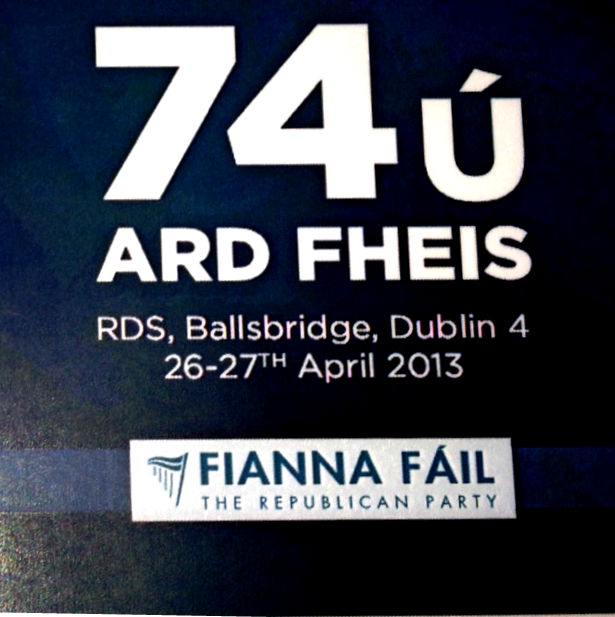
My column on this weekend’s Fianna Fáil Árd Fheis from today’s Herald
If you are planning to head to Ballsbridge for a quiet pint or a cup of coffee this Friday or Saturday – think again. From about 5pm this Friday until well past mid-night on Saturday the area around the RDS will be saturated with about five thousand exuberant and excitable Fianna Fáil-ers gathered for the party’s Árd Fheis – including yours truly.
If you decide to follow the Árd Fheis proceedings online or on air you can expect to hear the Good Friday Agreement (GFA), whose fifteenth anniversary passed two weeks ago with little acknowledgement from the Government, mentioned several times.
Many in Fianna Fáil fear that its greatest recent political achievement is being slowly air brushed out of official history.
The impression is being given that the GFA was merely the logical and inevitable consequence of the 1985 Anglo Irish Agreement, about which we have heard a lot following the deaths of both Garret Fitzgerald and Margaret Thatcher.
As one of many people who spent countless hours travelling up and down to Belfast on pre M1 roads that stopped for lollipop ladies in Balbriggan and Julianstown, I can assure you there was nothing inevitable about it.
But the Good Friday Agreement is also something of a metaphor for Fianna Fáil itself.
We now see that that getting agreement was the easier piece of work when compared with the effort and energy required to get it implemented and working – well, almost working.
The same is true of Fianna Fáil. The work required to get the party to this point has been huge, but it as nothing to the work ahead.
While last year’s Árd Fheis focused mainly on important internal reforms, such as One Member One Vote, the truly difficult work starts now.
This Árd Fheis is more about facing outwards and talking to an electorate who now shows signs of being ready to listen to what the party has to say. But the party’s improving opinion poll figures should not delude pundits, or even party members, to thinking its resurgence is assured.
To be brutally frank, what has Fianna Fail said or done in recent months to justify such increases? While it has produced some very fine policy proposals such as the Family Home Bill and Regulation of Debt Management Advisors Bill, they hardly account for bounce.
Nor does the performance of the party’s spokespeople.
Without doubt the party has scored significant hits on the government in recent months, particularly via its Health Spokesman Billy Kelliher, its Finance Spokesman Michael McGrath and its Justice Spokesman Niall Collins and, of course, the party leader Michéal Martin, but it is finding it difficult to mark all bases with such few Oireachtas personnel.
While he has several new people inside the Oireachtas who he can use effectively: such as Senators Averil Power and Marc McSharry, perhaps the leader also needs to look outside the ranks of the parliamentary party for other new faces and voices to put on Radio and TV in senior roles – Dublin Bay South’s Cllr Jim O’Callaghan for instance.
The hard truth is that the increases are as much down to Fine Gael and Labour’s travails as they are to any softening of attitude to Fianna Fáil. Besides, as the poll analysts would tell you, it is dangerous to read too much into opinion polls where over 30% of the respondents are answering: don’t know.
This is not to underestimate the size of what the party has achieved. At this time last year it was a tough job convincing others that while the party may be down, it was not finished. The big achievement has not been the increases in the polls, but rather the halt in the party’s decline.
At last year’s Árd Fheis the party helped reverse that decline by re-introducing itself to its own members, this weekend it starts the even great task of re-introducing itself to its former supporters. Let’s hope it has more success in doing that than the GFA has had in getting its institutions working.
Yesterday (Thurs April 11th) the Irish Times ran a storysaying that the German chancellor Angela Merkel is facing mounting political pressure at home to demand fiscal concessions from Ireland in exchange for granting extra time to repay crisis loans.
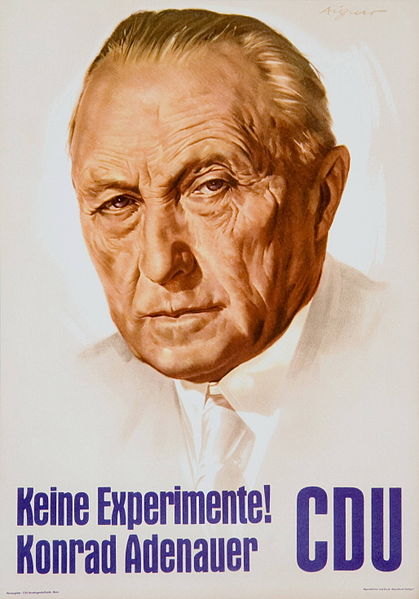
It seems that once again Germany is insisting that it not merely have an input into EU talks and discussion, but that it have a veto on the outcome. It is the ‘he who pays the piper calls the tune’ school of political thought. While the approach is not unfamiliar in politics, it flies totally in the face of democratic process and accountability. But even more than that, in this instance, it contradicts the history of Germany’s own economic revival and the important role played by one of Ms Merkel’s most illustrious predecessors: Konrad Adenauer.
Germany’s Wirtschaftswunder – the economic miracle of the 1950s – was based in large measure on a generous programme of debt forgiveness given to Germany by its 33 debtor countries (including Ireland). The 1953 London Agreement on German External Debts, effectively wrote off half of Germany’s total mountain of debt and gave it additional time to repay the monies it owed. These debts included war reparations from both first and second world wars, plus the massive German 1930’s debt default, which was just as significant as the 2008 European financial crisis.
The West German CDU Chancellor, Konrad Adenauer realised that there would be no growth or revival of the West German economy for as long as it had to make huge annual payment to the Allied and other powers. These hefty payments, many of which Germany was even failing to make, were draining the West German economy of the ability to rebuild itself. He recognised that the only way to achieve growth was to get some relief from this debt burden, hence the London conference on German external debts.
Adenauer managed to convince the others sitting around the table that the only way that Germany could recover and rebuild was for them to ease the burden on it – he managed to convince them to stop doing to Germany what Germany is now doing to Ireland, Spain, Portugal, Greece and Cyprus.
Easing the burden of West Germany’s debt did not make the country lazy and profligate, quite the opposite. The Agreement, along with the Marshall Plan very quickly enabled the West German government and industry to use the resources freed up by the easing of the debt burden to generate domestic economic activity and growth.
Not only did the London Agreement write off 50% of Germany’s debt it removed the requirement that interest be paid, though did say that this proviso would be revisited in the event of German reunification. The collapse of the Wall in late 1989 triggered that proviso but it was never implemented due to Chancellor’s Kohl’s protestations that demanding such interest payments would make it almost impossible for Germany to meet the considerable costs of re-unification. So, once again, Germany’s partners allowed it to walk away from its financial commitments in the greater good.
As we know, both Enda Kenny and the Fine Gael party is deeply proud of its strong association with the CDU and Ms Merkel via their shared membership of the centre right European grouping: The European People’s Party EPP. Indeed, they regard the linkage as so important and significant that Mr Kenny manged to include a quick visit to Berlin and photocall with the Chancellor in the first week of the February 2011 general election campaign.
Perhaps the next time An Taoiseach meets up with the Chancellor in either Dublin, Brussels or Berlin he might gently remind her that her countries economic resurgence and dominance is due, in no small part, to the fact that 33 other countries, including Ireland, had allowede Germany to ease its burdens when it mattered and that it may now be time for Germany to allow others the facility they once extended to it.
The late Séamus Brennan: “You are playing senior hurling now lads…”
“You are playing senior hurling now lads – but you are playing with lads with All Ireland medals”.
This, according to Eamon Ryan, is how the late Séamus Brennan greeted the Green Party team as it arrived in Government buildings for the 2007 talks on forming a government with Fianna Fáil.
It is a phrase that every Labour Party TD calling for a renegotiation of the Programme for Government (PfG) should print out and place at the top of their PC screen.
God be with the days when Labour recruited its Dáil candidates from the old ITGWU or FWUI. Those guys knew the first principles of negotiating; they particularly knew that you did not go into negotiations unless you had 1. A strong hand and 2. A fair idea of the outcome. Yet some in Labour are advocating that they enter talks with neither.
They want to enter a renegotiation of the government’s fundamental policy programme at precisely the moment when their party has hardly ever been weaker. Do they seriously expect that their senior partners in Fine Gael will take pity on them and offer them major policy concessions just because they are having a bad hair day?
Do they really underestimate their government partners that much?
Politics is a tough world guys. Wake up.
You do not get your way in politics just because you mean well, you get your way and get policies implemented by getting a mandate and pursuing your goals assiduously.
You certainly do not enter talks with partners from whom you wish to extract concessions with the message: we are in a weakened state and desperately need to give the impression that we can beat you into submission, so please, please, please let us.
It is the equivalent in nature of a lone deer asking a lion to not to devour them as they have a leg injury and cannot run properly today. Indeed it goes further and suggests that the lion should agree to allow the injured deer to bitch slap them around for a while so that any other deer who may be watching from a distance will think more highly of them.
There is no compulsion on Fine Gael to enter meaning renegotiation talks with Labour. They know Labour cannot cut and run now and risk facing the electorate, so they know it is strapped into this arrangement until the bitter end. The very most Labour could hope to get is a sham negotiation where we see TV clips of the pairs of Ministers from each side entering Government buildings for late night talks and the last minute “leak” from a source “close to the Labour leadership” saying the talks are at a crucial point right now and may go well into the night. The optics will look good, they may even fool a few activists, but most others (including the public) will see it as just a gesture. If the guys want to go down this road there is doubtless a battered old playbook for such an exercise laying around Government building somewhere.
The current cohort of Fine Gael TDs is possibly the most right of centre since the late 1950s. They are already getting flack from supporters and voters for the appearance that Labour is dictating too much of the government’s agenda, particularly on social issues, so they are neither motivated nor minded to give any more policy ground to them on the back of what was a bad day for Labour and, conversely, a good day for Fine Gael.
The idea of renegotiating the PfG is at best: naïve, and at worst: dumb.
That so many TDs would advocate it after only two years in office suggests that we are probably beyond the mid point of the life of this government and that the chances of there being a general election in early 2015 just got stronger.
Irish troops serving the cause of peace internationally
My column from tonight’s Evening Herald on how the reform and modernisation of the Defence Forces over the past year could prove a model for public sector reform
—————————————————————————————————–
The first tentative step on the path to a possible Croke Park II deal was taken last week when Public Sector unions and management sat down together for preliminary talks.
While reaching any form of deal will pose difficulties for negotiators on both sides, the management side has a particularly difficult delicate balance to strike. Though their political masters in Cabinet may be signalling their support for a deal they also know that most Fine Gael back benchers would be just as happy if no deal was reached.
The public service is just one more issue that divides back-benchers from both parties, with many of FG’s newer intake of TD’s echoing the “small government” rhetoric heard from US Republicans and Tea-Partyers.
It is not an uncommon view in these difficult times. There are many siren voices around attacking the public service and portraying it as riding on the back of a shrinking private sector.
Sadly, the public service often leaves itself open to these onslaughts with daft examples of wasteful spending and bad work practises. But the danger lies when occasionally justified criticisms are distilled into a dogma.
Yes, the public service is in need of reform and modernisation, but the one dimensional demonizing of the entire public service we hear from some quarters will not help reform anything. Nor will the “everything is just fine as it is” defence we hear from various public sector unions.
Public service reform is possible without hyperbole or blood on the carpets. With the right management and leadership the public service is capable of reforming and modernising itself. I know, because I was there when it happened.
The reform and modernisation of the Defence Forces over the past decade and a half is a model of how it can be done right.
The 2009 Bórd Snip Nua report found that the Defence Forces were the only sector in the Public Service to reduce numbers during the Celtic Tiger.
While the numbers working in the Public Service had increased by 17% between 2001 and 2009, the numbers working in the defence organisation actually fell by 8%, going from 11,808 down to 10,895 a drop of 913.
The reduction in numbers in uniform was reflected in a reduction of numbers of civil servants in the Department. These payroll savings were invested in better equipment and improved training meaning that the Irish Defence Forces could do more with less.
The negotiations were tough, but both sides recognised that it was in their mutual interest. While soldiers and officers do not have Trade Unions, they do have strong representative organisations: PDFORRA and RACO and a parallel conciliation and arbitration process that conducts it business quietly and effectively,
Perhaps the absence of outside influences, speculation and running commentaries, helped create the conditions for agreement – but not nearly as strong leadership, both political and military.
We should now be finding ways of replicating this progressive model. Before coming into office the Taoiseach’s last big idea on the Defence Forces was that it should be running boot camps for young offenders.
Doubtless he has abandoned this nonsense having spent two years seeing them close up, but their handling of the last round of barrack closures suggests that he may not yet have realised just how the Defence Forces be a model for public service reform.
Today, December 29th 2012, marks the 75th anniversary of the Irish Constitution, Búnreacht na hÉireann coming into effect. This is my Evening Herald column on it continuing importance and relevance to Irish life.
Dev – Architect of our Constitution
On this day seventy five years ago the Irish Constitution came into operation. As we have seen in recent and current controversies, almost four decades on, the Constitution is still central to much of our political debate.
Within the past year we have seen it successfully amend it three times: Judges Pay, Fiscal Compact and Children’s Rights. But, we have also seen the public resoundingly reject the governments request that they amend it on the issue of Oireachtas enquiries.
It is not the first time the public has done this. Not only did they defeat the Nice I and Lisbon I votes, as early as 1959 they rejected the then attempt to change the voting system. Indeed in 1968 the voters rejected the next two amendments put to them, both related to elections.
It was not until the 1972 vote on joining the then EEC that the people passed the first amendment to the Constitution. (Technically this is the Third Amendment as the first two were made in 1939 and 1941 without referendums as part of transitional arrangements.)
Over the past 75 years the public have approved some twenty five changes to the Constitution. While some were technical in nature, others – such as the five votes relating to abortion – were highly controversial and emotionally charged.
What this shows is that the Constitution makes the people sovereign. They alone decide what changes may be made to the fundamental law of the land.
This important aspect of De Valera’s 1937 Constitution has been much praised over the years. While it is easy to look at the language and some of the secondary provisions as being a product of their time and maybe a little outdated now, most legal experts view the principles set out in the Constitution of 1937 as being ahead of their time.
Five of the fifty articles are devoted to Fundamental Rights. Decades before international instruments, such as the United Nations Charter and the Universal Declaration of Human Rights proclaimed fundamental rights and fair procedures, the Irish Constitution had done so.
Indeed, while the Constitution does not declare Ireland as militarily neutral, it does contain in Article 29.2 a commitment to “the pacific settlement of international disputes” and the adherence to International law. This is just something else that marks the document out as being ahead of its time.
But while it may have been well ahead of its time 75 years ago, it is still so?
I would argue that, essentially, it is. The fundamental principles it espouses are just that – fundamental. The commitment to democracy, rule of law, fair procedures etc do not change with the seasons of the prevailing political fashion.
But it is also a living document, particularly in the provisions relating to how government and the judiciary should work. Back in 1937 it seemed natural that only those over 21 should be entitled to vote, by 1972 that was changed to 18 by a margin of over 5 to 1 of those voting.
Events of recent years have thrown up some more significant issues. Are our governmental structures sufficiently responsive – or even fit for purpose – in the context of the IMF/EU bailout and an evolving European Union/Eurozone? Is the 1930’s post independence concept of property ownership appropriate in 21st century Ireland?
But where is reform on these issues being discussed? Not at the Government’s Constitutional Convention, it seems. Its initial priorities, as set out by the Government, are to discuss the President’s term of office and the voting age. This is the equivalent of setting up a dance committee after the Titanic has hit the ice. The one substantive constitutional issue on which the government, particularly the Taoiseach, is committed is abolition of the Seanad.
Just when we require more meaningful scrutiny of government policy, it proposes less and sells it under the guise of “reform”. Fortunately, it is the people who will be sovereign on this.
In American politics they refer to a policy issue that is so controversial or highly charged that it is dangerous for any politician to dare touch it as a”third rail” issue. Third rail being a reference to the electrified third rail of a metro or train system.
Leaders’ questions….. or, questions for a leader?
As we have recently seen both here and in the US, abortion is just such a classic third rail issue.
The last thing the Taoiseach and his Ministers want right now is a divisive argument within the Fine Gael parliamentary party. The party leadership is determined to quell the growing unrest.
Over the past few days we have seen and heard a series of backbench Fine Gael TDs coming out to state their own views on what should be in and what should not be in the legislation the government must produce to comply with the European Court of Human Rights judgment.
But will Enda Kenny’s tough words from Cardiff yesterday, telling these TDs that they must back whatever legislation the government produces be enough to keep them in line?
Is this the Taoiseach being a strong and determined leader or it is him doing an impression of what he thinks a strong leader should look like?
At a parliamentary party meeting Last July it was reported that anywhere up to 15 TDs had put the Taoiseach on notice that they would oppose legislation that would pave the way for abortion.
More importantly, in the context of the current situation they sought assurances from Kenny that the findings of the expert group on abortion would be discussed with them before they were brought to Cabinet.
While they did not get that assurance, they will not be happy to see the Government adopt a position without proper consultation with them.
In fairness, the Taoiseach can argue that the tragic events of recent weeks have hurried matters along and robbed him and them of the time and space in which to consider the expert group’s findings.
But will this sizeable group of back benchers be calmed and silenced so easily.
The timing could not be worse with one of the toughest budgets this government is going to have to introduce barely a week away.
Yes, the government has a big majority, but it cannot afford to lose too many overboard. So far Fine Gael has lost one TD, over Roscommon hospital. Those this pales in comparison to the four TDs that Labour has lost, included two former Junior Ministers.
Is this really the best of times for a Taoiseach to be publicly warning TDs that they will be expected to vote the right way or lose the whip? It is hard to argue that your back benchers should be using the parliamentary party room to air their views in private when you deliver that rebuke yourself very publicly.
This is the second time, in just over a week, that we have seen the Taoiseach resort to such megaphone diplomacy. Last week it was his ill judged and, frankly, insensitive public call on Praveen Halappanavar to meet with the Chairman of the inquiry into his wife’s death delivered on the floor of the Dáil.
As we saw that call was particularly ineffective as Mr Halappanavar graciously, but firmly, resisted Enda Kenny’s entreaties to back down.
Will his call this week to his back benchers be any more effective? Only if it is backed up with direct contacts and clear communications from the Whip’s office.
Backbenchers do not like being taken for granted, especially when they feel the governments plans and ideas run contrary to those of their own grassroots. Enda Kenny needs to remember that real leadership is about more than just being seen to be in charge, it is about convincing people they are doing the right, not just telling them to do it.

 This was my first column for Broadsheet.ie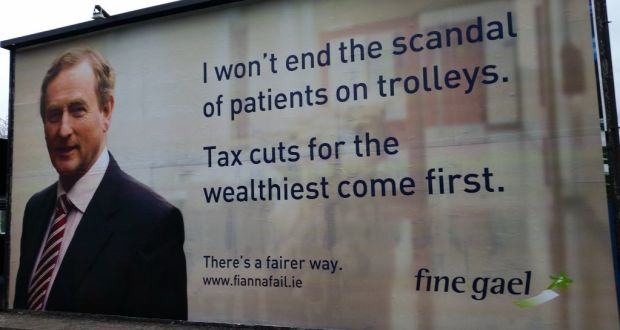




 derekmooney.ie