While there are worse jobs in the world: the worst job in politics is certainly leader of the opposition.
If he didn’t already know this, it is certain that Fianna Fáil’s leader Micheal Martin will know this in just over a week.
The 2014 European and Local Election campaigns for which he and his HQ team have prepared and planned for over 18 months are proving themselves to be a source of unalloyed joy. It is hard to believe that these are the campaigns they wanted.
The latest round of opinion poll findings only confirm this. They suggest that
His Dublin Euro candidate will fail to take the seat
His Midlands North West duo may struggle to win a seat
While his Ireland South candidates have the best part of two quotas between but are so imbalanced as to render a second seat impossible.
If the ballots cast on Friday confirm these poll findings, then it will be hard to make any of this sound like an achievement.
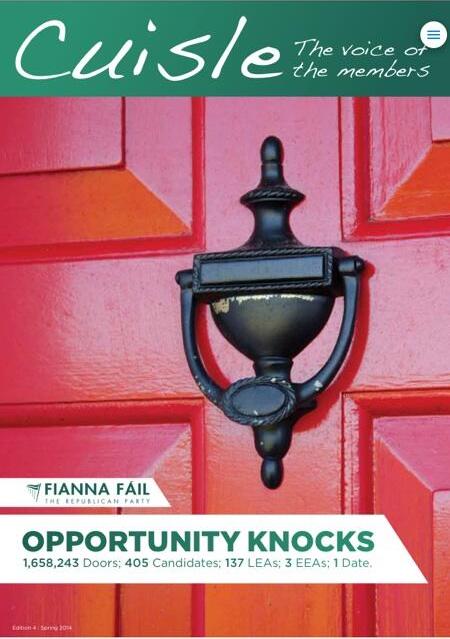
This is an article I have written for the March 2014 Árd Fheis issue of Fianna Fáil’s members’ magazine Cuisle.
————————————————————————————————–
A few months before the 2011 election, Michael Gallagher (the TCD Professor of Politics, not the Donegal postman and amateur weather forecaster) posted a blog where he asking how long Fianna Fáil could expect to spend in opposition. In it he wrote:
“Fianna Fáil is not a party accustomed to spending time there. Its longest spell on the opposition benches is still the nearly six years between its foundation in May 1926 and its entry into government in March 1932. Since then, the party has never spent more than one consecutive Dáil term in opposition and the longest spell it has been out of power remains the 4 years and 4 months of the Cosgrave coalition in the mid-1970s.”
Underpinning Gallagher’s 2010 comments is the idea that Fianna Fáil has never been that good at opposition. It is a fair point.
Not only have we not spent much time in opposition, as Gallagher points out, it is almost 30 years since we last spent a full Dáil term there.
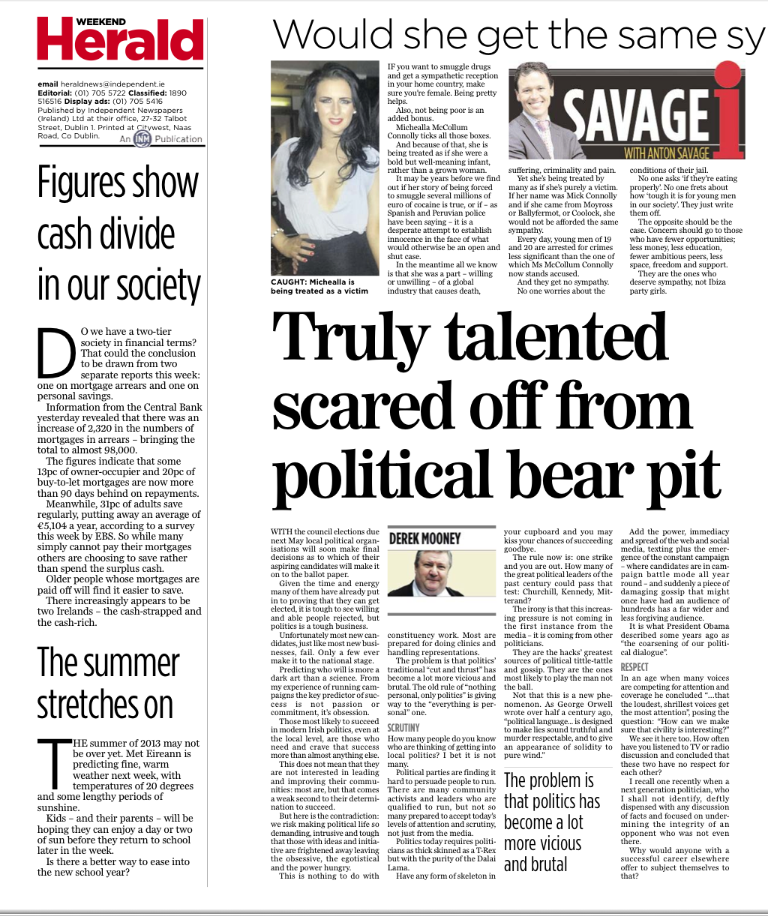
This is my latest column on how “playing the man, not the ball” is hurting Irish politics. It appeared in today’sHerald (August 24th 2013):
Evening Herald Aug 24, 2013
With the council elections due next May local political organisations will soon make final decisions as to which of their aspiring candidates will make it on to the ballot paper.
Given the time and energy many of them have already put in to proving that they can get elected, it is tough to see willing and able people rejected, but politics is a tough business.
Unfortunately most new candidates, just like most new businesses, fail. Only a few ever make it to the national stage.
Predicting who will is more a dark art than a science. From my experience of running campaigns the key predictor of success is not passion or commitment, its obsession… and I don’t mean the fragrance.
Those most likely to succeed in modern Irish politics, even at the local level, are those who need and crave that success more than almost anything else.
This does not mean that they are not interested in leading and improving their communities: most are, but that comes a weak second to their determination to succeed.
But here is the contradiction: we risk making political life so demanding, intrusive and tough that those with ideas and initiative are frightened away leaving the obsessive, the egotistical and the power hungry.
This is nothing to do with constituency work. Most are prepared for doing clinics and handling representations. The problem is that politics’ traditional “cut and thrust” has become a lot more vicious and brutal. The old rule of “nothing personal, only politics” is giving way to the “everything is personal” one.
How many people do you know who are thinking of getting into local politics? I bet it is not many.
Political parties are finding it hard to persuade people to run. There are many community activists and leaders who are qualified to run, but not so many prepared to accept today’s levels of attention and scrutiny, not just from the media.
Politics today requires politicians as thick skinned as a T-Rex but with the purity of the Dalai Lama. Have any form of skeleton in your cupboard and you may kiss your chances of succeeding goodbye. The rule now is: one strike and you are out. How many of the great political leaders of the past century could pass that test: Churchill, Kennedy, Mitterand?
The irony is that this increasing pressure is not coming in the first instance from the media – it is coming from other politicians.
They are the hacks greatest sources of political tittle-tattle and gossip. They are the ones most likely to play the man not the ball.
Not that this is a new phenomenon. As George Orwell wrote over half a century ago, “political language… is designed to make lies sound truthful and murder respectable, and to give an appearance of solidity to pure wind.”
Add the power, immediacy and spread of the web and social media, texting plus the emergence of the constant campaign – where candidates are in campaign battle mode all year round – and suddenly a piece of damaging gossip that might once have had an audience of hundreds has a far wider and less forgiving audience.
It is what President Obama described some years ago as “the coarsening of our political dialogue” In an age when many voices are competing for attention and coverage he concluded “…that the loudest, shrillest voices get the most attention”, posing the question: “How can we make sure that civility is interesting?”
We see it here too. How often have you listened to TV or radio discussion and concluded that these two have no respect for each other? I recall one recently when a next generation politician, who I shall not identify, deftly dispensed with any discussion of facts or and focused on undermining the integrity of an opponent who was not even there.
Why would anyone who either with a successful career elsewhere offer to subject themselves to that?
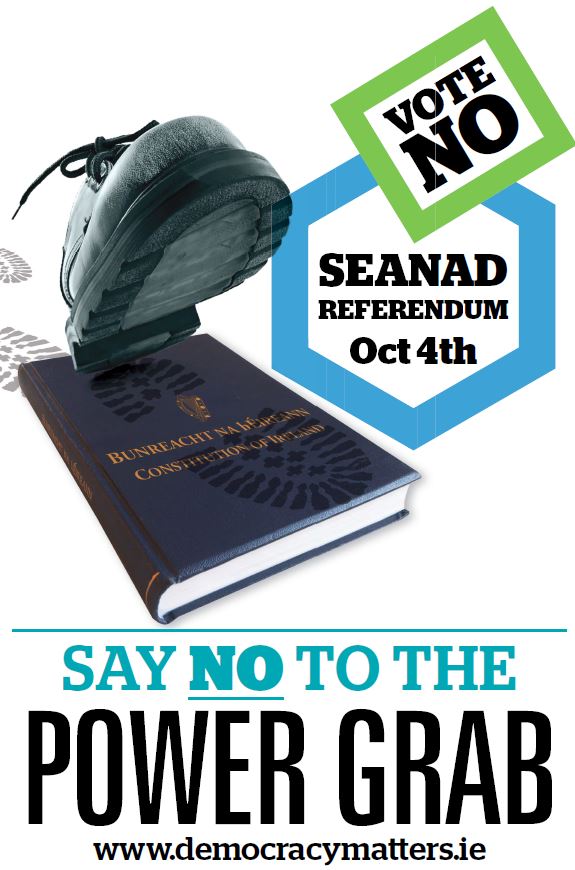
As a firm believer in Seanad reform – and consequently a trenchant opponent of Seanad abolition – the Sunday Independent’s Millward Brown poll showing the No to Abolition side gaining further momentum is gratifying.
The past few weeks have hardly been great for the No side. Fine Gael has been pretty active on the airwaves over the Summer break, while Sinn Féin’s opportunistic decision to campaign for a Yes, having vehemently opposed the Government’s proposal in both the Dáil and Seanad, hasn’t helped the No cause either.
All this makes the increase in the pro Seanad reform level of support all the more re-assuring. Not that the poll suggests that the campaign is done and dusted. Far from it.
More than almost any other, this Seanad abolition policy, is the lone brain child of Enda Kenny. Though there seem to be no research papers, discussion documents or policy positions he can produce to justify the origins of this initiative, he is the man behind it and he has more to lose by its defeat than anyone else.
While Labour nominally favours abolition, its TDs and Ministers can reasonably see their policy obligations as fulfilled by the holding of a referendum. Don’t expect to see many of them working too hard for a Yes to abolition vote. Indeed, as the Labour Chief Whip has indicated, at least half the Labour parliamentary party may actually work for a No vote seeing it as the best way to secure a popular mandate for Seanad reform.
One of the two authors of Labour’s 2009 position paper on Seanad reform, Junior Minister, Alex White has not commented on the issue much, while the other author, Joanna Tuffy TD has indicated that she will be campaigning for a No vote.
The worrying shift in the poll numbers make it necessary for Fine Gael to up the ante over the weeks ahead.
Given that the main shift has been in the group who describe themselves as favouring reform expect to see Fine Gael focus its attentions there and try to convince them that a Yes vote is a vote for reform.
We already had a glimpse of this approach last week via its neophyte Wicklow TD, Simon Harris’s speech at the Parnell Summer School.
Harris advanced the argument that abolishing the Seanad counts as reform and gives power back to the people as it means the single remaining chamber of the Oireachtas: the Dáil will be 100% elected by the public.
Harris’s reasoning seems to hinges on the statistic that the number of people registered to vote in Seanad elections, under current legislation, is around 156,000; about 5% of the approx 3.1 million entitled to vote at the February 2011 Dáil election.
What Harris misses, however, is that this 156,000 (Councillors, Oireachtas members and NUI and TCD graduates) is defined in legislation – not the Constitution. Everyone in the North and South could be given the right to vote with the passing of an Act by the Dáil and Seanad. Indeed the Seanad has already voted for such a piece of reform with the Second Stage vote on the Quinn/Zappone Seanad Reform Bill.
The extension of the Seanad franchise to all is now completely within the gift of Deputy Harris’s colleagues on the government benches.
The only real obstacle to such a real reform is the Taoiseach’s obduracy in insisting on Seanad abolition instead of reform.
Though not central to the argument it is worth noting that the 156,000 figure is probably an understatement as it just counts the NUI and Trinity graduates who have registered to vote. Many 100s of 1000s more are entitled to vote by virtue of their graduation.
The other problem with Harris’s reasoning is the idea that the answer to existing disenfranchisement is more disenfranchisement. It defies all democratic principles to propose removing someone’s voting rights when you have it in your power to extend them.
If you were to apply Deputy Harris’s quirky logic to the campaign for women’s suffrage a century back you would determine that the way to ensure equal voting rights for all was to remove the vote from men so that the two genders were equally disadvantaged.
The very legitimate criticism that not enough people are entitled to vote in Seanad elections is properly addressed by giving everyone the right, not by removing it.
I would hope that Deputy Harris’s espousal of a position that is the absolute antithesis of reform is informed by loyalty to his party leader and desire for advancement rather than by belief in the argument itself.
If it is the former then the case for reform is all the greater, if it is latter then it is time to worry.
Today’s RedC poll for Paddy Power brings very little good news unless you are an independent or a don’t know. The unadjusted core figures rank the parties in descending order as:
Fine Gael 23%
Fianna Fáil 18%
Don’t Knows 18%
Independents 17%
Sinn Féin 13%
Labour 9%
After adjusting the figures by excluding 50% of the don’t know and adjusting the other 50% back to how they voted in 2011 the ranking positions stay the same. Only the relative gaps between Fine Gael and Fianna Fáil and between Fianna Fáil and the Independents widen.
Fine Gael 29%
Fianna Fáil 22%
Independents 21%
Sinn Féin 15%
Labour 11%
Sinn Fein’s lead over Labour remains at a steady 4%. While this may, at first glance, suggest some good news for Sinn Féin, the party has been in this territory before only for its good polling numbers to fail to translate into votes.
Back in December 2010, on the eve of a general election, three polls showed the party in the mid teens. A Red C Poll for The Sun on 03/12/2010 gave the party 16%. The MRBI/Irish Times poll on Dec 16th put it on 15% while a third, the Red C/Sunday Business Post poll of December 18th put its support at 14%. On polling day, two months later, the voters gave it 9.9%.
This is not to discount its advance since. Sinn Féin has been consistently polling in the mid teens since September 2011. That said, though an Irish Times poll in early October 2011 put party support at a hefty 18% its Presidential candidate and possibly most charismatic figure, Martin McGuinness still could not get the party’s actual vote past the 13.7% mark in the ballot boxes a few weeks later.
Despite its considerable and well resourcing organisation it seems to still have a problem translating favourable poll numbers into actual votes.
Though of cold comfort to Fianna Fáil it does not, at least, have this particular problem. The MRBI/Irish Times and Red C/Sunday Business Post polls conducted on the eve of the 2009 Local elections put Fianna Fáil’s support at 20% and 21% respectively. On polling day, the party managed to scrape its way up to 25.4%.
Fianna Fáil problems are more significant. While it has won back some of its lost “soft” support and pulled itself up from the 2011 hammering it has yet to say or do anything substantive to win back many of those who had voted for it in 2002 and 2007 but rejected it in 2011. There is nothing to suggest it is doing any better with potential first time voters either.
Despite the speculation of last weekend, Fianna Fáil’s problem is not its leader. The notion that Fianna Fáil picking a new leader whose only virtue is that they were not a member of the previous government is almost laughable. Surely no one in the party or the commentariat is delusional enough to think that the electorate is so naïve that it will flock to Fianna Fáil’s cause just because it has a leadership team devoid of anyone who served under Ahern or Cowen?
Despite its apology and acknowledgement of past mistakes, Fianna Fáil has yet to present a researched and substantive alternative policy programme. It has come up with some good micro-policies, not least its family home protection and debt resolution Bills, but many have been light on substance and appear to have been produced as well intentioned responses to specific representative groups, e.g. the Mobile Phone Radiation Warning Bill
Try finding the party’s April 2013 Policy Guide on its website. It is there, but you have to know what you are looking for to find it. Click on the “issues” button on the homepage and you get the Spring 2012 version, to locate the latest version you need to do a search for it by name.
The April 19th 2013 document shows the party has been doing some serious work on policy, but you would be hard pushed to know it from the statements coming from its spokespeople. These still read as knee jerk responses to government statements rather than as co-ordinated parts of a coherent alternative. Fine Gael may have gotten away with tactic this during its time in opposition, but Fianna Fáil does not have the luxury they had: a Government unwilling and unable to communicate with its own supporters.
Perhaps the criticisms of a small and possibly over stretched clique around the leadership have some basis in reality, but as someone who has spent a long time around the party, on both the inside and outside tracks, I think the problem lies elsewhere.
Michéal Martin has shown a remarkable capacity for getting out and about and engaging with members and voters alike, it is curious, therefore, to read of him being less engaged and accessible to members of his own very diminished parliamentary party.
Might I suggest that the fault lies on both sides. Yes, he should be having regular one to one meetings with his 33 parliamentary colleagues – God knows there are not that many of them to make such regular meetings impractical – but they too should be engaging with him.
The traditional deference to the leader needs to change. Gone are the days when you had to wait ages to have an audience with the great leader as he busied himself with the great affairs of state in the Taoiseach’s office. Parliamentary party members have the opportunity for unique access, let them use it. A minority can only exercise sole access when allowed by the majority indifference or reticence.
Despite the job losses and the massive reduction in resources, there still appears to be a sense that the party structures are operating and running as if the party is still as big as it once was. Worse still many of those working those structures have no sense memory of how the party should operate in opposition.
A small number of paid officials are being expected to do the party’s policy research and formulation with minimal input from a vast array of experts across the volunteer membership. Too much power and control is being retained around the centre and around Leinster House: not by the leadership and his supposed clique, but also by members of the parliamentary party who are criticising him for just that.
I am old enough to remember what was put in place between 1982 and 1987, the last time the party was truly in opposition. Back then a series of policy committees were established by the leadership and mandated, working with the various spokespeople, to produce credible and researched policies for submission to the party for adoption.
These committees worked with the TDs and Senators but were not run by them. Outside experts were brought in to assist and work with them.
To borrow a phrase from Fianna Fáil’s past – the phase of its recovery will be dependent on policies and substance – not personality. The party already has the potential to bring itself back into the upper 20s in terms of actual voter support – the question now for the leadership and the party as a whole is if it has the energy, expertise and inclination to innovate the policy approaches that could bring support up into the 30% plus range.
TNT24.ie asked me to take a quick look back over the issues emerging so far in the Seanad referendum campaign. As a protagonist on the Seanad Reform side, I do not claim this to be an impartial observation, but I have attempted to make it as fair as possible.
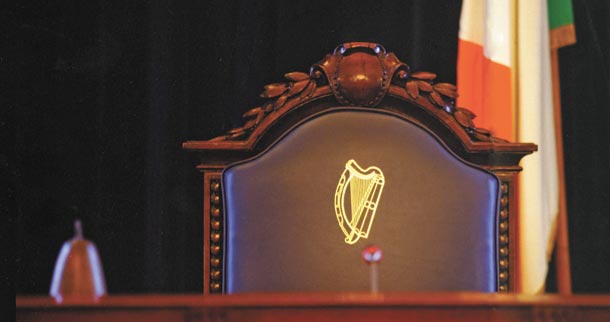
The Seanad Chair
Just over eight weeks ago Democracy Matters, the civic society group advocating Seanad Reform rather over abolition, was launched. A week later, in Government Buildings, An Taoiseach Enda Kenny and Tánaiste Éamon Gilmore published their proposed amendment to the Constitution which, if passed by the people in about eleven weeks time, will abolish Seanad Éireann following the next election.
While the Seanad referendum campaign has yet to start in earnest: it has still been an eventful eight weeks with several shots fired in anger by both sides. We are already seeing some of the key lines of argument and contention emerging between the pro and anti campaigns. The debate, thus far, has seemed largely to focus on:
Cost
Scale
Relevance
This has been to the advantage of the government side abolitionists so far. The discussion so far seems to have been on the government’s terms with very little real exploration of the No side’s reform alternatives. Nonetheless, the No side have had some success punching holes in some of the government’s case to date.
Costs: This has quickly emerged as an area of contention between the two sides. Fine Gael in particular has been focussing its attention of its claims that abolishing the Seanad would potentially save the State some €20million a year. This claim has been contested by several people on the No side, including Fianna Fáil, Democracy Matters and several Senators – including some Fine Gael and Labour ones. They put the figure at €10million or below
Fine Gael says its figures come from the Oireachtas Commission and offers the following breakdown on the €20m figure:
Total direct costs of running the Seanad of €8.8m (Gross), including
members’ salary (€4.2m);
members’ expenses (€2.5m) and
members’ staff costs (€2.1m)
€2m in annual pensions costs relating to the Seanad.
The additional indirect apportioned pay and non-pay costs of supporting sections of €9.3m:
ICT (€1.9m);
Superintendent (€1.6m);
Procedural sections (€2.8m) and
Other support sections (€3m).
Not that Fine Gael always used this figure. At one stage it was suggesting an annual saving of €30 per annum, but this was subsequently slimmed down – to a figure of around €10million. In June an opinion piece appeared in the Irish Times advocating abolition under the name of the then Fine Gael back bench TD Paschal Donohoe. It did not use this €20million figure, but rather suggested the €10m per annum one saying: “…at least €50 million over the lifetime of one Dáil term. Over five Dáil terms, with pension costs and expenses included, these savings alone would have us more than halfway to paying for a national children’s hospital.”
Reform advocates point to the January 2012 testimony of the outgoing Clerk of the Dáil, Kieran Coughlan who estimated the gross annual saving from abolition would be less than €10million. If you take into account that at least 30% of that €10million goes back to the Exchequer in taxes, levies and VAT, the real annual cost of the Seanad to the taxpayer is probably between €6 million and €7 million. The €2 million pensions cost would continue for all former members and might likely increase for the foreseeable future with 60 Senators being made redundant in one fell swoop.
As for the indirect costs the Oireachtas has said that it is not possible to estimate the net actual savings and advises there would be substantial increases in pension costs and redundancy payments.
The government does not mention the estimated €15+million cost of holding the referendum. This is based on the government’s own figures for the costs of the Referendum on the Protection of Children held on the 10th November, 2012.
The whole debate on costs is probably moot. As Senator Professor John Crown has pointed out, Minister Brendan Howlin has stated that money saved from Seanad abolition will be redeployed to Dáil Committees. So there will be no net savings to the Exchequer.
Scale:The government’s next big argument for abolition is that Ireland is too small a country to have a two chambered (bicameral) parliament and to have as many national politicians as we have.
These lines has been trotted out many times with the Taoiseach and Ministers making lots of references to such similarly sized places as Denmark, Finland, Sweden and New Zealand.
Reformists say that there is no direct correlation, between the size of State and parliamentary system. China with a population of over 1.3 billion has a single chamber (unicameral) parliament while the parliament of Saint Lucia (population 170,000) is bicameral.
They argue that bicameral is the norm for common law countries, such as ours – regardless of size. Indeed world’s wealthiest nations are mostly bicameral: of the fifteen countries with the highest GDP only two – the People’s Republic of China and South Korea – have a unicameral parliament.
As for the comparisons with Scandinavian countries, you are not comparing like with like. The overall structure of these Scandinavian political systems is very different from ours. In Denmark, Finland and Sweden local government is at the heart of the political system. In Sweden, for example, there are three tiers of government. These local governments can set their own local income tax. As for the numbers, contrary to having fewer politicians all these countries have more.
Local Authorities
Councillors
Denmark
98
2,500
Finland
304
10,000
Norway
423
12,000
Ireland
31
949
Relevance: Launching the government’s referendum proposal; back in June the Taoiseach questioned the relevance of the Seanad saying that modern Ireland cannot be governed effectively by a political system originally designed for 19th century Britain.
Putting the factual error on 19th century Britain element part down to the rhetorical over exuberance of his speech writer (perhaps the same one who thought Lenin had visited Ireland and met with Michael Collins), it is a theme frequently mentioned.
Does much of the question mark over the Seanad’s relevance stem from how it is elected – mainly by other politicians?
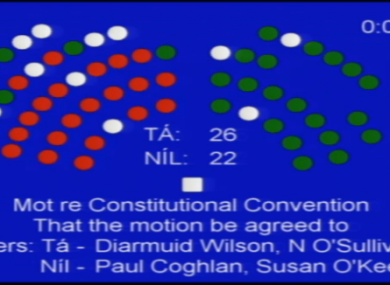
Government just defeats Seanad attempt to refer abolition to Constitutional Convention
If so, could it not be addressed by extending the franchise for the Seanad and allowing every voter on the island – North and South – the right to vote in Seanad elections?
The method of elected the 43 vocational Senators is set out in law, not in the Constitution. It would not take a referendum to give every existing (and future) voter the right to vote in a Seanad election. Every voter could decide on which panel they wished to exercise their vote: Labour, Culture & Educational, Agriculture, Industry & Commerce and Administrative and vote accordingly. Everyone would get one vote – no more multiple voting.
With this one simple act – achieved by legislation – the government could do more to address the Seanad’s relevance and the issue of Oireachtas reform than with any number of referendums.
The new, reformed Seanad would be a positive response to the fiscal crisis and loss of sovereignty. The global crisis was exacerbated in Ireland because public policy and economic dogma went unchallenged. Regulators went unregulated, civil society and the party system failed to advance realistic alternatives.
Rejecting abolition and giving ourselves a new reformed Seanad is about ensuring this doesn’t happen again.
Thanks to a lot of travelling with work it has been a few weeks since I last posted on here. Here are my belated thoughts on Lucinda Creighton’s departure from the ranks of the Fine Gael parliamentary party and how it connects with the “rats in the ranks”
——
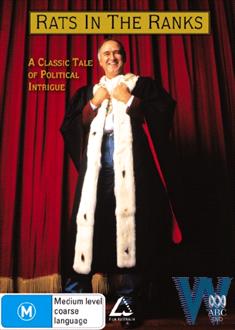
Larry Hand in “Rats in the Ranks”
If you enjoy political machinations and intrigue then you should definitely watch the excellent 1994 Australian documentary “Rats in the Ranks” It chronicles the back stabbing and political manoeuvrings among the 12 local councillors electing a new mayor in a suburban Sydney district of Leichhardt. Watch the trailer here: http://www.youtube.com/watch?v=huxbBH78nhg
It has become ritualistic viewing for me, I usually watch it a few times a year. The central character, Cllr Larry Hand, not only offers a quick primer in petty political power-play as he attempts to retain his post as Mayor, he also comes out with a few nice political aphorisms.
My particular favourite is his observation following yet another row with his Australian Labor Party (ALP) counterparts: “I’ve always felt you haven’t really joined the ALP until you’ve been expelled from it.” Hand had originally been an ALP member.
Perhaps the line has a particular resonance with me as around the same time (the mid 90s) I came perilously close to being expelled from Fianna Fáil. The reason was my going on RTÉ’s Morning Ireland in early November 1994 to call on Albert Reynolds to stand aside in the wake of the controversy surrounding the appointment of Harry Whelehan as President of the High Court.
My public comments on that Monday morning provoked a motion to discipline me (for conduct unbecoming a member) for the following Thursday’s Fianna Fáil Árd Comhairle, but it was never discussed as Reynolds resigned on Thursday morning.
Hand’s words came to mind again while watching Lucinda Creighton’s departure from the Fine Gael parliamentary party last week.
Though her fairly intensive milking of the situation in the days since her departure has not impressed me as much, it still does not take away from her steadfastness in sticking by her beliefs and pre-election commitments on X case legislation.
At this point it is worth pointing out that while I am a constituent of hers, I have never voted for her and that I don’t share her reservations and disagree with how she voted last week. Nonetheless, her actions stand in marked contrast to the capitulation of some of her colleagues. Notwithstanding the weeks of watching them publicly wrestling with their consciences, it was almost inevitable that they were going to beat their consciences into submission.
Step forward Deputy Michelle Mulherin. The paucity of her argument was exposed in the final line of her excruciatingly self pitying Dáil speech: “I am now faced with either supporting the bill or being booted out of the party, my party, and I am not going to allow myself to be booted out so I am supporting this legislation.”
If her intention was to secure sympathy, she failed miserably. The only thing she succeeded in doing was making her constituency colleague John O’Mahony look less spineless than her.
His statement, at least, made some attempt at arguing a case for reneging on Fine Gael’s the pre-election commitments made in Phil Hogan’s infamous letter of comfort.
O’Mahony had to share his particular fig leaf of pretence with Deputy James Bannon. Bannon is another one of the cadre of Fine Gael Deputies who once swore up and down that they would never ever support something like this and now happily marched into the Yes lobby hoping that the people to whom they given those solemn promises would ignore their volte-face.
While I would happily advise anyone wanting a peaceful and contented existence to resolutely ignore Deputy Bannon, I suspect they will not ignore his duplicity on this one.
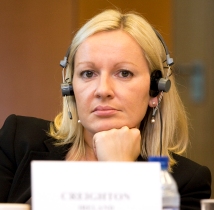
Returning to Lucinda, the pundits and observers who were this week predicting her slow disappearance into obscurity on the back benches seriously underestimate the Deputy for Dublin Bay South.
Lucinda Creighton TD (pic taken from her website)
While political history does show that many TDs who have defied the whip manage do disappear, never to be heard from again: Alice Glenn springs to mind, there are several notable exceptions.
Charlie McCreevy’s expulsion from Fianna Fáil under Haughey was the making of his career, not the breaking of it. Similarly Mary Harney’s 1985 expulsion from the Fianna Fáil parliamentary party for voting for the Anglo Irish Agreement did not end her career. This applies too to Des O’Malley, though I will concede that their routes back came via a new party.
While her stance on the Protection of Life During Pregnancy Bill would not reflect the views of most in her constituency, I suspect they will still admire her conviction and preparedness to walk the walk when necessary.
The same can be said for Wicklow TD, Billy Timmins. Billy was the Fine Gael opposition spokesperson for most of my time in the Department of Defence. He was an extremely effective opposition spokesman who showed more loyalty to Enda Kenny (via his attempted defence of Enda’s hare brained call for Army boot camps to deal with young offenders) than Enda showed to him.
While the conduct of this week’s debate bordered on the farcical with serious doubts now raised over the Government’s ability to order the business of the Dáil, by contrast the Taoiseach emerged somewhat stronger in the short term thanks to his put down of most of the wavering or doubtful TDs.
But, as for the implications for Enda in the medium to longer term, these may not turn out to be quite as rose tinted as they now appear. While the likes of Mulherin and Bannon now have little or no credibility, those others who were forced through the lobbies without all the public hullabaloo will quietly seethe away, just waiting for the moment when Enda needs them.
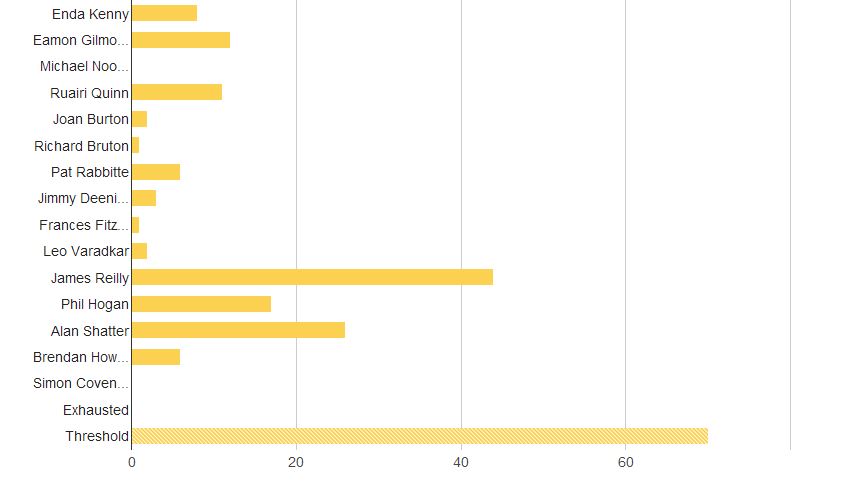
Last weekend I ran a poll under PR STV on the excellent www.opavote.org website to select/elect the worst Minister in Government. I closed polling a few minutes ago.
Many thanks to all those who took the time to vote. I ran this poll to see how well the site performed.
Results in Tabular formatFirst count as a bar chart
Where votes were tied (for an elimination) the one to be eliminated was picked by reference to their first count vote, where they were tied on first count is was by random selection
Interestingly both Michael Noonan and Simon Coveney received zero votes on the first count – which prompts me to shortly run a poll: Who is the best Minister in Cabinet (I may run that poll on a slightly different basis and seek the top three rather than just the one best)
My column on this weekend’s Fianna Fáil Árd Fheis from today’s Herald
If you are planning to head to Ballsbridge for a quiet pint or a cup of coffee this Friday or Saturday – think again. From about 5pm this Friday until well past mid-night on Saturday the area around the RDS will be saturated with about five thousand exuberant and excitable Fianna Fáil-ers gathered for the party’s Árd Fheis – including yours truly.
If you decide to follow the Árd Fheis proceedings online or on air you can expect to hear the Good Friday Agreement (GFA), whose fifteenth anniversary passed two weeks ago with little acknowledgement from the Government, mentioned several times.
Many in Fianna Fáil fear that its greatest recent political achievement is being slowly air brushed out of official history.
The impression is being given that the GFA was merely the logical and inevitable consequence of the 1985 Anglo Irish Agreement, about which we have heard a lot following the deaths of both Garret Fitzgerald and Margaret Thatcher.
As one of many people who spent countless hours travelling up and down to Belfast on pre M1 roads that stopped for lollipop ladies in Balbriggan and Julianstown, I can assure you there was nothing inevitable about it.
But the Good Friday Agreement is also something of a metaphor for Fianna Fáil itself.
We now see that that getting agreement was the easier piece of work when compared with the effort and energy required to get it implemented and working – well, almost working.
The same is true of Fianna Fáil. The work required to get the party to this point has been huge, but it as nothing to the work ahead.
While last year’s Árd Fheis focused mainly on important internal reforms, such as One Member One Vote, the truly difficult work starts now.
This Árd Fheis is more about facing outwards and talking to an electorate who now shows signs of being ready to listen to what the party has to say. But the party’s improving opinion poll figures should not delude pundits, or even party members, to thinking its resurgence is assured.
To be brutally frank, what has Fianna Fail said or done in recent months to justify such increases? While it has produced some very fine policy proposals such as the Family Home Bill and Regulation of Debt Management Advisors Bill, they hardly account for bounce.
Nor does the performance of the party’s spokespeople.
Without doubt the party has scored significant hits on the government in recent months, particularly via its Health Spokesman Billy Kelliher, its Finance Spokesman Michael McGrath and its Justice Spokesman Niall Collins and, of course, the party leader Michéal Martin, but it is finding it difficult to mark all bases with such few Oireachtas personnel.
While he has several new people inside the Oireachtas who he can use effectively: such as Senators Averil Power and Marc McSharry, perhaps the leader also needs to look outside the ranks of the parliamentary party for other new faces and voices to put on Radio and TV in senior roles – Dublin Bay South’s Cllr Jim O’Callaghan for instance.
The hard truth is that the increases are as much down to Fine Gael and Labour’s travails as they are to any softening of attitude to Fianna Fáil. Besides, as the poll analysts would tell you, it is dangerous to read too much into opinion polls where over 30% of the respondents are answering: don’t know.
This is not to underestimate the size of what the party has achieved. At this time last year it was a tough job convincing others that while the party may be down, it was not finished. The big achievement has not been the increases in the polls, but rather the halt in the party’s decline.
At last year’s Árd Fheis the party helped reverse that decline by re-introducing itself to its own members, this weekend it starts the even great task of re-introducing itself to its former supporters. Let’s hope it has more success in doing that than the GFA has had in getting its institutions working.



 derekmooney.ie