Labour TDs could not cause an election: even if they tried

And so it starts. Only eighteen months into a five year term and some jumpy Labour TDs are talking about snap general elections.

While it may be an idle threat, intended to frighten Fine Gael backbenchers, it is the non unnatural response of inexperienced functionaries to the health cut provocations of an inexperienced and dysfunction Minister.

While Minister Reilly’s bluff and bluster approach to his portfolio has irritated and angered many, in his defence it is not as if these Labour backbenchers were not given plenty of warning about the impending health crisis.

Within a couple of months of the last Budget being passed it was clear that health spending was in trouble and that the Minister had not given the health service the tools and supports to make the almost €750 million in savings he was demanding, but were the Labour TDs threatening a general election then? No.

By July those initial worries were confirmed. The mid year numbers showed that health spending was running out of control and the deficit had almost reached €300 million, and was expected to rise to €500 million by year’s end, but were the Labour TDs threatening a general election then? No.

Only now, with the year almost over and the preparations for the next Budget underway, do they find their voices, so what good can they achieve? To be frank: precious little. While some of them may threaten snap elections, the Dáil mathematics suggests that they are powerless and they could not cause an election even if they tried.

Blessed or Reilly?
Minister Reilly tooling up for a meeting with Labour TDs?

While first time Labour TDs may think that sitting on the opposition back benches would be an easier life than sitting on the government ones, Labour front benchers don’t. Does anyone seriously think that the likes of Brendan Howlin, Ruairi Quinn or Pat Rabbitte are ready, willing or prepared to walk away from office?

These guys cannot believe their extreme good fortune to still be there after so long. Some of their Ministerial careers commenced two and three decades ago. Ruairi Quinn was first appointed a Minister back in 1982, Howlin in 1993. They have no plans to go now, or at any mid term re shuffle.

Similarly, many Labour backbench TDs know from reading the opinion polls in their own areas that an election now would only result in them losing out to other left wing parties or independents.

But even ignoring these two very important reasons, the Dáil numbers suggest that Labour withdrawal from Government would not necessarily result in a snap election.

The results of the last General Election gave Fine Gael 76 seats, Labour 37, Fianna Fáil 20, Sinn Féin 14, and 19 various left wingers and assorted independents. The death of Brian Lenihan and the resulting by-election increased Labour’s total by one at Fianna Fail’s expense.

The other changes to the maths are the election of Sean Barrett as Ceann Comhairle, reducing Fine Gael’s numbers by one and the fact that several Government TDs jumped ship, three Labour and one Fine Gael. The three dissident Labour TDs could be expected to follow Labour if it was to pull out.

The point that we forget, however, is that 5 independent TDs voted for Enda Kenny as Taoiseach when the Dáil first met on March 9th 2011.

If these five independents were to stick with Fine Gael that would give a single party Fine Gael Government 80 seats, just three short of an overall majority. Admittedly, this is a very big “if” though the likes of Michael Lowry would find it hard not to vote for his former friends and colleagues.

There is no guarantee that everyone else would vote together to bring about an election. All Fine Gael need is a few abstentions and it can struggle through. The most the combined left: Labour, Socialist, Sinn Féin, People Before Profit and assorted other left leaning independents can muster, at a very big push, is 65.

This gives Fianna Fáil and a few other independents, such as Shane Ross, the effective balance of power. Is that really what these jumpy Labour TDs want?

I doubt it. The bad news for them is that they are stuck on this rollercoaster to the end. They suggested last year that there was as easier way out of this.

There wasn’t. They cannot now just cut and run when the going gets rough. I suppose, in a way, this makes them very much like the rest of us.

ENDS
Why lobbysits are so vital for all communities

My Evening Herald column from last Saturday (23rd June 2012)

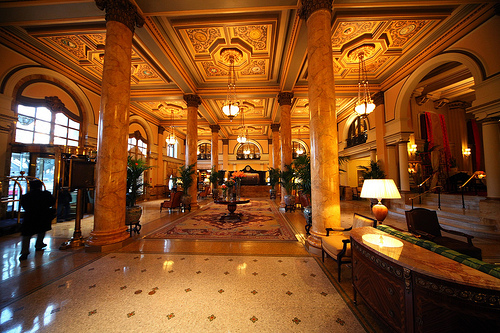
Lobby of The Willard Hotel in DC
Pic courtesy of biberfan on flickr

I have an aversion to the term: lobbyist. I resisted its use in describe myself when I worked with a range of national representative groups and I can’t recall ever using it to describe those whom I dealt with while I was a ministerial adviser.

The term “lobbyist” seems to have a pejorative tone to it. Lobbying is viewed with suspicion. Understandable enough after the Tribunal horror stories of men in well cut suits loitering outside Council chambers offering “incentives” to errant Councillors.

The reality is that lobbying is a practice as old as government itself. The origins of the term are often erroneously attributed to the post Civil War US President, Ulysses S. Grant.

Grant was fond of retiring to the bar of the old Willard Hotel across from the White House. News of his habit soon spread and he increasingly found himself besieged by promoters of this or that project as he passed through the lobby of the Hotel.

The term, in fact, well predates Grant and the Willard Hotel and most probably goes back to 17th century England and refers to the lobbies where constituents and petitioners could meet Members of Parliament.

Yet somehow the image of rail tycoons and land speculators in the lobby of the Willard smoking big cigars while stuffing cash into the pockets of pliable politicians seems to have stuck

This is a great pity as lobbying is an entirely legitimate and democratic activity. It is even protected by the First Amendment to the US Constitution which speaks of the right “…to petition the government for a redress of grievances.”

Substitute the words “advocacy” or “campaigning” for “lobbying” and you get a better sense of what it should be about: making the best case you can to the powers that be.

When it descends to kick backs and payola it is no longer lobbying, it is just corruption, plain and simple.

Yet this is the image that still persists: guys in the lobby of the Willard improperly influencing politicians, and their more modern day equivalents.

But it is a false image. Lobbyists today come in all shapes, sizes and types.

People can be advocates on their own behalf, or they can seek the services of others with experience and skills in presenting a case on behalf of others.

They can be from schools, universities, communities, companies, trade associations, trade unions, churches, charities, environmental groups or senior citizens groups

Not all lobbyists are paid. In my experience (from both sides of the divide) most are not. During my time in government I recall getting more calls and emails from volunteer lobbyists than paid ones.

Lobbying is not simply about getting access to a TD, Senator Councillor or Official. These meetings are just the final small step in a much more complex process.

Lobbying is about preparation. It is about research. It is about assembling the facts and honestly analyzing the implications of what you propose. It is a process – and one more about research, education and communication than it is just about persuasion.

I know, from being on the other side, that a dedicated individual pleading a case that they know and understand deeply can be infinity more persuasive than the most costly lawyer or public affairs consultant.

This was the case with those who campaigned for formal recognition of the bravery of those who fought at Jadotville in the Congo in 1961. Not only were they tireless and passionate, they had done their research. No one knew or understood the complexities of this tragic situation better than they. When presented, their case was undeniable.

Far from having something to fear from lobbying such as this, democracy needs it. Just as lobbyists and public affairs people will benefit from a transparent and fair system of regulation.

As Justice Brandeis observed, almost a century ago. “sunlight is the best of disinfectants”.

ENDS

Results of my online poll

Here are the results of my online poll. Over 360 visitors to the webpage in last two days – thanks for the 247 votes cast and for the comments posted.

I am not claiming this as scientific, just indicative…. maybe most indicative of just who follows me on Twitter and Facebook

You can print out the results in a PDF document fromhere: Impressed Most Poll

The question posed: Leaving aside whether you voted Yes or No who impressed you most during the Fiscal Treaty Campaign (Pick 3)


Total Votes 247

%


1

Micheál Martin

21.86%

2

Declan Ganley

14.17%

3

Michael McGrath

14.17%

4

Simon Coveney

13.77%

5

Mary Lou McDonald

13.77%

6

Joan Burton

5.67%

7

Gerry Adams

5.26%

8

Enda Kenny

4.45%

9

Shane Ross

2.83%

10

Eamon Gilmore

1.62%

11

Joe Higgins

1.21%

12

Richard Boyd Barrett

1.21%


Who impressed you most during referendum campaign?

Is Government the Biggest Threat to a Yes Vote?

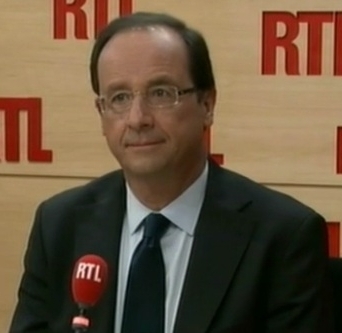
The next French President? François Hollande
(Photo taken from the Hollande Campaign site)

Though the early polls have been positive I am getting a sense that the No side may picking up some momentum as we near the May 31st polling date for the Fiscal Stability Treaty Referendum.

One of the main grounds for this sense of foreboding may indeed be the May polling date itself. I fear having the poll this early may prove the biggest threat to a Yes outcome for three reasons:

1. It allows no side to raise the prospect of a second referendum later in the year. The more astute and sophisticated side of the No campaign is starting to run an argument that goes as follows: We have voted twice on the last two EU treaties.In each case we have come back with a better deal the second time. This Treaty does not come into force until January 2013. We have the time to Vote No now and use the following months to go back and get a better deal and then Vote Yes later in the year. A late September polling date would have denied this argument to them

2. This Sunday see’s the first round of the French Presidential Elections, The Second roubnd of voting will be two weeks later at the beginning of May. While Sarkozy has had a good campaign to date and has closed the gap in the first round the polls there still suggest that Francois Hollande will win the Second Round by approx 55:45.Hollande is standing on recovery platform that rejects Sarkozy’s austerity plan and talks of renegotiating the Fiscal Compact,

While this position may be dismissed as a Gallic version of Gilmore’s “Frankfurt’s Way or Labour’s Way” – ie a promise that sounds good in the campaign but doesn’t survive past polling day – it does look like Hollande is serious. His determination to imeddiately set out a renegotiation the Fiscal Compact to include a growth programme, Euro Bonds etc has probably been strengthened by the attempts of Merkel and other Centre Right EU leaders to snub him.

We will be going to vote during the first days of a Hollande presidency, the background noise to ouyr vote to pass the existing threaty will be his moves to renegotiate that very treaty – almost making a farce of that vote. The politically astute move for our Government would have been to hold off until September and see if Hollande will make a difference.

3. The one great lesson learned from previous referenda, particularly NIce I & II and Lisbon I & II is that the public needs a longer run up/lead in period to tease out the issues. The traditional three or four week campaign has been found to be insufficient, particularly in the absence of “on the ground” campaigns.

Though polling day is about six weeks away there is little sign of that debate is starting yet. Will the Refendum Commission have the time to do the job? Based on the last referendums, it would certainly appear not.  The Tanaiste and Minister for Foreign Affairs had a thirty minute slot on RTE 1 last Saturday where he could have used 5/6 miinutes to explain why voting Yes is important. He didn’t. He chose instead to just give the poll a passing reference, 125 words in a script over 3100 words long. “referendum” featured only once in his script.

While the timing of the polling day is just one factor, it may prove a crucial one. The Treaty should stand or fall on its own contents alone. I am on record here as having my own qualms about the Treaty (see my post here on why I will be a reluctant Yes voter). The debate will be essential. This vote is not like others, we do not have a veto, we cannot delay or deny the progress of this Treaty by our vote alone. The EU has been horrendously slow to act to save itself from the start of this crisis. It has chosen the path of half measures over swift decisive action – usually at the behest of a Franco-German leadership that put domestic political considerations ahead of pan european ones. But we should not be blind to the developing EU real politik.

The appointment of Simon Coveney and Joan Burton as the Fine Gael and Labour campaign directors somehow does not imbue one with a sense of confidence. Coveney’s nomination does echo Charlie Haughey’s appointment of Paddy Lalor as Fianna Fáil national director of elections – a move that spurred the late Frank Cluskey to comment: “There’s confidence for ya”

Labour Leader Gilmore Ranked Second Worst in Poll of Ministers’ Performance

Over the past few days (Tues Apil 11 – 13) I ran a simple poll on my website www.derekmooney.ie . In it I asked people to select the three government ministers they believed were performing best in office.

 182 people voted in the online poll.

The results are as follows: You can download the results in pdf format Rate the Ministers

1

Finance Minister Michael Noonan

2

Welfare Minister Joan Burton

3

Agriculture Minister Simon Coveney

4

Pub Exp Minister Brendan Howlin

5

Transport Minister Leo Varadkar

6

Education Minister Ruairi Quinn

7

Enterprise Minister Richard Bruton

8

Children’s Minister Frances Fitzgerald

9

Communications Minister Pat Rabbitte

10

Arts Minister Jimmy Deenihan

11

Justice Minister Alan Shatter

12

Foreign Minister Eamon Gilmore

12

Health Minister James Reilly

13

Environment Minister Phil Hogan*

If they squabble this much over small stuff… what happens when the big probs arrive?

About a week ago I wrote a piece for the Herald defending the government giving politicians a three week break for the Easter.

Scousers
Calm down lads, calm down

This was, I argued, a welcome opportunity for Ministers, TDs and their advisers to do some of the other boring, but important, work and also to take some time to reflect and think about the issues of the day.
Talk about getting it wrong. No sooner has the ink hit the pages than almost everyone in Government was out in public tearing strips off each other.
The whole cast of characters were involved: Environment Minister: Big Phil Hogan, Health Minister: James “Capt Birsdeye O’Reilly, Finance Minister: Michael Noonan, Arts Minister: Jimmy Deenihan, Welfare Minister: Joan Burton, Communications Minister: Pat Rabbitte, Justice Minister Alan Shatter, FG Party Chair Charlie Flanagan plus a few Government backbenchers including Labour’s Colm Keaveney and Fine Gael’s Regina Doherty.

The week before had seen some on the Labour side saying that Big Phil could have handled the whole household charge thing a lot better. Just as it appeared that that particular row had run its course, news broke that Big Phil was meeting with Moriarty Tribunal favourite and Tipp North TD, Michael Lowry only a few days after the publication of that Tribunal’s final report.

Within hours other Ministers, namely Birdseye O’Reilly and Noonan, were confirming that they too had meetings with Lowry. This was all too much for Joan who questioned the wisdom of this. So too did Jimmy, but more subtly.

Joan’s words riled Charlie who went on Twitter to ask if Joan had a Government death wish. Regina subsequently went on Radio to say Charlie was right and that Joan was wrong. Others thought Joan was right, including Colm, who also went on to Twitter to call the judgment of senior figures in Fine Gael into question.

Meanwhile Pat spoke to the Sunday Independent to say that he was frustrated by the “interminable delay” in bringing prosecutions following Mahon and Moriarty. Within hours of the paper hitting the breakfast table Alan had issued a broadside that had Pat in mind when it stressed the importance of not making public comments that might prejudice proceedings.

By lunchtime the Taoiseach was doing a bad Harry Enfield scouser impression telling everyone to “calm done”. All that was missing was him donning a Kevin Keegan wig and finishing off the interview saying: “Dey do do dat dough don’t dey dough”

Not only did all of this happen in just one week, it happened in very quiet week at that. If this is how the members of the Government deal with minor matters, Lord help us when the big problems come. And come they will.

The Government has had a fairly charmed existence since coming to office. While things are clearly not improving, they have not had to face any genuine crises or policy dramas.

Both parties have endured some setbacks early into their term. but none that really tested them. For Fine Gael it was the losses in the presidential election and referendum, plus the Roscommon hospital fiasco. For Labour it was the loss of three TDS, including a Junior Minister and a by-election winner, though these were offset by their man winning the presidency.

The handling of the household charge suggests they lack a certain deftness of touch, yet it pales into significance against the problems they may yet face in the years ahead.

How will a government that descends into public squabbling and faction fighting at the mere mention of the names of Moriarty Lowry or O’Brien cope if Merkel Draghi or Barroso decide to turn the thumbscrews on Corporation tax or whatever?

Have they all forgotten that they will be asking the people to take their collective advice at the end of May and vote yes to the Fiscal Compact Treaty? Might it not help their case to give the appearance of knowing what they are doing and all pulling in one direction?

As to the internecine squabbling, there are several systems in place to stop such petty rows escalating and getting into the public arena. One is called common sense. Another is the special adviser/programme manger system. Isn’t it time to get working on both?

ENDS

Cowen Talks Ireland Up Seeking Inward Investment

The speech at Washington DC’s Georgetown University by former Taoiseach, Brian Cowen, has attracted some comment since it was reported last week in the Financial Times and Irish Times. Much of that comment has focussed upon just about everything about from its contents. It is a well drafted and cogently argued analysis of the crisis that befell both Ireland and the EU and well worth reading in full: Speech By Fmr Taoiseach B Cowen – 21.03.12

Given the venue and context it is evident that this was meant as a low key, considered and informed contribution and not as a political foray. While I think it will, in time, be seen as an important analysis of the situtaion from 2007/08 onwards. I also think it is important to note how the former taoiseach took the opportunity present to talk Ireland up and to touts for business and investment for Ireland. This is particularly evident in the final paragraphs of the speech:

“I believe Ireland is one of the best locations in the world to establish and to grow a business. This is not just rhetoric but is reflected in the rapid on-going overseas investment which is occurring in Ireland. Ireland is not just open for business but as, I believe, any independent assessmentwould indicate it is among the best places in Europe to start and grow an international business. This will ultimately pay off for our citizens. Indeed all of the fundamental strengths which prior to the crisis meant that Ireland had one of the highest growth rates of GNP per capita among advanced countries for a very long period are still in place and in many respects our advantages have improved in terms of increased cost competitiveness.”


Dáil breaks can only benefit both sides

My Evening Herald column from Saturday March 31st arguing that breaks in Dáil sittings are necessary and beneficial


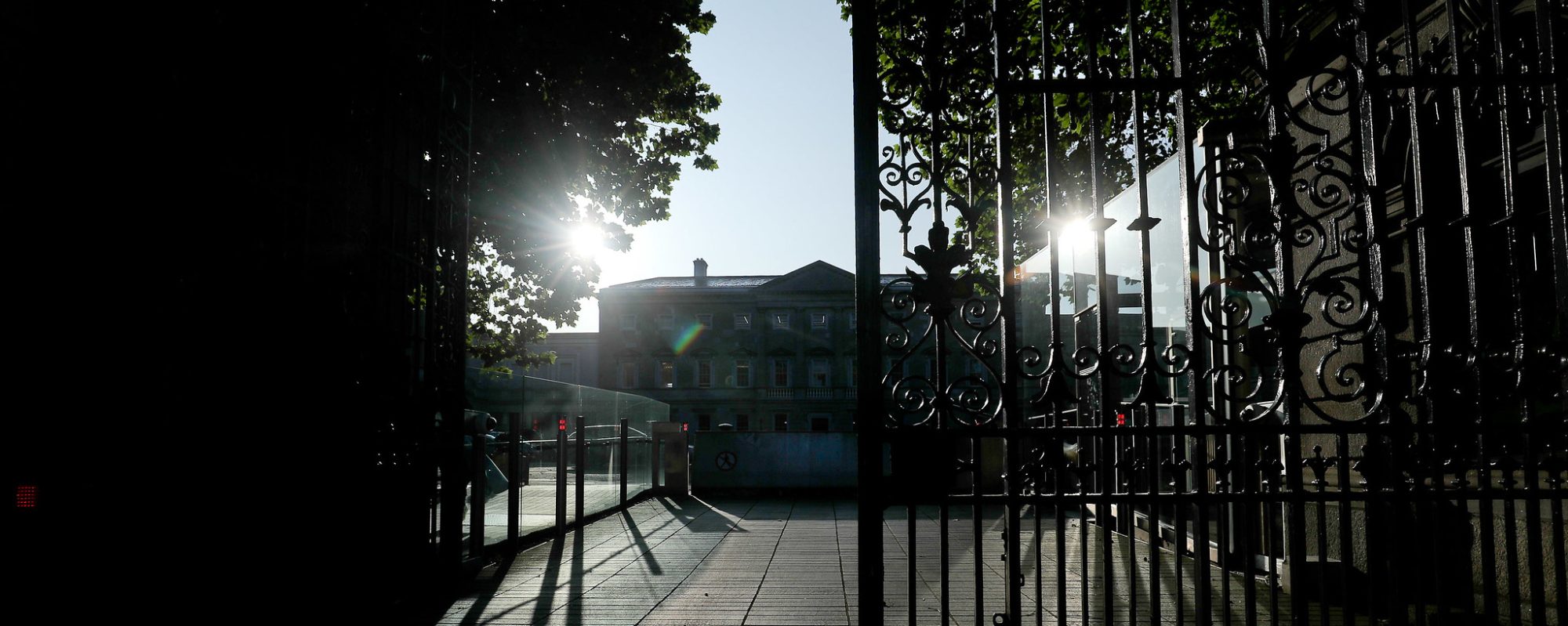
Leinster House

On Thursday Dáil Éireann takes a break for the Easter recess. It is set to return on April 18th. Cue a hue and cry from opposition TDs and assorted political hacks demanding that the Dáil return sooner or sit longer or whatever.

These protests are not only regular and predictable, they are just as entertaining as they are pointless.

These sham battles seem to be based on the notion that the more the Dáil sits the better. Really? It is hard to sustain that argument when you look at the household charge fiasco.

In its recent annual report the Government commends itself for increasing the number of sitting days, saying that the Dáil sat for about 127 days, roughly 36/37weeks, in its first year.

According to the government’s calculations this is a 44% increase on the number of sitting days in the first year of the previous Dáil (2007/08).

A major achievement you’d think. Though not quiet as impressive when compared with the years 2008/09 and 2009/10 when the Dáil actually sat for 35 weeks per annum.

But what’s a week or two between old sworn enemies?

It is the old public sector problem: measuring inputs, not outcomes. Successive governments have been guilty of it.

The Government’s legislative programme should be driven by the number of pieces of legislation it wishes to pass into law, not by a need to produce bits of legislation to fill up some allotted time slot.

TDs should not be apologising for the Dáil not sitting in plenary session over the next three weeks.

Yes, various Oireachtas committees will be sitting during that time – but something else should also be happening. Something that is, in my opinion, far more important.

Politicians and their policy advisers should be availing of this break to do something they rarely get to do: think and prepare.

There is a story, probably apochryphal, about a Minister walking along a corridor in his Department when he spies a senior policy maker sitting back with his feet up on the desk. “Have you no work to do?” asks the Minister, “I have…” comes the reply “…I am doing it now, I’m thinking”.

These short breaks in Dáil sittings afford Ministers and senior officials some time and space away from debates, motions and parliamentary questions to think and to focus on other matters in their departments – things that don’t often make the headlines at Leader’s questions.

Central to this is standing back and taking stock of where they are.

When the Dáil is sitting a surprising amount of time in a government Department can be taken up in answering TDs questions alone, particularly when its that Minister’s turn at oral PQs.

Parliamentary accountability and scrutiny is an essential part of the democratic process, but you also need time to go and effectively do all those things that the parliament will subsequently want to scrutinise.

But if the need for this “thinking” time is important for Ministers and officials is it absolutely vital for an opposition and its support teams.

The Minister has a full time team of 8 or more in his office to fetch, carry and prepare – plus those other senior officials along the corridor to advise and research – the opposition spokesman is often depending on two or three.

But it is not a matter of resources. While the Dáil is sitting the agenda is set by the government. The opposition is usually just reacting to it – or reacting to the media reaction to events.

This is not always a bad thing, especially for an opposition that is effective at harrying the administration. This was the case in the latter half of the last government. The only crumb of comfort it got from the polls was when the Dáil was in recess. When it was in session both oppositions parties’ ratings went up, especially Labour’s.

But an opposition also needs to set the agenda too. It takes a lot of preparation and planning for an opposition to get the focus on its agenda. These breaks can often provide that space.

Politicians on both sides should acknowledge this fact. Who knows, maybe the reporters who cover the Dáil and actually benefit from the break might even credit them for it.

Ends

BAI Report Does Not Close the File on that Bogus Tweet

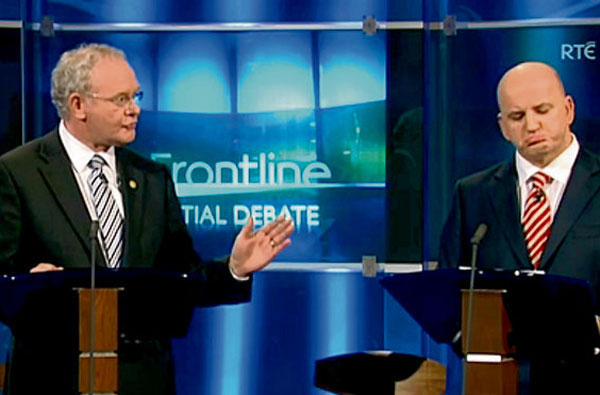
Áras12 Candidates McGuinness and Gallagher

Besides our Fianna Fáil backgrounds, Sean Gallagher and I have something else in common: an errant tweet has contributed to us both losing out on a job.

In my case it partly caused me to lose a job I already held. I was Willie O’Dea’s adviser and programme manager when Dan Boyle sent his infamous tweet.

Its claim that there would: “Probably be a few chapters in this story yet” proved baseless, nonetheless 24 hours later the Minister had resigned and yours truly was clearing out his desk. C’est la vie. The tweet only brought the inevitable forward by twelve months.

In Sean’s case the broadcast of a bogus tweet during the Frontline Presidential Debate played a major play in derailing his campaign and denying him the job he wanted.

Yesterday the Broadcasting Authority of Ireland gave its verdict on his complaint against RTE, The Frontline and The Pat Kenny Show.

It was a fairly damning judgement. The BAI found that Sean Gallagher had been treated “unfairly” on three counts.

One: by the broadcast of the initial bogus tweet from an account that purported to be from the official Martin McGuinness for President campaign.

Two: by the failure of the Frontline to tell the audience of the subsequent tweet from the official McGuinness campaign denying that it had issued the bogus one.

Three: by the continuing failure of the Today with Pat Kenny radio show the next morning to properly clarify the status and background of the two tweets.

Given that it found that a programme that was intended as a Presidential Debate was unfair to one particular candidate, it was amazing to see the BAI go on to say that no further investigation or inquiry is required as the complaint “was not of such a serious nature as to warrant an investigation or public hearings”.

It is not as if this might have affected the outcome of an election or anything….. oh, hang on a minute…. Yes, it might.

No one can definitively state whether the tweetgate affair altered the outcome, but we do know that Sean Gallagher was the poll leader before the debate and he wasn’t a few days later. We also know that tallies of the postal votes – ie those votes cast and returned to the presiding officers before the Frontline debate – showed Gallagher topping the poll.

On the other hand, it is entirely possible that viewers watching the Frontline debate might have switched from Gallagher to Michael D Higgins even if the tweet had never been mentioned.

All this is in the realms of speculation. What is not speculation however it that someone sent that tweet to undermine the front runner and affect the race.

So, yes, this matter does require further investigation.

The BAI has determined that Mr Gallagher was treated unfairly in how the tweet was handled. RTE’s Director General made a sincere and genuine apology and the RTE Authority is to examine the BAI’s finding.

This is all right and proper. But RTE’s actions are only part of the case.

Like others watching the campaign on the internet I was not aware of the difference between the real and fake McGuinness for President twitter accounts until the controversy broke that night.

The confusion was easy as, according to some Social Media watchers, both twitter accounts were created on the same day. Indeed, as part of its own defence, RTE argued that many other journalists were similarly confused and had taken the first bogus tweet as genuine. (A defence rejected by the BAI)

The question remains: who was responsible for sending out the tweet? Are we going to tolerate a situation where an election outcome can potentially be so easily influenced by one person or group of people acting in the shadows?

We have seen thousands of people protest on the streets of Moscow regarding accusations that Putin rigged their Presidential election, are we not to try and look a bit deeper into this case?

Isn’t the integrity of our democratic process worth a bit more effort?