Intriguing insight into the worklife of Minister Quinn

My column from today’s Evening Herald on Monday night’s RTE 1 #backtoschool documentary “Inside the Department” – a fly on the wall look at life in Education Minister, Ruairi Quinn’s office. 

——————————————————————————

There are times when you despair at how little choice of TV viewing there appears to be on the domestic channels.
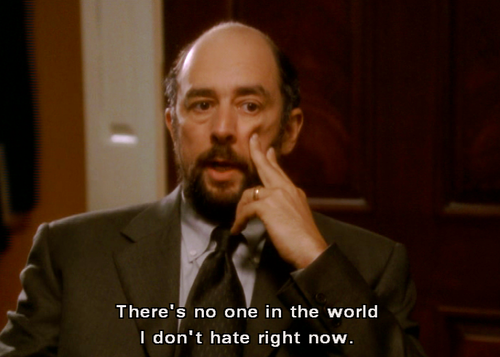
Wesht Wing?
The West Wing’s Toby Ziegler….. not a young Ruairi Quinn TD

Last night was not one of those nights.

You could watch the fly on the wall documentary “Inside the Department” on RTE1 or the latest incarnation of Dallas on TV3.

What a choice. A programme about power, jealousy, feuding, lust, carnality, sumptuous offices, driving ambition, back stabbing, expense accounts and flash cars….. or you could watch JR and Bobby stare it out on Dallas.

As an ex ministerial adviser, I opted for the former and watched “Inside the Department”. Indeed, I not only watched it, I recorded it and watched it a second time.

This was not due to my not believing what I had seen the first time, but rather as a means of catching on the second viewing any gems or nuggets of information I missed on the first viewing.  I needn’t have bothered.

As a PR colleague from the North observed on Twitter last night: like all bad ideas making this documentary probably looked like a good one at the time.

That is not to say it was a bad idea for the producers, far from it. It was interesting programme. The problem is that it did not achieve its goal. It was less a look “inside the department” and more a look at Ruairi Quinn and his kitchen cabinet.

And what a kitchen cabinet it is. I think I counted five of them around a table at one point. When I was a special adviser at the Department of Defence there was just the two of us: me and the Minister’s press adviser. Even so, the then Fine Gael and Labour opposition told us we were over staffed

But even they, notwithstanding their numbers, failed to note that the title of the programme was “Inside the Department” and not “Inside the West Wing”.

They also forgot that they are there as servants of the Minister, not as players. Their role is to aid and assist the minister in implementing government policy. This is work you can best do silently and discreetly.

What possessed them to agree to do interviews to camera and offer what were, in my opinion, smug and ill-considered running commentaries on the events of the day?

Worse still, how did they allow themselves and their Minister to talk so loosely on camera about “summoning” Minister Rabbitte over to the northside and being “wary” of  the planned “off the record” meeting with Rabbitte and a delegation of Labour TDs?

As Minister Quinn said during the programme itself, we all make mistakes, I know that only too well myself, but having such a discussion on camera shows naivety at best.

On the broader front, I got the sense that the neither Minister nor the advisers were ever arguing the public’s side during any discussions: either on the Déis schools or reductions in teacher numbers.

It is called “going native”. It was the accusation that stuck to the last administration after 14 years in office. It is the impression that Ministers and advisers are there to represent and present the policy of the bureaucracy, not the voters.

While it took us the guts of 14 years to that that way, these guys seems to have achieved it in as many weeks.

Listening to them talk and interact with the officials it is almost impossible to believe that they had ever been in opposition. It was if they had no problems with the existing policy and saw it merely as their role to guarantee its seamless and uncritical transmission to the public, with the odd kick at Fianna Fáil thrown in to remind them that this lot is different.

Yes, there were the clips of Ruairi calling the Department “malevolently dysfunction” back in 2010, but where did we see it reflected in his discussion with his officials?

Rather than coming across as our representatives in Government, they came across as the system’s front men to us, more concerned with presentation than substance.

Perhaps the documentary caught the mood of the place accurately, but as someone who believes in the benefits of the adviser system, I sincerely hope it didn’t.

ENDS

Labour TDs could not cause an election: even if they tried

And so it starts. Only eighteen months into a five year term and some jumpy Labour TDs are talking about snap general elections.

While it may be an idle threat, intended to frighten Fine Gael backbenchers, it is the non unnatural response of inexperienced functionaries to the health cut provocations of an inexperienced and dysfunction Minister.

While Minister Reilly’s bluff and bluster approach to his portfolio has irritated and angered many, in his defence it is not as if these Labour backbenchers were not given plenty of warning about the impending health crisis.

Within a couple of months of the last Budget being passed it was clear that health spending was in trouble and that the Minister had not given the health service the tools and supports to make the almost €750 million in savings he was demanding, but were the Labour TDs threatening a general election then? No.

By July those initial worries were confirmed. The mid year numbers showed that health spending was running out of control and the deficit had almost reached €300 million, and was expected to rise to €500 million by year’s end, but were the Labour TDs threatening a general election then? No.

Only now, with the year almost over and the preparations for the next Budget underway, do they find their voices, so what good can they achieve? To be frank: precious little. While some of them may threaten snap elections, the Dáil mathematics suggests that they are powerless and they could not cause an election even if they tried.

Blessed or Reilly?
Minister Reilly tooling up for a meeting with Labour TDs?

While first time Labour TDs may think that sitting on the opposition back benches would be an easier life than sitting on the government ones, Labour front benchers don’t. Does anyone seriously think that the likes of Brendan Howlin, Ruairi Quinn or Pat Rabbitte are ready, willing or prepared to walk away from office?

These guys cannot believe their extreme good fortune to still be there after so long. Some of their Ministerial careers commenced two and three decades ago. Ruairi Quinn was first appointed a Minister back in 1982, Howlin in 1993. They have no plans to go now, or at any mid term re shuffle.

Similarly, many Labour backbench TDs know from reading the opinion polls in their own areas that an election now would only result in them losing out to other left wing parties or independents.

But even ignoring these two very important reasons, the Dáil numbers suggest that Labour withdrawal from Government would not necessarily result in a snap election.

The results of the last General Election gave Fine Gael 76 seats, Labour 37, Fianna Fáil 20, Sinn Féin 14, and 19 various left wingers and assorted independents. The death of Brian Lenihan and the resulting by-election increased Labour’s total by one at Fianna Fail’s expense.

The other changes to the maths are the election of Sean Barrett as Ceann Comhairle, reducing Fine Gael’s numbers by one and the fact that several Government TDs jumped ship, three Labour and one Fine Gael. The three dissident Labour TDs could be expected to follow Labour if it was to pull out.

The point that we forget, however, is that 5 independent TDs voted for Enda Kenny as Taoiseach when the Dáil first met on March 9th 2011.

If these five independents were to stick with Fine Gael that would give a single party Fine Gael Government 80 seats, just three short of an overall majority. Admittedly, this is a very big “if” though the likes of Michael Lowry would find it hard not to vote for his former friends and colleagues.

There is no guarantee that everyone else would vote together to bring about an election. All Fine Gael need is a few abstentions and it can struggle through. The most the combined left: Labour, Socialist, Sinn Féin, People Before Profit and assorted other left leaning independents can muster, at a very big push, is 65.

This gives Fianna Fáil and a few other independents, such as Shane Ross, the effective balance of power. Is that really what these jumpy Labour TDs want?

I doubt it. The bad news for them is that they are stuck on this rollercoaster to the end. They suggested last year that there was as easier way out of this.

There wasn’t. They cannot now just cut and run when the going gets rough. I suppose, in a way, this makes them very much like the rest of us.

ENDS

Who impressed you most during referendum campaign?

Is Government the Biggest Threat to a Yes Vote?

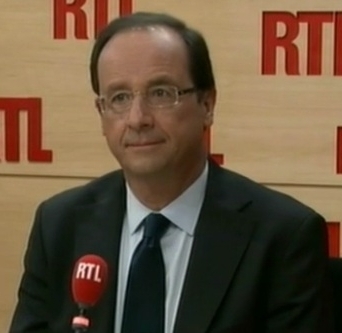
The next French President? François Hollande
(Photo taken from the Hollande Campaign site)

Though the early polls have been positive I am getting a sense that the No side may picking up some momentum as we near the May 31st polling date for the Fiscal Stability Treaty Referendum.

One of the main grounds for this sense of foreboding may indeed be the May polling date itself. I fear having the poll this early may prove the biggest threat to a Yes outcome for three reasons:

1. It allows no side to raise the prospect of a second referendum later in the year. The more astute and sophisticated side of the No campaign is starting to run an argument that goes as follows: We have voted twice on the last two EU treaties.In each case we have come back with a better deal the second time. This Treaty does not come into force until January 2013. We have the time to Vote No now and use the following months to go back and get a better deal and then Vote Yes later in the year. A late September polling date would have denied this argument to them

2. This Sunday see’s the first round of the French Presidential Elections, The Second roubnd of voting will be two weeks later at the beginning of May. While Sarkozy has had a good campaign to date and has closed the gap in the first round the polls there still suggest that Francois Hollande will win the Second Round by approx 55:45.Hollande is standing on recovery platform that rejects Sarkozy’s austerity plan and talks of renegotiating the Fiscal Compact,

While this position may be dismissed as a Gallic version of Gilmore’s “Frankfurt’s Way or Labour’s Way” – ie a promise that sounds good in the campaign but doesn’t survive past polling day – it does look like Hollande is serious. His determination to imeddiately set out a renegotiation the Fiscal Compact to include a growth programme, Euro Bonds etc has probably been strengthened by the attempts of Merkel and other Centre Right EU leaders to snub him.

We will be going to vote during the first days of a Hollande presidency, the background noise to ouyr vote to pass the existing threaty will be his moves to renegotiate that very treaty – almost making a farce of that vote. The politically astute move for our Government would have been to hold off until September and see if Hollande will make a difference.

3. The one great lesson learned from previous referenda, particularly NIce I & II and Lisbon I & II is that the public needs a longer run up/lead in period to tease out the issues. The traditional three or four week campaign has been found to be insufficient, particularly in the absence of “on the ground” campaigns.

Though polling day is about six weeks away there is little sign of that debate is starting yet. Will the Refendum Commission have the time to do the job? Based on the last referendums, it would certainly appear not.  The Tanaiste and Minister for Foreign Affairs had a thirty minute slot on RTE 1 last Saturday where he could have used 5/6 miinutes to explain why voting Yes is important. He didn’t. He chose instead to just give the poll a passing reference, 125 words in a script over 3100 words long. “referendum” featured only once in his script.

While the timing of the polling day is just one factor, it may prove a crucial one. The Treaty should stand or fall on its own contents alone. I am on record here as having my own qualms about the Treaty (see my post here on why I will be a reluctant Yes voter). The debate will be essential. This vote is not like others, we do not have a veto, we cannot delay or deny the progress of this Treaty by our vote alone. The EU has been horrendously slow to act to save itself from the start of this crisis. It has chosen the path of half measures over swift decisive action – usually at the behest of a Franco-German leadership that put domestic political considerations ahead of pan european ones. But we should not be blind to the developing EU real politik.

The appointment of Simon Coveney and Joan Burton as the Fine Gael and Labour campaign directors somehow does not imbue one with a sense of confidence. Coveney’s nomination does echo Charlie Haughey’s appointment of Paddy Lalor as Fianna Fáil national director of elections – a move that spurred the late Frank Cluskey to comment: “There’s confidence for ya”

Labour didn’t know magnitude of problems facing Ireland?

Irish Labour Party - Didn't Know

I have just been watching Labour’s Dominic Hannigan on The Week in Politics and was amazed to hear him claim that Labour didn’t know the magnitude of problems facing Ireland during the General Election campaign last year. He offered this as the reason why they have abandoned so many of the promises made in that campaign.

It is the same attitude you hear when Ministers trot out the glib little phrase “we inherited this from the last government”.

I am long enough around in politics to know that the Government will be using variations on this theme for a long time to come. When there is a change of government, particularly on the scale we saw last year, the incoming Government is naturally going to dump on the previous one.

It happens everywhere. In the UK, although he is well now two year ins office, David Cameron starts off almost every reply to Prime Minister’s questions saying how he is trying to tackle the problems left by Gordon Brown.

Doubtless he will continue to trot out the line for a while more, though polls there are suggesting the British electorate are starting to tire of it,

I understand that the Taoiseach and his assortment of Ministers are going to spend the next year or more prefacing every utterance with the “it wasn’t me, it was like this when I got here” line of attack.

I just wish they would drop the “inheriting” hook and find a line that does not make them sound as if they are some unwilling group plucked from obscurity and press-ganged into taking on the Ministerial offices, salaries and cars against their will.

Most people “inheriting” a situation have found themselves in that space despite their wishes, not because of them. As far as I know you cannot legally inherit from someone you have helped to do in, even when that someone was already doing a good job of doing themselves in.

This government came into office knowing the situation they faced full well. They set it out clearly in their election campaigns and went to the people asking them for their mandate to tackle the enormous problems we face. Labour’s Finance spokeperson said the economy was banjaxed:

The two parties now holding the levers of power have every right to talk about the size of the problems, the need for difficult decisions and to throw a few belts into the outgoing government for good measure.

They should not, however, be talking as if this all something that has taken them somehow by surprise. They also forfeit the right to lash their predecessors on every single issue by effectively taking the same policy approaches.

The health issue and the fate of local A&Es is a good case in point. There is no credibility in the Health Minister outbidding the outgoing Government by writing open letters to the voters in February saying “Fine Gael undertakes to retain the emergency surgical, medical and other health services at Roscommon Hospital”, only to reverse that commitment a few weeks later.

The Taoiseach only adds salt to the wound by offering the defence that when Dr Reilly “…was contesting the general election he was not in possession of the informati

on about the difficulties surrounding the recruitment of non-consultant hospital doctors.”

Labour Leader Gilmore Ranked Second Worst in Poll of Ministers’ Performance

Over the past few days (Tues Apil 11 – 13) I ran a simple poll on my website www.derekmooney.ie . In it I asked people to select the three government ministers they believed were performing best in office.

 182 people voted in the online poll.

The results are as follows: You can download the results in pdf format Rate the Ministers

1

Finance Minister Michael Noonan

2

Welfare Minister Joan Burton

3

Agriculture Minister Simon Coveney

4

Pub Exp Minister Brendan Howlin

5

Transport Minister Leo Varadkar

6

Education Minister Ruairi Quinn

7

Enterprise Minister Richard Bruton

8

Children’s Minister Frances Fitzgerald

9

Communications Minister Pat Rabbitte

10

Arts Minister Jimmy Deenihan

11

Justice Minister Alan Shatter

12

Foreign Minister Eamon Gilmore

12

Health Minister James Reilly

13

Environment Minister Phil Hogan*

If they squabble this much over small stuff… what happens when the big probs arrive?

About a week ago I wrote a piece for the Herald defending the government giving politicians a three week break for the Easter.

Scousers
Calm down lads, calm down

This was, I argued, a welcome opportunity for Ministers, TDs and their advisers to do some of the other boring, but important, work and also to take some time to reflect and think about the issues of the day.
Talk about getting it wrong. No sooner has the ink hit the pages than almost everyone in Government was out in public tearing strips off each other.
The whole cast of characters were involved: Environment Minister: Big Phil Hogan, Health Minister: James “Capt Birsdeye O’Reilly, Finance Minister: Michael Noonan, Arts Minister: Jimmy Deenihan, Welfare Minister: Joan Burton, Communications Minister: Pat Rabbitte, Justice Minister Alan Shatter, FG Party Chair Charlie Flanagan plus a few Government backbenchers including Labour’s Colm Keaveney and Fine Gael’s Regina Doherty.

The week before had seen some on the Labour side saying that Big Phil could have handled the whole household charge thing a lot better. Just as it appeared that that particular row had run its course, news broke that Big Phil was meeting with Moriarty Tribunal favourite and Tipp North TD, Michael Lowry only a few days after the publication of that Tribunal’s final report.

Within hours other Ministers, namely Birdseye O’Reilly and Noonan, were confirming that they too had meetings with Lowry. This was all too much for Joan who questioned the wisdom of this. So too did Jimmy, but more subtly.

Joan’s words riled Charlie who went on Twitter to ask if Joan had a Government death wish. Regina subsequently went on Radio to say Charlie was right and that Joan was wrong. Others thought Joan was right, including Colm, who also went on to Twitter to call the judgment of senior figures in Fine Gael into question.

Meanwhile Pat spoke to the Sunday Independent to say that he was frustrated by the “interminable delay” in bringing prosecutions following Mahon and Moriarty. Within hours of the paper hitting the breakfast table Alan had issued a broadside that had Pat in mind when it stressed the importance of not making public comments that might prejudice proceedings.

By lunchtime the Taoiseach was doing a bad Harry Enfield scouser impression telling everyone to “calm done”. All that was missing was him donning a Kevin Keegan wig and finishing off the interview saying: “Dey do do dat dough don’t dey dough”

Not only did all of this happen in just one week, it happened in very quiet week at that. If this is how the members of the Government deal with minor matters, Lord help us when the big problems come. And come they will.

The Government has had a fairly charmed existence since coming to office. While things are clearly not improving, they have not had to face any genuine crises or policy dramas.

Both parties have endured some setbacks early into their term. but none that really tested them. For Fine Gael it was the losses in the presidential election and referendum, plus the Roscommon hospital fiasco. For Labour it was the loss of three TDS, including a Junior Minister and a by-election winner, though these were offset by their man winning the presidency.

The handling of the household charge suggests they lack a certain deftness of touch, yet it pales into significance against the problems they may yet face in the years ahead.

How will a government that descends into public squabbling and faction fighting at the mere mention of the names of Moriarty Lowry or O’Brien cope if Merkel Draghi or Barroso decide to turn the thumbscrews on Corporation tax or whatever?

Have they all forgotten that they will be asking the people to take their collective advice at the end of May and vote yes to the Fiscal Compact Treaty? Might it not help their case to give the appearance of knowing what they are doing and all pulling in one direction?

As to the internecine squabbling, there are several systems in place to stop such petty rows escalating and getting into the public arena. One is called common sense. Another is the special adviser/programme manger system. Isn’t it time to get working on both?

ENDS

Dáil breaks can only benefit both sides

My Evening Herald column from Saturday March 31st arguing that breaks in Dáil sittings are necessary and beneficial


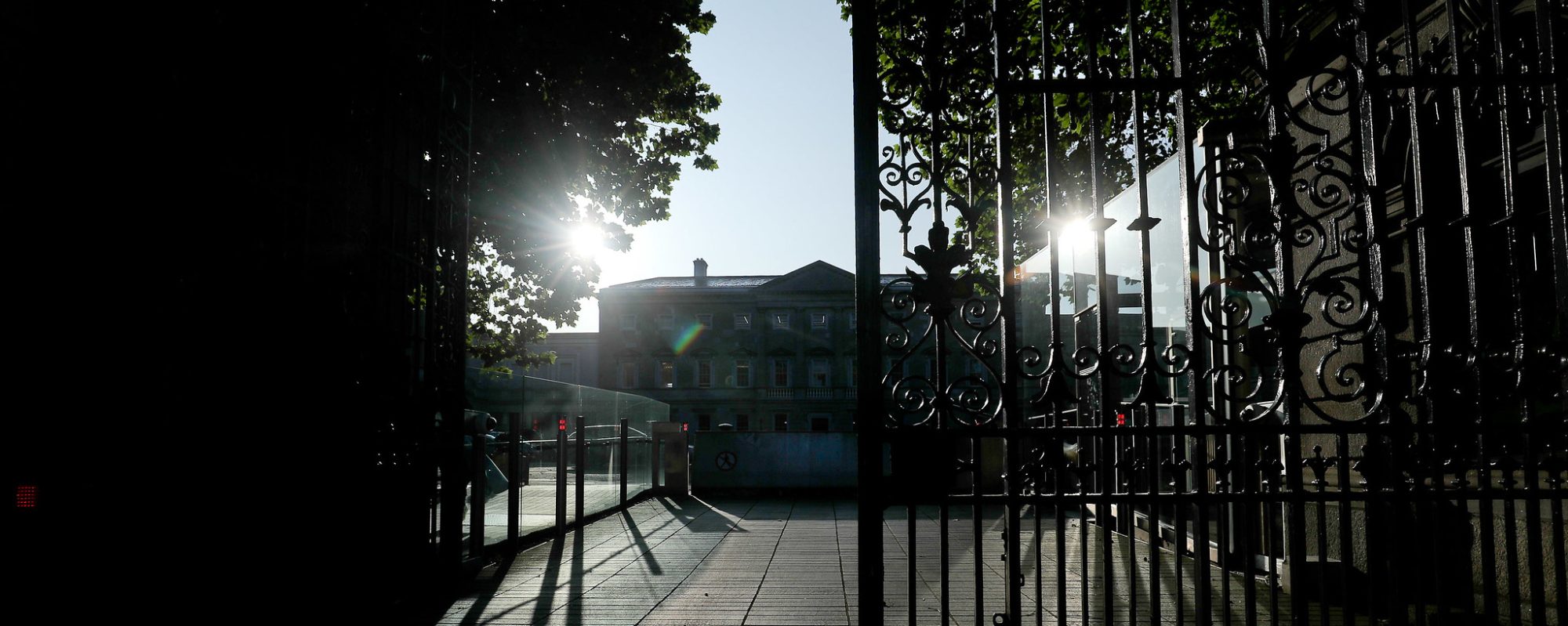
Leinster House

On Thursday Dáil Éireann takes a break for the Easter recess. It is set to return on April 18th. Cue a hue and cry from opposition TDs and assorted political hacks demanding that the Dáil return sooner or sit longer or whatever.

These protests are not only regular and predictable, they are just as entertaining as they are pointless.

These sham battles seem to be based on the notion that the more the Dáil sits the better. Really? It is hard to sustain that argument when you look at the household charge fiasco.

In its recent annual report the Government commends itself for increasing the number of sitting days, saying that the Dáil sat for about 127 days, roughly 36/37weeks, in its first year.

According to the government’s calculations this is a 44% increase on the number of sitting days in the first year of the previous Dáil (2007/08).

A major achievement you’d think. Though not quiet as impressive when compared with the years 2008/09 and 2009/10 when the Dáil actually sat for 35 weeks per annum.

But what’s a week or two between old sworn enemies?

It is the old public sector problem: measuring inputs, not outcomes. Successive governments have been guilty of it.

The Government’s legislative programme should be driven by the number of pieces of legislation it wishes to pass into law, not by a need to produce bits of legislation to fill up some allotted time slot.

TDs should not be apologising for the Dáil not sitting in plenary session over the next three weeks.

Yes, various Oireachtas committees will be sitting during that time – but something else should also be happening. Something that is, in my opinion, far more important.

Politicians and their policy advisers should be availing of this break to do something they rarely get to do: think and prepare.

There is a story, probably apochryphal, about a Minister walking along a corridor in his Department when he spies a senior policy maker sitting back with his feet up on the desk. “Have you no work to do?” asks the Minister, “I have…” comes the reply “…I am doing it now, I’m thinking”.

These short breaks in Dáil sittings afford Ministers and senior officials some time and space away from debates, motions and parliamentary questions to think and to focus on other matters in their departments – things that don’t often make the headlines at Leader’s questions.

Central to this is standing back and taking stock of where they are.

When the Dáil is sitting a surprising amount of time in a government Department can be taken up in answering TDs questions alone, particularly when its that Minister’s turn at oral PQs.

Parliamentary accountability and scrutiny is an essential part of the democratic process, but you also need time to go and effectively do all those things that the parliament will subsequently want to scrutinise.

But if the need for this “thinking” time is important for Ministers and officials is it absolutely vital for an opposition and its support teams.

The Minister has a full time team of 8 or more in his office to fetch, carry and prepare – plus those other senior officials along the corridor to advise and research – the opposition spokesman is often depending on two or three.

But it is not a matter of resources. While the Dáil is sitting the agenda is set by the government. The opposition is usually just reacting to it – or reacting to the media reaction to events.

This is not always a bad thing, especially for an opposition that is effective at harrying the administration. This was the case in the latter half of the last government. The only crumb of comfort it got from the polls was when the Dáil was in recess. When it was in session both oppositions parties’ ratings went up, especially Labour’s.

But an opposition also needs to set the agenda too. It takes a lot of preparation and planning for an opposition to get the focus on its agenda. These breaks can often provide that space.

Politicians on both sides should acknowledge this fact. Who knows, maybe the reporters who cover the Dáil and actually benefit from the break might even credit them for it.

Ends

Labour Party is the real victim of Sinn Fein’s ST poll surge

my take on the recent Sunday Times poll as seen from a different perspective, both in terms of distance and time. I never cease to be intrigued how distance can change your perspective. It is true whether that distance is in time or in space. Indeed not only does it change it, it usually improves it.

This blindingly obvious conclusion struck me late on Saturday night as I sat in my Hotel room on the Costa Blanca coast watching my twitter feed to find the results of the latest Sunday Times opinion poll.

As the old joke goes: it was like deja vu all over again. Exactly one year earlier I was sitting in another room at the same Hotel trying to follow the results of the General Election online.

Though I managed to log in every few hours to catch the resulting coming in online, I still failed to fully grasp the full impact of Fianna Fail’s defeat at the time. My mind was elsewhere. My Dad had died suddenly at my parents’ home in Spain on the eve of polling day. I had, along with other family members, rushed over for the funeral in the days that followed.

It therefore took a week or so for the full enormity of what had happened at the polls to sink in. When it did, I found myself almost detached from its consequences and outworkings. I had not been at the count centres for the emotional traumas. By the time I was back home and chatting with former colleagues; they were reconciled with their fates to the point of being phlegmatic.

Anyway, that was a year ago. Back to last Saturday night. Sitting in a similar room, one year on and almost 1800km away, I found myself having quite a different perspective on the latest opinion poll figures.

As I looked at the RTE news online I was taken aback to see them running the line that big news in this poll was the drop in support for Fianna Fail.

Really? Not from where I was sitting.

Perhaps it was the night breeze drifting in off the Mediterranean. Maybe it was the over generous Soberano.

Either way; it appeared to me that the big news in this poll lay elsewhere.

To my mind the first piece of news in the Sunday Times B&A poll was the halving of Labour’s support in one year – from 19.4% on polling day to 10% today.

Second was the dramatic increase in support for Sinn Fein. from just under 10% at the General Election to a whopping 25% in the poll.

Indeed, there is a third equally significant story, namely the finding that, at 70%, almost three times as many people are disatisfied with the Government than are satisfied with it (26%). Not a ringing endorsement for a government just one year into its term and yet to face any seriously testing challenges.

Though it would be foolish to read too much into just one poll, Sinn Fein’s strategists North and South will be feeling understandably satisfied that their tactic of placing the Labour Party firmly in their sights is paying dividends.

In comparison with these almost double digit changes, Fianna Fail’s decrease from 17.4 to 16 is modest, though disappointing.

Yes, it is the type of news Michael Martin and Co can do without with the first Ard Fheis in two years only a week away and the Mahon report looming. But who, in their right mind, really expected voters, who were bitterly angry with Fianna Fail, to suddenly turn and cry “this shower is even worse than you lot: all is forgiven” barely one year on?

Maybe it is a back handed compliment of sorts that the party’s fortunes still merit such attention and coverage: even when the figures don’t exactly back it up.

If so, then expect plenty more of the same for the rest of the year as further polls emerge and more pundits line out to say what it all means for Fianna Fail. Meanwhile, I will see if I can manage to be away for their publication. It appears to be the best way to view them.

Joan Burton’s Second Law of Inverse Stability

Hadn’t posted on here in a few weeks – catching up on missed items today. This is the most current of the three blogs posted today. It was originally intended for today’s Evening Herald

—————————————————

As far as I am aware the only eponymous Irish Rule of Politics was named for its creator, the much missed political journalist Gerald Barry.

The rule roughly states that “every leader of the opposition will, be at some point, be hailed as the worst ever leader of the opposition.”  Its strength lies not just in its inherent truth; but also to the fact that it applies in almost every jurisdiction.

Look at poor Ed Miliband. How he manages to drag himself into Parliament after reading reports of backbench murmuring and discontent in that morning’s papers is beyond me.

Yet he does, thus highlighting the fundamental truth that scorn and opprobrium goes with the job of being opposition leader. Maybe Enda Kenny could give Ed some pointers on this

But I digress. While the US has numerous rules and laws of politics, Gerald Barry’s is the only one I can think of in the Irish context, or at least it was until now.

Over the weekend the Social affairs Minister, Joan Burton reminded us that there is a second immutable rule of Irish politics, even if it hasn’t had a name up to now.

This Second law states that “large government majorities can lead to disaster and indiscipline”. It so might have been drafted with Minister Burton’s tactics in mind that it probably should be named for her: The Burton Second Law of Inverse Stability.

It’s most notable occurrence to date was during the 1977 – 1981 Fianna Fail majority Government. In 1997 Jack Lynch returned Fianna Fail to office with a twenty seat majority.

Two years later a variety of backbench insurrections on issues from the Farmer’s Levy to British Army border flyovers had so weakened and undermined his leadership that he lost two by-elections in his own back yard and would see his leadership ended by December of 1979.

While at first sight it would appear that big majorities would leave a government comfortably placed to win Dáil votes, the counter intuitive truth is otherwise.

Such big majorities allow backbenchers the scope to flex their muscles and run risks they would not dare try if they thought their actions might herald an election and the loss of their own seat.

Enter Minister Joan Burton. Almost since her appointment to government she has erred on the side of expressing her own strongly views rather than merely defer to the broader FG/Lab consensus.

She has some entitlement to feel aggrieved. She did the heavy lifting as the party’s Finance spokesperson in opposition. She carved out a separate position for the Labour party on the economy, differentiating itself from Fine Gael.

She played a vital part in securing the Labour swing, only to find herself having to standby while Labour effectively disavowed her policies, not in favour of Fine Gael’s but, in favour of those of the outgoing Government.

A hard pill to swallow, made harder by seeing front bench colleagues leap frog her into Cabinet.

It would seem her response has been to work the Labour back benches and strive to speak more for them than for her FG colleagues. A good strategy for positioning yourself within the party: not a great one when it comes to conveying the impression of strong and cohesive government.

While her comments on a second bailout may not send the markets into a spin or (regrettably) make President Sarkozy’s political headaches any worse, it will not endear her to her party leader or Cabinet colleagues.

It also sends a signal to others to feel free to do the same. Clearly, with three of them jettisoning the Labour Whip so far, labour backbenchers do not need much encouragement, but for how much longer can or will Fine Gael be prepared to tolerate this?

Which brings me back to the issue of rules and laws. Newton’s Third Law of Motion states: “To every action there is an equal and opposite reaction”. It is just as true in politics.

While they have been disciplined up to now, I suspect it won’t be too long until we see some Fine Gaelers feeling the same need to unburden themselves and say their piece.

Maybe we will then have our third law of politics: Varadkar’s Third Law of Political Momentum?

Twitter @dsmooney