
Enda Kenny has questions to answer after @Independent_ie reveals his #Anglo contacts

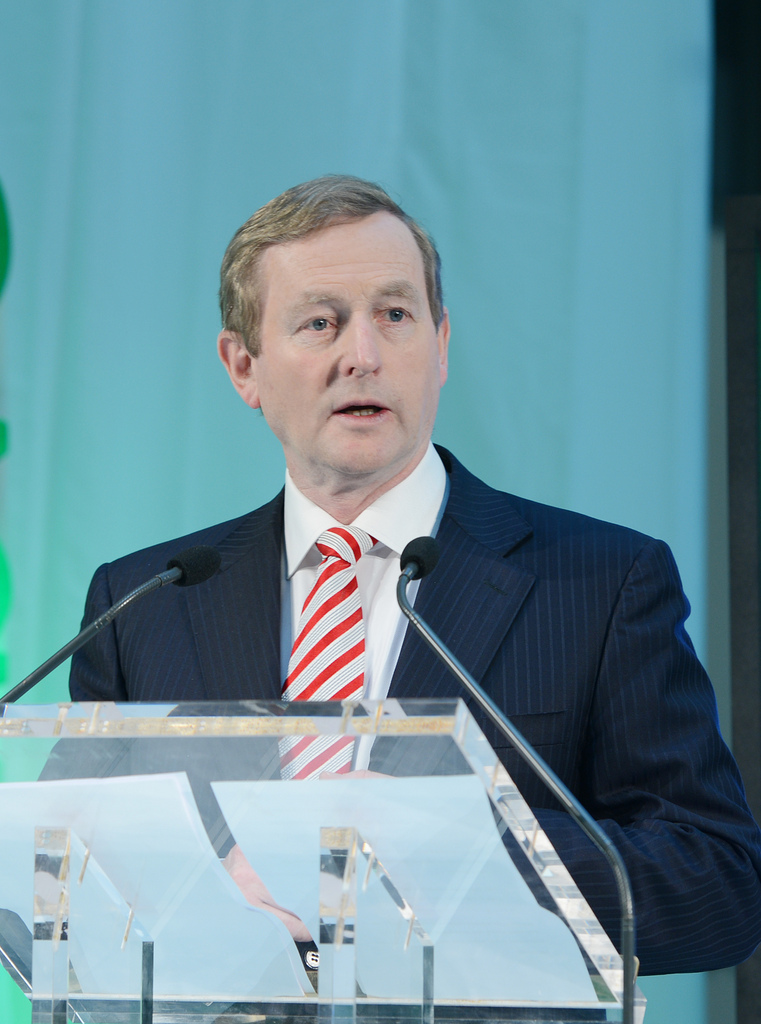
An Taoiseach Enda Kenny (pic taken from FG website)
An Taoiseach Enda Kenny, T.D.  (pic from FG website)

This morning’s Sunday Independent story that back in January 2009 when he was still leader of the opposition that Enda Kenny had been in informal contact with Anglo Irish Bank’s CFO, Matt Moran, raises several questions for Mr Kenny. Some of these questions have already been posed by Fianna Fáil’s Micheál Martin.

When the Anglo tapes first came into the public arena at the end of June, Mr Kenny moved quickly to politically insinuate that the tapes suggested an “axis of collusion” between Anglo Irish and Fianna Fáil, even though the tapes did not suggest any improper or informal contacts between any Fianna Fáil ministers and Anglo bosses.

During the course of Leaders Question on June 25th, Enda Kenny was quite strident and aggressive in his exchanges with the Fianna Fáil leader, Micheál Martin with the Taoiseach repeatedly mentioning Martin’s role in the Bank Guarantee (notwithstanding the fact that it was not Anglo who had sought the guarantee and that the bank was not even represented at the meeting in Government Buildings on the night of September 28th, 2008).

Typical of the exchanges is the following line from the Taoiseach:

“Deputy Micheál Martin was part of that environment. I am not suggesting he was involved directly in any of it—– (Interruptions) —-but he was a member of the Government and the people are entitled to know why the Government had incorporeal meetings at 3 a.m. They are entitled to know about the political environment in which all of these agents operated.”

Even after Martin had finished asking his two questions, the Taoiseach continued his political allegations of collusion during his subsequent exchanges with Deputy Gerry Adams and Deputy Mattie McGrath.

During his two questions McGrath asked the Taoiseach if the Minister for Justice and Equality had known about the tapes and if the government intended to set up a criminal inquiry and a robust investigation?

Towards the end of his replies to McGrath, indeed just as the time for Leader Questions was ending and Deputies were starting to prepare for the next business the Taoiseach volunteered the following curious little revelation. McGrath had not asked if he had any contact with the bosses in Anglo, indeed the topic had not been raised, yet the Taoiseach felt the need to put the following titbit on to the record:

“I had the doubtful privilege of calling into Anglo Irish Bank with Deputy Bruton, when he was the party’s spokesman on finance, a couple of weeks after the guarantee went through. We met all of the principals in the bank’s building on St. Stephen’s Green.

We were given a wonderful presentation by people who were very well remunerated in their positions and received very large bonuses. As has transpired, all of that presentation was a tissue of fabrication and untruths. The questions we asked on that occasion, from the Opposition benches, were very realistic in the context of the pressures people were under and the stories, rumours and allegations that were flying around about that bank. They were all utterly denied.

I make that point for the politicians who are interested in what happened here.”

http://oireachtasdebates.oireachtas.ie/debates%20authoring/debateswebpack.nsf/takes/dail2013062500028?opendocument

Is this just a case of Mr Kenny’ showing how unlike John Bruton, his predecessor as FG leader and Taoiseach, he is? Some years back Mr Bruton infamously defended his evasiveness in the Dáil with the line: “you didn’t ask me the right question”.  Are we to believe that where Bruton was cautiously meticulous in only answering the specifics of the question asked, Kenny is more effusive? To judge from other Leaders’ Questions sessions before and since, hardly so.

It now appears that Mr Kenny was endeavouring to get something on the record regarding his contacts with Anglo bosses just in case these precise revelations were to emerge.

This brings us to Minister Frances Fitzgerald’s protestations this morning on RTÉ’s The Week in Politics that it is ridiculous to suggest that the Taoiseach might have any questions to answer as he was only leader of the opposition back in January 2009. The presumption here is that Mr Kenny knew little or nothing about what was going on back in January 2009 so what could he have told or said to Anglo’s Mr Moran?

Two points here:

First, if the conversations with Moran, who it seems hails from the same part of the world as Kenny, were so inconsequential why did the Taoiseach not make even a passing reference to them in his June 25 dump out of unrequested information? Perhaps because these were one to one conversations without Richard Bruton present?

Second: the notion that Mr Kenny was completely clueless in January 2009 does not hold water. Unlike the current government, the last one – particularly the late Brian Lenihan was scrupulous in keeping the opposition informed and briefed. Lenihan knew the enormous scale of the issues with which he was grappling. He was not going to allow himself open to the charge of a lack of transparency or openness in dealing with decisions that would affect the economy for decades. It should not be forgotten that Fine Gael had, in the wake of the Sept 28 guarantee, been broadly constructive in its approach.

We get a glimpse into openness of the contacts between Lenihan and Kenny at the time from the following comment by Lenihan at the conclusion of the Second Stage debate on the Bank Guarantee legislation (Credit Institutions (Financial Support) Bill 2008).

“When I telephoned Deputy Kenny at 7 a.m. this morning and explained to him the circumstances in which the State found itself in regard to financial stability, he responded without hesitation that he would support any measure the Government brought forward.” 

http://oireachtasdebates.oireachtas.ie/debates%20authoring/debateswebpack.nsf/takes/dail2008093000018?opendocument

This contrasts with the paucity of the briefings offered by the current government to opposition spokespeople on February 6th when the government expected the Dáil to pass the legislation winding up Anglo Irish (by then called the Irish Bank Resolution Corporation) with only 10 minutes prior sight of the Bill itself.

Only after much cajoling from both Fianna Fáil and Sinn Féin did the Taoiseach eventually concede to giving the opposition an extra 30 minutes to read the legislation before debating it.

While Kenny’s informal contacts with Anglo Irish in 2008 and 2009 are clearly no where near the scale of Nixon’s pre 1968 back channel communications with the Vietnamese, they do raise some important question for the Taoiseach to answer now.

Rather than issuing bland blanket denials he needs to set out in tabular form all the contacts he and his colleagues had with Anglo Irish bank and its agents between early 2008 and before the 2011 election.

Will he heed Justice Minister Alan Shatter’s call elsewhere to tell us what he knows about “direct” contacts with Anglo? He also needs to say if he is willing to agree to co-operate with an independent Leveson style investigation into the banking crisis.

Why the Good Friday Agreement is a good metaphor for @FiannaFailparty

Fianna Fáil Ard Fheis this weekend

My column on this weekend’s Fianna Fáil Árd Fheis from today’s Herald

If you are planning to head to Ballsbridge for a quiet pint or a cup of coffee this Friday or Saturday – think again. From about 5pm this Friday until well past mid-night on Saturday the area around the RDS will be saturated with about five thousand exuberant and excitable Fianna Fáil-ers gathered for the party’s Árd Fheis – including yours truly.

If you decide to follow the Árd Fheis proceedings online or on air you can expect to hear the Good Friday Agreement (GFA), whose fifteenth anniversary passed two weeks ago with little acknowledgement from the Government, mentioned several times.

Many in Fianna Fáil fear that its greatest recent political achievement is being slowly air brushed out of official history.

The impression is being given that the GFA was merely the logical and inevitable consequence of the 1985 Anglo Irish Agreement, about which we have heard a lot following the deaths of both Garret Fitzgerald and Margaret Thatcher.

As one of many people who spent countless hours travelling up and down to Belfast on pre M1 roads that stopped for lollipop ladies in Balbriggan and Julianstown, I can assure you there was nothing inevitable about it.

But the Good Friday Agreement is also something of a metaphor for Fianna Fáil itself.

We now see that that getting agreement was the easier piece of work when compared with the effort and energy required to get it implemented and working – well, almost working.

The same is true of Fianna Fáil. The work required to get the party to this point has been huge, but it as nothing to the work ahead.

While last year’s Árd Fheis focused mainly on important internal reforms, such as One Member One Vote, the truly difficult work starts now.

This Árd Fheis is more about facing outwards and talking to an electorate who now shows signs of being ready to listen to what the party has to say. But the party’s improving opinion poll figures should not delude pundits, or even party members, to thinking its resurgence is assured.

To be brutally frank, what has Fianna Fail said or done in recent months to justify such increases? While it has produced some very fine policy proposals such as the Family Home Bill and Regulation of Debt Management Advisors Bill, they hardly account for bounce.

Nor does the performance of the party’s spokespeople.

Without doubt the party has scored significant hits on the government in recent months, particularly via its Health Spokesman Billy Kelliher, its Finance Spokesman Michael McGrath and its Justice Spokesman Niall Collins and, of course, the party leader Michéal Martin, but it is finding it difficult to mark all bases with such few Oireachtas personnel.

While he has several new people inside the Oireachtas who he can use effectively: such as Senators Averil Power and Marc McSharry, perhaps the leader also needs to look outside the ranks of the parliamentary party for other new faces and voices to put on Radio and TV in senior roles – Dublin Bay South’s Cllr Jim O’Callaghan for instance.

The hard truth is that the increases are as much down to Fine Gael and Labour’s travails as they are to any softening of attitude to Fianna Fáil. Besides, as the poll analysts would tell you, it is dangerous to read too much into opinion polls where over 30% of the respondents are answering: don’t know.

This is not to underestimate the size of what the party has achieved. At this time last year it was a tough job convincing others that while the party may be down, it was not finished. The big achievement has not been the increases in the polls, but rather the halt in the party’s decline.

At last year’s Árd Fheis the party helped reverse that decline by re-introducing itself to its own members, this weekend it starts the even great task of re-introducing itself to its former supporters. Let’s hope it has more success in doing that than the GFA has had in getting its institutions working.


Why waste time speculating about possible @FiannaFailparty and @FineGaeltoday link-ups?

This piece is also on www.TNT24.ie 

Surely I cannot be alone in realising that there is less chance of Fianna Fáil and Fine Gael linking up than there is of Luis Suarez having all his teeth pulled and turning vegetarian.

Yet, within hours of each new opinion poll you will see lots of speculation in print, on air, online and/or on all three that the next government will consist of Fianna Fáil and Fine Gael in some combination or other.

Such speculation seems to be based just on adding together the numbers that bring you to 50% and ignores the glaring Catch 22 that renders the chances of any such FG/FF or FF/FG alliance impossible: neither party would ever agree to go into a partnership government where it was not the biggest partner.

Kenny Martin
Photo via http://www.dailyedge.ie/

And as, by definition, a partnership government of just two groups cannot have two biggest partners, neither party would agree to be the junior partner in such a relationship. To do so would fly in the face of the fundamental rule of Irish governmental politics: junior coalition partners come off worst.

The strategists in both Fine Gael and Fianna Fáil know this. Whatever their weaknesses and deficiencies in policy formulation, these are still wily and experienced political operatives, they understand political realities. More critically they understand the laws of self preservation. They know that going into government as the junior partner while leaving Labour and Sinn Féin as the official opposition would be tantamount to writing their own party’s obituary.

Those who argue, on the basis of current opinion polls, that the Fine Gael / Fianna Fáil option may be the only viable one after the next election, do it on the basis that politics is a “numbers game”.

Well, to some degree it is, but numbers do not dictate everything. True, without the numbers you have no role and no say, but the converse is not true. Having the numbers does not mean that you must necessarily do A or B. Having the numbers does not restrict your options, quiet the opposite. Rather than being compelled to pursue some particular course, you have the opportunity to exercise judgement and think strategically.

This is not to discount the temptation and lure of ministerial office, especially to those who may not plan to face the electorate again. Saying no to power is no easy task, but the decision is made somewhat less troublesome if you know that saying yes to office today as a junior partner means that you are almost certainly ensuring that that option will be denied to you and your colleagues for many years thereafter.

Though majorly damaged after electoral pounding it took in the February 2011 General Election, Fianna Fáil is still hard wired for power – perhaps even more so that Fine Gael – so saying no to office would be difficult for some within the upper echelons of the organisation. Perhaps this is why the party leadership has recruited the membership of the party to ensure that any post election decision would be made by the broader party.

The situation is just as true for Fine Gael, though for other reasons. Having spent so long as the second party of Irish politics, it is now relishing its time in the top spot. It will be loathe to surrender that place – least of all to Fianna Fáil.

If the next election were to put Fianna Fáil ahead of Fine Gael, no matter by how small a margin, Fine Gael would do nothing to help Fianna Fáil back into power. Fine Gael would seek alliances with Labour, Sinn Féin, Independents, Socialists, Wallacites; McGrath-ites (of the Mattie or Fintan variety) Greens, People Before Profit, Profit Before People, Cart Before the Horse or whoever to keep Fianna Fáil out.

I know I risk appearing more than a little cynical in not mentioning policies and principles and just discussing the possible make up of a future government in terms of survival strategies but, I believe the chances of a Fine Gael/Fianna Fáil government are so remote and unrealistic that it is cynical not to dismiss it and to allow any more time and energy be wasted on discussing an option (and the associated policies) that does not exist.

New young politicians? Yes, but some diversity too

Milintee
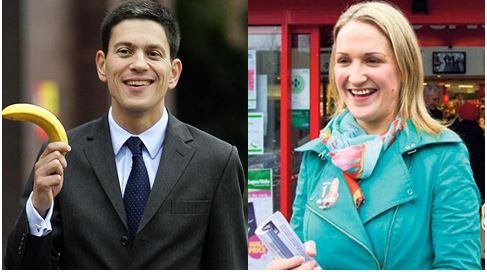
Miliband and McEntee – Milintee?

Not surprisingly, most of the commentary on the Meath East by-election result has focussed on the electoral drubbing meted out to the Irish Labour Party, but as Fergus Finlay pointed out in the Irish Examiner, Labour has been here before. Back in 1983, at the Dublin Central By-Election occasioned by the death of George Colley, Labour’s then candidate Jimmy Somers was beaten not only by the Workers’ Party (ironic) but by Sinn Fein in an area where Labour had until recently held a seat.

This nice analysis piece penned by the late Mary Raftery for MaGill at the time is worth reading and contains some phrases we have seen used a few times over the past week, including: “The by-election result was one of the most disastrous in Labour’s history” and “…a humiliation from which it will be difficult to recover.”

While Labour’s poor showing and Fianna Fáil’s continuing electoral recovery are the two main national lessons to be taken from the Ashbourne count centre, I want to briefly reflect on another less obvious one.

On almost precisely the same day as Fine Gael’s Helen McEntee entered full time national politics on this island, another politician was leaving it on the neighbouring island: David Miliband.

So what could these two events have in common? Well, not a lot really – but it did occur to me that Miliband, aged 48, was quitting politics at an age when politicians used to once enter politics.

In that regard Ms McEntee and Mr Miliband do have something in common, two things actually. First they both entered their respective parliaments at a relatively young age – Ms McEntee at 26 and Mr Miliband, slightly later, at 36 and second, neither had much real world experience outside of politics before entering parliament.

Essentially both were products of the political system, albeit at differing levels and grades. After completing her masters in 2010 Ms McEntee worked as a parliamentary assistant in her late father’s constituency office, while David progressed from Oxford and M.I.T to becoming Tony Blair’s head of policy via a stint at the Institute for Public Policy Research.

Neither had, to use the American phrase, “ever made a payroll”. While in America that is taken to mean running a business and being responsible for paying and employing people, in this context we can use it to mean experience of the real world, getting a job, getting promoted, running a household, paying a mortgage, providing childcare and then education for your kids.

Not that experiencing some or all of these necessarily qualify you to become a full time public representative, but wouldn’t some understanding of these help? Not that I am disregarding the pressures and difficulties faced by students these days. Frankly, as bad as the 70s and 80s were, I daily thank heavens that I am not a student in today’s environment.

Neither is this a plea for the Oireachtas to be full of 50 and 60-somethings or an attack on anyone under 25 running for the Dáil.

Rather I am just sounding a small note of caution against what I perceive as an emerging phenomenon here of people going almost straight from college into full time politics. Over the past two decades the number of jobs and opportunities in full time politics have increased. Since the early 90s the world of politics has become more professionalised with TDs and Senators now being able to employ parliamentary researchers and assistants paid for from the public purse. Not that I am one to complain having been a beneficiary of this development.

But with the creation of these additional opportunities it now seems the most successful path into the Dáil runs as follows:

University → elected as party officer – Job in Leinster House → Special Adviser → TD.

We risk having cohort of potential TDs (and Senators, if it survives) who have almost all followed the same real-life free path. Look at the UK and see how many of the men and women on the Tory and Labour benches fall into this category. While they may represent different political parties and support competing policies they essentially come from the same political background – all university educated, essentially middle class and all from within the political process.

Already we see the parties here looking out for new, young, vibrant candidates – and that’s a good thing. But what we also see is these candidates being identified earlier and earlier and based on criteria that are hard to understand.

Perhaps it is their newness and inexperience that is the attraction: a fresh clean slate for the party leadership to control and etch its views, coupled with a personal history that is free of controversy because its brevity presented damn all opportunity for it.

Turning back to Meath East, maybe it was just campaign hyperbole, or his penchant for the grandiloquent, that prompted Enda Kenny to describe Helen McEntee as “one of the most brilliant young candidates I have seen in any election” during an exchange in the Dáil on the day before polling. But what was there in her achievements or utterances that justified this high praise?

Is she a smart, confident and well educated woman, yes, without a doubt… but one of the most brilliant… in any election? Did we see anything in either the Vincent Brown or Primetime debates to support this claim?

Yes, there is a place in full time politics for young people and yes they deserve a major say in how their future is shaped, but we need to ensure that the search for the ideally packaged and presented candidate is not done at the cost of selecting those with more experience of life.

Have we in Fianna Fáil survived our election punishment beating?

My column from yesterday’s Evening Herald (21/Feb/13) taking a very personal look at where Fianna Fáil is today; almost exactly two years on from the political meltdown of Election 2011 

Sums up the the response in many places in 2011

——————————————————————————————————————

Though I don’t share his politics I like John O’Farrell. O’Farrell, whose father hailed from Galway, is a comedy writer and British Labour Party supporter who is now their candidate in the Eastleigh by-election.

My reasons for liking him stem not just from his days as a script writer on Spitting Image but from his hilarious 1998 memoir: Things Can Only Get Better: Eighteen Miserable Years in the Life of a Labour Supporter.

In it he details the disappointments, frustrations and the heartache he endured at all levels of the Labour Party until he came to realise that “Michael Foot would never be Prime Minister… and that the nuclear arms race was never going to be stopped by face painting alone.”

A few months after the punishment beating that was Fianna Fáil’s 2011 General Election result I started to wonder if I should start work on my own homespun version.

I toyed around with several possible titles, including: I Thought That Things Could Only Get Better: Boy, Was I Wrong or Fianna Fáil: the view from the edge.

The idea never got beyond a few lines on the PC screen, however. This was partly due to my not seeing anything even vaguely humorous in my situation, but also to me not knowing any publisher sufficiently cracked to commission it. Back in 2011 it was hard to imagine a market for such a work.

I also had a slight suspicion that the party was not yet ready for the scrapheap, nor for 18 years in the wilderness.

Yes, it was in bad shape – very bad shape. Not just the organisation, but the people too. Friends and colleagues who had worked in politics were shell shocked by the result. Not just elected reps, but people on more modest salaries working behind the scenes. Researchers, press officers, organisers and administrators. Losing 51 seats meant HQ shedding staff over half its staff.

But along with this loss, a loss that many hundreds of thousands of other people have had to face, was the realisation that people of my vintage were the ones who had allowed the decline to happen: we could be the generation that not only wrecked Fianna Fáil, but damaged the values on which it was founded.

This is not to underestimate or disregard the mistakes we made and the anger we caused to those people whose support we had sought and won over the decades. Nor is it a plea for pity. It is just to acknowledge that the 2011 defeat had real consequences for many of us.

While there were reports of some particularly heated and fraught exchanges during the campaign, what I experienced at the doors was a harsh coldness. The voters had long since made up their minds on Fianna Fáil – we had let them down badly and we would pay the price.

I suspect many voters even surprised themselves with the scale and magnitude of the Tsunami that engulfed Fianna Fáil two years ago.

Two years is not a long time in the life of an established political party. While the coldness and mistrust may have thawed somewhat, there is still a lot of real anger out there that will take a long time to address.

This should not be confused, however, with the contrived disdain that characterises some people’s attitudes to Fianna Fáil. As Sean Gallagher discovered during his presidential bid, it is now almost McCarthey-esque. You can talk about us in a way that you could not about almost any other group.

It ranges from the scorn that perceives FF as unprincipled, gauche, maybe even a bit NOCD (not our class dahling) to the more visceral anti Fianna Fail-ism that sees us all as chancers and strokers.

But for as long as I know that I am in a party that works to give people the means and opportunities to succeed, I reckon I can live with that.

ENDS

It’s petty settling these old scores incognito Chris

My column on the Chris Andrews Twittergate fiasco from today’s (Mon August 13th 2012) Evening Herald

Anonymous Tweets

I am not exactly sure how I feel about Chris Andrews today. I have known him personally for over 25 years. We are near contemporaries. I have campaigned alongside him and, on a couple of occasions, for him. He managed to so something I repeatedly failed to do: to get elected.

In his case that meant serving as a Dublin City Councillor and a TD for the Dublin South East constituency. His defeat in the great Fianna Fáil wipeout of February 2011 was not a reflection on his work as a local representative.

He came closer than many to hanging on in a constituency that has not be traditional FF territory. His work rate meant that the tide which engulfed him was not nearly as severe as that which washed away so many others.

For these reasons I feel sorry to see him exit politics.

But there is another side too. Like many of his friends and supporters I am deeply angered by the report in yesterday’s Sunday Independent of his antics in setting up a fake twitter account to attack Fianna Fáil.

This anger is twofold. It is an anger at his actions and his attempts to glorify them by presenting himself now as some victim, but it is also an anger at his betrayal of the trust of supporters and colleagues, like me.

No matter how much he may seek to convince himself otherwise, Chris is no victim.

He is no principled dissenter or critic being silenced out by an intolerant leadership. His actions were petty and self serving. He hid behind a fake account (@brianfornerFF) and sniped at perceived political rivals in the hope of bringing them down and advancing himself.

I engaged with his fake persona on Twitter a few times, mistakenly believing it what that of a disillusioned young member. After a few exchanges I quickly realised that it was nothing of the sort, though I never suspected it was Chris.

There was nothing noble or admirable in his comments, Most were just bitchy and sneering rants at colleagues. The only “political” thread in his exchanges with me was his expressed disdain for political dynasties, a little ironic now given the source.

The comical point in all of this is that the real Chris Andrews and I were exchanging messages on twitter at the same time as the fake tweets.

I, like others, had become an audiences for Chris’s one man performance of his own “Philadelphia Here I Come”. Unlike Friel’s “Gar Public” and “Gar Private” his were not the inner and outer voices of the same person, one expanding upon and setting the context for the utterances of the other.

Quite the opposite. While “official Chris” publicly expressed support and praise for the party “Continuity Chris” was lashing out at those seeking to reform and rebuild. He did occasionally take pot shots at the leadership and senior figures, but his targets were mainly local.

It was all a game, and a pointless one at that.

There was no great point of principle at stake here. His attacks and indeed his departure was not about the party’s stand on the Fiscal Treaty Referendum, no more than it was about its support of Gay marriage or a reformed Seanad.

This was about high politics or the future, it was about low politics and the past. It was about settling old scores and doing it out of sight, hidden behind a screen.

It was about the worst of the old politics, which makes his parting shot, his suggestion that dissent and criticism is not tolerated in FF, all the more galling.

Because of his age, his location and indeed his background Chris was uniquely placed to play a part in crafting and determining whatever future Fianna Fáil may have. The pity is that he rejected that opportunity – it did not reject him. This is what makes me both sad and angry.

Results of my online poll

Here are the results of my online poll. Over 360 visitors to the webpage in last two days – thanks for the 247 votes cast and for the comments posted.

I am not claiming this as scientific, just indicative…. maybe most indicative of just who follows me on Twitter and Facebook

You can print out the results in a PDF document fromhere: Impressed Most Poll

The question posed: Leaving aside whether you voted Yes or No who impressed you most during the Fiscal Treaty Campaign (Pick 3)


Total Votes 247

%


1

Micheál Martin

21.86%

2

Declan Ganley

14.17%

3

Michael McGrath

14.17%

4

Simon Coveney

13.77%

5

Mary Lou McDonald

13.77%

6

Joan Burton

5.67%

7

Gerry Adams

5.26%

8

Enda Kenny

4.45%

9

Shane Ross

2.83%

10

Eamon Gilmore

1.62%

11

Joe Higgins

1.21%

12

Richard Boyd Barrett

1.21%


Who impressed you most during referendum campaign?

Independent Study Shows Ireland had 5th Highest Attendance at EU Council Meetings 2000 – 2010

The attached research paper Report on EU Attendance was conducted by Markus Johansson and Daniel Naurin of the Dept of Political Science at the University of Gothenburg and presented at the SNES spring conference in Uppsala 22-23 March 2011.

SNES (Swedish Network for European Studies in political science) is Sweden’s leading research network dealing with questions of European politics and governance.

The study examined 808 EU Council meetings between 2000 and 2010 and found that Ireland had one of the highest average Ministerial attendances at Council of Minister’s meetings, 5th out of the 27 member states.

The authors of the study argue that attendance is an integral part of EU engagement and reflects the priorities of the governments involved. Ireland’s position as 5th highest out of the 27 member states from 2000-2010 is a testament to Fianna Fáil’s committeeman to Europe and strong engagement

This exposes the hollowness of claims repeatedly made by Government Ministers and the Taoiseach that Fianna Fáil failed to attend EU meetings.

Rebel Ó Cuiv is risking a life in political exile

My column from today’s Evening Herald on Éamon Ó Cuiv’s Craggy Island Act

Craggy Island


If you think Fine Gael or Labour party backbenchers have it tough; spare a thought for Fianna Fáil’s sole backbencher: Éamon Ó Cuiv. He has been rarely out of the headliners since quitting as his party’s deputy leader and communications spokesperson.

Though he served as a Minister for the duration of the 1997 – 2010 Fianna Fáil led governments, it took a few disloyal acts as a back bencher to bring him to some form of public fame.

His newly found rebellious streak comes as a bit of a shock to those who remember his ministerial days, particularly his almost eight year stint as Minister for Community, Rural and Gaeltacht Affairs.

That department’s acronym (D/CRGA), coupled with his peculiarly laconic style, earned it the title Craggy Island during his tenure – though whether this was a reference to Fr Jack, Fr Ted Crilly or Fr Dougal was never fully established.

His reinvention as a latter day rebel is not his first metamorphosis. Despite his Man of Aran manner and demeanour he actually hails from the leafy and affluent, Dublin 4. His success at portraying himself as the archetypal westerner possibly owes as much to his lineage as it does to his conscious efforts.

His excellent track record as a public representation in West Galway, has gained him much respect in the party: almost as much as his position as Dev’s grandson.

This is the Catch 22 he seemed to have missed. While the reduction in the size of the parliamentary party has made him a bigger player, the cachet his political heritage confers is also somewhat diminished. The events of the past few years have reduced the currency value of dynasties in the new leaner Fianna Fáil. Isn’t the concept of dynasty incompatible with a truly republican party?

His outspoken comments on Europe, urging the party to a more Tory-esque euro sceptic position have not been the rallying cry he may have hoped for. Many share his view that Europe has not been working together in partnership or solidarity. They see that Europe’s “failure to act decisively and cohesively damaged its reputation and standing amongst its own citizens”.  But they do not see voting No as the logical or sane answer to that problem.

I put that last line in quotes as, significantly, it does comes not from an Ó Cuiv speech, but rather from Michael Martin’s February 9th address to Institute for International and European Affairs, Dublin.

Ó Cuiv’s belief that he is the lone voice criticising the EU does not stand up. Despite his contentions, voting Yes does not require one to draw a veil over the glaring flaws in what the EU have done in addressing the European banking and economic crisis.

While many in the party may be prepared to allow him the occasional euro-sceptic outburst, they draw a definite line at his idea that Fianna Fáil should be cosying up to Sinn Féin. That is simply not on the table for the vast majority of the party’s public representatives at national and local level.

While some see Ó Cuiv’s grá for such an arrangement as a product of the shinner’s relative weakness in his bailiwick, others suggest it exposes his ill-founded, romantic notions of reuniting republicanism.

The Shinner’s provo-ism is the antithesis of Fianna Fáil’s republicanism. The two strands are simply incompatible and have been for generations. For Ó Cuiv to imagine that they are reconcilable does a disservice to those who adhered to the constitutional republican path and underestimates the ambitions of those who espoused the provo alternative

The irony is that Ó Cuiv’s truculence runs counter to the approach his grandfather adopted. Dev believed that being an elected representative of a political party brought responsibility and required discipline. The party decided its policies behind closed doors and everyone stuck to the party line, whether they personally agreed with it or not.

While there is no desire to grant Ó Cuiv the martyrdom that some think he seeks, he may yet force their hand and find himself banished to a Craggy Island of his own making.

May 4th 2012