A brief history of the Fine Gael Heave #FGheave

cosgrave
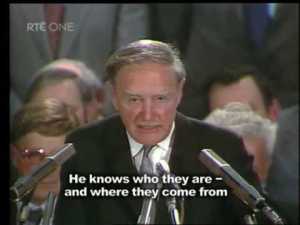
Cosgrave at a Fine Gael Árd Fheis

No one does heaves like Fine Gael does heaves. None of your subtle behind the scenes manoeuvrings for them. When it comes to getting political blood on the plush axminster the good folks at Fine Gael are major exhibitionists.

They have had plenty of heaves over the past forty years or so: most of them ill-judged, poorly timed and glaringly unsuccessful. The December 1972 heave against Liam Cosgrave is a good example of all three.

Fine Gael’s liberal wing wanted rid of the conservative, law and order Cosgrave. They complained that the party had failed under his leadership to capitalise on Fianna Fáil’s post Arms Crisis trials and tribulations, but the final straw was Cosgrave’s efforts to get FG TDs to back the government’s controversial Offences Against the State Bill – something they implacably opposed.

Cosgrave was effectively saved from the plotters by a loyalist bomb on Sackville Place that tragically killed two CIE busmen. The explosion took place just hours before the Dáil vote on the Bill. The Dáil adjourned to allow discussion between the parties. When it resumed, Fine Gael withdrew its opposition and abstained as Bill was voted through in an all-night sitting. Three months later Cosgrave became Taoiseach leading Fine Gael into government with the Labour Party.

Fast forward to 1980s and 1990s and we enter the golden age of the Fine Gael heave. The drama and intrigue within the Fine Gael parliamentary party was so intense that RTÉ ran a TV documentary series in 2003 about the period entitled: Fine Gael: A Family at War.

For about two decades the folks in blue were regularly sharpening their knives as they awaited the opportunity to dispatch their leaders. While Dr Garret Fitzgerald managed to escape their clutches his successor, Alan Dukes, had a less happy fate.

Dukes took over from Fitzgerald after the 1987 defeat. While he started out well, Duke’s Tallaght Strategy – a less formalised precursor of the current Confidence and Supply Agreement, which facilitated Haughey’s minority government – was not too popular with FG TDs.

One TD, Austin Deasy, was so incensed that he at first resigned in protest from the party only to return in 1989 and try, unsuccessfully, to oust Dukes. Deasy was a serial heaver, launching his first one first against Garret in 1982 and finishing up with his failed November 2000 one against John Bruton.

Dukes survived, but not for long. In a snap election in June 1989, Fine Gael regained only 5 of the 19 seats they lost two years earlier. The whispering campaign against Dukes was back with a vengeance with one back bencher remarking that if it was raining soup Dukes would be out there with a fork. Things came to a head in late 1990 when the party’s candidate in the presidential election came a very poor third behind Mary Robinson and Brian Lenihan Snr.

The result had hardly been declared when Fergus O’Brien, who had been demoted by Dukes, tabled a motion of no confidence. This was followed by a flurry of Fine Gael TDs rushing to the nearest journalist to unburden themselves. Dukes could not withstand the onslaught. Within days he resigned and was succeeded by John Bruton.

Now the Fine Gael heavers shifted into top gear. It seemed as if there was a heave brewing every few months. Bruton survived five leadership contests during his eleven years at the top. The sixth one, in January 2001, led by two political heavy weights Jim Mitchell and Michael Noonan succeeded in toppling him. Noonan took the top job, beating Enda Kenny, but his reign was short lived. FG’s defeat in the May 2002 election was so calamitous that Noonan resigned on the night of the count. He was succeeded by Enda Kenny.

As you can see from these examples and the June 2010 heave against Enda outlined in my Enda’s 3am question is still unanswered Broadsheet column: most of them fail. The ones that do succeed have the oblique backing of the person who hopes to succeed and are usually attempted when the party is in opposition – not in government.

This later point is perhaps not so relevant today. Fine Gael spent most of the 80s and 90s in opposition and were not in office long enough to have the time to consider it. It was these long periods of opposition – and powerlessness – that led to the heaves. The breaking point, in most cases, being a bad election result or a series of poor opinion poll results.

This heave is different or at least it appears different. Unlike heaves of the past it has been occasioned by an actual political event, namely the chronic mishandling of the Sgt McCabe debacle and the confusion about who told who said what and when and if they told the Taoiseach or just one of his Advisers.

But it would be foolish to think that electoral considerations are not also a major factor.
While Enda Kenny has made it clear that he does not intend to lead his party into the next election, the abiding fear among Fine Gael TDs was that events would overtake them and that Fianna Fáil would pull down the house of cards before Enda quits and they find themselves facing an election with Enda still in place.

Up to a few weeks ago, they assumed that Fianna Fáil was neither ready nor willing to trigger an election until 2018 – but a series of good polls for Micheál Martin’s soldiers of destiny has convinced already rattled Fine Gael TDs that Fianna Fáil was preparing itself to call time on the government.

The problem with this scenario is that it shows Fine Gaelers thinking like Fine Gaelers, not like Fianna Fáilers. Fianna Fáil knows well that voters tend not to reward parties who trigger unnecessary elections for partisan gain. Martin’s FF eschews the “cute hoor” tag that once bedevilled the party. When it eventually moves against the government it will be seen clearly do so on an issue of policy, not personality or partisan gain.

On a more practical front, 20 of Fianna Fáil’s 45 TDs are first timers. They are just starting to settle in after two or three years of intense campaigning to win those seats. They are not ready or prepared for an election yet. Most are now watching the turmoil in the FG ranks and trying to work out whether the election of Simon or Leo – or neither – means the election will be in May, June, September or later.

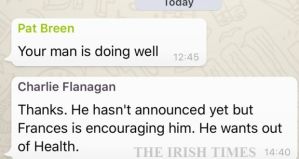
Meanwhile the rest should reach for the popcorn, scan our WhatApp to see if Charlie Flanagan is messaging us and just enjoy it all.
flanagan

Some understanding, but no grá for the GRA #Gardastrike.

This is my Broadsheet article from Monday, October 3rd, 2016

gardai-in-uniform-1878112If the Luas and Dublin Bus pay disputes are anything to go by then the choreography of future pay rows, particularly public sector ones, is likely to run as follows:
Step 1. Both sides negotiate for months without success.
Step 2. Employees go on a limited strike, inconveniencing the public
Step 3. The strike action continues for 3 – 4 weeks while both sides posture on TV and radio news shows
Step 4. Both sides then ‘suddenly’ return, without preconditions, to the negotiating table
Step 5. Employers find extra cash for pay increases they previously said was not there

Would it not be better for everyone, most particularly the public who these public services are meant to… well… serve…, if the unions and management could just skip steps 2 and 3 and jump straight to step 4?

Continue reading “Some understanding, but no grá for the GRA #Gardastrike.”

The decline of public language in politics is coming to Ireland

This is my Broadsheet column from just over a week ago – September 12th 2016 – it concerns the then MoS John Halligan will he/won’t he resign saga. Though he didn’t resign, keep this one on file for the next time this political soap opera comes around. The original column can be viewed here: www.broadsheet.ie/in-a-field-of-his-own/ 

——————–

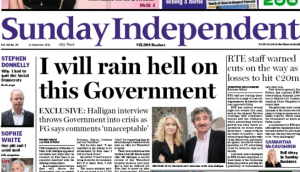
rain-hellThough he may not realise it: John Halligan’s pronouncements over the weekend (such as the headline [left] in the Sindo) may just be a very small part of a world-wide phenomenon.
No, I am not claiming there is global movement to secure a second catheterisation (cath) lab for Waterford. What I am saying however, is that his statements, particularly his most recent ones, contain many of the elements of the decline of public language in politics that we have heard elsewhere.

I accept that Halligan and the local consultants in Waterford hospital are sincere in desperately wanting a second cath lab, but wanting something is not the same as needing it – especially when resources are not unlimited.

Continue reading “The decline of public language in politics is coming to Ireland”

Special Advisers #Spads can play an important and positive role in government

Here is my Broadsheet column from September 5th 2016. This looks at the important and positive role Special Advisers (Spads) can play in government, particularly a partnership one. www.broadsheet.ie/treated-like-interlopers/

——————-

sycamore-room
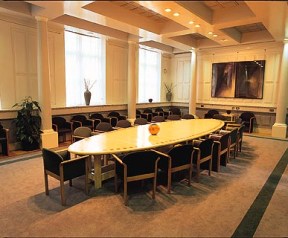
The Sycamore Room in Dept of an Taoiseach where the Advisers meet

“To provide spurious intellectual justifications for the Secretary of State’s prejudices”

This is how the late Maurice Peston (father of ITV’s political editor Robert Peston) responded in the early 1970s when a senior UK civil servant asked him to explain how he saw his role as Roy Hattersley’s newly appointed Special Adviser (Spad).

It was more than just a casual witty remark from the Professor of Economics: it specifically referenced the fears the Department of Prices and Consumer Protection had about having an acknowledged policy expert in their midst and gainsaying their more generalist advice.

Continue reading “Special Advisers #Spads can play an important and positive role in government”

.@RealDonaldTrump is Riding A Zeitgeist Didn’t Create But Others Have Missed

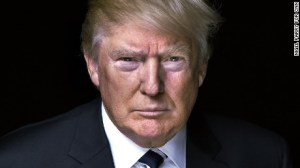
donald-trump CNNHere is my Broadsheet column from June 7th 2016. Published online here:  http://www.broadsheet.ie/riding-a-zeitgeist 

——————————–

“Donald Trump looks as if he was playing a President in a porn movie.”  This was Scottish comedian Frankie Boyle’s scathing put down of the Donald on BBC radio four’s News Quiz last Friday.

Maybe it is something to do with the Donald’s addiction to calling everything ‘huge’ (or as he says it: huuuuuge ) and lauding his own achievements with outlandish superlatives but Boyle’s taunt perfectly captures Trump’s OTT and hammy public appearances.

Trump’s emergence as a real contender for the White House has surprised most pundits including – if one of his former publicists is to be believed – himself.

How could this gauche, egotistical, property dealing demagogue tear up the US presidential campaign playbook and beat a string of long established Republican hopefuls?

Hard though we may find it to comprehend from this side of the Atlantic; but part of the Trump phenomenon is that he has teed-up this US presidential election to be a fight between the Washington insider: Hillary Clinton and the outsider: Trump.

Continue reading “.@RealDonaldTrump is Riding A Zeitgeist Didn’t Create But Others Have Missed”

Alan Kelly: @labour’s unpopular populist? (From @broadsheet_ie)

DSMooney_Bio_PicThis was my first column for Broadsheet.ie

“There’s no Labour problem that Ken (Livingstone) can’t make worse.”

This was Alan Johnson’s response to the former London Mayor’s latest unwelcome intervention in a UK Labour row.

Substitute the name “Alan Kelly” for “Ken Livingstone” and Johnson’s axiom could just be as applicable here.

Perhaps it’s his pugnacious ‘I tell it like it is’ style, but Alan Kelly has come to be personally identified with two of the last government’s biggest political failures: Irish Water to the housing crisis, not to mention his “power is a drug… it suits me” interview or his penchant for adding to his own party’s travails.

Continue reading “Alan Kelly: @labour’s unpopular populist? (From @broadsheet_ie)”

My #af14 analysis: @fiannafailparty’s future depends on delivering a coherent alternative

This is an article I have written for the March 2014 Árd Fheis issue of Fianna Fáil’s members’ magazine Cuisle

————————————————————————————————–

BjNAsq0IcAAMTFkA few months before the 2011 election, Michael Gallagher (the TCD Professor of Politics, not the Donegal postman and amateur weather forecaster) posted a blog where he asking how long Fianna Fáil could expect to spend in opposition. In it he wrote:

“Fianna Fáil is not a party accustomed to spending time there. Its longest spell on the opposition benches is still the nearly six years between its foundation in May 1926 and its entry into government in March 1932. Since then, the party has never spent more than one consecutive Dáil term in opposition and the longest spell it has been out of power remains the 4 years and 4 months of the Cosgrave coalition in the mid-1970s.”

Underpinning Gallagher’s 2010 comments is the idea that Fianna Fáil has never been that good at opposition. It is a fair point.

Not only have we not spent much time in opposition, as Gallagher points out, it is almost 30 years since we last spent a full Dáil term there.

Continue reading “My #af14 analysis: @fiannafailparty’s future depends on delivering a coherent alternative”

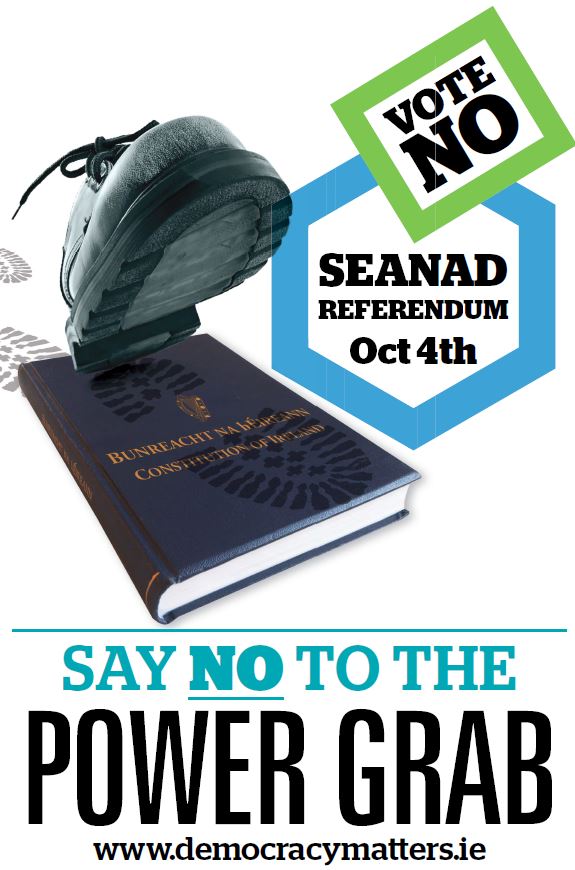
Download #seanref #seanad information booklet here…

Download the Seanad Information Booklet produced by Democracy Matters!

Seanad Reform Information Booklet


Powergrab

An analysis of @REDCMD @pppolitics poll & why the @fiannafailparty leadership is not an issue

RedC Polling
RedC Polling

Today’s RedC poll for Paddy Power brings very little good news unless you are an independent or a don’t know. The unadjusted core figures rank the parties in descending order as:

Fine Gael                   23%

Fianna Fáil                18%

Don’t Knows            18%

Independents         17%

Sinn Féin                    13%

Labour                          9%

After adjusting the figures by excluding 50% of the don’t know and adjusting the other 50% back to how they voted in 2011 the ranking positions stay the same. Only the relative gaps between Fine Gael and Fianna Fáil and between Fianna Fáil and the Independents widen.

Fine Gael                  29%

Fianna Fáil               22%

Independents        21%

Sinn Féin                  15%

Labour                      11%

Sinn Fein’s lead over Labour remains at a steady 4%. While this may, at first glance, suggest some good news for Sinn Féin, the party has been in this territory before only for its good polling numbers to fail to translate into votes.

Back in December 2010, on the eve of a general election, three polls showed the party in the mid teens.  A Red C Poll for The Sun on 03/12/2010 gave the party 16%. The MRBI/Irish Times poll on Dec 16th put it on 15% while a third, the Red C/Sunday Business Post poll of December 18th put its support at 14%. On polling day, two months later, the voters gave it 9.9%.

This is not to discount its advance since. Sinn Féin has been consistently polling in the mid teens since September 2011. That said, though an Irish Times poll in early October 2011 put party support at a hefty 18% its Presidential candidate and possibly most charismatic figure, Martin McGuinness still could not get the party’s actual vote past the 13.7% mark in the ballot boxes a few weeks later.

Despite its considerable and well resourcing organisation it seems to still have a problem translating favourable poll numbers into actual votes.

Though of cold comfort to Fianna Fáil it does not, at least, have this particular problem. The MRBI/Irish Times and Red C/Sunday Business Post polls conducted on the eve of the 2009 Local elections put Fianna Fáil’s support at 20% and 21% respectively. On polling day, the party managed to scrape its way up to 25.4%.

Fianna Fáil problems are more significant. While it has won back some of its lost  “soft” support and pulled itself up from the 2011 hammering it has yet to say or do anything substantive to win back many of those who had voted for it in 2002 and 2007 but rejected it in 2011. There is nothing to suggest it is doing any better with potential first time voters either.

Despite the speculation of last weekend, Fianna Fáil’s problem is not its leader. The notion that Fianna Fáil picking a new leader whose only virtue is that they were not a member of the previous government is almost laughable. Surely no one in the party or the commentariat is delusional enough to think that the electorate is so naïve that it will flock to Fianna Fáil’s cause just because it has a leadership team devoid of anyone who served under Ahern or Cowen?

Despite its apology and acknowledgement of past mistakes, Fianna Fáil has yet to present a researched and substantive alternative policy programme. It has come up with some good micro-policies, not least its family home protection and debt resolution Bills, but many have been light on substance and appear to have been produced as well intentioned responses to specific representative groups, e.g. the Mobile Phone Radiation Warning Bill

Try finding the party’s April 2013 Policy Guide on its website. It is there, but you have to know what you are looking for to find it. Click on the “issues” button on the homepage and you get the Spring 2012 version, to locate the latest version you need to do a search for it by name.

The April 19th 2013 document shows the party has been doing some serious work on policy, but you would be hard pushed to know it from the statements coming from its spokespeople. These still read as knee jerk responses to government statements rather than as co-ordinated parts of a coherent alternative. Fine Gael may have gotten away with tactic this during its time in opposition, but Fianna Fáil does not have the luxury they had: a Government unwilling and unable to communicate with its own supporters.

Perhaps the criticisms of a small and possibly over stretched clique around the leadership have some basis in reality, but as someone who has spent a long time around the party, on both the inside and outside tracks, I think the problem lies elsewhere.

Michéal Martin has shown a remarkable capacity for getting out and about and engaging with members and voters alike, it is curious, therefore, to read of him being less engaged and accessible to members of his own very diminished parliamentary party.

Might I suggest that the fault lies on both sides. Yes, he should be having regular one to one meetings with his 33 parliamentary colleagues – God knows there are not that many of them to make such regular meetings impractical – but they too should be engaging with him.

The traditional deference to the leader needs to change. Gone are the days when you had to wait ages to have an audience with the great leader as he busied himself with the great affairs of state in the Taoiseach’s office. Parliamentary party members have the opportunity for unique access, let them use it. A minority can only exercise sole access when allowed by the majority indifference or reticence.

Despite the job losses and the massive reduction in resources, there still appears to be a sense that the party structures are operating and running as if the party is still as big as it once was. Worse still many of those working those structures have no sense memory of how the party should operate in opposition.

A small number of paid officials are being expected to do the party’s policy research and formulation with minimal input from a vast array of experts across the volunteer membership. Too much power and control is being retained around the centre and around Leinster House: not by the leadership and his supposed clique, but also by members of the parliamentary party who are criticising him for just that.

I am old enough to remember what was put in place between 1982 and 1987, the last time the party was truly in opposition. Back then a series of policy committees were established by the leadership and mandated, working with the various spokespeople, to produce credible and researched policies for submission to the party for adoption.

These committees worked with the TDs and Senators but were not run by them. Outside experts were brought in to assist and work with them.

To borrow a phrase from Fianna Fáil’s past – the phase of its recovery will be dependent on policies and substance – not personality. The party already has the potential to bring itself back into the upper 20s in terms of actual voter support – the question now for the leadership and the party as a whole is if it has the energy, expertise and inclination to innovate the policy approaches that could bring support up into the 30% plus range.

That is the challenge ahead.

Scrap the #Seanad? No, we need a new, revamped one more than ever

Sorry for being late in posting this – it is my Herald column from last Friday, May 24th, on why the the Government’s plan to abolish the Seanad is as far from reform as it is almost humanly possible to get 

——————–

Democracy Matters! Campaign

Next week the Government publishes the legislation that paves the way for a referendum on abolition of the Seanad later this year.

Last week the same Government supported a proposal from independent Senators not to abolish the Seanad but to reform it.

So how can they advocate two such contrary positions within two weeks of each other?

The answer is simple – abolition is not as simple and straightforward as originally thought. It does not mean just rubbing out a few words in the Constitution: it will require about 75 individual amendments.

The origin of all of this is a Fine Gael knees up back in October 2009. That is where Enda Kenny made the surprise announcement that he planned to scrap the Seanad. His new policy came as a surprise as only three months earlier his policy was that it be given greater powers and become a forum on European issues.

So what happened over those summer months, when neither the Dáil nor Senate were sitting, to change Enda’s mind? Nothing it seems, apart from being upstaged by Éamon Gilmore and growing criticism within Fine Gael of his leadership.

Enda needed a soft target – and the slow, lumbering Seanad obligingly painted a nice big un-missable bull’s eye on its own backside.

While it is difficult to present an argument for retaining the Seanad as it is: with most of its members elected just by TD’s and Councillors, that is not the same as saying that we do not need some form of a Second House of Parliament.

Despite its faults, the Seanad has served the country well. It has been a champion of reform and minority rights in a way the Dáil has often not. To quote the President, Michael D Higgins from a 2009 Dáil debate: “historically, the Seanad has been the place where there has been legislative innovation.”

Indeed it has, even with its antiquated system of having 6 seats elected by University Graduates and the Taoiseach nominating 11 members. It has allowed many voices and views from outside the political mainstream not only to be heard but to have a say: from W B Yeats to Seamus Mallon to Éamon de Buitléar to David Norris.

The value of having a second chamber to revise laws and give proposals further scrutiny can be demonstrated with one simple statistic. Since 2011 the Seanad has made 529 amendments to 14 different laws passed by the Dáil with inadequate scrutiny.

Without a Seanad or Second chamber those defective laws would have passed on to the statute without correction.

In today’s Ireland we need more scrutiny and oversight – not less. Abolition strengthens the old system. It means fewer new voices. The answer lies in reform, not abolition: open up the system, don’t close it down.

We need a reformed Seanad that makes those in power accountable. We need a reformed Seanad that has a gender balance. One where all of us, not just an elite, get a vote, including people in the North and those forced into emigration.

These basic, but effective, reforms could be made without a referendum and major constitutional change. All that is required is a Government that has the will to make that change.
Enda Kenny is doing this the wrong way around. We should learn from the Canadian Prime Minister, Stephen Harpers who told his people “…that our Senate, as it stands today, must either change… or vanish.”

We should be given the option of change.

Instead, the government will spend millions on a referendum that only offers a sham choice between keeping something that we know is not working as well as it could and handing its powers and resources over to a Dáil that has proved itself less than capable of holding Government to account.

Have we learned nothing from the crisis?

Do we want to fix the system or merely consolidate it?

My latest column in Friday's Herald
My latest column in Friday’s Herald