
#LE14 changes expose the big weakness in Government’s #Seanad Abolition case

Phil HoganOn Thursday last the hopes and political aspirations of many hundreds of aspiring and existing City and County Councillors were either dashed or revived with the publication of the new local government electoral boundaries.

Within seconds of being posted online the reports and maps containing the details of the new wards and local areas were being downloaded by political junkies and local election hopefuls across the country, looking to see how the new boundaries would impact on their community.

While these changes, reflecting shifts in population measured at the last Census, are always anxiously awaited, this review had a particular significance as it had been heralded by the Environment Minister as important next step in the Government’s programme for local government reform. Unlike previous reviews this one had a specific goal of improving balance and consistency in representational ratios in local government.

This has been an issue for many years with huge variations in the size of local council constituencies between Dublin and many rural areas. While someone running for election in Dublin City would need 2,500+ votes to secure a seat, someone else running in Leitrim or Roscommon might only require 900 or so votes.

In order to redress this imbalance the Government decided to set terms of reference that reduced the ratio in certain rural areas and reduced it in Dublin. The net effect was that Dublin and other major urban areas get more councillors and many rural areas get less.

The net effect of this rebalancing coupled with the Government’s already stated policy of scrapping Town Councils is a reduction in the number of council seats from 1,627 to 949 and in the number of local authorities from 114 to 31.

This is a significant reduction and it is not going down too well across the country.

While much of the analysis of the review and the changes has understandably focussed on this particular aspect, there is another area which is also worth considering, in the contexts of the Government’s plans to propose the abolition of the Seanad in a referendum later this year.

In scrapping the town councils and reducing the number of local elected representatives so dramatically; have they – to use a phrase from a bygone Fine Gael era – just shot their own fox?

Over the past few weeks and months Fine Gael has been claiming that Ireland does not need a Seanad or second parliamentary chamber based on its size. They have been particularly eager to draw comparisons with a number of the Nordic countries, pointing out that they only have one Chamber and that their average number of national parliamentarians is 160. They even put this claim on their Seanad Abolition posters saying that its time that we too had “fewer politicians”.

The problem with this assertion is that it is just plain wrong. The comparisons Fine Gael try to make don’t work because they compare apples with oranges. They compare bicameral (two chambered) parliaments with unicameral (single chambered) ones and shriek with terror that the bicameral ones have more members – well, of course they have. They are two chambered.

What Fine Gael don’t tell you though is that this is just half the picture. While countries like Norway, Sweden, Finland and Denmark do not have an upper house of parliament, i.e. no Senate, they have far more powerful, advanced and resourced systems of local government instead. That is how they maintain the checks and balances essential to a proper democracy – balances this Abolition proposal will eliminate.

The statistics country by country are quite impressive:

  • Denmark has 98 local authorities and 2,500 local Councillors.
  • Finland has 304 local authorities and just under 10,000 local Councillors.
  • Norway has 423 local authorities and 12,000 local Councillors.

The most impressive one by far is Sweden. It has a whopping 50,000 public office holders.  In other words 1% of the entire Swedish adult population (ie between 18 and 80) is a politician.

Over 3,500 of these public representatives serve on regional council governments. There are 20 of these councils based on Swedish counties. But these are not our Irish county councils – these councils control local schools, health services and have the power to raise their own taxes. Below this regional government tier there are about 46,000 local Councillors running their own local municipalities.

Sweden has approximately twice our population. So to match the Swedish level of public access and participation we would need to create an additional 20,000 + elected positions. Even before Fine Gael put up a single poster we already had fewer politicians per capita than Sweden or any of the Scandanavian countries.

But Fine Gael has such a cock eyed view of its own logic that after the changes introduced by this government:

  • Ireland will have 31 local authorities and 949 Councillors.
CIMG0509
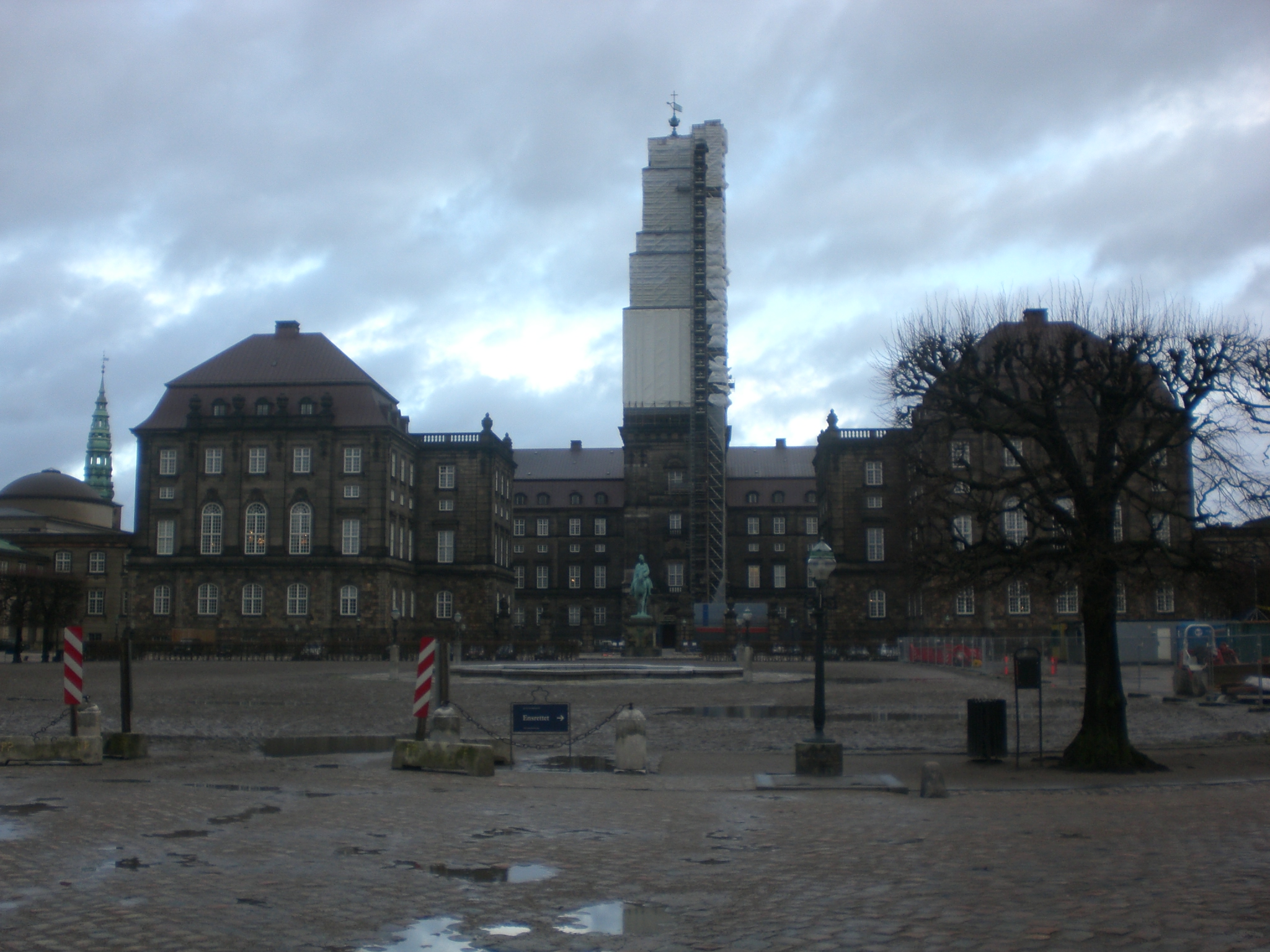
The courtyard of the Folketing (Danish Parliament)

Doesn’t this run counter to their argument? Surely the way to end elitism is to create more opportunities for access and participation – not less!

Doesn’t this expose and even widen a hole in the Government’s Abolition argument?

The Nordic countries may not have Senate, but they have a sound reason for not needing one. Their systems of government and administration are considerable more devolved than ours, with the Government and parliament retaining less centralised control over day to day services than we do.

In practice this means that the scrutiny and oversight we need to conduct in a Senate can be done by them at the local government level.

The Danish ambassador to Ireland, Niels Pultz, explained this approach in a recent column for the Irish Independent:“Another important fundamental in Danish politics is the division of labour between the national parliament and the local municipalities. The philosophy is basically that issues of importance to the daily life of citizens are best taken care of at the local level. That goes for primary and secondary education, social services, health, child care, local roads, water and waste management.”

If the government seriously believes that it can move our parliamentary system to resemble the Nordic model is it not going completely the wrong way about doing it?

ENDS
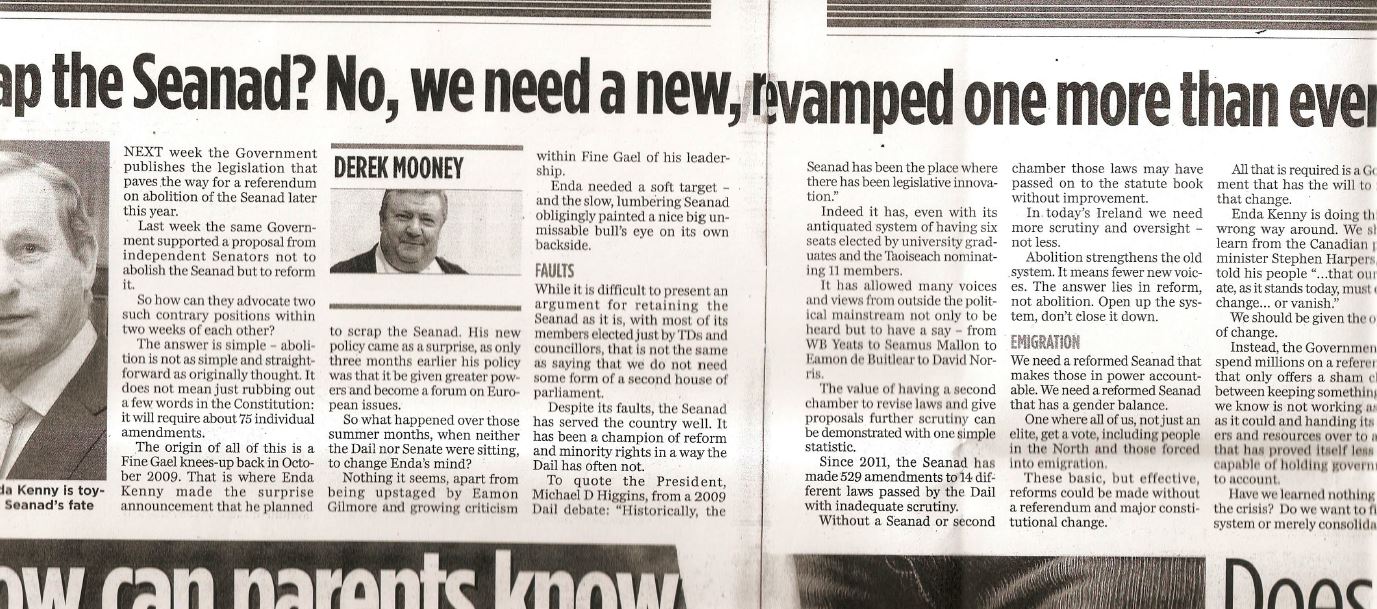
Scrap the #Seanad? No, we need a new, revamped one more than ever

Sorry for being late in posting this – it is my Herald column from last Friday, May 24th, on why the the Government’s plan to abolish the Seanad is as far from reform as it is almost humanly possible to get 

——————–

Democracy Matters! Campaign

Next week the Government publishes the legislation that paves the way for a referendum on abolition of the Seanad later this year.

Last week the same Government supported a proposal from independent Senators not to abolish the Seanad but to reform it.

So how can they advocate two such contrary positions within two weeks of each other?

The answer is simple – abolition is not as simple and straightforward as originally thought. It does not mean just rubbing out a few words in the Constitution: it will require about 75 individual amendments.

The origin of all of this is a Fine Gael knees up back in October 2009. That is where Enda Kenny made the surprise announcement that he planned to scrap the Seanad. His new policy came as a surprise as only three months earlier his policy was that it be given greater powers and become a forum on European issues.

So what happened over those summer months, when neither the Dáil nor Senate were sitting, to change Enda’s mind? Nothing it seems, apart from being upstaged by Éamon Gilmore and growing criticism within Fine Gael of his leadership.

Enda needed a soft target – and the slow, lumbering Seanad obligingly painted a nice big un-missable bull’s eye on its own backside.

While it is difficult to present an argument for retaining the Seanad as it is: with most of its members elected just by TD’s and Councillors, that is not the same as saying that we do not need some form of a Second House of Parliament.

Despite its faults, the Seanad has served the country well. It has been a champion of reform and minority rights in a way the Dáil has often not. To quote the President, Michael D Higgins from a 2009 Dáil debate: “historically, the Seanad has been the place where there has been legislative innovation.”

Indeed it has, even with its antiquated system of having 6 seats elected by University Graduates and the Taoiseach nominating 11 members. It has allowed many voices and views from outside the political mainstream not only to be heard but to have a say: from W B Yeats to Seamus Mallon to Éamon de Buitléar to David Norris.

The value of having a second chamber to revise laws and give proposals further scrutiny can be demonstrated with one simple statistic. Since 2011 the Seanad has made 529 amendments to 14 different laws passed by the Dáil with inadequate scrutiny.

Without a Seanad or Second chamber those defective laws would have passed on to the statute without correction.

In today’s Ireland we need more scrutiny and oversight – not less. Abolition strengthens the old system. It means fewer new voices. The answer lies in reform, not abolition: open up the system, don’t close it down.

We need a reformed Seanad that makes those in power accountable. We need a reformed Seanad that has a gender balance. One where all of us, not just an elite, get a vote, including people in the North and those forced into emigration.

These basic, but effective, reforms could be made without a referendum and major constitutional change. All that is required is a Government that has the will to make that change.
Enda Kenny is doing this the wrong way around. We should learn from the Canadian Prime Minister, Stephen Harpers who told his people “…that our Senate, as it stands today, must either change… or vanish.”

We should be given the option of change.

Instead, the government will spend millions on a referendum that only offers a sham choice between keeping something that we know is not working as well as it could and handing its powers and resources over to a Dáil that has proved itself less than capable of holding Government to account.

Have we learned nothing from the crisis?

Do we want to fix the system or merely consolidate it?

My latest column in Friday's Herald
My latest column in Friday’s Herald


Abortion debate will test Enda’s leadership over his backbenchers to the max

My Evening Herald column from tonight’s newspaper

=====================================================================================

In American politics they refer to a policy issue that is so controversial or highly charged that it is dangerous for any politician to dare touch it as a”third rail” issue. Third rail being a reference to the electrified third rail of a metro or train system.

Leaders’ questions….. or, questions for a leader?

As we have recently seen both here and in the US, abortion is just such a classic third rail issue.

The last thing the Taoiseach and his Ministers want right now is a divisive argument within the Fine Gael parliamentary party. The party leadership is determined to quell the growing unrest.

Over the past few days we have seen and heard a series of backbench Fine Gael TDs coming out to state their own views on what should be in and what should not be in the legislation the government must produce to comply with the European Court of Human Rights judgment.

But will Enda Kenny’s tough words from Cardiff yesterday, telling these TDs that they must back whatever legislation the government produces be enough to keep them in line?

Is this the Taoiseach being a strong and determined leader or it is him doing an impression of what he thinks a strong leader should look like?

At a parliamentary party meeting Last July it was reported that anywhere up to 15 TDs had put the Taoiseach on notice that they would oppose legislation that would pave the way for abortion.

More importantly, in the context of the current situation they sought assurances from Kenny that the findings of the expert group on abortion would be discussed with them before they were brought to Cabinet.

While they did not get that assurance, they will not be happy to see the Government adopt a position without proper consultation with them.

In fairness, the Taoiseach can argue that the tragic events of recent weeks have hurried matters along and robbed him and them of the time and space in which to consider the expert group’s findings.

But will this sizeable group of back benchers be calmed and silenced so easily.

The timing could not be worse with one of the toughest budgets this government is going to have to introduce barely a week away.

Yes, the government has a big majority, but it cannot afford to lose too many overboard. So far Fine Gael has lost one TD, over Roscommon hospital. Those this pales in comparison to the four TDs that Labour has lost, included two former Junior Ministers.

Is this really the best of times for a Taoiseach to be publicly warning TDs that they will be expected to vote the right way or lose the whip? It is hard to argue that your back benchers should be using the parliamentary party room to air their views in private when you deliver that rebuke yourself very publicly.

This is the second time, in just over a week, that we have seen the Taoiseach resort to such megaphone diplomacy. Last week it was his ill judged and, frankly, insensitive public call on Praveen Halappanavar to meet with the Chairman of the inquiry into his wife’s death delivered on the floor of the Dáil.

As we saw that call was particularly ineffective as Mr Halappanavar graciously, but firmly, resisted Enda Kenny’s entreaties to back down.

Will his call this week to his back benchers be any more effective? Only if it is backed up with direct contacts and clear communications from the Whip’s office.

Backbenchers do not like being taken for granted, especially when they feel the governments plans and ideas run contrary to those of their own grassroots. Enda Kenny needs to remember that real leadership is about more than just being seen to be in charge, it is about convincing people they are doing the right, not just telling them to do it.

Who impressed you most during referendum campaign?

Labour could be casualty in Treaty Yes vote

My Evening Herald column from today’s (Thurs May 24th) edition:

voting
Many different reasons to vote yes or no

With less than a week to go the referendum campaign seems more and more to be about less and less.

On the face of it, if you believe the posters, the choice is to Vote Yes to achieve stability or to Vote No to end austerity.

But do any of us really believe these claims? Regrettably, like previous EU referendums the debate has been conducted at the extremes, not the centre. It was the case in the Nice and Lisbon referendums, remember those “€1.84 Minimum Wage after Lisbon” posters?

Mercifully, we have been spared the malign input of Cóir and Youth Defence this time. The are no loss, especially as most of them wouldn’t know a treaty from a tea-bag (to rob a line I recently overheard)

But this absence of any significant ultra right involvement on the no side does highlight a curious undercurrent to the campaign, one, which I suspect, may be a factor in how some people decide how to vote next week.

While the slogans maybe about the EU and the Euro the referendum has morphed into a proxy battle on the future of left / right politics in Ireland.

From the start the battle front was drawn up along left versus right lines.

On the Yes side you had the right and centre right parties: FG, FF and Lab (more about them later), the employers’ and business organisations, the farmer’s groups and the more established/mainstream trade unions.

On the No side you had the socialist and hard left parties, People Before Profit, Joe Higgin’s Socialists, Sinn Féin, the more radical trade unions.

While the entrance of The Declan Ganley somewhat clouded the the Left/Right delineation, it hasn’t ruptured it.

The sight of him sharing No platforms with irredentist left firebrands is a joy to behold, especially when you consider that they agree on virtually nothing, including Europe. Most on the hard left are euro-sceptic while The Ganley is avowedly Euro-federalist.

While passing the Fiscal Treaty will herald no major day to day changes – mainly because it just restates the centre/centre right economic orthodoxy in place since 2008 – it will cement it into domestic law for the foreseeable future.

It is this that the left fears and opposes most.

Passing the Treaty would recalibrate the centre of the Irish political spectrum a few points to the right. It won’t be a seismic or noticeable shift, but it torpedoes the Left’s ambitions of shifting it the other way.

It doesn’t vanquish them, nor does it make them to tone the rhetoric down. If anything, it will do the opposite, but in their hearts they will know that their ambition to shift Ireland economically to the left has been reversed.

This explains why the campaign from Joe Higgins, Boyd Barrett and Sinn Féin has been so fierce. But not as fierce as when its over and they start to target each other.

I am not predicting that their poll rating drops are set to drop. They won’t. They will probably rise as voters use them to express their disapproval of government parties going pack on pre election pledges.

But the Irish electorate is sophisticated. It is overwhelmingly aspirational. This applies across all social classes and communities. They want their kids to do better than they did. That decides voting intentions more than anything.

In the meantime Sinn Féin will continue to do well at Labour’s expense, after all Gerry and Mary Lou are saying now what Éamon and Joan were saying two years ago.

It is Labour who will be the biggest casualty. Polls showing 40% of Labour supporters voting No could have longer term ramifications for the leadership. But whatever they may be, they can be so where near as damaging as Gilmore’s infamous “Frankfurt’s Way or Labour’s Way” slogan.

It may turn out to be the most devastating political slogan of recent times – devastating to its authors, that is.

Referendum is as much about Left vs Right as it is about the €

What will we be voting about on May 31st? It is one of the toughest Treaty referendum questions to answer.

European Central Bank
The ECB on Frankfurt’s Way?

If you are to believe the thousands of posters that adorn our street lamps we are either voting yes to stability and jobs or voting no to austerity. A simple enough choice… or so you’d think? Unfortunately, as the campaign progresses, it is becoming clear that neither the Yes nor the No poster claims stands up to much scrutiny.

Do we really think we will suddenly achieve stability and more jobs if we vote yes? I suspect that even the most ardent of yes voters believes that to be case.

On the other hand does the most convinced no voter think that the austerity measures, including household and septic tank charges will disappear if 50% plus one of us votes no? I doubt it.

So what are we voting about?

The best answer I have heard so far has not come from a member of government, the ULA or Sinn Féin. It came, peculiarly enough, from a Euro bureaucrat, a former member of the board of the European Central Bank member. Not the type of person you would expect to speak with simplicity and clarity, yet he did.

Speaking on RTE Radio One’s This Week programme, Lorenzo Bini Smaghi described the decision before us with a cheque book analogy. After years of having separate current accounts, he explained, the Eurozone countries have decided to have one current account and one single chequebook between them for certain purposes.

The risk with this is that any individual country could abuse their access and stick others with the bill, so it is important to agree a set of strict and enforceable rules beforehand. These rules are set out in the Fiscal Treaty. If you want to be able to use the joint account, you need to agree the rules. Refuse to agree the rules and you won’t be allowed near the chequebook.

It is a simple and effective explanation.

What we are voting about is our relationship with the Eurozone countries. Do we want to continue and strengthen that relationship or do we want to weaken it. This does not mean that voting No is the same as being against the Europe, but the choice we are facing has become starker than we would like it to be.

Ok. So now that I have attempted to make the issue a little clearer and get behind the hype and hysteria printed on the posters let me now reverse the process and confuse it again.

While much of the debate has been about the EU and the Euro let me point to another level in the debate. Though it does not get mentioned so much, this referendum has become a proxy battle on the future of left versus right politics in Ireland.

Before The Declan Ganley entered the fray the battle lines had been drawn up along clear Left/Right lines.

On the Yes side you had the right/centre right parties (FG, FF and even Lab), the employers’ and business organisations, the farmer’s groups and the more conservative trade unions.

On the No side you had the radical and left parties, People Before Profit, Joe Higgins Socialists, Sinn Féin, the more radical trade unions.

A Yes result would recalibrate the centre of the Irish political spectrum several degrees to the right. While this would not vanquish the left, it would limit their scope and hem them in.

This could help explain why Sinn Féin has been so fierce in urging a No. A Yes vote would place a definite ceiling on their ambitions and make the centre/centre right economic approach the norm for at least the next decade.

This would leave the hard left /socialist factions with no influence, just sitting on the sideline spouting rhetoric – so, no change there.

The main casualty could be Irish Labour Party, no matter what the result. “Frankfurt’s Way or Labour’s Way” may turn out to be the most devastating political slogan of recent times – devastating to its authors, that is.

Time to Postpone #EURef ?

Text of my Evening Herald column considering the consequences of the French & Greek election results for our forthcoming Stability Treaty Referendum vote

The EU political landscape has changed dramatically in the last 24 hours. The election of Francois Hollande in France and the defeat of the pro bailout parties in Greece will have repercussions far beyond the borders in both countries.

While both results will come as no great surprise to politicians who have been following the campaigns in France and Greece; it seems no one has given any serious thought as to what may now happen.

The focus of such thought, in so much as there has been any, has been on what Hollande might do to make good on his campaign promise to move the EU’s focus on to growth and investment.

There seems to have been very little thought as to what might happen in Greece. As recently as last week, pundits were citing polls that showed that up to two thirds of the Greek electorate accepted the need for a bailout.

Perhaps they did tell the pollsters that but, as we discovered last night, that sentiment did not transfer itself to the ballot box. The reality is that two thirds of Greek voters opted for anti bailout parties of various hues – from far left to far right, leaving the two pro bailout parties in tatters.

The net result, in the short to medium term, will be political stability that will make markets jumpy and herald problems for counties such as Spain and Italy when they go to the markets to borrow money.

The instability in the Eurozone that we thought had abated for a while looks like returning with a vengeance. M Hollande may not have time to set out his vision for a growth and investment plan for the EU – events may well overtake him.

Uncertainty may now be the name of the game in the EU and the Eurozone – yet the Government here seems to think that nothing that has happened in the last 24 hours has changed the mood music here.

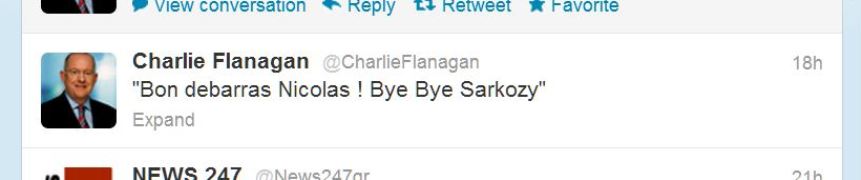
To judge from Tánaiste Eamon Gilmore’s comments the coalition government here believes that the result there has no consequence for the Stability Treaty referendum. The Tánaiste was in Paris, in a signal of European Socialist grouping solidarity, with PES colleague M Hollande. This contrasts with the fickleness of the FG party chairman,Charlie Flanagan’s “Bon debarras (Good Riddance) Nicolas ! Bye Bye Sarkozy” tweet last night.

@Charlie Flanagan FG Chairman
@Charlie Flanagan FG PP Chairman

In Feb 2011 Fine Gael were championing their relations with Sarkozy, Merkel and the EPP – now they deny their former friends. You could almost hear the cock crow three times.

I am no fan of the Stability Treaty. Like others. I believe it is a missed opportunity. It fails to tackle the root cause of the problems in Ireland and Europe – a failed and dysfunctional banking system. But I am not convinced that voting it down brings us one millimetre closer to resolving our problems.

I am a reluctant Yes voter. I hope that passing it may give Germany the cover it needs to allow real reforms to the European Central Bank and the Euro architecture,

For that reason I want to give the Treaty every chance to gain public support. I do not believe that ploughing ahead with a vote on a Treaty that may yet be further reformed – or even improved – serves any purpose. I genuinely fear that going ahead against a background of uncertainty and volatility puts the outcome in doubt.

It is not that I think the combined forces of Sinn Féin and the ULA will convince the people to vote No, but rather that the public will opt not to endorse a Treaty that may be defunct within weeks of passing it.

This is not a new fear. I wrote about the imprudence of holding the vote this early on my website some weeks ago. While I know many would suggest that postponing the referendum sends out the signal that the Government is weak, I think that is better than landing itself with a no vote based on bad timing.

While the Tánaiste is technically right in saying that we wouldn’t need to come back and vote again if a growth package were eventually added to the Treaty – can he really justify putting only half the question to a vote? Would it not be wiser, and more democratic, to wait a few months and put a definitive position to the people?#

It would require more courage and leadership to postpone the referendum than proceed with it. This just may be the reason why it doesn’t happen
May 7th 2012

Rebel Ó Cuiv is risking a life in political exile

My column from today’s Evening Herald on Éamon Ó Cuiv’s Craggy Island Act

Craggy Island


If you think Fine Gael or Labour party backbenchers have it tough; spare a thought for Fianna Fáil’s sole backbencher: Éamon Ó Cuiv. He has been rarely out of the headliners since quitting as his party’s deputy leader and communications spokesperson.

Though he served as a Minister for the duration of the 1997 – 2010 Fianna Fáil led governments, it took a few disloyal acts as a back bencher to bring him to some form of public fame.

His newly found rebellious streak comes as a bit of a shock to those who remember his ministerial days, particularly his almost eight year stint as Minister for Community, Rural and Gaeltacht Affairs.

That department’s acronym (D/CRGA), coupled with his peculiarly laconic style, earned it the title Craggy Island during his tenure – though whether this was a reference to Fr Jack, Fr Ted Crilly or Fr Dougal was never fully established.

His reinvention as a latter day rebel is not his first metamorphosis. Despite his Man of Aran manner and demeanour he actually hails from the leafy and affluent, Dublin 4. His success at portraying himself as the archetypal westerner possibly owes as much to his lineage as it does to his conscious efforts.

His excellent track record as a public representation in West Galway, has gained him much respect in the party: almost as much as his position as Dev’s grandson.

This is the Catch 22 he seemed to have missed. While the reduction in the size of the parliamentary party has made him a bigger player, the cachet his political heritage confers is also somewhat diminished. The events of the past few years have reduced the currency value of dynasties in the new leaner Fianna Fáil. Isn’t the concept of dynasty incompatible with a truly republican party?

His outspoken comments on Europe, urging the party to a more Tory-esque euro sceptic position have not been the rallying cry he may have hoped for. Many share his view that Europe has not been working together in partnership or solidarity. They see that Europe’s “failure to act decisively and cohesively damaged its reputation and standing amongst its own citizens”.  But they do not see voting No as the logical or sane answer to that problem.

I put that last line in quotes as, significantly, it does comes not from an Ó Cuiv speech, but rather from Michael Martin’s February 9th address to Institute for International and European Affairs, Dublin.

Ó Cuiv’s belief that he is the lone voice criticising the EU does not stand up. Despite his contentions, voting Yes does not require one to draw a veil over the glaring flaws in what the EU have done in addressing the European banking and economic crisis.

While many in the party may be prepared to allow him the occasional euro-sceptic outburst, they draw a definite line at his idea that Fianna Fáil should be cosying up to Sinn Féin. That is simply not on the table for the vast majority of the party’s public representatives at national and local level.

While some see Ó Cuiv’s grá for such an arrangement as a product of the shinner’s relative weakness in his bailiwick, others suggest it exposes his ill-founded, romantic notions of reuniting republicanism.

The Shinner’s provo-ism is the antithesis of Fianna Fáil’s republicanism. The two strands are simply incompatible and have been for generations. For Ó Cuiv to imagine that they are reconcilable does a disservice to those who adhered to the constitutional republican path and underestimates the ambitions of those who espoused the provo alternative

The irony is that Ó Cuiv’s truculence runs counter to the approach his grandfather adopted. Dev believed that being an elected representative of a political party brought responsibility and required discipline. The party decided its policies behind closed doors and everyone stuck to the party line, whether they personally agreed with it or not.

While there is no desire to grant Ó Cuiv the martyrdom that some think he seeks, he may yet force their hand and find himself banished to a Craggy Island of his own making.

May 4th 2012

Is Government the Biggest Threat to a Yes Vote?

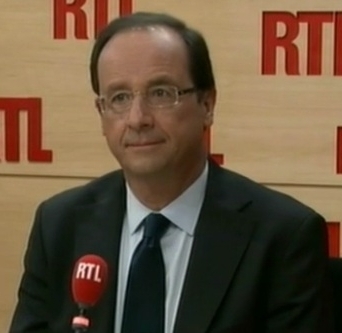
The next French President? François Hollande
(Photo taken from the Hollande Campaign site)

Though the early polls have been positive I am getting a sense that the No side may picking up some momentum as we near the May 31st polling date for the Fiscal Stability Treaty Referendum.

One of the main grounds for this sense of foreboding may indeed be the May polling date itself. I fear having the poll this early may prove the biggest threat to a Yes outcome for three reasons:

1. It allows no side to raise the prospect of a second referendum later in the year. The more astute and sophisticated side of the No campaign is starting to run an argument that goes as follows: We have voted twice on the last two EU treaties.In each case we have come back with a better deal the second time. This Treaty does not come into force until January 2013. We have the time to Vote No now and use the following months to go back and get a better deal and then Vote Yes later in the year. A late September polling date would have denied this argument to them

2. This Sunday see’s the first round of the French Presidential Elections, The Second roubnd of voting will be two weeks later at the beginning of May. While Sarkozy has had a good campaign to date and has closed the gap in the first round the polls there still suggest that Francois Hollande will win the Second Round by approx 55:45.Hollande is standing on recovery platform that rejects Sarkozy’s austerity plan and talks of renegotiating the Fiscal Compact,

While this position may be dismissed as a Gallic version of Gilmore’s “Frankfurt’s Way or Labour’s Way” – ie a promise that sounds good in the campaign but doesn’t survive past polling day – it does look like Hollande is serious. His determination to imeddiately set out a renegotiation the Fiscal Compact to include a growth programme, Euro Bonds etc has probably been strengthened by the attempts of Merkel and other Centre Right EU leaders to snub him.

We will be going to vote during the first days of a Hollande presidency, the background noise to ouyr vote to pass the existing threaty will be his moves to renegotiate that very treaty – almost making a farce of that vote. The politically astute move for our Government would have been to hold off until September and see if Hollande will make a difference.

3. The one great lesson learned from previous referenda, particularly NIce I & II and Lisbon I & II is that the public needs a longer run up/lead in period to tease out the issues. The traditional three or four week campaign has been found to be insufficient, particularly in the absence of “on the ground” campaigns.

Though polling day is about six weeks away there is little sign of that debate is starting yet. Will the Refendum Commission have the time to do the job? Based on the last referendums, it would certainly appear not.  The Tanaiste and Minister for Foreign Affairs had a thirty minute slot on RTE 1 last Saturday where he could have used 5/6 miinutes to explain why voting Yes is important. He didn’t. He chose instead to just give the poll a passing reference, 125 words in a script over 3100 words long. “referendum” featured only once in his script.

While the timing of the polling day is just one factor, it may prove a crucial one. The Treaty should stand or fall on its own contents alone. I am on record here as having my own qualms about the Treaty (see my post here on why I will be a reluctant Yes voter). The debate will be essential. This vote is not like others, we do not have a veto, we cannot delay or deny the progress of this Treaty by our vote alone. The EU has been horrendously slow to act to save itself from the start of this crisis. It has chosen the path of half measures over swift decisive action – usually at the behest of a Franco-German leadership that put domestic political considerations ahead of pan european ones. But we should not be blind to the developing EU real politik.

The appointment of Simon Coveney and Joan Burton as the Fine Gael and Labour campaign directors somehow does not imbue one with a sense of confidence. Coveney’s nomination does echo Charlie Haughey’s appointment of Paddy Lalor as Fianna Fáil national director of elections – a move that spurred the late Frank Cluskey to comment: “There’s confidence for ya”