Who would want to be a TD?

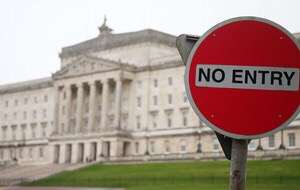
This column is from two weeks back (July 3rd, 2017) and is both a guarded defence of the political party system and a warning of the dangers of the constant desire of the hard left fringe parties to take politics out on to the street.  

It is said that France has the only “tricameral system” in the world – the National Assembly, the Senate and the Street – but history and experience shows that the Street has always been the biggest hindrance to reform. Origianl column online here: www.broadsheet.ie/who-would-want-to-be-a-td/

____________________________________

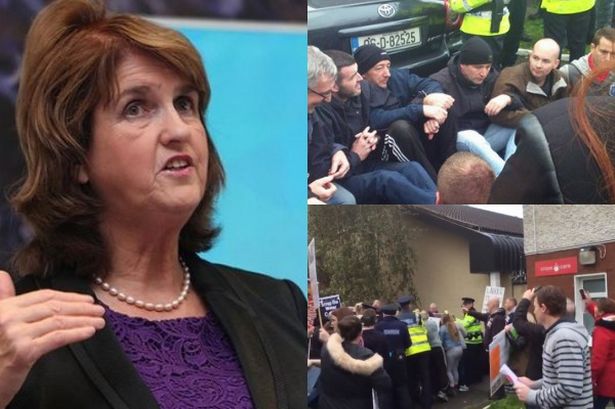
Joan-Burton-Collage
Collage pic from Irish Mirror


Who in their right mind would want to become a T.D.?

The pay is good, the perks are decent and the scope for promotion (career and ‘self’) is none too bad either, but can these incentives really outweigh the forfeiture of a private life, never mind the ongoing press, public and social media opprobrium whenever you express an opinion?

Shouldn’t politics be a vocation, not a career path?

The problem with that view is not just that it is naïve, it is that it simply won’t work. Try it and we end up with a Dáil full of only those who can only afford to be there by virtue of their profession, their families’ money or simple “pull” – by the way not all of them would be on the right, a fair few would also come from the comfortable left, but that’s just an aside.

Continue reading “Who would want to be a TD?”

The honeymoon for Leo was over… even before it started? @campaignforleo @FineGael

This column is from last month, June 19th 2017. In it, I looked at Taoiseach Varadkar’s first few faltering days in office and conclude that things have not been going according to his masterplan.

Even the more ardent blueshirt cannot call a cabinet that contains FG ministers who entered the Oireachtas in 1981 (Bruton), 1987 (Flanagan) and 1989 (Creed), 1992 (Fitzgerald) and 1994 (Ring) new or fresh.

Meanwhile, the Marie Whelan saga, which was not of Varadkar’s making, but his ownership of a move that looked suspiciously like a vintage political stroke, is now 100%

Original article here: www.broadsheet.ie/the-honeymoon-is-over/

____________________________________________________
Silage

“Silage and Ice-cream”.   This is how Audrey Carville defined the classic Irish Summer on RTÉ Radio One’s Morning Ireland earlier today.

And though silage was not exactly plentiful in the Liberties, Rathmines or even Yellowbatter in Drogheda during my childhood years, I think I know what she means.

Indeed, up to this morning I hadn’t realised that silage is spelled with just one “l”. Though I cannot recall using the word in many speeches, reports or articles I am virtually certain that I used two “l”s anytime I have written it.

I know for sure that I used two “l”s when I went searching for the phrase just before writing this piece, only to discover that the two “l”-ed version of silage, i.e. sillage (pronounced as if there were no “l”s at all in the word) is the word used to describe the lingering fragrance that someone’s perfume leaves in the air.

Silage and ice-cream may also be an apt phrase to describe Leo Varadkar’s first few days as Taoiseach.

The ice-cream has come in the form of the positive coverage his elevation to high office has generated, both at home and abroad, though that may be starting to melt a bit after two solid weeks of learning what a wonderfully precocious child he was and how he wrote his first letter to the Irish Times aged three, or whatever.

His first TV interview with Tommy Gorman was good. He was clear, concise and on top of his brief. The fact that he opted to do his first one-to-one TV encounter as Taoiseach with RTÉ’s northern editor was clearly intended to signal that the North would be a priority with this Taoiseach in a way that it had not been for his predecessor.

It was also interesting that he opted to set out his government’s policy approach to the North and re-unification himself having just appointed his rival, Simon Coveney, as the line minister dealing with the brief, a signal perhaps of things to come.

But, and not for the first time, a gap emerged between what he says and what he does. His decision to just meet with the leaders of two of the North’s five major political parties was not a good first move. In using his first actions on the North to meet with just Arlene Foster of the DUP and Sinn Féin’s Michelle O’Neill, and not to meet with the leaders of the other three centre ground parties: the SDLP, UUP and Alliance, the new Taoiseach was perpetuating the mistake made by recent Irish governments.

Yes, a deal on the return of Stormont and the Executive is not possible without the two big beasts of the DUP and Sinn Féin agreeing to again work together, but the smaller parties should not be taken for granted. Even the British government realised that when it invited all the parties to Downing Street last Thursday, not just the big two.

Taoiseach Varadkar made a silly unforced error in appearing to relegate the smaller parties to the second division of negotiation. Their participation in the institutions is as important and crucial as that of the DUP and SF. If anything, the events of the second half of last year suggest that it is even more important, as the two main parties seem unable to reach accommodations in office without the smaller parties there to give them cover.

Varadkar should know this. He sits at a Cabinet which could not continue in office if it were not for the involvement of smaller parties and Independents though, as we see from today’s latest development in the Marie Whelan appointment saga, he may know it, but he doesn’t show it.

Perhaps this is the point. Perhaps his near disdainful attitude to the smaller parties in the North just echoes his disdainful attitude to its own partners in government?

The incredible, some would say grubby, rush to get Marie Whelan quickly sworn in as a judge of the appeal court this morning so that the sorry saga is all over and down before tomorrow’s Cabinet meeting is a brazen throw down to Ministers Ross and Naughten and – by extension to Fianna Fáil.

Is this just Varadkar bravado, showing early on that he is now the boss and what he says goes? Or, is the nomination a difficult, but essential, element of the succession’s realpolitik that he must see through to the end, no matter how the stench adheres to him? I suspect this is more the latter.

Those who say that Leo has wiped Fianna Fáil’s eye by pushing this through seem to miss the point that this appointment, coupled with the fiasco of the cabinet reshuffle that wasn’t, has just shortened what could have been an extensive Varadkar honeymoon.

As every job interviewee had been told: you only get one chance to make a first impression and Leo has wasted his. Meanwhile, Fianna Fáil will wait for its moment to exact some political revenge and that will be a moment of its choosing, not Leo’s. If Fianna Fáil is to bring down this government let be on an issue of policy that affects people’s lives, not “beltway” process.

The Marie Whelan saga was not of Varadkar’s making, but his ownership of a move that looks suspiciously like a vintage political stroke, is now 100%. The appointment was brought to Cabinet as the last act of the outgoing Taoiseach and outgoing Justice Minister, but by defending it so fiercely the new Taoiseach has made it his own… alone… and, unless I am missing something, I have not seen the new, sorry… the incoming… Minister for Justice, Charlie Flanagan, (it hardly seems right calling someone who has been in the Dáil since 1987 “new”) rushing to the barricades to help.

If Varadkar has been preparing all his political life for this moment, then it is hard to believe that this is what he had planned. You cannot call a cabinet that contains FG ministers who entered the Oireachtas in 1981 (Bruton), 1987 (Flanagan) and 1989 (Creed), 1992 (Fitzgerald) and 1994 (Ring) new or fresh.

We shall see tomorrow how he handles the even trickier issue of appointing Junior Ministers. Will he be bold and courageous in these hardly earth-shattering selections, or will he just do what he did with the cabinet?

Are these first faltering steps a case of the promises made to secure election restricting the ability to operate, or is the problem more fundamental? Can Varadkar be the thrusting and dynamic Taoiseach his Fine Gael parliamentary colleagues longed for, or will he just become the commentator-in-chief?

Is that the sillage of silage or of raspberry ripple ice-cream. Excuse me, I must be off to Teddys in Sandycove!

 

The perks of abstinence…?

This Broadsheet column first appeared online on June 12th 2017. In it, I explore the ramifications of the 2017 Westminster election result on politics in Northern Ireland, and suggest – borrowing heavily from an Irish Times article by Denis Bradley – that politics on the nationalist/republican side may be set for a major change over the coming year… www.broadsheet.ie/the-perks-of-abstinence/

_____________________________________________

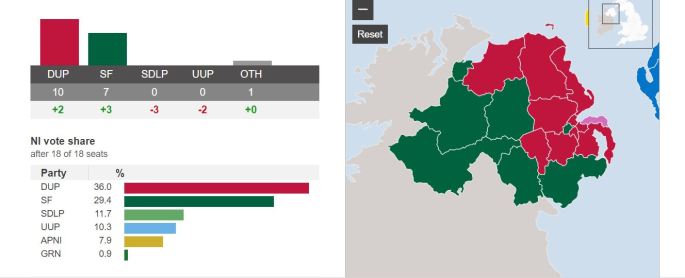
BBC NI

The results page from the BBC NI website – www.bbc.com/results/northern_ireland

While the outcome of the Westminster election was far from conclusive in England and Wales, the same cannot be said for Scotland and Northern Ireland.

Only for the resurgence of the Scottish Tories under Ruth Davidson, Theresa May would be moving furniture rather than clinging to office by her fingertips. While the same Scottish result has, sadly, delayed the prospect of an Indy2 referendum, as the SNP Westminster representation collapsed from 56 seats to just 35 thanks to a 13% drop in support.

Continue reading “The perks of abstinence…?”

#Macron – Le Pen and Now

This column appeared on Broadsheet.ie on April 24th, 2017 – just after the first round of voting in the French Presidential election when Macron and Le Pen emerged as the two front runners in Round Two: www.broadsheet.ie/le-pen-and-now

________________________

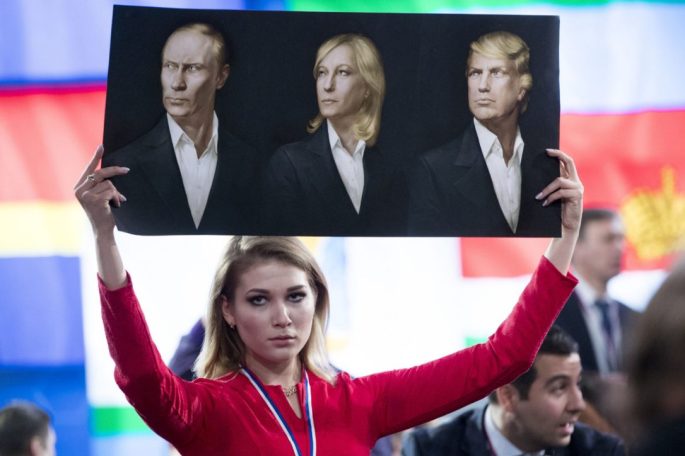
protester.jpg.size.custom.crop.1086x724
The new would-be divine trinity: Putin, Le Pen, Trump?

You could almost hear the collective sigh of relief last night as the first exit poll results from the French presidential election emerged showing Emmanuel Macron as the front runner. Macron, the former Economy Minister under Socialist President Francois Hollande and now independent centrist candidate now faces off against the second placed right-winger, Marine Le Pen in round two of the election in two weeks’ time.

It wasn’t just EU officials and other EU heads of government who were relieved, but also the heads of the polling companies whose predictions turned out to be extraordinary accurate, in many cases within just 1% of the result.

That sense of relief continued into this morning with European stock markets rallying and the Euro rising to a five-month peak with the news that France is likely to have a more centrist pro-EU President Emmanuel Macron.

Only a month ago the polls suggested that Le Pen might emerge as the lead candidate in the first round followed by Macron, with some showing Le Pen as high as 27% and Macron around 25%.  However; the collapse in recent weeks of the socialist party candidate Hamon saw the far left’s Melechon rally and join the leading pack, consisting of Le Pen, Macron and the conservative candidate Fillon, all within 3-4% of each other.

Continue reading “#Macron – Le Pen and Now”

Enda Kenny: we’ll miss him (eventually)

This column originally appeared on Broadsheet.ie on May 8th 2017 and suggests that Fine Gael will come to regret dumping Enda Kenny as Taoiseach and leader as speedily as they have…  www.broadsheet.ie/well-miss-him-eventually/

enda

“But as I leave you I want you to know – just think how much you’re going to be missing. You won’t have Nixon to kick around anymore”

With these words, Richard Nixon departed the political scene, well almost. It was November 7th, 1962. He was concluding what he assumed would be his last ever political press conference after losing the race to become Governor of California. Two years earlier he had narrowly lost the Presidency to John F Kennedy.

While Enda Kenny’s departure, when it comes – possibly over the next week or two – will not be as bitter and waspish as Tricky Dicky’s, there may just be the slightest hint of the same sentiment: just think what we will potentially be missing.

Love him or loathe him, during his time as Taoiseach Enda has been anything but colourless or bland. For all his faults and failings, he showed quickly that he realised that one of the main roles of any Taoiseach is re-assuring the public that there is someone with a plan in charge.

He also grasped that this role as the nation’s re-assurer-in-chief requires you to get out and about and meet people as much as possible. In some ways, Enda has spent the past six years doing a passable Bertie Ahern impression.

Continue reading “Enda Kenny: we’ll miss him (eventually)”

I have my doubts about Enda Kenny’s emigrants’ votes plans

Enda Kenny’s fascination with his predecessor John A. Costello continues. Not only is Enda determined to beat Costello’s record for time served as Taoiseach, he now seems to want to eclipse Costello’s penchant from making major constitutional announcements outside the country.

Costello announced his intention for Ireland to abandon the External Relations Act (and effectively quit the British Commonwealth and declare itself Republic) during a visit to Canada in 1948, while Kenny announces in Philadelphia that he intends to hold a referendum to give the Irish diaspora votes in future Irish presidential elections – but only in elections after the next one.

There are many legends about Costello’s Ottawa announcement, including one version that claims he made it when was “tired and emotional” and another that asserts he did it after being offended by the placing of a replica of the Roaring Meg canon used in the Siege of Derry in front of him on the dining table at a formal dinner at the Governor General’s residence. But they are only legends.

Continue reading “I have my doubts about Enda Kenny’s emigrants’ votes plans”

#Brexit and a suspension of NI institutions – a Heisenberg Uncertainty sized crisis? 

Here is a worrying thought with which to start your week: in two years’ time, we will look back at these last few weeks with fondness and regard them as the last period of stability and calm before the storm.  
Not a nice prospect, huh? Yet it is entirely possible that two separate but related and linked events due occur over the next month could throw us into several years of instability and confusion. 

The first, and more obvious, of the two events is the triggering of the Article 50 Brexit clause by the British Government. This may happen at the March 9th EU Summit in Malta, though the UK’s Brexit Minister recently hinted that they may wait until later in the month, either way it is certain to happen before the end of March. 

We already know how costly and disruptive this will be for us here. But a second event, due to happen later this week, could potentially make what would have already been a difficult situation considerably worse. 

That second event is next Thursday’s Northern Ireland Assembly election.  

Most commentators and pundits believe that the result after the election will broadly be in line with the one before it. The issue at stake at this Thursday’s Assembly election is not who gets what number of seats but rather whether the Assembly voted in next Thursday has the political will to elect a First and Deputy First Minister and return to operation.  

The issue is even more clear cut than that. Will the DUP and Sinn Féin have the political will and backbone to take the result and make it work or will they both continue to play the vapid and empty orange and green politics that we have seen them engage in for the past few weeks and months.   

While each side will point the finger at each other in the classic Northern political game of whataboutery – they are equally responsible. Arlene Foster’s partisan intransigence is matched by Sinn Féin’s opportunist disruptive-ism.  

Both parties cataloguing of the other’s transgressions and insults from the past is very hard to swallow when you consider that it is barely three months since the then First and Deputy First Ministers, Arlene Foster and Martin McGuinness penned this joint article for the Irish News setting out how well their two parties were working together, stating:  

Our two parties are now in an Executive facing in the same direction. We made promises to voters that we will keep – taking on the heavy responsibilities that come with elected office, governing in their best interests, tackling head-on the tough decisions. Others decided to duck the challenges and retreat to the Opposition benches. That is a matter for them…. We are in this for the long haul. 

That was on November 21st last – the long haul is not as long as it used to be, especially when there are political points to score. Their delight and bonhomie may also explained, in part, by the ease with which they had happily carved everyone else out of the picture a year earlier in the ill-named Stormont Fresh Start deal.  

Right now, we are looking at a suspension of the key institutions established under the Good Friday Agreement: The Assembly and the Executive for a period of perhaps six months, or even a year.  

So, we enter a major negotiation on our neighbouring island (sometimes known as Great Britain) exiting the EU at a time when Northern Ireland – whose status and future in those negotiations is a key interest and concern for us – is set to enter a period of political instability. 

Not that you would know this from listening to anything coming out from either Dublin or London. Rarely have the two sovereign governments been less prepared and less well equipped to handle, never mind resolve, a crisis in Northern Ireland.  

Here in Dublin, the political side of the government machinery is more focused on its internal machinations and the leadership of Fine Gael. Neither of the two main contenders for the Fine Gael leadership have ever exhibited much interest in the North or the Good Friday Agreement, though on this score FG is consistent as our current Foreign Minister, Charlie Flanagan, is more disinterested in the North than most.    

While the political side of government is in a state of bewilderment, the institutional side is at least watching what is going on, though it is tough to do this while straining to find the resources to deal with one of the most complex negotiations we have ever conducted with the EU.  

Meanwhile, across the sea Theresa May’s government is focused, nay fixated, on the Brexit negotiations and finding a way not to (a). bankrupt their economy by cutting it off from its biggest market and (b). end the Union by disregarding the clearly stated will of the people in Scotland, Northern Ireland and central London. 

 
Coupled with this Prime Minister May has landed Northern Ireland with a Secretary of State who is disinterested in dealing even-handedly with the parties there or even following events in Northern Ireland.  

This does not augur well.  

The problem is not merely that the Irish government is going to have deal with two major simultaneous political crises – Brexit and suspension of the institutions in the North – but that the discussions in Brussels and the issues in Belfast are considerably intertwined and each exert pressures on, and creates stresses under, the other.  

Add to this the potential for even greater destabilisation within the United Kingdom as the Scottish government increasingly moves towards a second independence referendum and you have a mix for a highly volatile and difficult situation not just within Northern Ireland but across this and the neighbouring island.  

One of the great strengths of the Good Friday Agreement as negotiated by Bertie Ahern and Tony Blair is that it recognised that the tree strand nature of relationships on these islands. The first strand was the internal relationship between the two communities in the Six Counties. The second was the North/South relationships between the North and the remaining 26 counties of the Republic. The third is the east-west strand between the British and Irish Governments. 

One of its weaknesses is that it set these in the context of our mutual membership of the EU, but did not explicitly recognise this underpinning fact anywhere in the text. 

So, there you have it. We are about to face into political problems whose complexity and duality are of Heisenberg Uncertainty Principle dimensions and all we have to tackle them is a choice between are two primary school science teachers. Worrying… isn’t it?  

A brief history of the Fine Gael Heave #FGheave

cosgrave
Cosgrave at a Fine Gael Árd Fheis

No one does heaves like Fine Gael does heaves. None of your subtle behind the scenes manoeuvrings for them. When it comes to getting political blood on the plush axminster the good folks at Fine Gael are major exhibitionists.

They have had plenty of heaves over the past forty years or so: most of them ill-judged, poorly timed and glaringly unsuccessful. The December 1972 heave against Liam Cosgrave is a good example of all three.

Fine Gael’s liberal wing wanted rid of the conservative, law and order Cosgrave. They complained that the party had failed under his leadership to capitalise on Fianna Fáil’s post Arms Crisis trials and tribulations, but the final straw was Cosgrave’s efforts to get FG TDs to back the government’s controversial Offences Against the State Bill – something they implacably opposed.

Cosgrave was effectively saved from the plotters by a loyalist bomb on Sackville Place that tragically killed two CIE busmen. The explosion took place just hours before the Dáil vote on the Bill. The Dáil adjourned to allow discussion between the parties. When it resumed, Fine Gael withdrew its opposition and abstained as Bill was voted through in an all-night sitting. Three months later Cosgrave became Taoiseach leading Fine Gael into government with the Labour Party.

Fast forward to 1980s and 1990s and we enter the golden age of the Fine Gael heave. The drama and intrigue within the Fine Gael parliamentary party was so intense that RTÉ ran a TV documentary series in 2003 about the period entitled: Fine Gael: A Family at War.

For about two decades the folks in blue were regularly sharpening their knives as they awaited the opportunity to dispatch their leaders. While Dr Garret Fitzgerald managed to escape their clutches his successor, Alan Dukes, had a less happy fate.

Dukes took over from Fitzgerald after the 1987 defeat. While he started out well, Duke’s Tallaght Strategy – a less formalised precursor of the current Confidence and Supply Agreement, which facilitated Haughey’s minority government – was not too popular with FG TDs.

One TD, Austin Deasy, was so incensed that he at first resigned in protest from the party only to return in 1989 and try, unsuccessfully, to oust Dukes. Deasy was a serial heaver, launching his first one first against Garret in 1982 and finishing up with his failed November 2000 one against John Bruton.

Dukes survived, but not for long. In a snap election in June 1989, Fine Gael regained only 5 of the 19 seats they lost two years earlier. The whispering campaign against Dukes was back with a vengeance with one back bencher remarking that if it was raining soup Dukes would be out there with a fork. Things came to a head in late 1990 when the party’s candidate in the presidential election came a very poor third behind Mary Robinson and Brian Lenihan Snr.

The result had hardly been declared when Fergus O’Brien, who had been demoted by Dukes, tabled a motion of no confidence. This was followed by a flurry of Fine Gael TDs rushing to the nearest journalist to unburden themselves. Dukes could not withstand the onslaught. Within days he resigned and was succeeded by John Bruton.

Now the Fine Gael heavers shifted into top gear. It seemed as if there was a heave brewing every few months. Bruton survived five leadership contests during his eleven years at the top. The sixth one, in January 2001, led by two political heavy weights Jim Mitchell and Michael Noonan succeeded in toppling him. Noonan took the top job, beating Enda Kenny, but his reign was short lived. FG’s defeat in the May 2002 election was so calamitous that Noonan resigned on the night of the count. He was succeeded by Enda Kenny.

As you can see from these examples and the June 2010 heave against Enda outlined in my Enda’s 3am question is still unanswered Broadsheet column: most of them fail. The ones that do succeed have the oblique backing of the person who hopes to succeed and are usually attempted when the party is in opposition – not in government.

This later point is perhaps not so relevant today. Fine Gael spent most of the 80s and 90s in opposition and were not in office long enough to have the time to consider it. It was these long periods of opposition – and powerlessness – that led to the heaves. The breaking point, in most cases, being a bad election result or a series of poor opinion poll results.

This heave is different or at least it appears different. Unlike heaves of the past it has been occasioned by an actual political event, namely the chronic mishandling of the Sgt McCabe debacle and the confusion about who told who said what and when and if they told the Taoiseach or just one of his Advisers.

But it would be foolish to think that electoral considerations are not also a major factor.
While Enda Kenny has made it clear that he does not intend to lead his party into the next election, the abiding fear among Fine Gael TDs was that events would overtake them and that Fianna Fáil would pull down the house of cards before Enda quits and they find themselves facing an election with Enda still in place.

Up to a few weeks ago, they assumed that Fianna Fáil was neither ready nor willing to trigger an election until 2018 – but a series of good polls for Micheál Martin’s soldiers of destiny has convinced already rattled Fine Gael TDs that Fianna Fáil was preparing itself to call time on the government.

The problem with this scenario is that it shows Fine Gaelers thinking like Fine Gaelers, not like Fianna Fáilers. Fianna Fáil knows well that voters tend not to reward parties who trigger unnecessary elections for partisan gain. Martin’s FF eschews the “cute hoor” tag that once bedevilled the party. When it eventually moves against the government it will be seen clearly do so on an issue of policy, not personality or partisan gain.

On a more practical front, 20 of Fianna Fáil’s 45 TDs are first timers. They are just starting to settle in after two or three years of intense campaigning to win those seats. They are not ready or prepared for an election yet. Most are now watching the turmoil in the FG ranks and trying to work out whether the election of Simon or Leo – or neither – means the election will be in May, June, September or later.

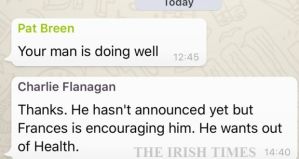
Meanwhile the rest should reach for the popcorn, scan our WhatApp to see if Charlie Flanagan is messaging us and just enjoy it all.
flanagan

Do @realdonaldtrump supporters fear this is last chance to elect a white guy as @POTUS?

When Hillary Clinton told a cheering audience that she thought half of Donald Trump’s supporters were “deplorables” she gave the Donald Trump campaign a stick with which to beat her. And boy have they wielded that stick.

Their strategy was clear. Use her careless comment both to energise the existing core Trump support base and to try to expand it. While they may have succeeded in the former aim, they are struggling, if not plainly failing, when it comes to the latter.

Nonetheless, it is a valid strategy as her comment, with its apparent dismissal of up to 20% of the American population, only served to confirm the image of Hillary Clinton as the ultimate out of touch insider, a part of the Washington political elite.

The strategy also assists Trump to portray himself as the bold and brash “outsider, the champion of a middle America that feels their country has lost its way and is now failing to deliver the American Dream for them and – more critically – for their children.

The strategy sits neatly with Trump’s campaign blueprint: present Donald Trump as a willing battering ram which disillusioned voters can use to attack and demolish a broken and unresponsive political system, be it Republican or Democrat. Trump’s core voters are using him everything bit as much as he is using them.

Without a doubt, Hillary Clinton’s comment was an unnecessary and unforced error, but does she have a point? Look at what she said:

“You know, to just be grossly generalistic, you could put half of Trump’s supporters into what I call the basket of deplorables. Right? – The racist, sexist, homophobic, xenophobic, Islamaphobic — you name it. And unfortunately there are people like that. And he has lifted them up.”

Take out the word “half”, the specific word for which she has since apologised several times, and put the stress on “grossly generalistic” and it is hard to deny that some of his supporters fall into those categories.

Are these the defining characteristics of his candidacy? No. Has he used some of these dog whistles to exercise certain blocs of voters? Yes, though he would not be the first to do so.

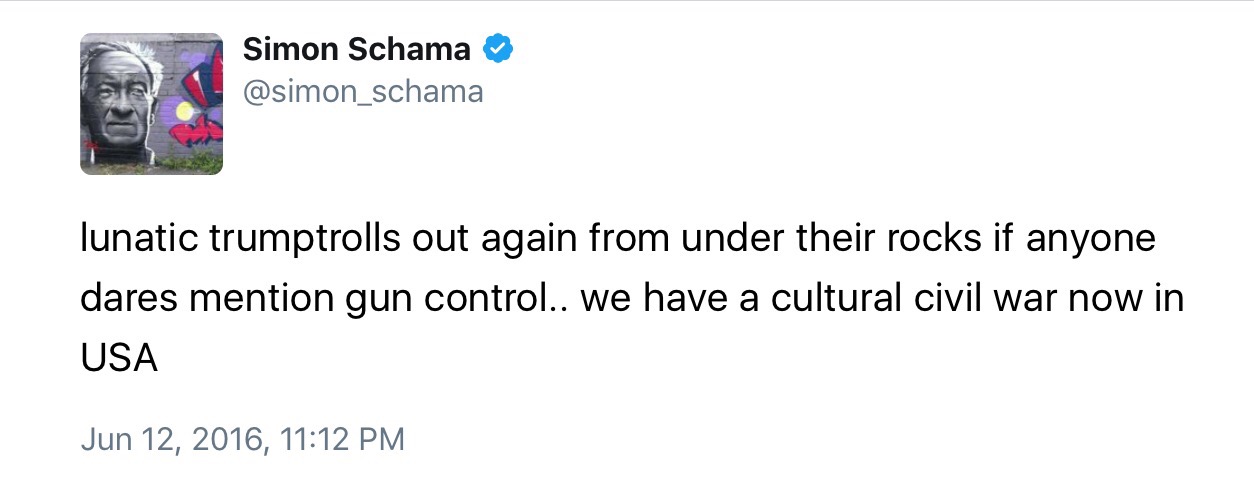
While Trump is undoubtedly playing on people’s fears and concerns, those fears and concerns existed before Trump appeared on the political field. He is merely riding a Zeitgeist which he did not create but which others have ignored. As Prof Simon Schama tweeted in the midst of the anger and turmoil following the horrific Orlando shooting: “…we have a cultural civil war now in USA”.

That cultural civil war is being played out in this election with many of those planning to vote for Trump fighting what they believe is a last ditch battle for an America they can recognise and feel a part of, but which they fear is disappearing.

Since the 1970s the American middle class has shrunk from 61% of the population to 50%, and the American dream has become an increasingly distant prospect for the majority.

There is a smack of the “stop the world, I want to get off” to their concerns, be it globalisation, changing world of work, growing diversity, changing lifestyles.

Race plays a part too. Might there also be a cohort within Trump’s core base who feel (or is it fear) that the changing American demographics means that this is their absolutely last chance to elect someone just like them: old, white and male? His stubbornly high support levels among older white males, especially those with no third level education suggest that this was the first group to embrace him and may be the last group to abandon him.
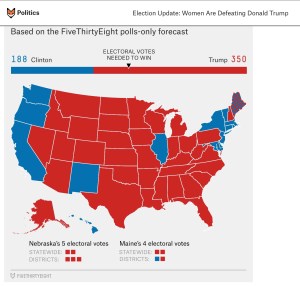
http://fivethirtyeight.com/features/election-update-women-are-defeating-donald-trump/

Might this cohort, who once felt they were the typical average American and were at the core of American society, now feel so alienated that they are willing to forgive Trump any indiscretion in the hope that his election will help them return to the old certainties?

I suspect the answer was: yes, they were, but that they will now gradually start to abandon him as they realise that his flaws and weaknesses are so intrinsic and deep seated that he useless as a battering ram and has no hope of changing anything.

Trump’s defeat will not end the cultural civil war. Neither will Clinton’s election, unless she realises that while the “deplorables” are an irredeemable tiny minority, that the zeitgeist described above needs to be acknowledged.

Why directly elected Mayor model is the wrong one for #Dublin 

This is one of my Broadsheet opinion pieces from back in July 2017. In it I set out why Dublin does not need a Boris Johnson or Ken Livingstone.

img_7042What is it about bad political ideas? When it comes to tenacity and resilience they put the cockroach to shame. While the cockroach simply trundles along looking loathsome and malodorous, bad ideas manage to get worse over time and yet somehow develop an enticing perfume.

So it is with the idea that Dublin should have a directly elected Mayor. Once again this superficially alluring proposal is being promulgated by some, including – though not exclusively – the Green Party.

It is as if its proponents had looked across the Irish sea, seen the absolute mayhem that the first two elected Mayors of London: Ken Livingstone and Boris Johnson, have wrought on the political scene so far this year and thought: hmm, how could we get some of that here.

It is not as if this is a new idea either. It has been trotted out in a couple of incarnations over the past decade and a half.

Continue reading “Why directly elected Mayor model is the wrong one for #Dublin “