Over the past few days, I’ve seen several political pundits offering their Irish election forecasts – offering a range of possible seat totals.
God bless their courage.
Until the campaign gets underway, I think it is wiser to avoid seat predictions, especially ones informed by polling. My main reason for this is that I think that the outcome of election will be heavily influenced by the campaign itself.
Campaigns matter… and this time around I believe the truth of this sound political adage will be very evident.
This is part due to the fact that this is will be a winter election. Though voters do like to be canvassed and the old motto that a vote worth getting is worth asking for still holds true voters might not be as inclined to engage with canvassers at their doors, especially during a cold Thursday evening. Continue reading “My thoughts… with about one week until the start of #GE2024 campaign”→
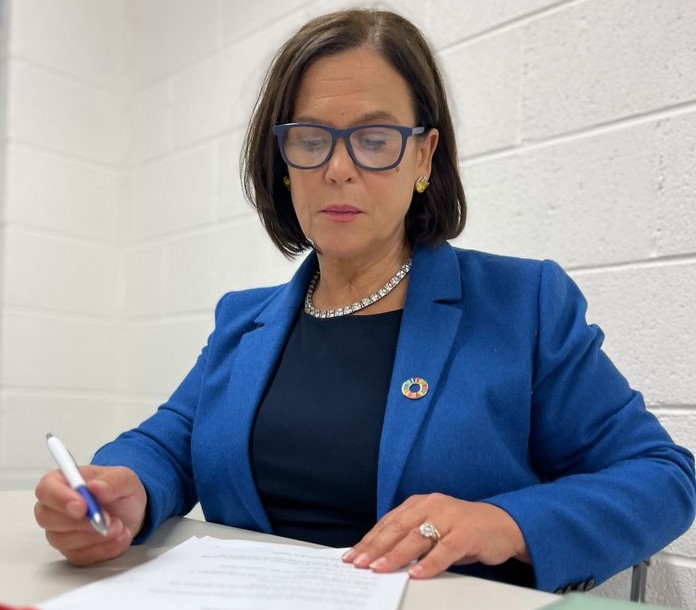
From the Sinn Féin leader’s own Twitter/X feed: LINK
While it may seem odd, even discourteous, to start a critique of last Saturday’s Sinn Féin Árd Fheis address by Mary Lou McDonald with a reference to Sesame Street… well bear with me.
One of the great achievements of that landmark educational programme was how it borrowed methods of television advertising, jingles, and short segments to promote letters and numbers instead of product and sponsors. Each episode ended with the message today’s programme was brought to you by the letter P and the number 5… or whatever.
If last Saturday night’s address had such a message, it would have been just one word: change.
Poker players among you will know about “tells.” These are the little involuntary actions, sometimes physical, sometimes verbal, that “tell” about the strength of another player’s hand.
According to those who know and understand the game far better than I, one common “tell” is to watch how other players handle their chips. Players with strong hands tend to grab their chips well before the action reaches them, indicating a desire to bet. While players with weak hands will leave their stacks untouched.
Not being much of a poker player I will have to take their word for it. But, as a keen watcher of the game of politics I can talk about this government’s more significant “tells.”
We saw a big one at the recent Fine Gael think-in. It involved Taoiseach, Leo Varadkar wading into the EU nitrates derogation controversy by promising the Irish Farmers Association he would invite EU environment commissioner to Ireland to discuss the issue. Continue reading “Feck the tiger… says Varadkar to Martin”→
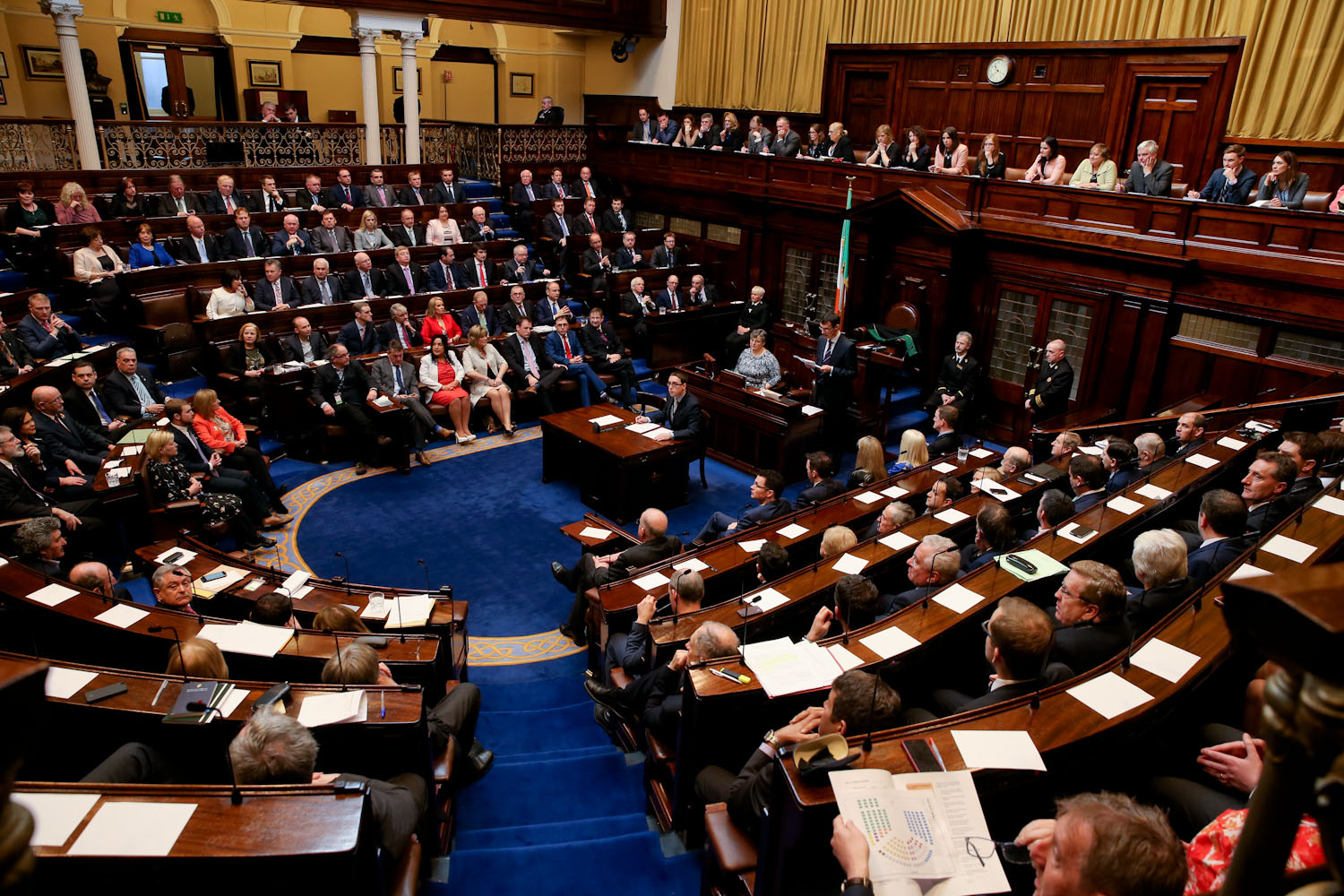
It is likely that the next Dáil will have 178 members
Last Thursday’s Irish Times/Ipsos poll findings left many people wondering why Fine Gael had suffered such a big drop in support (-4%).
The publication of the second half of the poll’s findings, a day later, offered an answer. It showed that voters would much prefer to see more money spent on improving public services and infrastructure than on tax cuts.
Only 13% of 35 – 49-year-olds (which at 19% is Fine Gael’s strongest voting cohort – though only just) want to see the government surplus used for tax cuts compared to 24% who want to see the surplus used to improve public services such as health and education or 39% who want to see it used to build infrastructure such as public transport, housing, hospitals, and schools. The ratios are very similar across other age groups. Continue reading “Next Dáil will have 18 extra TDs… but how many extra will FF or FG win… I doubt it will be many…”→
A year ago we were told by those close to the Fianna Fáil leader that the persistantly poor poll numbers were due to disunity and sniping at the leader. So why… after 10 months of back benchers holding their tongues…. are the party’s poll figures still stuck in the mid to high teens? The party fared disastrously in Feb 2020…. but that figure now looks like a long distant high water mark.
Orson Welles as Harry Lime – Switzerland had 500 years of brotherly love and peace. And what did that produce? The cuckoo clock.
Exactly two years ago, on June 15th 2020 in a column entitled Better Never Than Late, I stated that there were then three absolute truths for Fianna Fáil. Truths that highlighted how misguided the leadership’s strategy of putting Fine Gael back into government was as it ignored the reality that that Fianna Fáil had options and leverage.
I revisited those three truths several times in both late 2020 and early 2021, but it has occurred to me that I have not examined them again lately.
This week’s column first appeared on Broadsheet last Monday (July 5th). In it, I look at the argument on Fianna Fáil’s real and demonstrable problems with young voters that mysteriously leaked out from the parliamentary party. Indeed, it is long past time for folks to wonder why (and how) there are so many leaks from what is supposed a confidential meeting of elected colleagues, particularly when most of that leaked material is often detrimental to those not on the leader’s side. I also take a final look at the Dublin Bay South By-Election.
According to the many detailed leaks from last week’s Fianna Fáil parliamentary party meeting (an issue itself worthy of an article) the suggestion that young people perceive the party as toxic and inimical to their needs, angered and upset several TD’s and junior ministers.
And not in a good way. Rather than being angered that young people feel this way – and sadly they do, as almost every poll published over the past 18 months has shown – some ministers were outraged that colleagues would dare point this out.
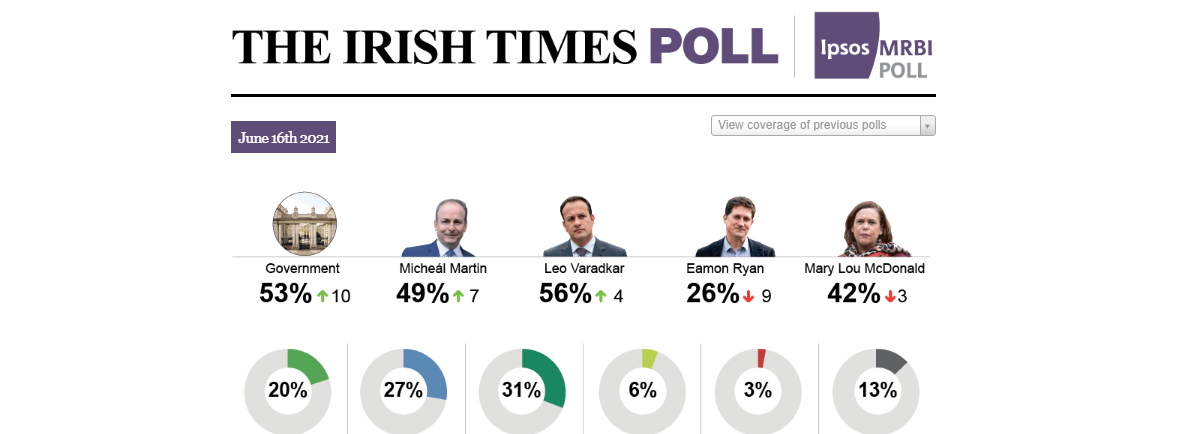
Even the recent Irish Times Ipsos/Mori, which optimistically showed Fianna Fáil’s support increasing nationally by 6pts to 20%, still found that the party is only on 8% among Dublin voters aged under 35. This puts it in a very weakened 5th place in Dublin, well behind Sinn Féin, Fine Gael, The Greens and Independents.
Last week I rekindled my love affair with the word “paradox”, so expect to see it pop up here a lot, including in this week’s Broadsheet column where I look at the paradox of Fianna Fáil’s poll ratings remaining stubbornly low, while the approval ratings of its leader move up. Has An Taoiseach, Micheál Martin learned how to disassociate himself from his party… and doesn’t this mean that what is in his interest, is not in his party’s.. and vice-versa?
Ipsos/MRBI Irish Times Poll – June 16th 2021
Though I probably keep this fact well hidden from readers, I really try to not write about polling too often. I say this through clenched fingers as I know it must seem that I have written about little else over the past few weeks and months.
It is a fair criticism to say that political pundits talk and write excessively about polling in the guise of political analysis. While the soap opera aspects of politics, who’s in, who’s out, who’s politically in bed with whom, does help liven up what can often be a dull area, the focus should be on the policies and the decisions rather than who makes them.
The old Heisenberg uncertainty/indeterminacy principle applies to politics as much as it does to physics. If you cannot accurately measure both the position and the velocity of an object simultaneously, then you should focus more on the trajectory of an object or an idea than analysing snapshots of where it was a few days or weeks ago.
All of which is a long-winded way of me explaining/excusing – why I am once again talking about polling. In my defence, I do this as there is something that is worth discussing in the two most recent opinion polls: yesterday’s Ireland Thinks/Irish Mail on Sunday one and last week’s Irish Times/IPSOS/MRBI, as they offer some contradictory results.
During RTÉ Radio One’s Late Debate show coverage of the US election results, I challenged #Trump supporter and American Greatness editor Chris Buskirk on his bizarre assertion that the violence we have seen on US streets over recent months has been caused by anti-Trump groups alone. His claim that shops and offices in Washington, New York and other big cities were being boarded up beacuse they feared violence by anti-Trump protesters has been proved untrue in recent days with the arrest of several armed pro-Trump supporters at various count centers – AP News.
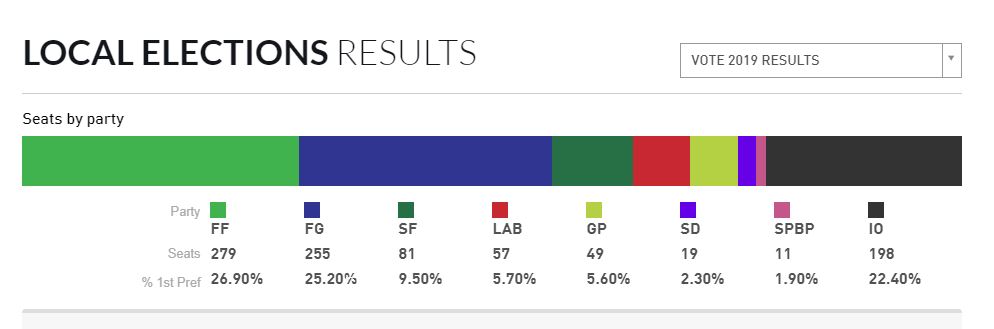
This is my Broadsheet.ie analysis of the 2019 Local Election results (this first appeared on May 28th). Here I set out why the results brought bad news for the leaders of both Sinn Féin and Fine Gael.
It is almost exactly two years since Leo Varadkar was selected as Fine Gael leader. On June 2nd, 2017 after a two-week contest involving FG members and councillors, but primarily TDs and Senators, Varadkar was declared the winner. He beat Simon Coveney with 60% in a weighted ballot in which TDs and Senators had 65% of the total vote, the membership had 25% and councillors had 10%.
While Coveney won the popular vote among the membership He secured 35 per cent in the membership ballot, Varadkar got the backing of 51 of the 73 members of the parliamentary party.
Six months later, in January 2018, Mary Lou MacDonald was announced to absolutely no one’s surprise as the sole candidate to succeed Gerry Adams. Adams had announced that he would step down after four decades as Sinn Féin leader at a special Árd Fheis the following month.





 MooneyComms