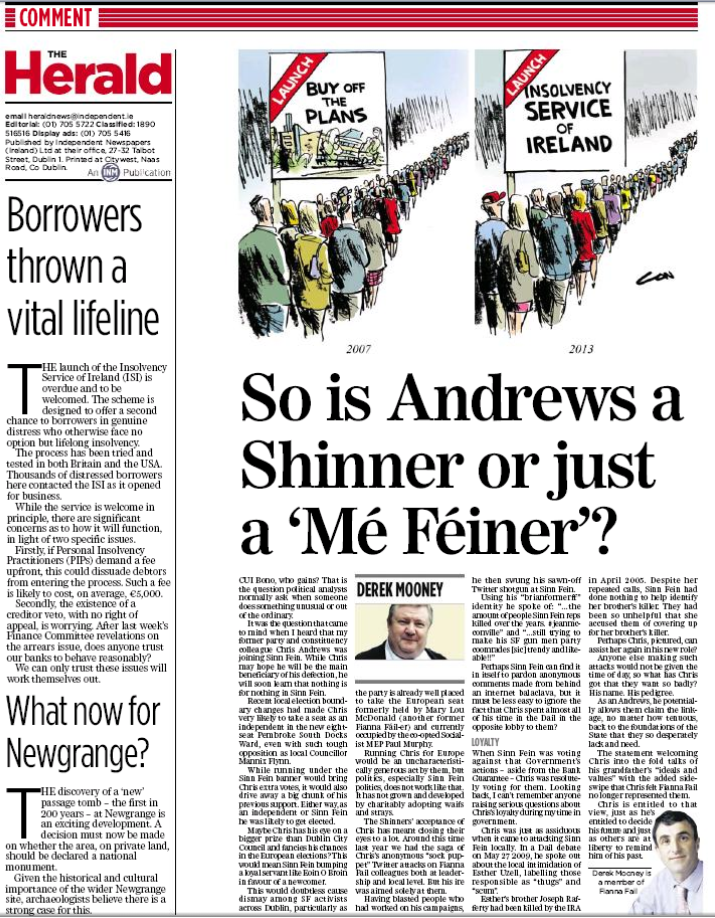
My column from today’s Herald on Chris Andrew’s joining Sinn Féin
My column in today’s Herald
————————————————————————
Cui Bono, who gains? That is the question political analysts normally ask when someone does something unusual or out of the ordinary.
It was the question that came to mind when I heard that my former party and constituency colleague Chris Andrews was joining Sinn Féin.
While Chris may hope he will be the main beneficiary of his defection, he will soon learn that nothing is for nothing in Sinn Féin.
Recent local election boundary changes had made Chris very likely to take a seat as an independent in the new eight seat Pembroke South Docks Ward, even with such tough opposition as local Councillor Mannix Flynn.
While running under the Sinn Féin banner would bring Chris extra votes, it would also drive away a big chunk of his previous support. Either way, as an independent or Sinn Féin he was likely to get elected.
Maybe Chris has his eye on a bigger prize than Dublin City Council and fancies his chances in the European elections? This would mean Sinn Féin bumping a loyal servant like Éoin Ó Broin in favour of a newcomer.
This would doubtless cause dismay among SF activists across Dublin, particularly as the party is already well placed to take the European seat formerly held by Mary Lou McDonald (another former Fianna Fáil-er) and currently occupied by the co-opted Socialist MEP Paul Murphy.
Running Chris for Europe would be an uncharacteristically generous act by them, but politics, especially Sinn Féin politics, does not work like that. It has not grown and developed by charitably adopting waifs and strays.
The Shinner’s acceptance of Chris has meant them closing their eyes to a lot.
Around this time last year we had the saga of Chris’s anonymous “sock puppet” Twitter attacks on Fianna Fáil colleagues both at leadership and local level. But his ire was not aimed solely at them.
Having blasted people who had worked on his campaigns, he then swung his sawn off twitter shotgun at Sinn Féin. Using his “brianformerff” identity he spoke of: “…the amount of people Sinn Féin reps killed over the years. #jeanmcconville” and “…still trying to make his SF gun men party coomrades [sic] trendy and likeable!!”
Perhaps Sinn Féin can find it in itself to pardon anonymous comments made from behind an internet balaclava, but it must be less easy to ignore the fact that Chris spent almost all of his time in the Dáil in the opposite lobby to them?
When Sinn Féin was voting against that Government’s actions – aside from the Bank Guarantee – Chris was resolutely voting for them. Looking back, I can’t remember anyone raising serious questions about Chris’s loyalty during my time in government.
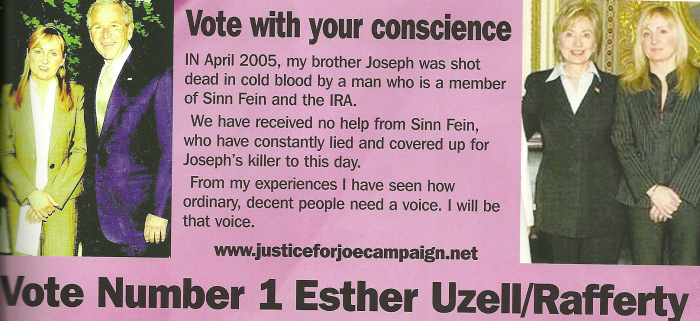
Chris was just as assiduous when it came to attacking Sinn Féin locally. In a Dáil debate on May 27 2009 he spoke out about the local intimidation of Esther Uzell, labelling those responsible as “thugs” and “scum”. Esther’s brother Joseph Rafferty had been killed by the IRA in April 2005. Despite her repeated calls, Sinn Féin had done nothing to help identify her brother’s killer. They had been so unhelpful that she accused them of covering up for her brother’s killer.
Perhaps Chris can assist her again in his new role?
Anyone else making such attacks would not be given the time of day, so what has Chris got that they want so badly? His name. His pedigree.
As an Andrews he potentially allows them claim the linkage, no matter how tenuous, back to the foundations of the State that they so desperately lack and need. The statement welcoming Chris into the fold talks of his grandfather’s “ideals and values” with the added sideswipe that Chris felt Fianna Fáil no longer represented them.
Chris is entitled to that view, just as he’s entitled to decide his future and just as others are at liberty to remind him of his past.
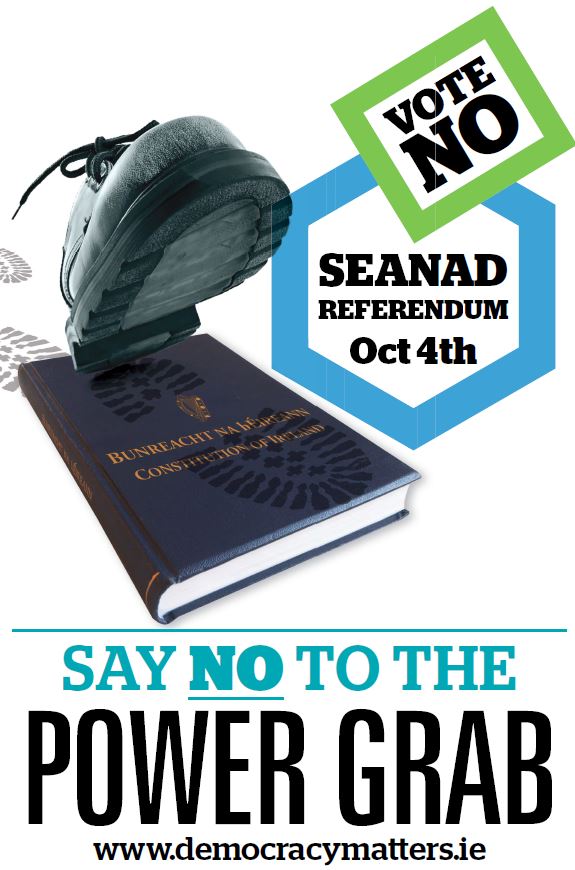
As a firm believer in Seanad reform – and consequently a trenchant opponent of Seanad abolition – the Sunday Independent’s Millward Brown poll showing the No to Abolition side gaining further momentum is gratifying.
The past few weeks have hardly been great for the No side. Fine Gael has been pretty active on the airwaves over the Summer break, while Sinn Féin’s opportunistic decision to campaign for a Yes, having vehemently opposed the Government’s proposal in both the Dáil and Seanad, hasn’t helped the No cause either.
All this makes the increase in the pro Seanad reform level of support all the more re-assuring. Not that the poll suggests that the campaign is done and dusted. Far from it.
More than almost any other, this Seanad abolition policy, is the lone brain child of Enda Kenny. Though there seem to be no research papers, discussion documents or policy positions he can produce to justify the origins of this initiative, he is the man behind it and he has more to lose by its defeat than anyone else.
While Labour nominally favours abolition, its TDs and Ministers can reasonably see their policy obligations as fulfilled by the holding of a referendum. Don’t expect to see many of them working too hard for a Yes to abolition vote. Indeed, as the Labour Chief Whip has indicated, at least half the Labour parliamentary party may actually work for a No vote seeing it as the best way to secure a popular mandate for Seanad reform.
One of the two authors of Labour’s 2009 position paper on Seanad reform, Junior Minister, Alex White has not commented on the issue much, while the other author, Joanna Tuffy TD has indicated that she will be campaigning for a No vote.
The worrying shift in the poll numbers make it necessary for Fine Gael to up the ante over the weeks ahead.
Given that the main shift has been in the group who describe themselves as favouring reform expect to see Fine Gael focus its attentions there and try to convince them that a Yes vote is a vote for reform.
We already had a glimpse of this approach last week via its neophyte Wicklow TD, Simon Harris’s speech at the Parnell Summer School.
Harris advanced the argument that abolishing the Seanad counts as reform and gives power back to the people as it means the single remaining chamber of the Oireachtas: the Dáil will be 100% elected by the public.
Harris’s reasoning seems to hinges on the statistic that the number of people registered to vote in Seanad elections, under current legislation, is around 156,000; about 5% of the approx 3.1 million entitled to vote at the February 2011 Dáil election.
What Harris misses, however, is that this 156,000 (Councillors, Oireachtas members and NUI and TCD graduates) is defined in legislation – not the Constitution. Everyone in the North and South could be given the right to vote with the passing of an Act by the Dáil and Seanad. Indeed the Seanad has already voted for such a piece of reform with the Second Stage vote on the Quinn/Zappone Seanad Reform Bill.
The extension of the Seanad franchise to all is now completely within the gift of Deputy Harris’s colleagues on the government benches.
The only real obstacle to such a real reform is the Taoiseach’s obduracy in insisting on Seanad abolition instead of reform.
Though not central to the argument it is worth noting that the 156,000 figure is probably an understatement as it just counts the NUI and Trinity graduates who have registered to vote. Many 100s of 1000s more are entitled to vote by virtue of their graduation.
The other problem with Harris’s reasoning is the idea that the answer to existing disenfranchisement is more disenfranchisement. It defies all democratic principles to propose removing someone’s voting rights when you have it in your power to extend them.
If you were to apply Deputy Harris’s quirky logic to the campaign for women’s suffrage a century back you would determine that the way to ensure equal voting rights for all was to remove the vote from men so that the two genders were equally disadvantaged.
The very legitimate criticism that not enough people are entitled to vote in Seanad elections is properly addressed by giving everyone the right, not by removing it.
I would hope that Deputy Harris’s espousal of a position that is the absolute antithesis of reform is informed by loyalty to his party leader and desire for advancement rather than by belief in the argument itself.
If it is the former then the case for reform is all the greater, if it is latter then it is time to worry.
My column from today’s Herald on the current discussions to have directly elected mayors for Dublin in the future.
____________________
Should Dublin have its own version of Boris Johnson?
That is the question a Forum of 22 Dublin councillors will consider between now and September. But there is good news: Dubliners will get a say on it in May.
While the forum, drawn from the four Dublin Councils, started its deliberations at the end of July, the idea of Dublin having a directly elected Mayor goes back much further.
According to the Lord Mayor of Dublin website it goes back to Chapter 11 of Minister Phil Hogan’s June 2012 local government reform: Putting People First. It actually goes back to Noel Dempsey’s 2001 Local Government Act.
In case my Boris Johnson reference hasn’t given it away, I am not a fan of the idea. I wasn’t a fan of it in 2000, nor when John Gormley resurrected it in 2008.
Like most Dubliners, I want to see decisions made about Dublin being made by people who are answerable to Dubliners, but I am not persuaded that directly electing a mayor is the way.
My biggest worry is that an office supposedly created to give leadership to Dublin would descend into de-facto focus of attention for opposition to the government of the day.
A directly elected Mayor of Dublin would, after the President, have the biggest electoral mandate in the State, but without the constitutional prohibitions on politicking.
Boris Johnson’s mayoralty has become a focus for those unhappy with David Cameron’s leadership. Given the scale here: a mayor of the greater Dublin area would potentially be elected by up to a third of the total electorate, imagine how much more pronounced those clashes would be, particularly when the Taoiseach and Mayor were from opposing parties?
The potential for political gridlock is huge, especially where the Mayor has no real powers or responsibilities, just what Teddy Roosevelt called “a bully pulpit”. Instead of leadership we would just be getting a personality with a shiny office and access to a microphone.
The use of the London Mayor template only adds to this concern. Chapter 11 of Putting People First, which the Forum is using as its starting point, makes no fewer that six references to London.
It does not mention the directly elected mayors in Berlin, Budapest or Paris, or the strong systems of city governance in Helsinki, or Copenhagen.
This Ministerial and Departmental infatuation with London is hard to understand. I can only imagine that it is because they have never seen the legislation establishing the London Mayoralty and Authority: The Greater London Authority Act 1999.
At almost 500 pages it is the longest piece of legislation passed at Westminster since the Government of India Act. More importantly it does something almost unheard of in Irish public administration: it takes power away from central government.
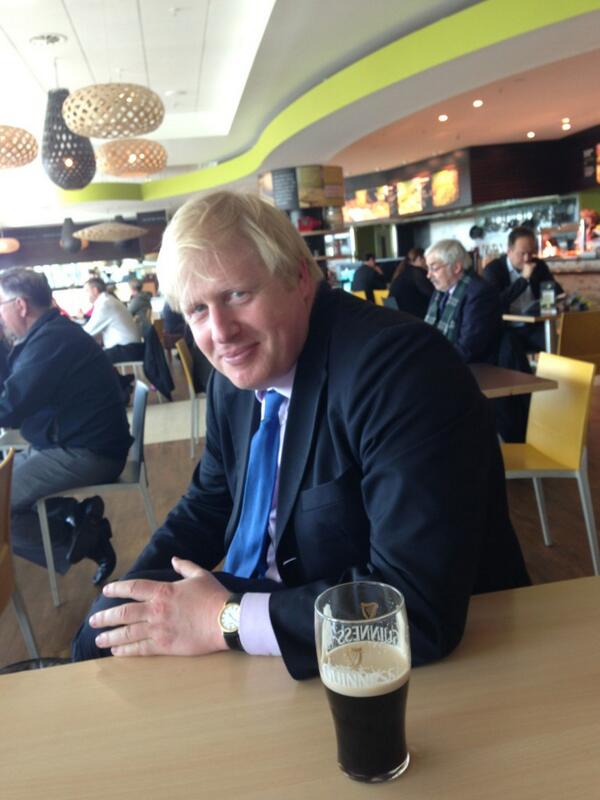
Boris Johnson pic from @mayoroflondon twitter a/c
Not that it took enough powers. Earlier this year Johnson was again calling for London to have the power to raise property and new tourism taxes. In May last year 8 out of the 10 UK cities asked if they wanted a directly elected Mayor said: no.
Do we really see the Phil Hogan’s Department of Environment ceding power and controls to anyone?
This is the Minister who, in the same Putting People First document, has slashed the number of local authorities from 114 to 31 and the total number of City, County and Town councillors from 1,627 to 949.
Do we really think he is ready to chop off a large section of his Budget and power to keep us happy?
With most decisions regarding Dublin’s present and future being made by unaccountable and disconnected State bodies and departments, the case for giving more power to Dublin is clear.
What is almost just as clear is that instead of being given viable city government with a budget and authority the most that will really be on offer is a city personality with a big desk, a press officer and an electric car.
Today’s RedC poll for Paddy Power brings very little good news unless you are an independent or a don’t know. The unadjusted core figures rank the parties in descending order as:
Fine Gael 23%
Fianna Fáil 18%
Don’t Knows 18%
Independents 17%
Sinn Féin 13%
Labour 9%
After adjusting the figures by excluding 50% of the don’t know and adjusting the other 50% back to how they voted in 2011 the ranking positions stay the same. Only the relative gaps between Fine Gael and Fianna Fáil and between Fianna Fáil and the Independents widen.
Fine Gael 29%
Fianna Fáil 22%
Independents 21%
Sinn Féin 15%
Labour 11%
Sinn Fein’s lead over Labour remains at a steady 4%. While this may, at first glance, suggest some good news for Sinn Féin, the party has been in this territory before only for its good polling numbers to fail to translate into votes.
Back in December 2010, on the eve of a general election, three polls showed the party in the mid teens. A Red C Poll for The Sun on 03/12/2010 gave the party 16%. The MRBI/Irish Times poll on Dec 16th put it on 15% while a third, the Red C/Sunday Business Post poll of December 18th put its support at 14%. On polling day, two months later, the voters gave it 9.9%.
This is not to discount its advance since. Sinn Féin has been consistently polling in the mid teens since September 2011. That said, though an Irish Times poll in early October 2011 put party support at a hefty 18% its Presidential candidate and possibly most charismatic figure, Martin McGuinness still could not get the party’s actual vote past the 13.7% mark in the ballot boxes a few weeks later.
Despite its considerable and well resourcing organisation it seems to still have a problem translating favourable poll numbers into actual votes.
Though of cold comfort to Fianna Fáil it does not, at least, have this particular problem. The MRBI/Irish Times and Red C/Sunday Business Post polls conducted on the eve of the 2009 Local elections put Fianna Fáil’s support at 20% and 21% respectively. On polling day, the party managed to scrape its way up to 25.4%.
Fianna Fáil problems are more significant. While it has won back some of its lost “soft” support and pulled itself up from the 2011 hammering it has yet to say or do anything substantive to win back many of those who had voted for it in 2002 and 2007 but rejected it in 2011. There is nothing to suggest it is doing any better with potential first time voters either.
Despite the speculation of last weekend, Fianna Fáil’s problem is not its leader. The notion that Fianna Fáil picking a new leader whose only virtue is that they were not a member of the previous government is almost laughable. Surely no one in the party or the commentariat is delusional enough to think that the electorate is so naïve that it will flock to Fianna Fáil’s cause just because it has a leadership team devoid of anyone who served under Ahern or Cowen?
Despite its apology and acknowledgement of past mistakes, Fianna Fáil has yet to present a researched and substantive alternative policy programme. It has come up with some good micro-policies, not least its family home protection and debt resolution Bills, but many have been light on substance and appear to have been produced as well intentioned responses to specific representative groups, e.g. the Mobile Phone Radiation Warning Bill
Try finding the party’s April 2013 Policy Guide on its website. It is there, but you have to know what you are looking for to find it. Click on the “issues” button on the homepage and you get the Spring 2012 version, to locate the latest version you need to do a search for it by name.
The April 19th 2013 document shows the party has been doing some serious work on policy, but you would be hard pushed to know it from the statements coming from its spokespeople. These still read as knee jerk responses to government statements rather than as co-ordinated parts of a coherent alternative. Fine Gael may have gotten away with tactic this during its time in opposition, but Fianna Fáil does not have the luxury they had: a Government unwilling and unable to communicate with its own supporters.
Perhaps the criticisms of a small and possibly over stretched clique around the leadership have some basis in reality, but as someone who has spent a long time around the party, on both the inside and outside tracks, I think the problem lies elsewhere.
Michéal Martin has shown a remarkable capacity for getting out and about and engaging with members and voters alike, it is curious, therefore, to read of him being less engaged and accessible to members of his own very diminished parliamentary party.
Might I suggest that the fault lies on both sides. Yes, he should be having regular one to one meetings with his 33 parliamentary colleagues – God knows there are not that many of them to make such regular meetings impractical – but they too should be engaging with him.
The traditional deference to the leader needs to change. Gone are the days when you had to wait ages to have an audience with the great leader as he busied himself with the great affairs of state in the Taoiseach’s office. Parliamentary party members have the opportunity for unique access, let them use it. A minority can only exercise sole access when allowed by the majority indifference or reticence.
Despite the job losses and the massive reduction in resources, there still appears to be a sense that the party structures are operating and running as if the party is still as big as it once was. Worse still many of those working those structures have no sense memory of how the party should operate in opposition.
A small number of paid officials are being expected to do the party’s policy research and formulation with minimal input from a vast array of experts across the volunteer membership. Too much power and control is being retained around the centre and around Leinster House: not by the leadership and his supposed clique, but also by members of the parliamentary party who are criticising him for just that.
I am old enough to remember what was put in place between 1982 and 1987, the last time the party was truly in opposition. Back then a series of policy committees were established by the leadership and mandated, working with the various spokespeople, to produce credible and researched policies for submission to the party for adoption.
These committees worked with the TDs and Senators but were not run by them. Outside experts were brought in to assist and work with them.
To borrow a phrase from Fianna Fáil’s past – the phase of its recovery will be dependent on policies and substance – not personality. The party already has the potential to bring itself back into the upper 20s in terms of actual voter support – the question now for the leadership and the party as a whole is if it has the energy, expertise and inclination to innovate the policy approaches that could bring support up into the 30% plus range.
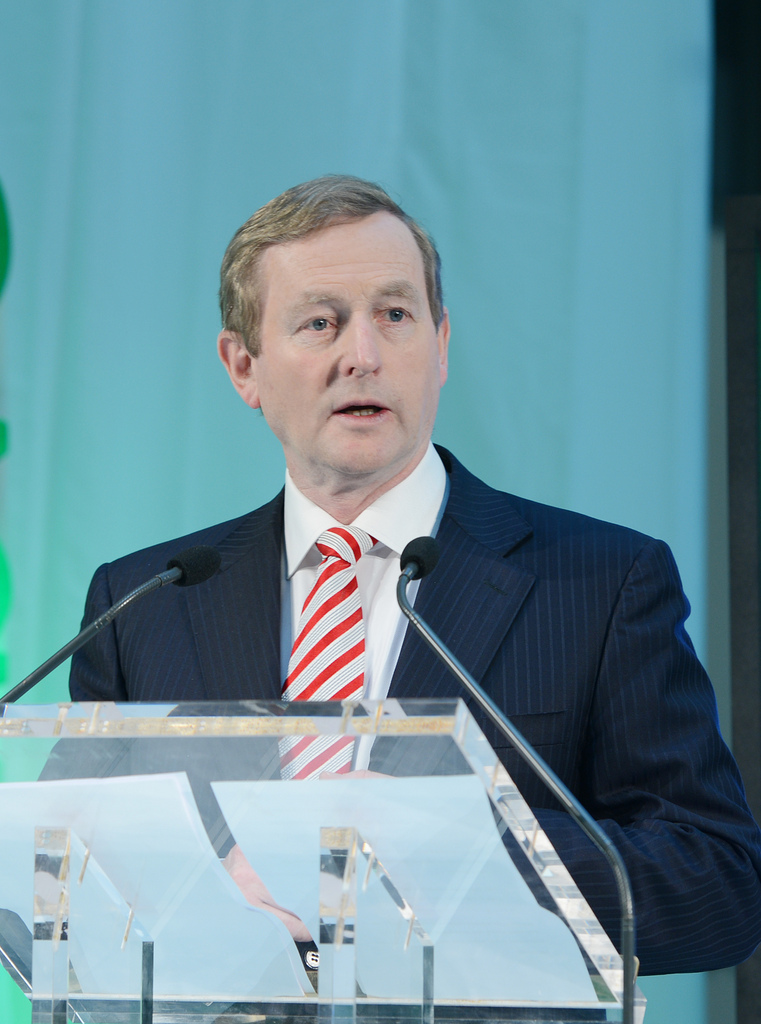
An Taoiseach Enda Kenny, T.D. (pic from FG website)
This morning’s Sunday Independent story that back in January 2009 when he was still leader of the opposition that Enda Kenny had been in informal contact with Anglo Irish Bank’s CFO, Matt Moran, raises several questions for Mr Kenny. Some of these questions have already been posed by Fianna Fáil’s Micheál Martin.
When the Anglo tapes first came into the public arena at the end of June, Mr Kenny moved quickly to politically insinuate that the tapes suggested an “axis of collusion” between Anglo Irish and Fianna Fáil, even though the tapes did not suggest any improper or informal contacts between any Fianna Fáil ministers and Anglo bosses.
During the course of Leaders Question on June 25th, Enda Kenny was quite strident and aggressive in his exchanges with the Fianna Fáil leader, Micheál Martin with the Taoiseach repeatedly mentioning Martin’s role in the Bank Guarantee (notwithstanding the fact that it was not Anglo who had sought the guarantee and that the bank was not even represented at the meeting in Government Buildings on the night of September 28th, 2008).
Typical of the exchanges is the following line from the Taoiseach:
“Deputy Micheál Martin was part of that environment. I am not suggesting he was involved directly in any of it—– (Interruptions) —-but he was a member of the Government and the people are entitled to know why the Government had incorporeal meetings at 3 a.m. They are entitled to know about the political environment in which all of these agents operated.”
Even after Martin had finished asking his two questions, the Taoiseach continued his political allegations of collusion during his subsequent exchanges with Deputy Gerry Adams and Deputy Mattie McGrath.
During his two questions McGrath asked the Taoiseach if the Minister for Justice and Equality had known about the tapes and if the government intended to set up a criminal inquiry and a robust investigation?
Towards the end of his replies to McGrath, indeed just as the time for Leader Questions was ending and Deputies were starting to prepare for the next business the Taoiseach volunteered the following curious little revelation. McGrath had not asked if he had any contact with the bosses in Anglo, indeed the topic had not been raised, yet the Taoiseach felt the need to put the following titbit on to the record:
“I had the doubtful privilege of calling into Anglo Irish Bank with Deputy Bruton, when he was the party’s spokesman on finance, a couple of weeks after the guarantee went through. We met all of the principals in the bank’s building on St. Stephen’s Green.
We were given a wonderful presentation by people who were very well remunerated in their positions and received very large bonuses. As has transpired, all of that presentation was a tissue of fabrication and untruths. The questions we asked on that occasion, from the Opposition benches, were very realistic in the context of the pressures people were under and the stories, rumours and allegations that were flying around about that bank. They were all utterly denied.
I make that point for the politicians who are interested in what happened here.”
Is this just a case of Mr Kenny’ showing how unlike John Bruton, his predecessor as FG leader and Taoiseach, he is? Some years back Mr Bruton infamously defended his evasiveness in the Dáil with the line: “you didn’t ask me the right question”. Are we to believe that where Bruton was cautiously meticulous in only answering the specifics of the question asked, Kenny is more effusive? To judge from other Leaders’ Questions sessions before and since, hardly so.
It now appears that Mr Kenny was endeavouring to get something on the record regarding his contacts with Anglo bosses just in case these precise revelations were to emerge.
This brings us to Minister Frances Fitzgerald’s protestations this morning on RTÉ’s The Week in Politics that it is ridiculous to suggest that the Taoiseach might have any questions to answer as he was only leader of the opposition back in January 2009. The presumption here is that Mr Kenny knew little or nothing about what was going on back in January 2009 so what could he have told or said to Anglo’s Mr Moran?
Two points here:
First, if the conversations with Moran, who it seems hails from the same part of the world as Kenny, were so inconsequential why did the Taoiseach not make even a passing reference to them in his June 25 dump out of unrequested information? Perhaps because these were one to one conversations without Richard Bruton present?
Second: the notion that Mr Kenny was completely clueless in January 2009 does not hold water. Unlike the current government, the last one – particularly the late Brian Lenihan was scrupulous in keeping the opposition informed and briefed. Lenihan knew the enormous scale of the issues with which he was grappling. He was not going to allow himself open to the charge of a lack of transparency or openness in dealing with decisions that would affect the economy for decades. It should not be forgotten that Fine Gael had, in the wake of the Sept 28 guarantee, been broadly constructive in its approach.
We get a glimpse into openness of the contacts between Lenihan and Kenny at the time from the following comment by Lenihan at the conclusion of the Second Stage debate on the Bank Guarantee legislation (Credit Institutions (Financial Support) Bill 2008).
“When I telephoned Deputy Kenny at 7 a.m. this morning and explained to him the circumstances in which the State found itself in regard to financial stability, he responded without hesitation that he would support any measure the Government brought forward.”
This contrasts with the paucity of the briefings offered by the current government to opposition spokespeople on February 6th when the government expected the Dáil to pass the legislation winding up Anglo Irish (by then called the Irish Bank Resolution Corporation) with only 10 minutes prior sight of the Bill itself.
Only after much cajoling from both Fianna Fáil and Sinn Féin did the Taoiseach eventually concede to giving the opposition an extra 30 minutes to read the legislation before debating it.
Rather than issuing bland blanket denials he needs to set out in tabular form all the contacts he and his colleagues had with Anglo Irish bank and its agents between early 2008 and before the 2011 election.
Will he heed Justice Minister Alan Shatter’s call elsewhere to tell us what he knows about “direct” contacts with Anglo? He also needs to say if he is willing to agree to co-operate with an independent Leveson style investigation into the banking crisis.
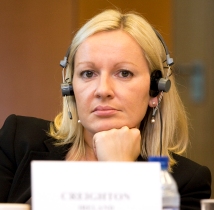
Thanks to a lot of travelling with work it has been a few weeks since I last posted on here. Here are my belated thoughts on Lucinda Creighton’s departure from the ranks of the Fine Gael parliamentary party and how it connects with the “rats in the ranks”
——
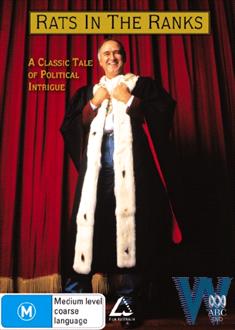
Larry Hand in “Rats in the Ranks”
If you enjoy political machinations and intrigue then you should definitely watch the excellent 1994 Australian documentary “Rats in the Ranks” It chronicles the back stabbing and political manoeuvrings among the 12 local councillors electing a new mayor in a suburban Sydney district of Leichhardt. Watch the trailer here: http://www.youtube.com/watch?v=huxbBH78nhg
It has become ritualistic viewing for me, I usually watch it a few times a year. The central character, Cllr Larry Hand, not only offers a quick primer in petty political power-play as he attempts to retain his post as Mayor, he also comes out with a few nice political aphorisms.
My particular favourite is his observation following yet another row with his Australian Labor Party (ALP) counterparts: “I’ve always felt you haven’t really joined the ALP until you’ve been expelled from it.” Hand had originally been an ALP member.
Perhaps the line has a particular resonance with me as around the same time (the mid 90s) I came perilously close to being expelled from Fianna Fáil. The reason was my going on RTÉ’s Morning Ireland in early November 1994 to call on Albert Reynolds to stand aside in the wake of the controversy surrounding the appointment of Harry Whelehan as President of the High Court.
My public comments on that Monday morning provoked a motion to discipline me (for conduct unbecoming a member) for the following Thursday’s Fianna Fáil Árd Comhairle, but it was never discussed as Reynolds resigned on Thursday morning.
Hand’s words came to mind again while watching Lucinda Creighton’s departure from the Fine Gael parliamentary party last week.
Though her fairly intensive milking of the situation in the days since her departure has not impressed me as much, it still does not take away from her steadfastness in sticking by her beliefs and pre-election commitments on X case legislation.
At this point it is worth pointing out that while I am a constituent of hers, I have never voted for her and that I don’t share her reservations and disagree with how she voted last week. Nonetheless, her actions stand in marked contrast to the capitulation of some of her colleagues. Notwithstanding the weeks of watching them publicly wrestling with their consciences, it was almost inevitable that they were going to beat their consciences into submission.
Step forward Deputy Michelle Mulherin. The paucity of her argument was exposed in the final line of her excruciatingly self pitying Dáil speech: “I am now faced with either supporting the bill or being booted out of the party, my party, and I am not going to allow myself to be booted out so I am supporting this legislation.”
If her intention was to secure sympathy, she failed miserably. The only thing she succeeded in doing was making her constituency colleague John O’Mahony look less spineless than her.
His statement, at least, made some attempt at arguing a case for reneging on Fine Gael’s the pre-election commitments made in Phil Hogan’s infamous letter of comfort.
O’Mahony had to share his particular fig leaf of pretence with Deputy James Bannon. Bannon is another one of the cadre of Fine Gael Deputies who once swore up and down that they would never ever support something like this and now happily marched into the Yes lobby hoping that the people to whom they given those solemn promises would ignore their volte-face.
While I would happily advise anyone wanting a peaceful and contented existence to resolutely ignore Deputy Bannon, I suspect they will not ignore his duplicity on this one.
Returning to Lucinda, the pundits and observers who were this week predicting her slow disappearance into obscurity on the back benches seriously underestimate the Deputy for Dublin Bay South.
Lucinda Creighton TD (pic taken from her website)
While political history does show that many TDs who have defied the whip manage do disappear, never to be heard from again: Alice Glenn springs to mind, there are several notable exceptions.
Charlie McCreevy’s expulsion from Fianna Fáil under Haughey was the making of his career, not the breaking of it. Similarly Mary Harney’s 1985 expulsion from the Fianna Fáil parliamentary party for voting for the Anglo Irish Agreement did not end her career. This applies too to Des O’Malley, though I will concede that their routes back came via a new party.
While her stance on the Protection of Life During Pregnancy Bill would not reflect the views of most in her constituency, I suspect they will still admire her conviction and preparedness to walk the walk when necessary.
The same can be said for Wicklow TD, Billy Timmins. Billy was the Fine Gael opposition spokesperson for most of my time in the Department of Defence. He was an extremely effective opposition spokesman who showed more loyalty to Enda Kenny (via his attempted defence of Enda’s hare brained call for Army boot camps to deal with young offenders) than Enda showed to him.
While the conduct of this week’s debate bordered on the farcical with serious doubts now raised over the Government’s ability to order the business of the Dáil, by contrast the Taoiseach emerged somewhat stronger in the short term thanks to his put down of most of the wavering or doubtful TDs.
But, as for the implications for Enda in the medium to longer term, these may not turn out to be quite as rose tinted as they now appear. While the likes of Mulherin and Bannon now have little or no credibility, those others who were forced through the lobbies without all the public hullabaloo will quietly seethe away, just waiting for the moment when Enda needs them.
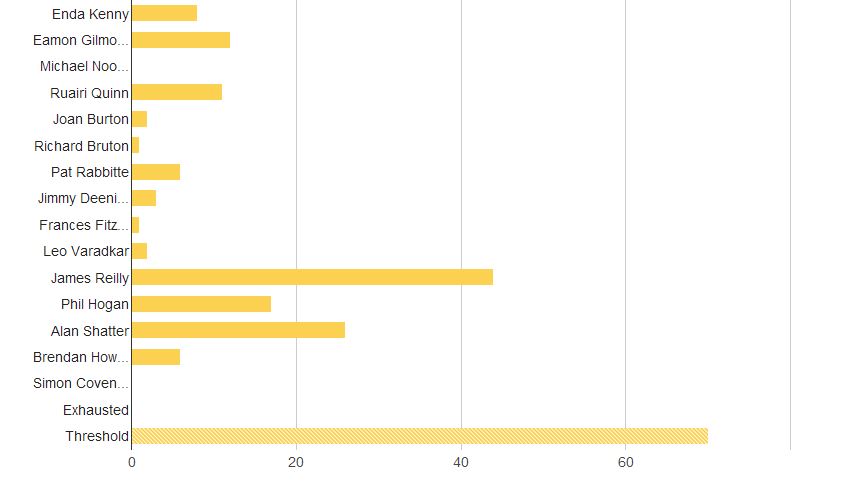
Last weekend I ran a poll under PR STV on the excellent www.opavote.org website to select/elect the worst Minister in Government. I closed polling a few minutes ago.
Many thanks to all those who took the time to vote. I ran this poll to see how well the site performed.
Results in Tabular formatFirst count as a bar chart
Where votes were tied (for an elimination) the one to be eliminated was picked by reference to their first count vote, where they were tied on first count is was by random selection
Interestingly both Michael Noonan and Simon Coveney received zero votes on the first count – which prompts me to shortly run a poll: Who is the best Minister in Cabinet (I may run that poll on a slightly different basis and seek the top three rather than just the one best)
I recently discovered the opavote.org website and wanted to try it out, so I decided to create an online poll to see how the site works.
The poll is determine the worst member of Government – the poll is being run under PR STV – ie you vote for the worst minister in the order of your choice 1 being worst, 2 being second worst and so on… you can stop after 1, or continue on down until 15 (for least worst… or even best!)
There will just be one winner – i.e. one person who exceeds the 50% + 1 quota. You can view the results as the voting proceeds – ie it will run the election as if yours was the final vote to be cast.
On Thursday last the hopes and political aspirations of many hundreds of aspiring and existing City and County Councillors were either dashed or revived with the publication of the new local government electoral boundaries.
Within seconds of being posted online the reports and maps containing the details of the new wards and local areas were being downloaded by political junkies and local election hopefuls across the country, looking to see how the new boundaries would impact on their community.
While these changes, reflecting shifts in population measured at the last Census, are always anxiously awaited, this review had a particular significance as it had been heralded by the Environment Minister as important next step in the Government’s programme for local government reform. Unlike previous reviews this one had a specific goal of improving balance and consistency in representational ratios in local government.
This has been an issue for many years with huge variations in the size of local council constituencies between Dublin and many rural areas. While someone running for election in Dublin City would need 2,500+ votes to secure a seat, someone else running in Leitrim or Roscommon might only require 900 or so votes.
In order to redress this imbalance the Government decided to set terms of reference that reduced the ratio in certain rural areas and reduced it in Dublin. The net effect was that Dublin and other major urban areas get more councillors and many rural areas get less.
The net effect of this rebalancing coupled with the Government’s already stated policy of scrapping Town Councils is a reduction in the number of council seats from 1,627 to 949 and in the number of local authorities from 114 to 31.
This is a significant reduction and it is not going down too well across the country.
While much of the analysis of the review and the changes has understandably focussed on this particular aspect, there is another area which is also worth considering, in the contexts of the Government’s plans to propose the abolition of the Seanad in a referendum later this year.
In scrapping the town councils and reducing the number of local elected representatives so dramatically; have they – to use a phrase from a bygone Fine Gael era – just shot their own fox?
Over the past few weeks and months Fine Gael has been claiming that Ireland does not need a Seanad or second parliamentary chamber based on its size. They have been particularly eager to draw comparisons with a number of the Nordic countries, pointing out that they only have one Chamber and that their average number of national parliamentarians is 160. They even put this claim on their Seanad Abolition posters saying that its time that we too had “fewer politicians”.
The problem with this assertion is that it is just plain wrong. The comparisons Fine Gael try to make don’t work because they compare apples with oranges. They compare bicameral (two chambered) parliaments with unicameral (single chambered) ones and shriek with terror that the bicameral ones have more members – well, of course they have. They are two chambered.
What Fine Gael don’t tell you though is that this is just half the picture. While countries like Norway, Sweden, Finland and Denmark do not have an upper house of parliament, i.e. no Senate, they have far more powerful, advanced and resourced systems of local government instead. That is how they maintain the checks and balances essential to a proper democracy – balances this Abolition proposal will eliminate.
The statistics country by country are quite impressive:
Denmark has 98 local authorities and 2,500 local Councillors.
Finland has 304 local authorities and just under 10,000 local Councillors.
Norway has 423 local authorities and 12,000 local Councillors.
The most impressive one by far is Sweden. It has a whopping 50,000 public office holders. In other words 1% of the entire Swedish adult population (ie between 18 and 80) is a politician.
Over 3,500 of these public representatives serve on regional council governments. There are 20 of these councils based on Swedish counties. But these are not our Irish county councils – these councils control local schools, health services and have the power to raise their own taxes. Below this regional government tier there are about 46,000 local Councillors running their own local municipalities.
Sweden has approximately twice our population. So to match the Swedish level of public access and participation we would need to create an additional 20,000 + elected positions. Even before Fine Gael put up a single poster we already had fewer politicians per capita than Sweden or any of the Scandanavian countries.
But Fine Gael has such a cock eyed view of its own logic that after the changes introduced by this government:
Ireland will have 31 local authorities and 949 Councillors.
The courtyard of the Folketing (Danish Parliament)
Doesn’t this run counter to their argument? Surely the way to end elitism is to create more opportunities for access and participation – not less!
Doesn’t this expose and even widen a hole in the Government’s Abolition argument?
The Nordic countries may not have Senate, but they have a sound reason for not needing one. Their systems of government and administration are considerable more devolved than ours, with the Government and parliament retaining less centralised control over day to day services than we do.
In practice this means that the scrutiny and oversight we need to conduct in a Senate can be done by them at the local government level.
The Danish ambassador to Ireland, Niels Pultz, explained this approach in a recent column for the Irish Independent:“Another important fundamental in Danish politics is the division of labour between the national parliament and the local municipalities. The philosophy is basically that issues of importance to the daily life of citizens are best taken care of at the local level. That goes for primary and secondary education, social services, health, child care, local roads, water and waste management.”
If the government seriously believes that it can move our parliamentary system to resemble the Nordic model is it not going completely the wrong way about doing it?