No long summer break from political debate

This week’s Broadsheet column was a defence of the oft criticisied Summer School season and an argument for more policy Irish think tanks, for for a Fianna Fáil aligned one in particular. Original column online here: Broadsheet.ie 


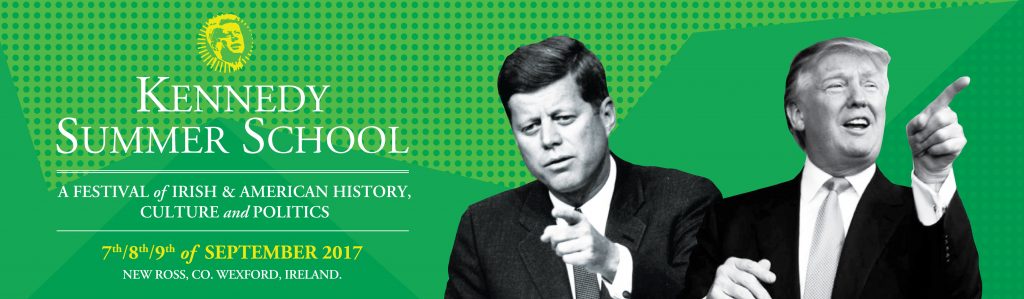
KSS-WEBSLIDER-BANNER17-FA-1024x299

At around 4.20pm on Friday last Dáil Éireann adjourned for the Summer recess. It is due to return at 2pm on Wednesday September 20th.

Cue the usual hollow complaints from the commentariat over TDs holidays and short Dáil sessions, with a few harrumphs from the Brussels side-line courtesy of Fine Gael MEP, Sean Kelly who tweeted that the EU parliament’s holiday will be 4 weeks shorter.

If this Dáil was actually processing legislation, especially the range of halfway decent Private Members Bills coming from backbenchers across the House, then there may be a basis for complaint. But, it isn’t.

To be fair, it is not as if TDs and Senators are about to head off to the Maldives or Marrakech. The Seanad is sitting this week, as are several Oireachtas committees, and they will take a shorter break than the Dáil and return earlier – and before you sigh that the committees don’t count, bear in mind that Sean Fleming’s Public Accounts Committee will be launching its report into the financial procedures at Garda College, Templemore at 2.00pm tomorrow.

Continue reading “No long summer break from political debate”

Who would want to be a TD?

This column is from two weeks back (July 3rd, 2017) and is both a guarded defence of the political party system and a warning of the dangers of the constant desire of the hard left fringe parties to take politics out on to the street.  

It is said that France has the only “tricameral system” in the world – the National Assembly, the Senate and the Street – but history and experience shows that the Street has always been the biggest hindrance to reform. Origianl column online here: www.broadsheet.ie/who-would-want-to-be-a-td/

____________________________________

Joan-Burton-Collage
Collage pic from Irish Mirror


Who in their right mind would want to become a T.D.?

The pay is good, the perks are decent and the scope for promotion (career and ‘self’) is none too bad either, but can these incentives really outweigh the forfeiture of a private life, never mind the ongoing press, public and social media opprobrium whenever you express an opinion?

Shouldn’t politics be a vocation, not a career path?

The problem with that view is not just that it is naïve, it is that it simply won’t work. Try it and we end up with a Dáil full of only those who can only afford to be there by virtue of their profession, their families’ money or simple “pull” – by the way not all of them would be on the right, a fair few would also come from the comfortable left, but that’s just an aside.

Continue reading “Who would want to be a TD?”

A brief history of the Fine Gael Heave #FGheave

cosgrave
Cosgrave at a Fine Gael Árd Fheis

No one does heaves like Fine Gael does heaves. None of your subtle behind the scenes manoeuvrings for them. When it comes to getting political blood on the plush axminster the good folks at Fine Gael are major exhibitionists.

They have had plenty of heaves over the past forty years or so: most of them ill-judged, poorly timed and glaringly unsuccessful. The December 1972 heave against Liam Cosgrave is a good example of all three.

Fine Gael’s liberal wing wanted rid of the conservative, law and order Cosgrave. They complained that the party had failed under his leadership to capitalise on Fianna Fáil’s post Arms Crisis trials and tribulations, but the final straw was Cosgrave’s efforts to get FG TDs to back the government’s controversial Offences Against the State Bill – something they implacably opposed.

Cosgrave was effectively saved from the plotters by a loyalist bomb on Sackville Place that tragically killed two CIE busmen. The explosion took place just hours before the Dáil vote on the Bill. The Dáil adjourned to allow discussion between the parties. When it resumed, Fine Gael withdrew its opposition and abstained as Bill was voted through in an all-night sitting. Three months later Cosgrave became Taoiseach leading Fine Gael into government with the Labour Party.

Fast forward to 1980s and 1990s and we enter the golden age of the Fine Gael heave. The drama and intrigue within the Fine Gael parliamentary party was so intense that RTÉ ran a TV documentary series in 2003 about the period entitled: Fine Gael: A Family at War.

For about two decades the folks in blue were regularly sharpening their knives as they awaited the opportunity to dispatch their leaders. While Dr Garret Fitzgerald managed to escape their clutches his successor, Alan Dukes, had a less happy fate.

Dukes took over from Fitzgerald after the 1987 defeat. While he started out well, Duke’s Tallaght Strategy – a less formalised precursor of the current Confidence and Supply Agreement, which facilitated Haughey’s minority government – was not too popular with FG TDs.

One TD, Austin Deasy, was so incensed that he at first resigned in protest from the party only to return in 1989 and try, unsuccessfully, to oust Dukes. Deasy was a serial heaver, launching his first one first against Garret in 1982 and finishing up with his failed November 2000 one against John Bruton.

Dukes survived, but not for long. In a snap election in June 1989, Fine Gael regained only 5 of the 19 seats they lost two years earlier. The whispering campaign against Dukes was back with a vengeance with one back bencher remarking that if it was raining soup Dukes would be out there with a fork. Things came to a head in late 1990 when the party’s candidate in the presidential election came a very poor third behind Mary Robinson and Brian Lenihan Snr.

The result had hardly been declared when Fergus O’Brien, who had been demoted by Dukes, tabled a motion of no confidence. This was followed by a flurry of Fine Gael TDs rushing to the nearest journalist to unburden themselves. Dukes could not withstand the onslaught. Within days he resigned and was succeeded by John Bruton.

Now the Fine Gael heavers shifted into top gear. It seemed as if there was a heave brewing every few months. Bruton survived five leadership contests during his eleven years at the top. The sixth one, in January 2001, led by two political heavy weights Jim Mitchell and Michael Noonan succeeded in toppling him. Noonan took the top job, beating Enda Kenny, but his reign was short lived. FG’s defeat in the May 2002 election was so calamitous that Noonan resigned on the night of the count. He was succeeded by Enda Kenny.

As you can see from these examples and the June 2010 heave against Enda outlined in my Enda’s 3am question is still unanswered Broadsheet column: most of them fail. The ones that do succeed have the oblique backing of the person who hopes to succeed and are usually attempted when the party is in opposition – not in government.

This later point is perhaps not so relevant today. Fine Gael spent most of the 80s and 90s in opposition and were not in office long enough to have the time to consider it. It was these long periods of opposition – and powerlessness – that led to the heaves. The breaking point, in most cases, being a bad election result or a series of poor opinion poll results.

This heave is different or at least it appears different. Unlike heaves of the past it has been occasioned by an actual political event, namely the chronic mishandling of the Sgt McCabe debacle and the confusion about who told who said what and when and if they told the Taoiseach or just one of his Advisers.

But it would be foolish to think that electoral considerations are not also a major factor.
While Enda Kenny has made it clear that he does not intend to lead his party into the next election, the abiding fear among Fine Gael TDs was that events would overtake them and that Fianna Fáil would pull down the house of cards before Enda quits and they find themselves facing an election with Enda still in place.

Up to a few weeks ago, they assumed that Fianna Fáil was neither ready nor willing to trigger an election until 2018 – but a series of good polls for Micheál Martin’s soldiers of destiny has convinced already rattled Fine Gael TDs that Fianna Fáil was preparing itself to call time on the government.

The problem with this scenario is that it shows Fine Gaelers thinking like Fine Gaelers, not like Fianna Fáilers. Fianna Fáil knows well that voters tend not to reward parties who trigger unnecessary elections for partisan gain. Martin’s FF eschews the “cute hoor” tag that once bedevilled the party. When it eventually moves against the government it will be seen clearly do so on an issue of policy, not personality or partisan gain.

On a more practical front, 20 of Fianna Fáil’s 45 TDs are first timers. They are just starting to settle in after two or three years of intense campaigning to win those seats. They are not ready or prepared for an election yet. Most are now watching the turmoil in the FG ranks and trying to work out whether the election of Simon or Leo – or neither – means the election will be in May, June, September or later.

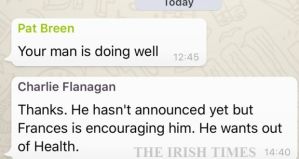
Meanwhile the rest should reach for the popcorn, scan our WhatApp to see if Charlie Flanagan is messaging us and just enjoy it all.
flanagan

I hate to admit it, but @JuliaHB1 and other #brexiteers may have a point, just not the one they think

Here is my Broadsheet article from Sept 28th regarding the calls for a second #Brexit referendum vote. I would love to be able to support the call, but I cannot. Experience of re-runs of Irish EU referendums tells me that this is not an option in the UK given the high voter turnout.

————– 

questiontimeI have to confess that my heart sinks a little whenever I hear English Tories or English nationalists, like Nigel Farage, mention Ireland during their rants about the EU. The reference is usually patronising or condescending or – even worse – is given in the form of advice that would have us join them in their march back to a glorious era that never existed.

This is why my heart sank when Julia Hartley Brewer, a British Talk Radio host, Leave campaigner and former political editor, stated on last Thursday’s BBC Question Time that the EU had forced Ireland, and other countries, to vote again on EU referendums.

Her comments came during the course of a discussion on whether Britain might have another referendum on Brexit – a proposal put forward by the failed Corbyn challenger, Owen Smith MP or that the UK might have a separate vote on the final deal hammered out on the conclusion of the Art 50 negotiations, an idea put forward by Tim Farron’s Liberal Democrats.

Though hearing Hartley-Brewer getting it badly wrong on the notion of the EU ‘forcing’ us to vote again made my heart sink a little, it sank even further when I realised that she and her fellow panellist that night Jacob Rees-Mogg MP (who looks like he is being portrayed by Joyce Grenfell) may actually have a point, just not the one they think.

Though I and other Remainers may wish it to be otherwise, the hard fact is that Ireland’s voting again on the Nice and Lisbon treaties is not relevant to the UK’s situation for one simple reason: turnout.

In the first referendum on the Nice Treaty (Nice I) in 2001 the turnout was just under 35% – the result then was 54% No: 46% Yes. At second referendum on the Nice Treaty (Nice II) in Oct 2002 the turnout shot up to just under 50% with Yes getting 63% and No dropping to 37%.

It was a broadly similar situation in the case of the two Lisbon Treaty referendums. In Lisbon I in June 2008 the turnout was 53%. No won by 53%:47%. At Lisbon II the turnout had again increased, this time to 59% with Yes now winning by 63%:37%

In both cases the turnout in the first referendum was low to start with, in the case of Nice I it was exceptionally low, just in the mid-30s, so there was a convincing argument to be made for a second vote, particularly when you felt that a second referendum would have a higher turnout.

This was not the case in the UK’s Brexit referendum. The turnout there was a whopping 72%. This is a substantial turnout. It is much higher that recent UK General Election turnouts, indeed you have to go back to Tony Blair’s 1997 election victory to find a UK general election turnout of over 70%.

The huge political risk you take by having a re-run second Brexit referendum in these circumstances is that you get a lower turnout. It is politically saleable to try to reverse one mandate with a smaller one?

To be clear, turnout alone was not the reason why there were re-runs of the Nice and Lisbon referendums. In both cases post referendum polling and analysis found that the main reason for voting “No” or abstaining was a lack of knowledge of either treaty. Both “Yes” and “No” voters were highly critical of what they viewed as a dearth of clear, accessible information on the treaty’s merits.

While the Remainers can clearly point to a lot of misinformation from the Leave side, not least the claims that leaving would mean £350 million extra per week for the NHS, they cannot yet point to any substantive research or analysis suggesting any changes in opinion.

Noted UK pollster, Prof John Curtice, reckons that there is little evidence of a “significant rethink” three months on from the result with those who voted Remain still convinced that they were right and likewise for the Leavers. Very few minds have been changed, though let us see if that remains the case as the details of the Brexit deal on offer emerge during the course of the next year or so.

The problem with all this abstract discussion on a second referendum is that it takes the focus away from the very real and tangible issues with the first result: most crucially that the Hartley Brewer, Farage and others do not want to honour the clear Remain majorities in Northern Ireland and Scotland. Instead they want to use the votes of English and Welsh people to forcibly drag Northern Ireland and Scotland out of the EU against their declared will.

This is no small issue, yet it is receiving scant attention in the UK and, sadly, here.

Voters in both Northern Ireland and Scotland voted convincingly to stay in the EU, by much bigger margins that the people across the UK voted to leave. Many of those voters in Northern Ireland hold Irish passports and are thus also EU citizens, even if the UK leaves. Can that citizenship – and the guarantees and privileges it offers – simply be snatched away from them on the say so of 50%+ of voters in the south of England?

As people like Michéal Martin and Colum Eastwood have repeatedly said over the past few weeks and months; trying to drag the North out of the EU against its will ignores the layered complexities of the Irish political process.

It is a refutation of the basic principles of the accommodation achieved in the Good Friday Agreement and that is something that concerns all of us on this island.

We should be debating and discussing this now. We should be looking at the significant consequences of Brexit for our economy, for our trade – both North/South and East/West, our education system, out health service.

We should not allow the foot dragging by the British Government on outlining its terms of exit to stop us from forcefully setting out our concerns and our alternatives. We need the speedy establishment of the all-island political/civic forum I called for here at the end of June. I know the Taoiseach and his team messed up their first attempt to get the idea up and running, but they need to go again and get it right this time.

Some understanding, but no grá for the GRA #Gardastrike.

This is my Broadsheet article from Monday, October 3rd, 2016

gardai-in-uniform-1878112If the Luas and Dublin Bus pay disputes are anything to go by then the choreography of future pay rows, particularly public sector ones, is likely to run as follows:

Step 1. Both sides negotiate for months without success.
Step 2. Employees go on a limited strike, inconveniencing the public
Step 3. The strike action continues for 3 – 4 weeks while both sides posture on TV and radio news shows
Step 4. Both sides then ‘suddenly’ return, without preconditions, to the negotiating table
Step 5. Employers find extra cash for pay increases they previously said was not there

Would it not be better for everyone, most particularly the public who these public services are meant to… well… serve…, if the unions and management could just skip steps 2 and 3 and jump straight to step 4?

Continue reading “Some understanding, but no grá for the GRA #Gardastrike.”

The decline of public language in politics is coming to Ireland

This is my Broadsheet column from just over a week ago – September 12th 2016 – it concerns the then MoS John Halligan will he/won’t he resign saga. Though he didn’t resign, keep this one on file for the next time this political soap opera comes around. The original column can be viewed here: www.broadsheet.ie/in-a-field-of-his-own/ 

——————–

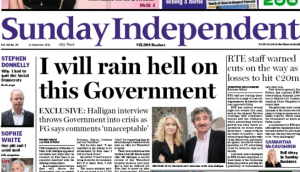
rain-hellThough he may not realise it: John Halligan’s pronouncements over the weekend (such as the headline [left] in the Sindo) may just be a very small part of a world-wide phenomenon.

No, I am not claiming there is global movement to secure a second catheterisation (cath) lab for Waterford. What I am saying however, is that his statements, particularly his most recent ones, contain many of the elements of the decline of public language in politics that we have heard elsewhere.

I accept that Halligan and the local consultants in Waterford hospital are sincere in desperately wanting a second cath lab, but wanting something is not the same as needing it – especially when resources are not unlimited.

Continue reading “The decline of public language in politics is coming to Ireland”

Special Advisers #Spads can play an important and positive role in government

Here is my Broadsheet column from September 5th 2016. This looks at the important and positive role Special Advisers (Spads) can play in government, particularly a partnership one. www.broadsheet.ie/treated-like-interlopers/

——————-

sycamore-room
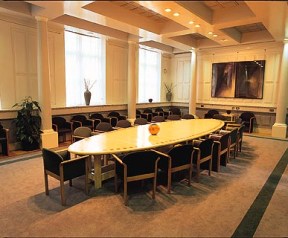
The Sycamore Room in Dept of an Taoiseach where the Advisers meet

“To provide spurious intellectual justifications for the Secretary of State’s prejudices”

This is how the late Maurice Peston (father of ITV’s political editor Robert Peston) responded in the early 1970s when a senior UK civil servant asked him to explain how he saw his role as Roy Hattersley’s newly appointed Special Adviser (Spad).

It was more than just a casual witty remark from the Professor of Economics: it specifically referenced the fears the Department of Prices and Consumer Protection had about having an acknowledged policy expert in their midst and gainsaying their more generalist advice.

Continue reading “Special Advisers #Spads can play an important and positive role in government”

A simple primer on Irish #Defence Policy

Here is another of my weekly Broadsheet columns. I am slowly catching up on reposting these columns here, I hope to have my site up to date over the coming week.

This one is from August 29th and offers a quick primer on understanding Irish Defence policy: www.broadsheet.ie/mission-creep-2/ 

————————————
army

Though you may not have noticed it – there was, over the last few weeks, an attempt to start a public debate on Irish Defence policy. While the Irish Examiner, in particular, did its level best to get it going, the discussion soon fizzled out.

The reason why the debate never really got going may be due to the fact that we tend to only discuss defence policy in public in response to some significant event or, more frequently, to some outlandish and unfounded claim.

On the rare occasions that we have any debate on defence in Ireland, they tend to be either end of the extreme ranging from claims that we are abandoning neutrality, a claim made continuously since the 1970s, to questions as to why we even have a Defence Force.

Though there is a real and clear public pride in our Defence Forces, both at home and abroad, there is also a surprising paucity of knowledge about Defence policy.

With this in mind, I want to use this week’s Broadsheet.ie offering to put some basic facts about Irish Defence policy out there, in the vain hope that the next public debate on Defence may be based on fact and reality, not myth and assertion.

Let’s start with a few basics.

The Irish Defence Forces comprise the Army, Air Corps and Naval Service and should total 9,500 men and women. The current manpower figure as set out in a parliamentary reply to Fianna Fáil’s Lisa Chambers, is just under 9100.

There are approximately 460 Irish troops currently serving overseas on a range of UN led and mandated peace-keeping and humanitarian missions. These include: 60 naval service personnel on the humanitarian search and rescue operations in the Mediterranean; about 210 troops on the UNIFIL mission in Lebanon and approx 140 troops serving in the UNDOF mission on the Golan Heights in Syria.

Though these numbers are way down from the average of 800 plus personnel serving overseas less than a decade ago, it still represents a sizeable Irish contribution to international peace and security, which in turn contributes to our own national security.

We spend about €900 million per year on Defence, though the vast bulk (over 70%) is accounted for by wages and pensions. When it comes to value for money the Defence Forces lead the way. The reform and modernisation programme undertaken between 2001 and 2010 make it a model of how public sector reform can be done right. Productivity was increased, numbers were reduced and the savings were invested in vastly improved equipment and training.

Now let’s turn to the policy side. First and foremost, Ireland is militarily neutral. While this is usually defined as not being a member of a military alliance, it also means that we decide for ourselves how much we spend on defence and – most importantly – how, where and when we deploy our troops overseas on humanitarian and peace-keeping/peace enforcement operations.

This is done via the “Triple-Lock” mechanism of UN mandate, Cabinet and Dáil approval. Triggering this triple lock is required before 12 or more Defence Force personnel are deployed overseas under arms. This enshrines not only our military neutrality but our commitment to multilateralism and the UN.

We use the phrase UN mandated, which means that a UN resolution is required. Nowadays many UN mandated missions are not UN led, i.e. “blue helmet”, but rather led by regional organisations – such as the EU, The African Union, NATO etc – on behalf of the UN. This was the case in the 2008 EUFor Chad  mission, which was commanded by an Irishman, Gen. Pat Nash.

I was in the Dept. of Defence during the Chad/Central African Republic mission, which was established to deal with the crisis created in the region on foot of the Darfur famine. I saw how the Triple Lock was implemented smoothly and speedily. UN resolution 1778 was passed at the end of Sept 2007, Cabinet Approval was given in October, unanimous Dáil approval by the end of November and by December an initial deployment of Army Rangers and support elements were on the ground in Eastern Chad establishing the Irish Camp.

Any difficulties in deployment were not due to the Irish or the Triple Lock but rather to the frustrating slowness of other EU countries, particularly the non-neutral ones, to respond especially when it came to offering air and medical support to the mission.

Nothing I saw at those defence meetings in Brussels led me to think that an EU Army was a realistic possibility, leaving aside the fact that we have a veto (EU requires unanimity on common defence) on it and that the Irish Constitution (Art 29.4.9) precludes Irish membership of a common defence.

Speaking of air support brings me back to the Irish Examiner article mentioned at the outset. From my perspective this appears to be based on the inaccurate, if not sensationalised misreading, of an already inaccurate report.

I say inaccurate as the original material suggests that is not Ireland which has asked the RAF to protect our airspace from terrorist threats, but rather that it is the British who have asked for Irish permission to fly into our air space in the event of terrorist air attacks heading for Britain.

When viewed this way the story is not quite as sensational, nor is it the slam dunk argument for Ireland rushing out and purchasing a fleet of F-16s.

I am not absolutely opposed to our buying a few F-16s – though if we are going to go into the fighter aircraft market why not opt for some newer F-35s?

I am sure the Air Corps would be overjoyed to have them, though I suspect the Departments of Finance and Public Expenditure might baulk at the tripling or quadrupling of annual defence expenditure necessary to keep these fighters in the air 24/7, especially when we consider the real and actual threat assessments.

So, let us have a full debate on defence (and foreign) policy by all means, but let us ground it in fact and reality.

ENDS

Three cheers for the system. Hip hip…. No? Nothing…?

Here is my “Mooney on Monday” Broadsheet column from August 8th 2016 last:  www.broadsheet.ie/three-cheers-for-the-system/

blog_tag1This comes as no surprise. After the tumult and turmoil of the past few years it would require a hopefulness that bordered on the foolhardy to expect to hear anything even vaguely complimentary said about the system.
At so many levels, it failed us. The institutional accountability and oversight that we thought would prevent bank and financial crashes proved inadequate at best, and downright mendacious at worst.

It is a failure that reaches beyond the crash and extends right up to the present day with so many people seeing the present recovery as something that is happening in communities and areas other than theirs.

This feeling that is not unique to Ireland. We see echoes of it in the Brexit result in the U.K. with the high numbers of people in the former industrial heartlands of the midlands and the north of England voting to leave the EU.

Continue reading “Three cheers for the system. Hip hip…. No? Nothing…?”

Pro-EU sentiment across #Ireland should be fostered via all island Forum #brexitresult

puckoonThis is my Broadsheet “Mooney on Monday” from Monday piece from June 27th on how the Irish Government (and politicians) must act in response to the UK’s Brexit vote.  

There is a new (though not uncritical) pro-EU majority across the island that should be encouraged and fostered via a re-establishment of the Forum on Europe. There must not any a return of form of border across the island.

The original online version appears here: www.broadsheet.ie/return-of-the-hard-border/

———————————

For as long as I can recall it has been a central tenet of Unionism that the status of Northern Ireland should not change without the political consent of the majority of the people living there.

Yet, that it precisely what is set to happen over the coming years, with senior members of the DUP cheering it on

Despite the fact that a clear majority – some 56% – of the people of Northern Ireland who voted, including large numbers from both traditions, stated that they wanted to remain in the EU, their wishes are about to be ignored. It seems that a majority in the North is only a majority when the DUP is a part of it.

Continue reading “Pro-EU sentiment across #Ireland should be fostered via all island Forum #brexitresult”