A very short (pre 1975) history of Irish/Russian relations.

An Taoiseach Micheál Martin has expressed the sincere and understandable concern that expelling the Russian Ambassador Yury Filatov could sever Irish/Russian relations and trigger the shuttering of both the Irish Embassy in Mosco and the Russian Embassy here in Dublin.

A not strictly reciprocal development given the imbalance in size between the representations… a point well made in this Irish Times article:  https://www.irishtimes.com/news/ireland/irish-news/russia-still-plans-to-extend-dublin-embassy-s-espionage-role-say-experts-1.4814532

Relations between Ireland and Russia have been fraught at times and formal diplomatic representation only commenced in 1973. Continue reading “A very short (pre 1975) history of Irish/Russian relations.”

Putin: the Czar of false flags

This column first appeared on Broadsheet on Monday Feb 21st, several hours before President Putin made it TV address and confirmed that Russia was recognising the two secessionist Ukrainian provinces of Donetesk and Luhansk as independent states.   

The most ridiculous and obsolete phrase you will hear in any Irish debate or discussion of the Ukrainian crisis is “… but Putin has a point.”  It is rarely uttered in isolation, but rather as the curt follow-up to an insipid denunciation of Putin’s blatant aggression. Suggesting that while Putin is doing the wrong thing, he may have understandable motives.

This is utter nonsense.

The notion that Putin’s threat to his smaller western neighbour has anything to do with NATO or the prospect of Ukrainian NATO membership is absurd. There has been no major expansion of NATO membership in recent years, indeed only two counties have joined NATO since late 2009 and both of those are well over 1400Km south west of Ukraine’s western border: Montenegro in 2017 and North Macedonia in 2020.

The biggest expansion in NATO’s membership happened back in 1999 and 2004 when ten countries, including three Baltic states that were once part of the Soviet Union and several former Warsaw Pact states, joined.  Are we to believe that Vladimir Vladimirovich Putin was so distressed by this 2004 move that it has taken him 18 years to regain his composure and respond?

Continue reading “Putin: the Czar of false flags”

The Painful Sting Of A Fading DUP

This column first appeared on Broadsheet.ie on Monday February 14th. This was the same day as the Irish News published results of their opinion poll, which was conducted in partnership with the Institute of Irish Studies University of Liverpool between January 25 and February 7.

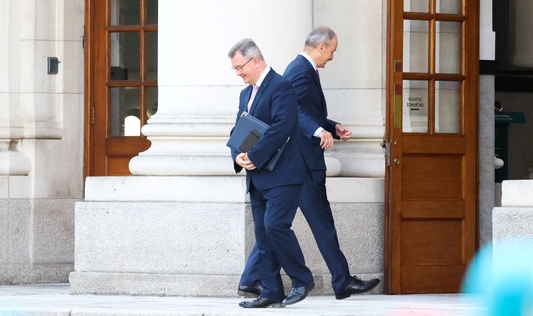
Pictured is Leader of the Democratic Unionist Party Jeffrey Donaldson with Taoiseach Micheal Martin as he leaves Government Buildings in Dublin, following a meeting between the two leaders. Photograph: Sam Boal / RollingNews.ie

The latest intrigues of Jeffrey Donaldson and the DUP bring to mind the adage: “You can get an awful sting from a dying bee.”

We may well be watching the final throes of Unionist ascendency as the DUP struggles to deal with a fraught situation entirely of its own making.

Last year’s celebration of Northern Ireland’s centenary reminded us how the net impact of five decades of Unionist rule was to undermine the very hegemony that brought it into existence. When Northern Ireland was established in 1921, around 62% identified as Protestant and 34% identified as Roman catholic. This figure remained steady up to the late 1960s when the proportion of Catholics began to increase. Continue reading “The Painful Sting Of A Fading DUP”

Irish Defence Policy – the sleeping dog that’s no longer content to stay asleep

This column first appeared on Broadsheet on Monday, January 31st with the much snappier title: Indefensible. In it, I explain how a decade of political neglect of both defence policy and the Defence Forces is coming back to haunt the government. Sadly, the comments of An Taoiseach and of Ministers Coveney and Ryan point to them having beither the ideas or the political will to undo the damage of thar decade of neglect. 

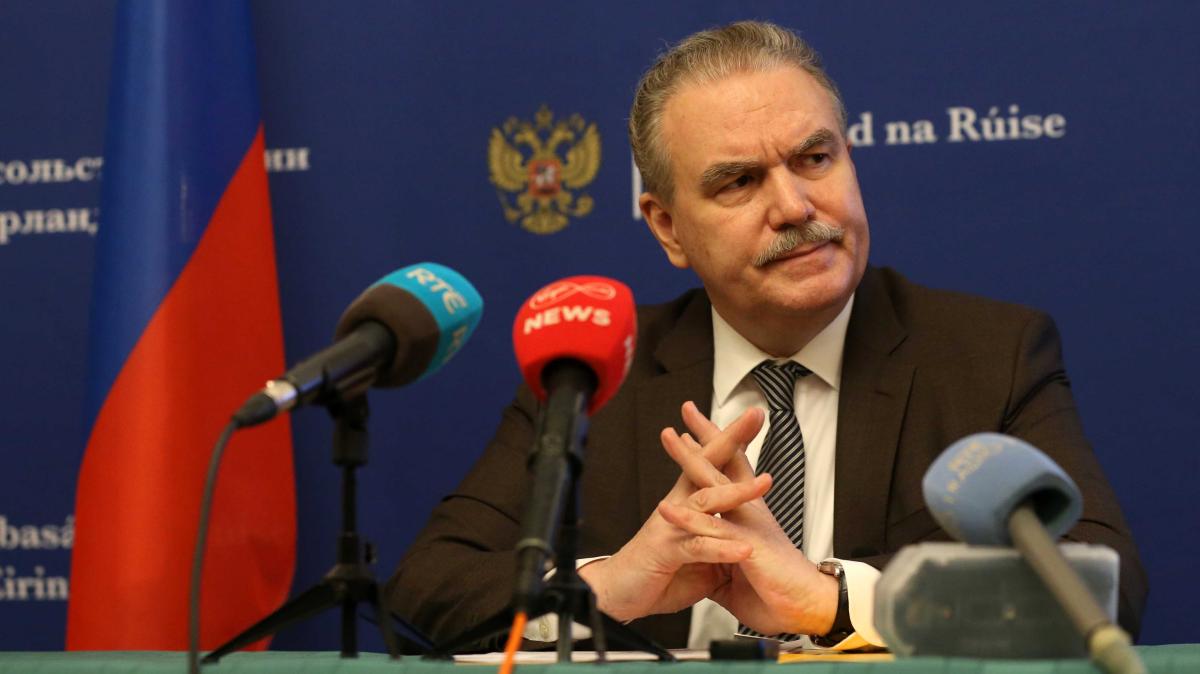
Active Measures – Russia’s Ambassador to Ireland, Yury Filatov. Pic via SASKO LAZAROV/ROLLINGNEWS.IE

After a decade of defence issues being pushed so far down the political agenda that you’d need a bathysphere and a decompression chamber to even spot them, they came roaring back up that agenda this week. With a vengeance.

Each day brought a new story. It started with the concern over the build up of Russian forces on the Ukrainian border and the not unconnected tumult over Russia’s plans to mount naval exercises in Ireland’s exclusive economic zone.

It then continued with the policy-making-on-the-hoof announcement by Taoiseach Micheál Martin and the Communications Minister Eamon Ryan that they plan to come up a plan to close Cathal Brugha barracks and use it for housing.

Continue reading “Irish Defence Policy – the sleeping dog that’s no longer content to stay asleep”

Promises to keep when you have mid-terms to avoid?

In this week’s column, which first appeared online on Broadsheet.ie on January 17th 2022, I looked at the beleagured leadership of Boris Johnson and suggest that he may limp on until May when his fate could be sealed by a bad mid-term local election result. Meanwhile, the three Irish government party leaders will be happy that the next locals and european elections are not due here until 2024 and so they face no mid-term electoral test in 2022… except…   

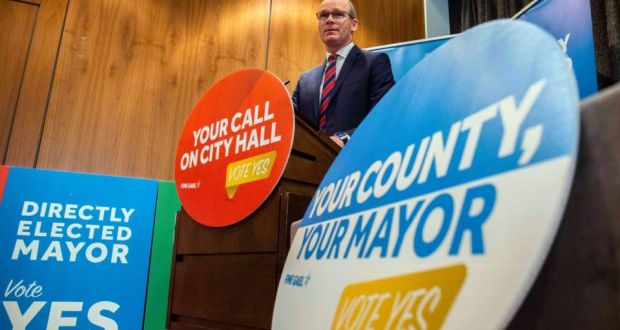
2019: Simon Coveney campaigning unsuccesfully to persuade Cork voters to back having a directly elected lord mayor of Cork. Limerick backed the plan. But 1000 days later it is not much closer to actually electing one. Photograph: Clare Keogh

In politics, the things you don’t say, or hesitate over saying, can say more about what you are really thinking than the things you do say. You can hear a near textbook perfect example in a short clip from a BBC Radio Devon interview with local Tory MP, Simon Jupp. (I have the audio in the Podcast version of this piece).

Asked if he thinks Boris Johnson will still be Prime Minister and Tory Leader this time next month, Jupp – a former BBC journalist and senior Tory party communications adviser – responds with… nothing. There are three or four seconds of silence, before he finally struggles to say he probably will.

Setting aside the schadenfreude of hearing a former press officer who may in his time have scolded ministers on their dire media outings, delivering an even worse one, Jupp’s performance highlighted the scale of the peril facing Johnson. Continue reading “Promises to keep when you have mid-terms to avoid?”

Sinn Féin discovers public sector reform, a decade after everyone else… late, but still welcome

This article first appeared on Broadsheet.ie on January 10th 2022 and looks at Sinn Féin’s 10-year-wait to discover the need for public sector reform. I also examine their record on this issue, in that part of the island, where they have ministerial responsibility for public sector reform

Sinn Féin, CC BY 2.0 via Wikimedia Commons

Something unusual, though politically significant, happened during the first 10 minutes of last Friday’s “Gathering” on RTÉ Radio 1’s Claire Byrne Today show.

We have become so accustomed to hearing Sinn Féin spokespeople sticking carefully to their talking points and holding the party line, that hearing one utter even the vaguest criticism of their leader, is jarring.

Yet that is what Sinn Fein’s Louise O’Reilly did when she said that she “wouldn’t use necessarily the words that Mary Lou used…”. The words to which O’Reilly was referring, which she also called “inelegant”, had come from an Irish Examiner interview in which the Sinn Féin leader said of the need for public sector reform:

“But we have, in many respects, a system that is constipated, a system that is slow, and a system that needs to be jolted… “

It’s not often you hear a Sinn Féin spokesperson upbraid their leader in public and get away with it. Louise’s move was politically bold and strategically wise.

Continue reading “Sinn Féin discovers public sector reform, a decade after everyone else… late, but still welcome”

For Both Taoiseach and Tánaiste The Question is: To reshuffle, or not…?

This column first appeared on Broadsheet on January 4th and looks at the contrasting approaches that both Taoiseach and Tánaiste appear (from their public comments, at least) to the possibility of a reshuffle of their ministesr when the government mid-point/turnabout comes next December.

Justice Minister Helen McEntee – Picture: Sam Boal Via Irish Examiner

Political commentators hailing a minister who was on maternity leave for half of 2022 as their politician of the year tells you a lot about the state of Irish politics.

Not that I particularly object to their choice of Minister Helen McEntee. Her absence from the cabinet table at a challenging time did nothing to diminish her public profile, while the positive media treatment of her return, did much to enhance it.

Minister McEntee is one of the few recognisable names and faces around the Cabinet table. She has become a political figure in her own right, albeit one who is still untested – a point I made here last February.

This is not something you can say about all her colleagues. While some do stand out as individuals with thoughts and ideas of their own, most come across as either politically shapeless or just innocuous. Mercifully the Taoiseach and Tánaiste have not required certain ministers wear nametags at meetings, if What’s My Line ever returns to our TV screens, the panel would have some trouble discerning precisely what the Minister for Children or the Minister for Agriculture do for a living. Continue reading “For Both Taoiseach and Tánaiste The Question is: To reshuffle, or not…?”

We Can’t Spite Ourselves On Covid Restrictions

The column first appeared on Broadsheet on December 20th. In it I look at the latest government responses to the Omicron variant and ask if we are taking sufficient notice from what our government, and others across Europe and across the globe, have sometimes done wrong, and often done right.

I specifically urge the re-establishment of the Special Dáil Committee on Covid-19, which was, in a most short-sighted move, disbanded in October 2020.

A sign for a Covid-19 testing centre at London Heathrow Airport – Photographer: Jason Alden/Bloomberg

In his hefty 2011 tome, The Better Angels of Our Nature, cognitive psychologist, Prof Steven Pinker argues that the lesson is history is a society that has become less violent. His central premise is that there has never been any time, in the history of mankind, when we were less likely to die at another’s hand, than now.

It’s an uncommonly positive and optimistic analysis of the state of the world. Right now we need as much of that as we can get. Pinker’s outlook is not unique to him. Many others have reached the same conclusion. This is hardly a surprise. The statistics are convincing.

Continue reading “We Can’t Spite Ourselves On Covid Restrictions”

GDPR: Going after the DPAs – First Belgium… Ireland next?

This is a short article I wrote for the BEERG (Brussels European Employee Relations Group) weekly newsletter on some interesting recent developments on data protection, particularly the criticisms of the Irish Data Protection Commission. Though unconnected, I had a short Twitter exchange with renowned privacy advocate, Max Schrems, on a related topic, a few days later.   

In early December one of the five directors at Belgium’s Data Protection Authority (APD/GBA) resigned, citing the same concerns about a “lack of independence” at the authority which the EU Commission had raised several weeks earlier.

In November VRT (public-service broadcaster for the Flemish Community of Belgium) ran a story saying that the European Commission was commencing infringement proceeding against Belgium claiming that:

some members of the APD/GBA cannot currently be considered free from outside influence, as they either report to a management committee dependent on the Belgian government, have participated in government projects for the detection of COVID-19- contacts, or are a member of the Information Security Committee.

Continue reading “GDPR: Going after the DPAs – First Belgium… Ireland next?”

Martin and Johnson… a lot more alike than you’d think

This column first appeared on Broadsheet on Monday December 13th. It looks at a comparison I would never have thought possible just two years ago – but I explain why the two leaders – who do not share many traits or characteristics – regrettably share one very large negative one

The famous blackboard from Derry Girls – now (a copy) in the Ulster Museum

If you haven’t seen it already, then do yourself an enormous favour and check out the glorious blackboard scene from the second series of Derry Girls. Actually, just go and watch all of Lisa McGee’s deeply affectionate and wildly funny account of life in 1990’s Derry.

In the blockboard scene, Fr Peter invites teenagers from a catholic girls’ school and a protestant boys’ school, brought together for a cross community weekend, to suggest examples of things they have in common. These are then written down on a blackboard.

While they struggle to come up with things they have in common, they have no such problem listing their differences: Catholics watch RTÉ; Protestants love soup. Catholics love statues; Protestants hate Abba. The ‘differences’ blackboard is soon overflowing. The similarities one remains bare.

While I’ve no doubt it wouldn’t be anywhere near as funny, ask a group of Irish people what Boris Johnson and Micheál Martin have in common, and they’d struggle to propose much for the similarities one. Continue reading “Martin and Johnson… a lot more alike than you’d think”