
Doing national #cybersecurity on the cheap costs more… time to put @defenceforces in charge

This week’s column first appeared on Broadsheet.ie on Monday May 17th. I look at the massive ransomware attack on the HSE and the Dept of Health and remind us that experts have been warning for years that government is not taking cyber defence seriously enough.

We risk being the EU’s weakest link on cyber security despite our dependence on the digital economy. 


Though I have related this Jeffrey Bernard anecdote here before, it still bears repeating. When Jeffrey Bernard was too “tired and emotional” to submit his weekly column to The Spectator, the editor would place an apologetic line explaining that there was no column that week as: “Jeffrey Bernard is unwell”.

There was also another one. It was longer, but less apologetic and appeared when the editor was feeling less charitable. It read: “Mr Bernard’s column does not appear this week as it remarkably resembles the one he wrote last week”.

Broadsheet’s editor could be forgiven for posting a similar renunciation here, as the discourse on the HSE cyber-attack I propose to put to you is effectively a re-statement of arguments and commentaries I’ve made many times over the past few years. 

I have been warning about our failure to take national cyber-security seriously since late 2019. I highlighted it as a sub-plot in this column from Sept 2019 and then expanded on the problem in a column entitled: Pleading No Defence On Cyber Security.
Continue reading “Doing national #cybersecurity on the cheap costs more… time to put @defenceforces in charge”

Like Brezhnev… many in Fianna Fáil Are Riding The Rails With The Blinds Down

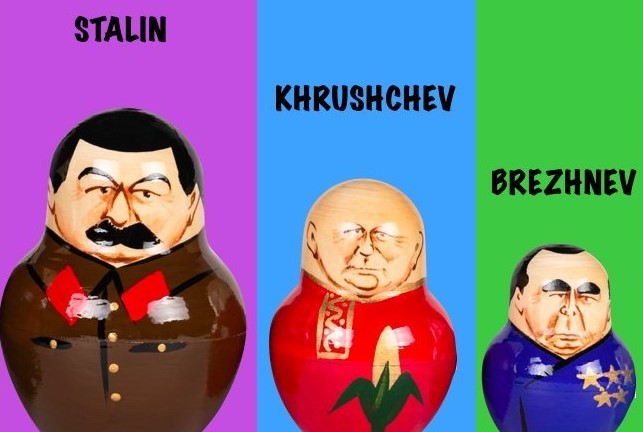
This week’s column appeared on Broadsheet.ie on May 10th and opens with an old Soviet era story contrasting the leadership styles of Stalin, Khrushchev and Brezhnev and moves on to me suggesting that the fence-sitters, the undecideds, in the Fianna Fáil parliamentary party are acting like latter-day Brezhnevs… hoping to survive just long enough to pass on the huge problems they can see, but ignore, to someone else. I also take a quick pre-campaign look at the upcoming Dublin Bay South by-election #DBSBE21

There’s a Soviet era story comparing the leadership styles of three of its former leaders: Stalin, Khrushchev and Brezhnev.

It goes like this. The three leaders are sitting in the plush compartment of a special politburo train traveling across the western Siberian plain.

The train suddenly stops in the middle of nowhere. The leaders send for the train manager. He informs them that the driver, co-driver and engineers have gone on strike and are refusing to move the train another centimetre.

Stalin tells Khrushchev and Brezhnev: “I’ll deal with this”. He climbs down from the carriage and walks to the front of the train to berate the crew.

Before the great leader can utter a word, the driver complains vocally that he hasn’t been paid in weeks, hasn’t eaten or slept over the past 24 hours and has just heard that his brothers have been arrested and sent to a gulag.

Continue reading “Like Brezhnev… many in Fianna Fáil Are Riding The Rails With The Blinds Down”

There’s no big secret to good government communications

This column appears here out of sequence, as it first appeared on Broadsheet.ie on April 19th. In it, I look at this government’s problems with communications, particularly the Fianna Fáil side of it.

According to the veteran American comedian George Burns there is no big secret to comic timing. It’s very simple, he said. You tell the joke, you wait for the laughter and when the laughter stops, you tell the next joke. That’s comic timing.

It’s something similar with government communications: you deliver you message and give the public the time to let it sink in.

What you certainly do not do is to talk across your message or try to chop and change the narrative while folks are still trying to take it in.

There is nothing wrong with a minister having a new idea, indeed it is something to be encouraged. What is important is that it is an informed idea. What you don’t do is to contact a journalist to communicate an idea to the public until it has been fully formed and explored with colleagues and – hopefully – some real live experts.

Continue reading “There’s no big secret to good government communications”

Varadkar’s future as leader is now no more assured than is Martin’s

This column first appeared on Broadsheet on March 15th, the day after the Sunday Times [Ireland] broke the story that the preliminary Garda inquiry into the leaking of a confidential contract by Leo Varadkar while Taoiseach had been upgraded to a criminal investigation by Garda Headquarters. Here I set out why Varadkar’s grip on the Fine Gael leadership was already starting to loosen before this story broke and why his political future may be every bit as uncertain as Micheál Martin’s. 

Over last few months I have written a lot… an awful lot… about Fianna Fáil’s existential crisis. These articles have mainly focused on the shortcomings of the leader, and Taoiseach, Micheál Martin.

This is to be expected. Even though I now find myself on the outside looking in, it is still the party I understand best, and care about most, having been a member for over 40 years.

But my instinctive focus on my former party should not detract from the problems facing Fine Gael – or, more specifically, those facing its leader, An Tánaiste, Leo Varadkar.

Before yesterday’s Sunday Times front page story about the Tánaiste being the subject of criminal investigation, Varadkar’s position looked unassailable. But looks can be deceiving.

Continue reading “Varadkar’s future as leader is now no more assured than is Martin’s”

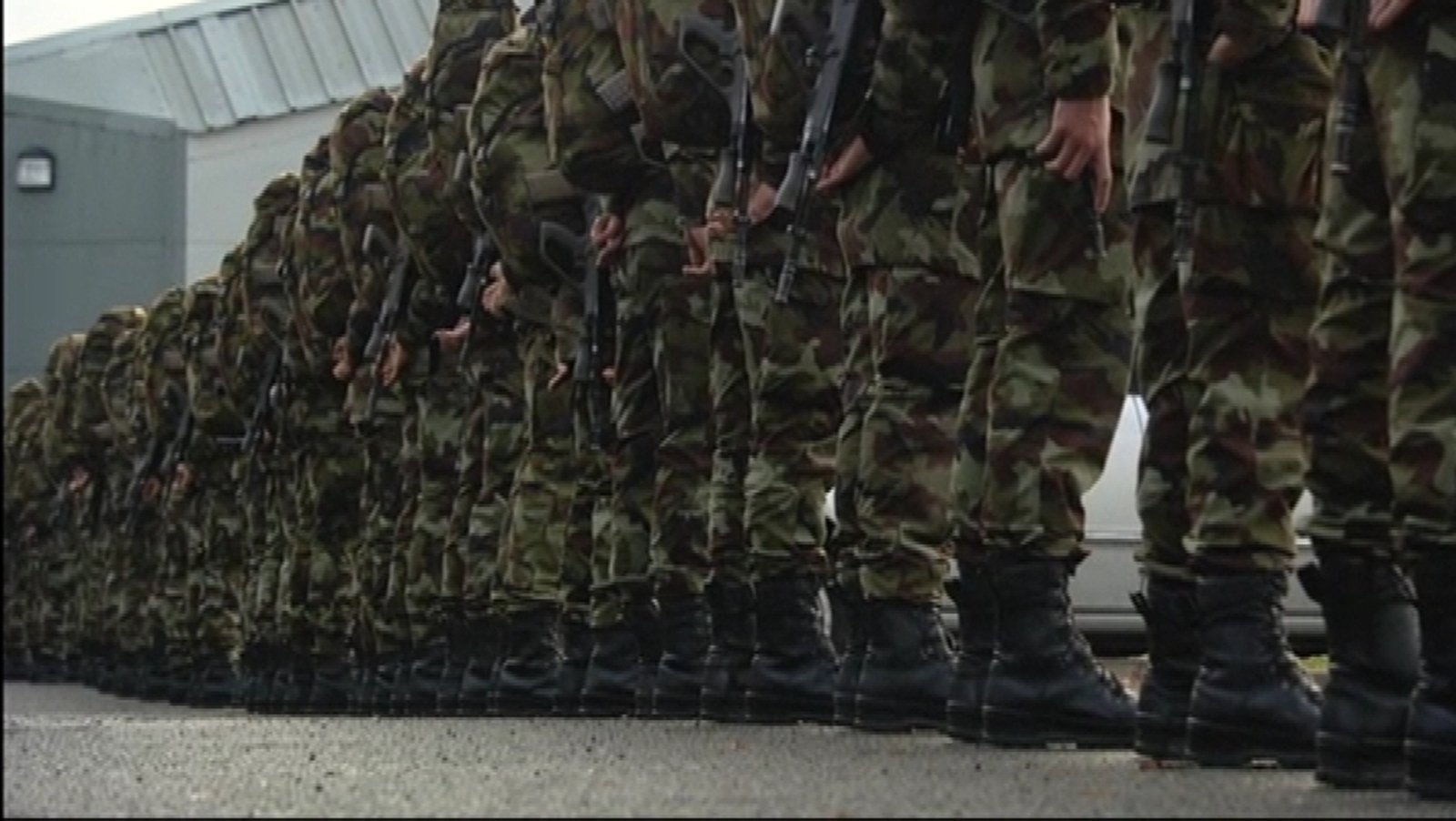
No defence of defence relationships

This article first appeared on Broadsheet dot i e on February 22nd and considers the political dimension to the reported breakdown in relationships between senior management in the Department of Defence and the Irish Defence Forces. I establish that the problem has nothing to do with personalities, but rather the structural relations between the two leaderships and the perception that the Department of Defence is not championing the cause of the Defence Forces within government, most particularly with the Department of Finance. But that is impossible to do without a committed minister at cabinet with political clout. A minister who puts Defence first, not second.

A few months after I started working as the special adviser in the Department of Defence, Gerry Hickey, the late and much missed programme manager to Taoiseach Bertie Ahern, phoned me to check on some departmental facts and figures for the annual Programme for Government review.

“…and roughly how many civil servants work in the Department of Defence”, he enquired.

“From what I can tell… about half of them”, I acerbically responded.

There was an exasperated silence at the other end of the line.  Not for the first time my knack for being smart-assed at the wrong moment was backfiring.  

“What was that?” he asked.

Luckily, I had the number to hand as there had been a parliamentary question on that topic a week or two before. From memory there were about 380 individual civil servants, but as some were on job sharing schemes this was roughly equal to 360 whole-time equivalents.  

My wise-guy answer was unnecessarily facetious. Almost all the department officials I encountered during in my time in defence were hard-working and professional. This is across the department, not just those on the policy side, who I encountered most frequently, but also the junior and mid-ranking officials who made the defence establishment work efficiently, such as those in the pay and pensions branches.

Continue reading “No defence of defence relationships”

If looking for inspiration, the Justice Minister should look more to MGQ than Nora.

In this Broadsheet column, which first appeared on February 8th, I look at the choices facing our Justice Minister, Helen McEntee T.D., as her ministerial inbox starts to fill up with difficult and pressing issues. Does she allow herself to be overwhelmed by the problems that face any Justice Minister, as happened to Nora Owen, or does she get ahead of them and not allow circumstances dictate her record, something Maire Geoghegan Quinn deftly managed to achieve. Time is still on her side… but only just.

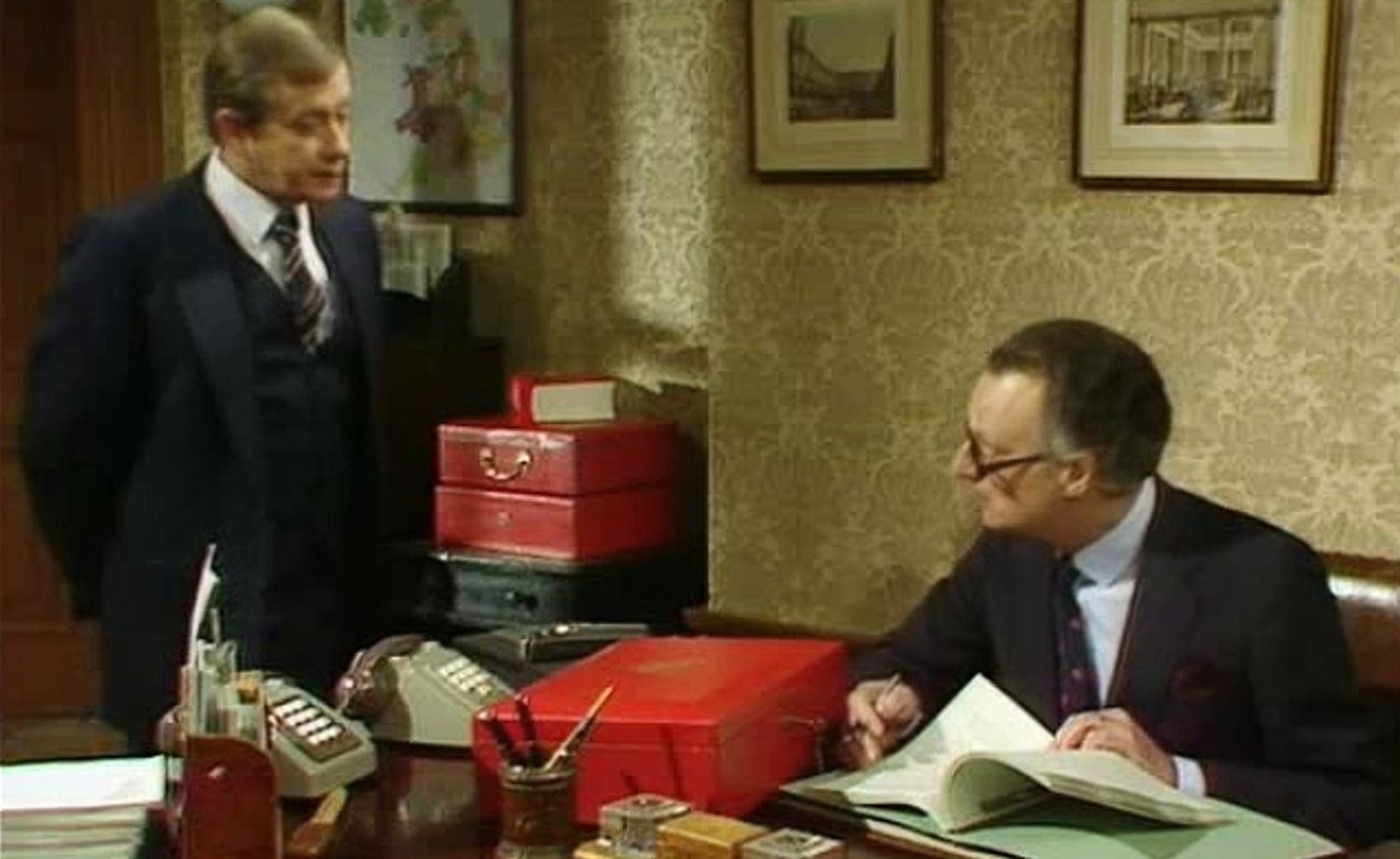
Yes Minister – Party Games episode: Hacker to Woolley: “Home Secretary? Don’t be daft, BernardBe responsible for all the muggings, jail breaks and race riots?

In the final episode of Yes Minister, the fictional Minister for Administrative affairs and party chairman, Jim Hacker, is faced with the difficult choice of backing one of two disreputable candidates to be the next Prime Minister.

His primary determining factor is what will the result mean for his career. While backing the losing side would probably see him being sent to Northern Ireland, Hacker concludes that the question facing him is not just one of picking the winner. As party chair his support could tip the balance, so Hacker feels he must ultimately decide whether he wants to be Foreign Secretary or Chancellor of the Exchequer?

Examining his options aloud in the company of Bernard Woolley, his civil servant private secretary, Hacker pronounces that neither job is attractive. To become Chancellor is to become Mr. Killjoy, he says, as all he does is raise taxes on beer and cigarettes. Besides, as no new economic policy has any real effect for at least two years, Hackers opines that he would spend his first two years as Chancellor paying the political price for the mistakes of his predecessor.

As for becoming Foreign Secretary, Hacker tells his private secretary that is an even worse job.  While the Government wants to be nice to foreigners, he knows  the electorate, especially his voters would want him to be nasty to them. Not to mention the fact that the British Foreign Office is now virtually irrelevant as Britain had no real power abroad and had just become a sort of American missile base since the 1950s. [Recall that this episode was first broadcast at Christmas 1984… a long time before Brexit]

Continue reading “If looking for inspiration, the Justice Minister should look more to MGQ than Nora.”

Normal Political Service Will Resume When Pubs (ie Wet Bars) Reopen

This column appeared on Broadsheet.ie on Jan 18th, 2021and looked at the impact of the pandemic on the craft and practise of normal politics. I suggest that we will not see a return to the normal exercise and discussion of ordinary politics until we are all able to safely have a pint or a drink without food in a non-gastro pub (the so-called Wet Bars). For that to happen, the vaccination programme will need to roll out much faster.

A faltering start and confusing release of data will not instill confidence in the public. If voters see Northern Ireland and Scotland a long way ahead of us by mid- March, in terms of vaccinating people and preparing to re-open, then public patience with the government, and with the Taoiseach and Health Minister in particular, will snap.

Writing traditional political analysis at a time when the usual power play and open practise of normal politics has been suspended is not easy. Writing it when people are worrying about the damage this pandemic is inflicting on their lives and livelihoods is uncomfortable.

The ups and down of this junior minister or that opposition frontbencher are so unimportant when compared with the concerns of people worried about whether their jobs will be still there, or their business will still be viable after the pandemic.

Even in normal times, the reporting of political processes, the who’s in and who’s out, only serves as a distraction from the real stuff of politics when its discussion is detached from the consequences of those movements on the formulation and implementation of policy.

While these are not normal times, their gradual return is almost within sight, and with those normal times will come a return to the normal practise and discussion of politics.

While no one is foolhardy enough to dare suggest a hard date for that return, I’d wager that we will not see a return to this normal politics this side of the wet pubs re-opening. I say this with deference to the many publicans who may now fear my forecast will act as an incentive for Micheál Martin to keep them closed to 2022! Continue reading “Normal Political Service Will Resume When Pubs (ie Wet Bars) Reopen”

Goodbye #2020: That Was The Year That Was

In this, the last column of 2020, I throw a very jaundiced eye over the political year, a year dominated by Covid and Brexit. I also look at the Taoiseach’s remarkable claim that we didn’t bail out the banks and suggest that his remarks were not an intemperate outburst as some suggest, but a clumsy and failed attempt to call out what he sees as populism.

The version below is a longer version of the column which appeared on Broadsheet.ie on Monday December 21, 2020.   

To paraphrase the David Frost programme of the 1960’s: That was the year that was — It’s over, let it go… except, we can’t, not just yet. Politically the year is far from over. 2020 is not quite yet finished with the two issues that have so far dominated the year: Brexit and Covid. While the two issues will also dominate 2021, they each have a bit left to be played out in this year.

On Brexit we still have the will they/won’t they saga over whether the EU and UK negotiators can finalise a deal in Brussels. Last week I said I thought they could and would. I still think they can, though it now seems possible that it may take until January to get that deal defined on paper and possibly until February to get it formally passed in Europe. Continue reading “Goodbye #2020: That Was The Year That Was”

A Leaked History Of Leaking

This column first appeared on Broadsheet.ie on Nov 9th, the day before the Dáil was due to debate the opposition motion of No Confidence in Leo Varadkar on foot of the #leakgate #leotheleaker controversy

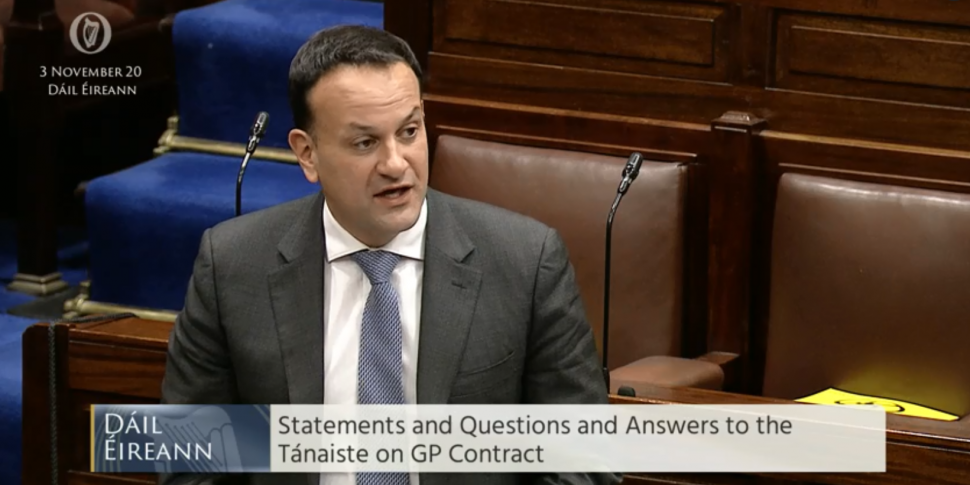
The Tánaiste in the Dáil on Nov 3rd 2020

I’m sure many of you were shocked as I was to learn last Friday that Sinn Féin doesn’t have confidence in Leo Varadkar.

Seriously, who’d have thought it?

Who’d have imagined that the main opposition party, a party that sees the future of Irish politics as a polarised race between itself and Fine Gael, would not have confidence in current Fine Gael leader?

As I explained in my first piece here last week there is no doubt that the Tánaiste has not gone far enough in his apology or his assurances about how he conducts the business of government. Some of the explanations he offered on Tuesday (November 3rd) were so juvenile and feeble that it was shameful to see them sent out alone without a guardian.

Many who will vote confidence in Varadkar in the upcoming confidence motion will do so with no more trust or confidence in the man now than voters had in him last February.

Continue reading “A Leaked History Of Leaking”

We Need To Talk About Micheál

This opinion piece appeared on Broadsheet.ie on Sept 7th and continues a set of themes I have addressed in previous op-eds, namely (i) the problems of a rotating Taoiseach, (ii) the paucity of government’s communications and messaging and (iii) the lack of identity and vision dogging a Fianna Fáil led by Micheál Martin

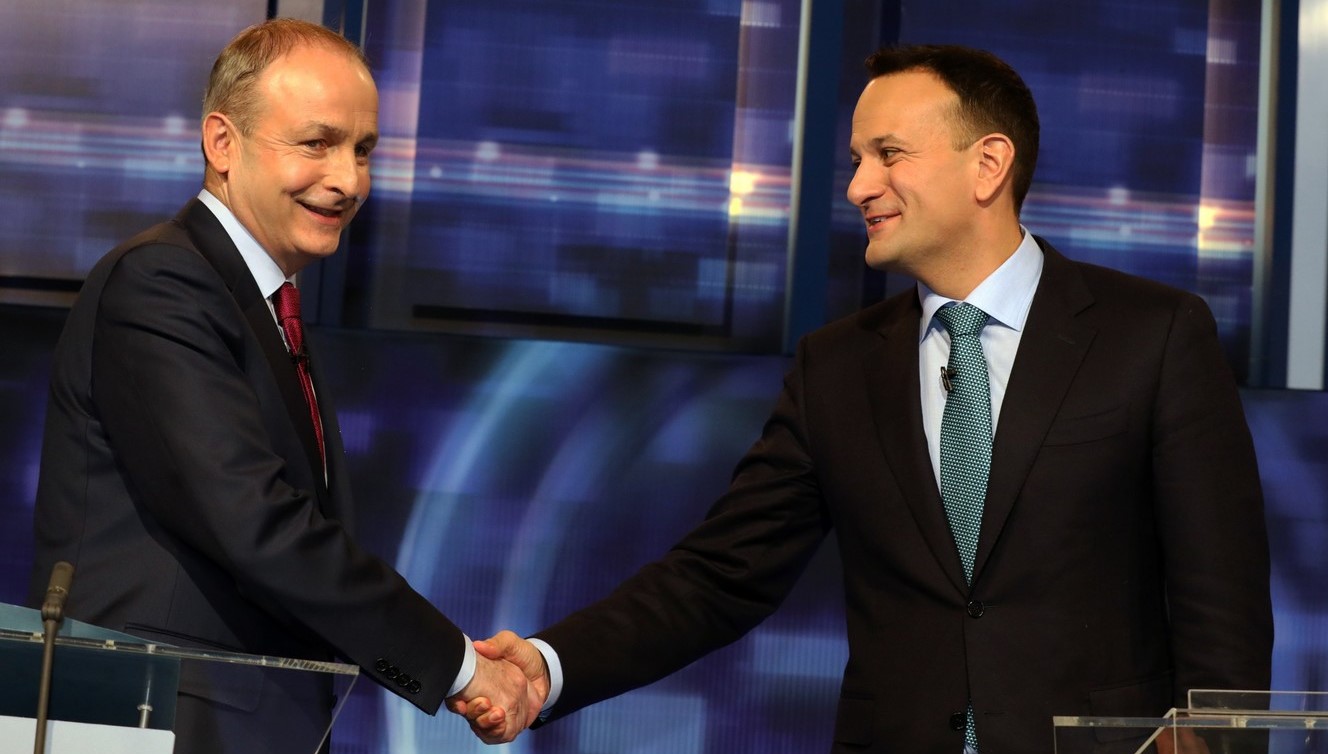
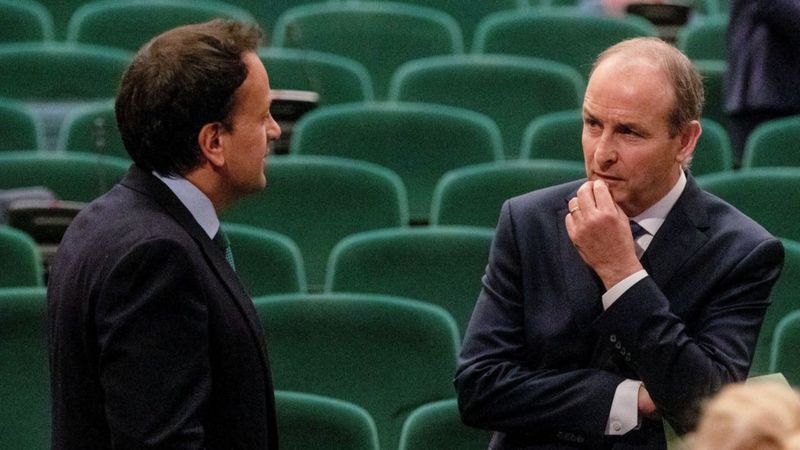
Tánaiste and Taoiseach at Convention Centre…. or joint Taoisigh?

“The office makes the man” is a phrase heard many times before Bertie Ahern and Enda Kenny became Taoiseach. It stems from the notion that you cannot properly envision someone as a Taoiseach (or Prime Minister or President) until they assume the office, as the trappings of office and the authority that come with role help increase their stature.

Afterall, very few people, apart from Gregory Peck, Martin Sheen or Oprah Winfrey, can truly act and sound presidential without being it. 

Continue reading “We Need To Talk About Micheál”