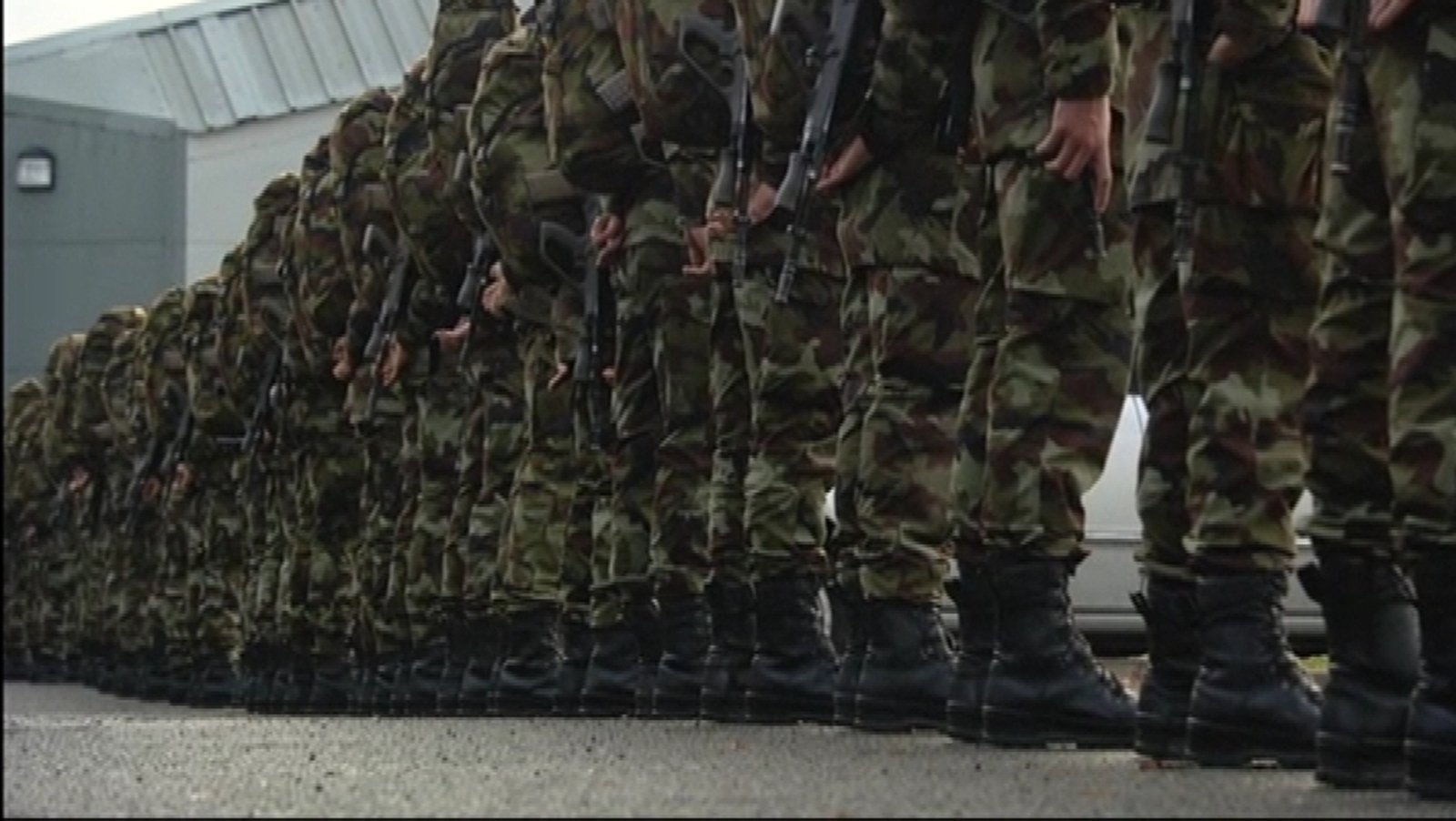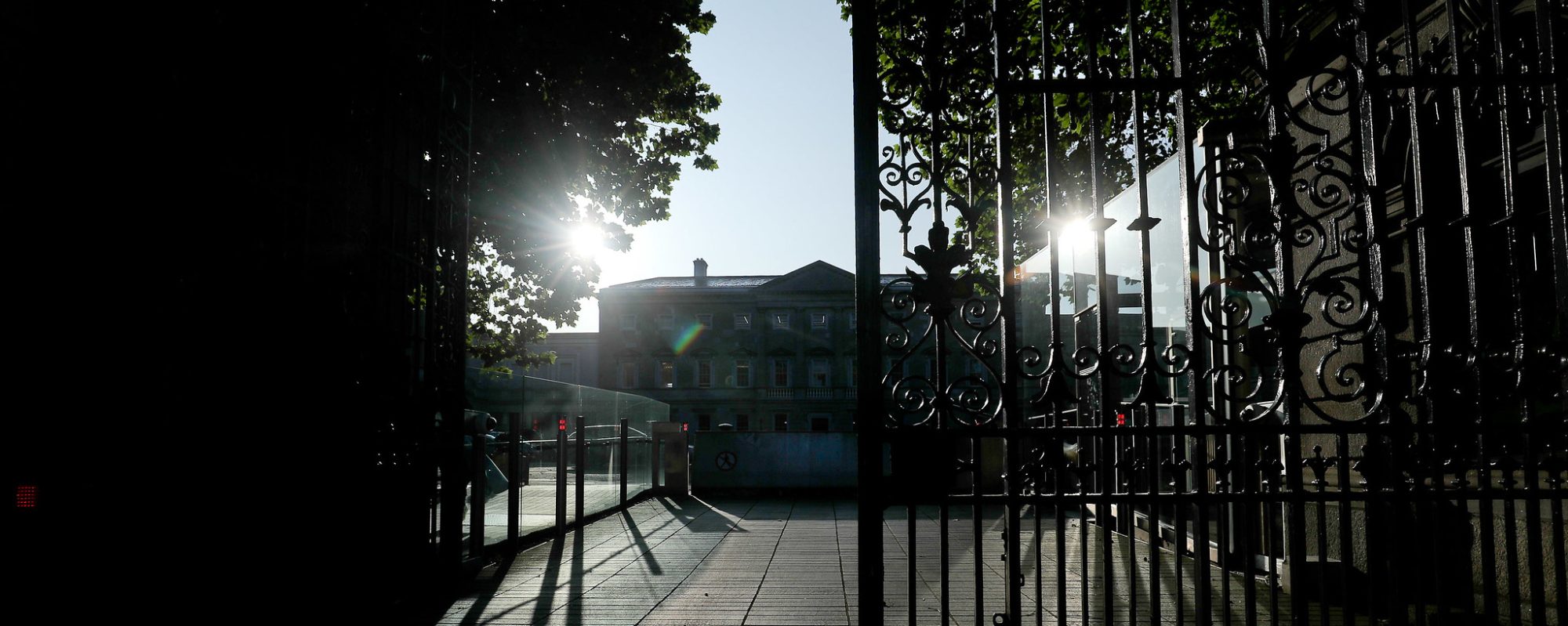

Doing national #cybersecurity on the cheap costs more… time to put @defenceforces in charge

This week’s column first appeared on Broadsheet.ie on Monday May 17th. I look at the massive ransomware attack on the HSE and the Dept of Health and remind us that experts have been warning for years that government is not taking cyber defence seriously enough.

We risk being the EU’s weakest link on cyber security despite our dependence on the digital economy. 


Though I have related this Jeffrey Bernard anecdote here before, it still bears repeating. When Jeffrey Bernard was too “tired and emotional” to submit his weekly column to The Spectator, the editor would place an apologetic line explaining that there was no column that week as: “Jeffrey Bernard is unwell”.

There was also another one. It was longer, but less apologetic and appeared when the editor was feeling less charitable. It read: “Mr Bernard’s column does not appear this week as it remarkably resembles the one he wrote last week”.

Broadsheet’s editor could be forgiven for posting a similar renunciation here, as the discourse on the HSE cyber-attack I propose to put to you is effectively a re-statement of arguments and commentaries I’ve made many times over the past few years. 

I have been warning about our failure to take national cyber-security seriously since late 2019. I highlighted it as a sub-plot in this column from Sept 2019 and then expanded on the problem in a column entitled: Pleading No Defence On Cyber Security.
Continue reading “Doing national #cybersecurity on the cheap costs more… time to put @defenceforces in charge”

Like Brezhnev… many in Fianna Fáil Are Riding The Rails With The Blinds Down

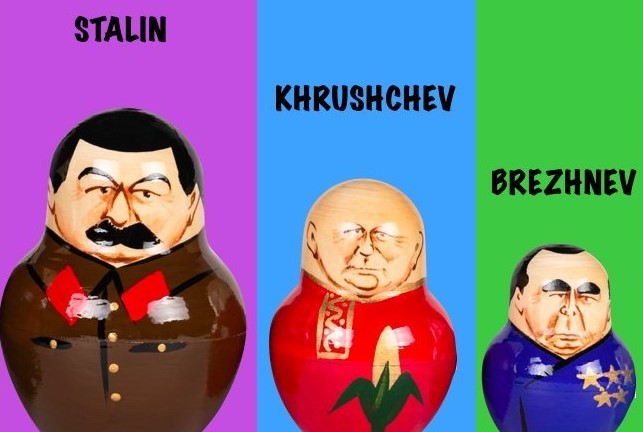
This week’s column appeared on Broadsheet.ie on May 10th and opens with an old Soviet era story contrasting the leadership styles of Stalin, Khrushchev and Brezhnev and moves on to me suggesting that the fence-sitters, the undecideds, in the Fianna Fáil parliamentary party are acting like latter-day Brezhnevs… hoping to survive just long enough to pass on the huge problems they can see, but ignore, to someone else. I also take a quick pre-campaign look at the upcoming Dublin Bay South by-election #DBSBE21

There’s a Soviet era story comparing the leadership styles of three of its former leaders: Stalin, Khrushchev and Brezhnev.

It goes like this. The three leaders are sitting in the plush compartment of a special politburo train traveling across the western Siberian plain.

The train suddenly stops in the middle of nowhere. The leaders send for the train manager. He informs them that the driver, co-driver and engineers have gone on strike and are refusing to move the train another centimetre.

Stalin tells Khrushchev and Brezhnev: “I’ll deal with this”. He climbs down from the carriage and walks to the front of the train to berate the crew.

Before the great leader can utter a word, the driver complains vocally that he hasn’t been paid in weeks, hasn’t eaten or slept over the past 24 hours and has just heard that his brothers have been arrested and sent to a gulag.

Continue reading “Like Brezhnev… many in Fianna Fáil Are Riding The Rails With The Blinds Down”

There’s no big secret to good government communications

This column appears here out of sequence, as it first appeared on Broadsheet.ie on April 19th. In it, I look at this government’s problems with communications, particularly the Fianna Fáil side of it.

According to the veteran American comedian George Burns there is no big secret to comic timing. It’s very simple, he said. You tell the joke, you wait for the laughter and when the laughter stops, you tell the next joke. That’s comic timing.

It’s something similar with government communications: you deliver you message and give the public the time to let it sink in.

What you certainly do not do is to talk across your message or try to chop and change the narrative while folks are still trying to take it in.

There is nothing wrong with a minister having a new idea, indeed it is something to be encouraged. What is important is that it is an informed idea. What you don’t do is to contact a journalist to communicate an idea to the public until it has been fully formed and explored with colleagues and – hopefully – some real live experts.

Continue reading “There’s no big secret to good government communications”

Just 1 week to go to the most consequential U.K. election of modern times… and a major #TheSNP win

This piece first appeared on Broadsheet.ie on Monday April 26th and looks at the upcoming Scottish Parliament elections and argues that this election will be one of the most consequential U.K. elections of modern times for the politics and future of these two islands.  

10-days from now (Mon, April 26th) people across Scotland will vote in what will probably be the most consequential election yet for both the people of Scotland and the of these two islands. I say “yet” as the second Scottish independence referendum that will inevitably follow, will be the most consequential.

With its bold and direct slogan: Scotland’s future is Scotland’s choice. And nobody else’s the SNP has left Scottish voters in no doubt as to what this election is about. It is not just about deciding about who sits in the Scottish Parliament and who forms the next Scottish Government, it is also about preparing for a second independence referendum.

That is why what happens on May 6th will be hugely consequential for us on this island because it will set the course for the final steps in the move to Scottish independence and the breakup of the United Kingdom of Great Britain and Northern Ireland.

With 10 days to go, things are looking good for First Minister Nicola Sturgeon’s SNP. But… a lot can happen in 10 days, and while the SNP’s dominance is in no doubt, the issue is now whether it can win a majority of seats (more than 65). Continue reading “Just 1 week to go to the most consequential U.K. election of modern times… and a major #TheSNP win”

When loyalism’s loyalty is rejected

This column first appeared on Broadsheet on April 12th. It followed almost a week of disturbances and incidents across the North, though I mainly focus here on the attacks by loyalist youths along the peace wall in West Belfast, specially at the Lanark Way interface.  The cause of these riots are complex – they also have immediate and proximate causes. While there are sinister loyalist paramilitary elements who saw this as an opportunity to make trouble for a PSNI that has enjoyed recent successes in thwarting loyalist drug dealing – especially with unionist leaders attacking the PSNI over and calling for the resignation of the Chief Constable – many of the teenagers and youths on the streets will misguidedly see themselves as fighting for their community, their people and their allegiance. Though that allegiance goes increasingly unreciprocated by the State to which they declare their loyalty.    

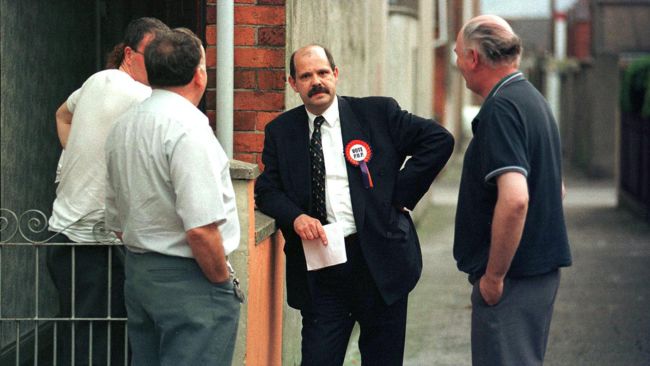
The late David Ervine (facing camera) out canvassing

As the riots raged along the peace walls in Belfast last week, I spotted a tweet bemoaning the absence of loyalist leaders of the calibre of the late David Ervine.

David was the avuncular, savvy leader of the loyalist Progressive Unionist Party (PUP). He was aptly described by Northern Ireland secretary John Reid as “possibly one of the most eloquent politicians in Northern Ireland”.

Ervine died tragically young, aged just 53, of a brain hemorrhage, in Jan 2007. Speaking at the time, the then Taoiseach, Bertie Ahern called him a “courageous politician who sought to channel the energies of loyalism in a positive political direction.”

I don’t claim to have known David well, though I did meet him several times and even debated against him in UCD before an audience of US politics students. He was characteristically witty and demonstrated a willingness to engage and debate the future of the North, that showed his confidence in his in his identity and position. This is not something you can say about many in today’s unionism.

Continue reading “When loyalism’s loyalty is rejected”

Time’s Up for Martin… But It’ll Take A Little Longer To Play Out

This column first appeared on Broadsheet on March 29th and draws together some of the points I have been making over previous weeks, particularly relating to Fianna Fáil’s existential crisis and the dramatic changes it must make, and quickly, if it is to remain relevant in Irish politics. The party’s support levels are now lower than they were when Martin moved to out his predecessor. Martin cannot halt the inevitable, but he can still determine his legacy.  

Much as I would prefer not to think about it, it is impossible for anyone with an interest in politics not to see yesterday’s Red C, Sunday Business Post poll as a seminal political moment for Fianna Fáil.

Ironically, for a poll that will be viewed as a landmark, the movements it records are quite small. I am sure this is something from which Taoiseach Micheál Martin will try to draw some comfort. Fianna Fáil’s latest 2% drop is within the margin of error and it is not in itself massively statistically important – except, it is yet another step bringing the party back down at its lowest ever point.

The party has recorded 11% in Red C polls before. Last October was the last time. The time before that was… well, never. Its lowest previous Red C rating was the 14% of early 2011 that provoked Micheál Martin to challenge Taoiseach Brian Cowen saying:

I believe that Fianna Fáil must recognize the reality of the current climate of public opinion… I have reluctantly concluded that, in these circumstances, Fianna Fáil should change its leader.”

Continue reading “Time’s Up for Martin… But It’ll Take A Little Longer To Play Out”

This is an important week for relations across these islands

This week’s Broadsheet column examines how the week beginning Monday March 22 may be a more important one for the medium to long term future of relations on this island that the one before, even though that week featured several important set-piece speeches by An Taoiseach, Micheál Martin on the North and the relations with UK and the EU post Brexit. My argument is not that the Taoiseach said anything wrong – he didn’t. My problem is with what he didn’t say.  On Unity.  I suspect the Taoiseach believes he is far ahead of public opinion in not discussing unity or constitutional change. The reality, I fear, is that Mr Martin is perilously far behind where the centre ground of nationalist and republican opinion public is, North and South.    

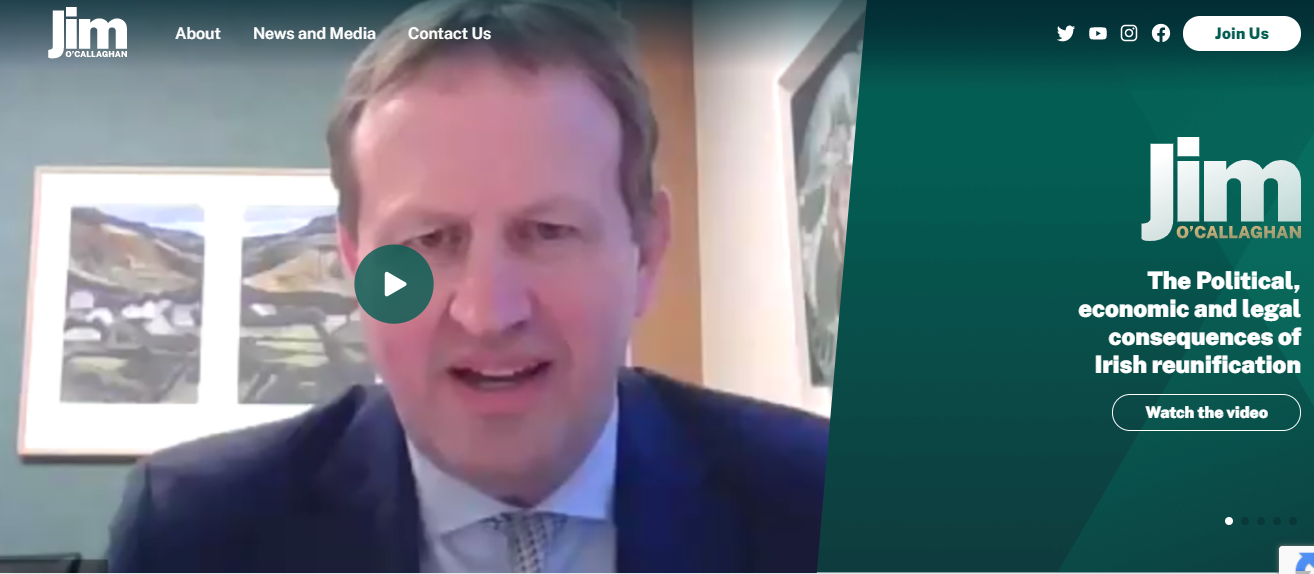
Jim O’Callaghan TD delivering his Cambridge Speech on Unity

Given the week that was in it, with St Patrick’s Day and all, and the impressive number of virtual calls and speeches made by An Taoiseach, Micheál Martin, you’d be forgiven for thinking that last week would have been a more important week for the future of relationships on these islands than this week. But it wasn’t.

To his credit, An Taoiseach seized every opportunity presented to him to speak in detail about what he called the “whole new category of challenges that we have had to deal with” following Brexit. He did so with conviction and belief.

In addition to his crucial virtual Oval Office face-to-face with President Biden and Vice President Harris, he had high profile speeches and exchanges with both the prestigious Brookings and Edward M. Kennedy institutes, plus a range of other important calls and engagements.

Continue reading “This is an important week for relations across these islands”

Varadkar’s future as leader is now no more assured than is Martin’s

This column first appeared on Broadsheet on March 15th, the day after the Sunday Times [Ireland] broke the story that the preliminary Garda inquiry into the leaking of a confidential contract by Leo Varadkar while Taoiseach had been upgraded to a criminal investigation by Garda Headquarters. Here I set out why Varadkar’s grip on the Fine Gael leadership was already starting to loosen before this story broke and why his political future may be every bit as uncertain as Micheál Martin’s. 

Over last few months I have written a lot… an awful lot… about Fianna Fáil’s existential crisis. These articles have mainly focused on the shortcomings of the leader, and Taoiseach, Micheál Martin.

This is to be expected. Even though I now find myself on the outside looking in, it is still the party I understand best, and care about most, having been a member for over 40 years.

But my instinctive focus on my former party should not detract from the problems facing Fine Gael – or, more specifically, those facing its leader, An Tánaiste, Leo Varadkar.

Before yesterday’s Sunday Times front page story about the Tánaiste being the subject of criminal investigation, Varadkar’s position looked unassailable. But looks can be deceiving.

Continue reading “Varadkar’s future as leader is now no more assured than is Martin’s”

Why An Taoiseach must act now to defer second Covid-19 vaccine doses so we can unlock sooner

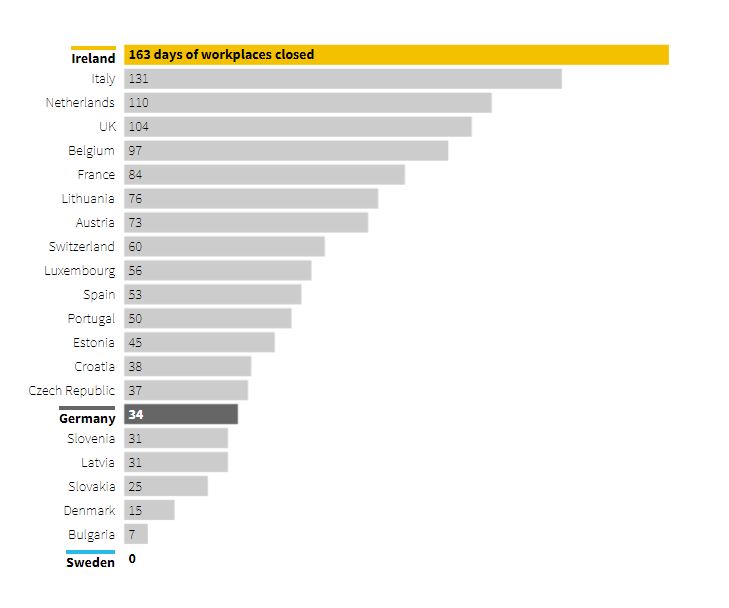
This column appeared on Broadsheet.ie on Monday March 8th 2021. It looks at the faltering Irish vaccine roll out and concludes that not all the blame rests with Brussels. We have endured the longest lock down, closing all but essential workplaces for 200 days so far (and counting) – so, coming seventh or eighth in Europe when it comes to vaccine roll out,  is just not good enough. We need to be at the top of the vaccine roll out league. That means we need to have a greater percentage of our people vaccinated, even if only with one dose, by the end of April or May.

Workplace closures to mid Jan 2021 – Via Reuters Graphics

It has long been accepted that the primary responsibility of government is the safety and protection of its people.

Though we can be critical of this government for many things, accusing it of not taking this responsibility seriously, is not one of them.

True, their execution of this responsibility has been patchy and erratic. The gradual depletion of our defence forces and the wanton neglect of national cyber security are but two obvious examples of how governments over the past decade have fallen well short of their duty to protect us, but – for the most part – the State has shown the political willingness and institutional capacity to keep us safe and well.

Continue reading “Why An Taoiseach must act now to defer second Covid-19 vaccine doses so we can unlock sooner”

No defence of defence relationships

This article first appeared on Broadsheet dot i e on February 22nd and considers the political dimension to the reported breakdown in relationships between senior management in the Department of Defence and the Irish Defence Forces. I establish that the problem has nothing to do with personalities, but rather the structural relations between the two leaderships and the perception that the Department of Defence is not championing the cause of the Defence Forces within government, most particularly with the Department of Finance. But that is impossible to do without a committed minister at cabinet with political clout. A minister who puts Defence first, not second.

A few months after I started working as the special adviser in the Department of Defence, Gerry Hickey, the late and much missed programme manager to Taoiseach Bertie Ahern, phoned me to check on some departmental facts and figures for the annual Programme for Government review.

“…and roughly how many civil servants work in the Department of Defence”, he enquired.

“From what I can tell… about half of them”, I acerbically responded.

There was an exasperated silence at the other end of the line.  Not for the first time my knack for being smart-assed at the wrong moment was backfiring.  

“What was that?” he asked.

Luckily, I had the number to hand as there had been a parliamentary question on that topic a week or two before. From memory there were about 380 individual civil servants, but as some were on job sharing schemes this was roughly equal to 360 whole-time equivalents.  

My wise-guy answer was unnecessarily facetious. Almost all the department officials I encountered during in my time in defence were hard-working and professional. This is across the department, not just those on the policy side, who I encountered most frequently, but also the junior and mid-ranking officials who made the defence establishment work efficiently, such as those in the pay and pensions branches.

Continue reading “No defence of defence relationships”